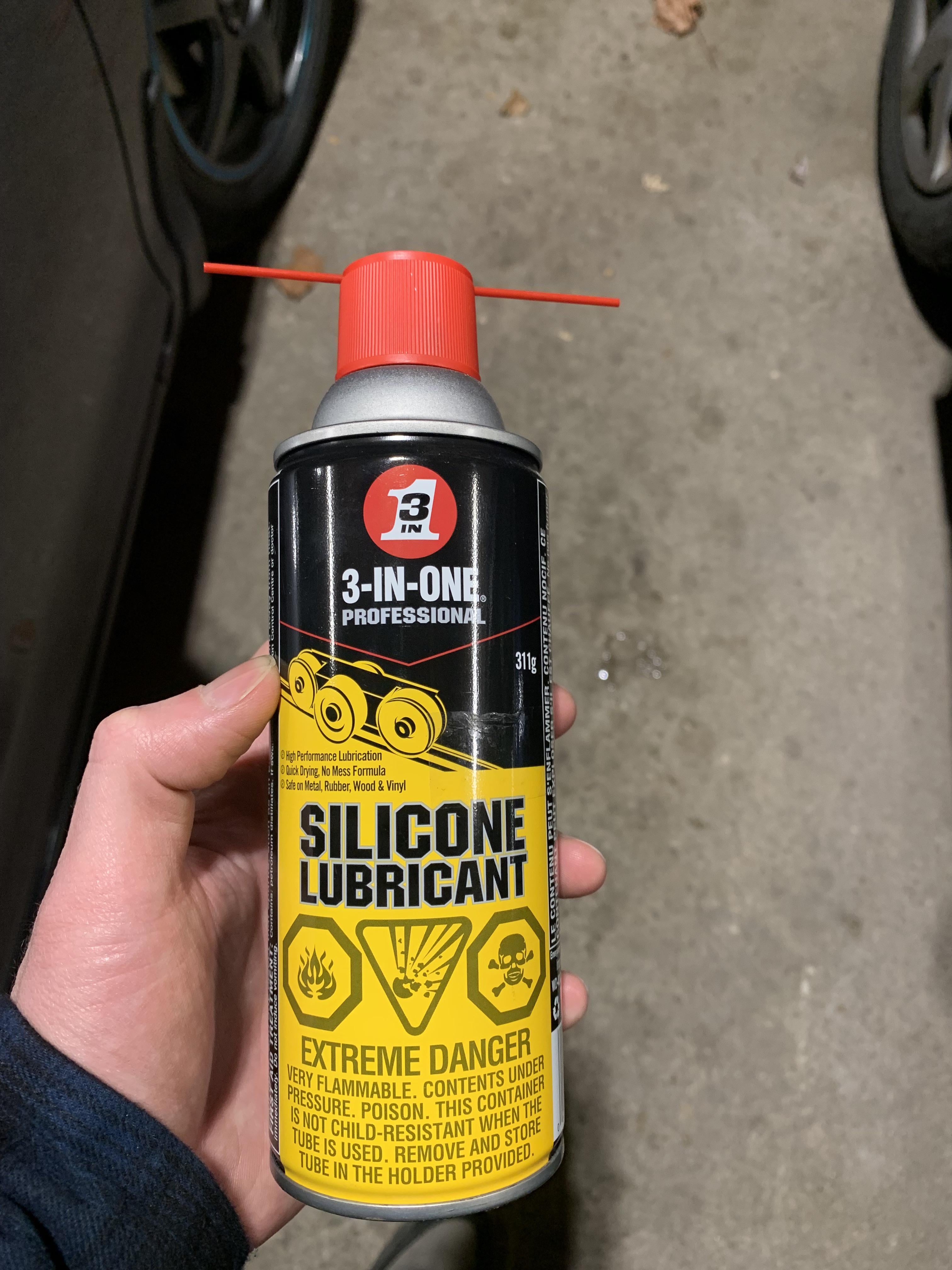
You could use it on a chain, but, there are better purpose-designed options for that. Spray is often going to be thinned out and have a lot of air so you end up paying for air as much as lubricant. Silicone alone isn’t an optimal dry lubricant for a chain either, I’d only use it in a pinch.
It’s a good product for spraying into your housing to clean out gunk, lube the cables for smoother shifting.
Might be ok for lubricating a shifter’s internals if they are dry and lacking lubrication.. but I’d use something like WD-40 first to loosen/clean the gunk and then follow up with something like that sprayed into a shifter. You wouldn’t want to spray it into a new shifter because the lubricants in your can may not be compatible with the lubricants in the shifter and you just end up washing away your lubrication and doing more harm than good.
That’s not nearly heavy enough to use on any bearings, you want grease for that purpose. That’s also too light for things where you’d typically want lighter oils.. suspension, freehubs, etc.
So, in short, you can’t use it for much on a bicycle. I’d use it to oil a pad lock, a car’s door hinge, maybe your seat post clamp although I’d just use grease there. Good for tools, pivots on pliers/scissors, the wheel on an adjustable wrench, that sort of thing.
Tirglo on
I think of this stuff is helpful for rubber/plastic parts where oil based lubes aren’t wanted or as helpful. Mostly things like air seals in pumps or plastic bushings in brake levers. I certainly don’t use it often tho
nattyd on
I have never seen this used on a bike. For chains, it’s probably better to use a purpose-made chain lubricant. They are usually PTFE (aka Teflon) or wax-based. Currently wax-water emulsions (like Squirt) or paraffin wax dipping are generally considered best, but they are more complex to apply, and PTFE lubes work well for most people.
For other applications, greases are most common (bearing parts, spindles, etc). I sometimes use PTFE chain lubes on shifter cables and derailleur linkages.
Tl;dr: probably wouldn’t be my first choice for anything but might be OK for non-chain, non-bearing applications.
Crash217 on
I’ve found silicone sprays to be fantastic for wiping the bike down before a muddy event. *Don’t put it on anything you touch or on the brakes/tires*. Any mud will fall off as it dries or rinse off quickly leaving a hazy film as a reminder. Wash with soap and water as normal afterwards.
hotasanicecube on
Just don’t use it anywhere that grease is a more appropriate protector/lubricant. It will remove grease. It’s for bolted joints. I use it for drivetrain on one bike because there is twenty years of gunk on it from the previous owner and I’m too lazy to scrub it off. After several hundred miles it should be clean enough to stop. Until then everything is protected and grit is washed away.

5 Comments
You could use it on a chain, but, there are better purpose-designed options for that. Spray is often going to be thinned out and have a lot of air so you end up paying for air as much as lubricant. Silicone alone isn’t an optimal dry lubricant for a chain either, I’d only use it in a pinch.
It’s a good product for spraying into your housing to clean out gunk, lube the cables for smoother shifting.
Might be ok for lubricating a shifter’s internals if they are dry and lacking lubrication.. but I’d use something like WD-40 first to loosen/clean the gunk and then follow up with something like that sprayed into a shifter. You wouldn’t want to spray it into a new shifter because the lubricants in your can may not be compatible with the lubricants in the shifter and you just end up washing away your lubrication and doing more harm than good.
That’s not nearly heavy enough to use on any bearings, you want grease for that purpose. That’s also too light for things where you’d typically want lighter oils.. suspension, freehubs, etc.
So, in short, you can’t use it for much on a bicycle. I’d use it to oil a pad lock, a car’s door hinge, maybe your seat post clamp although I’d just use grease there. Good for tools, pivots on pliers/scissors, the wheel on an adjustable wrench, that sort of thing.
I think of this stuff is helpful for rubber/plastic parts where oil based lubes aren’t wanted or as helpful. Mostly things like air seals in pumps or plastic bushings in brake levers. I certainly don’t use it often tho
I have never seen this used on a bike. For chains, it’s probably better to use a purpose-made chain lubricant. They are usually PTFE (aka Teflon) or wax-based. Currently wax-water emulsions (like Squirt) or paraffin wax dipping are generally considered best, but they are more complex to apply, and PTFE lubes work well for most people.
For other applications, greases are most common (bearing parts, spindles, etc). I sometimes use PTFE chain lubes on shifter cables and derailleur linkages.
Tl;dr: probably wouldn’t be my first choice for anything but might be OK for non-chain, non-bearing applications.
I’ve found silicone sprays to be fantastic for wiping the bike down before a muddy event. *Don’t put it on anything you touch or on the brakes/tires*. Any mud will fall off as it dries or rinse off quickly leaving a hazy film as a reminder. Wash with soap and water as normal afterwards.
Just don’t use it anywhere that grease is a more appropriate protector/lubricant. It will remove grease. It’s for bolted joints. I use it for drivetrain on one bike because there is twenty years of gunk on it from the previous owner and I’m too lazy to scrub it off. After several hundred miles it should be clean enough to stop. Until then everything is protected and grit is washed away.