I would buy a whole new wheel, those fixed/singlespeed wheels are not that pricey.
If you don’t want to spend money on tools and time on fixing, this would be the best solution.
kohroku on
If you are not able to tell what hub it is, or to measure what you need to get a replacement that will work, you are probably not going to be able to rebuild and true a wheel from scrap. No shame in that – very few people bother. You can learn but it takes patience and you have to be very systematic! I would replace the wheel
Working-Promotion728 on
Not sure why people are telling you to throw it away and replace the whole wheel. Without seeing the wheel IRL, no one can tell what shape the wheel is in. Replacing bearings when they wear out is routine maintenance that every bike needs at some point. You’ll need to remove the wheel and get access to the bearings. If they’re “loose” bearings, you might need to just clean and repack them with fresh grease, or maybe just replace the ball, which are cheap. If they are cartridge aka sealed bearings, you’ll need to access the bearings and read the number that is on the rubber seal.
Pepperidge_fam on
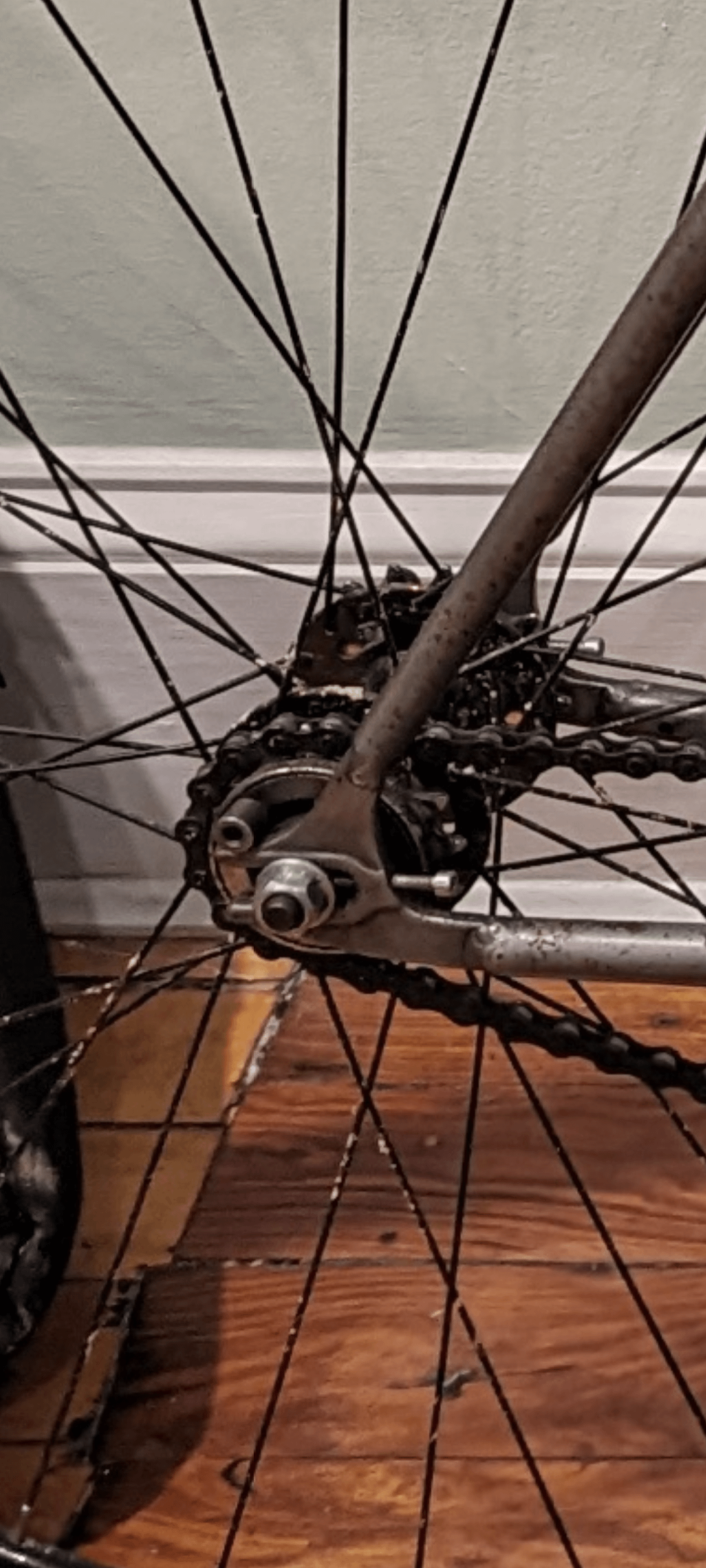
A photo of the hub, rather than the singlespeed freewheel, would make it easier to try to ID.
Andramelach on
This is more than likely what’s called a flip flop hub. With the picture that you’ve provided, the freewheel on this side is definitely a single speed hub.
The key to notice if this is a flip flop hub, is that you have two different freewheels, or cogs on either side. A freewheel will freely rotate backwards, whereas a fixed gear cog, will not.
Another big indicator is how a freewheel or cog are fixed to the hub. Freewheels are heavier, generally thicker, and rotate around the inside of their body. A fixed gear cog will be quite a bit thinner, and fixed in place on the hub with a lock ring, on the outside.
The next question would be to figure out if it’s your freewheel, or hub that needs service. A good way to test thus is to rotate the wheel with the chain on, and off.
-with the chain on, will be testing tour freewheel to see if it perhaps needs to be cleaned or re packed. It might be crunchy feeling or add lots of friction to the system.
-without the chain, will be testing the bearing and axle in your hub itself. If the wheel stops abruptly or feels crunchy, it’s the hub.

6 Comments
Likely a cup and cone hub with loose ball bearings. [https://www.parktool.com/en-us/blog/repair-help/hub-overhaul-and-adjustment](https://www.parktool.com/en-us/blog/repair-help/hub-overhaul-and-adjustment)
I would buy a whole new wheel, those fixed/singlespeed wheels are not that pricey.
If you don’t want to spend money on tools and time on fixing, this would be the best solution.
If you are not able to tell what hub it is, or to measure what you need to get a replacement that will work, you are probably not going to be able to rebuild and true a wheel from scrap. No shame in that – very few people bother. You can learn but it takes patience and you have to be very systematic! I would replace the wheel
Not sure why people are telling you to throw it away and replace the whole wheel. Without seeing the wheel IRL, no one can tell what shape the wheel is in. Replacing bearings when they wear out is routine maintenance that every bike needs at some point. You’ll need to remove the wheel and get access to the bearings. If they’re “loose” bearings, you might need to just clean and repack them with fresh grease, or maybe just replace the ball, which are cheap. If they are cartridge aka sealed bearings, you’ll need to access the bearings and read the number that is on the rubber seal.
A photo of the hub, rather than the singlespeed freewheel, would make it easier to try to ID.
This is more than likely what’s called a flip flop hub. With the picture that you’ve provided, the freewheel on this side is definitely a single speed hub.
The key to notice if this is a flip flop hub, is that you have two different freewheels, or cogs on either side. A freewheel will freely rotate backwards, whereas a fixed gear cog, will not.
Another big indicator is how a freewheel or cog are fixed to the hub. Freewheels are heavier, generally thicker, and rotate around the inside of their body. A fixed gear cog will be quite a bit thinner, and fixed in place on the hub with a lock ring, on the outside.
The next question would be to figure out if it’s your freewheel, or hub that needs service. A good way to test thus is to rotate the wheel with the chain on, and off.
-with the chain on, will be testing tour freewheel to see if it perhaps needs to be cleaned or re packed. It might be crunchy feeling or add lots of friction to the system.
-without the chain, will be testing the bearing and axle in your hub itself. If the wheel stops abruptly or feels crunchy, it’s the hub.