I suspect they were a few years old when you bought them….and those are done.
Snitz72 on
Replace
HikingFun4 on
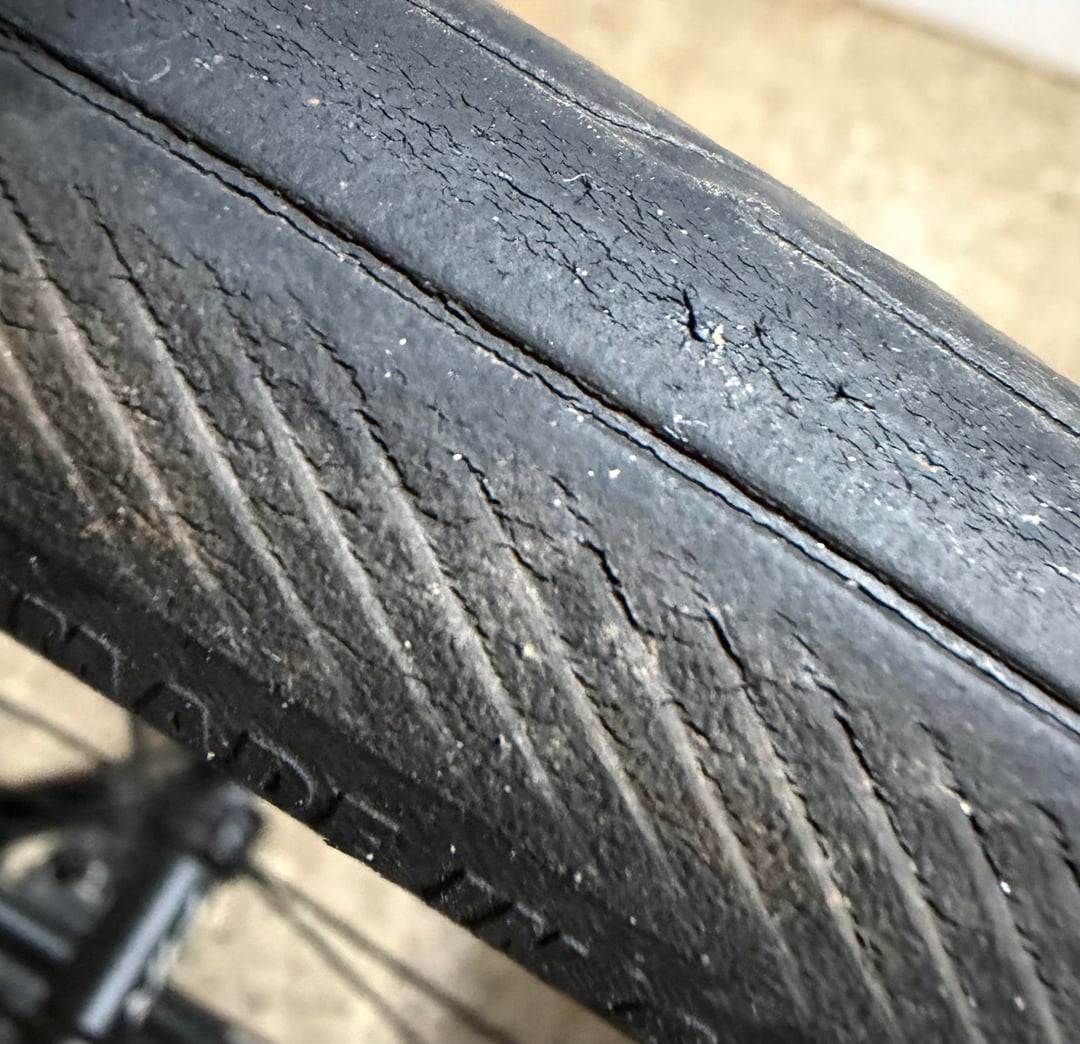
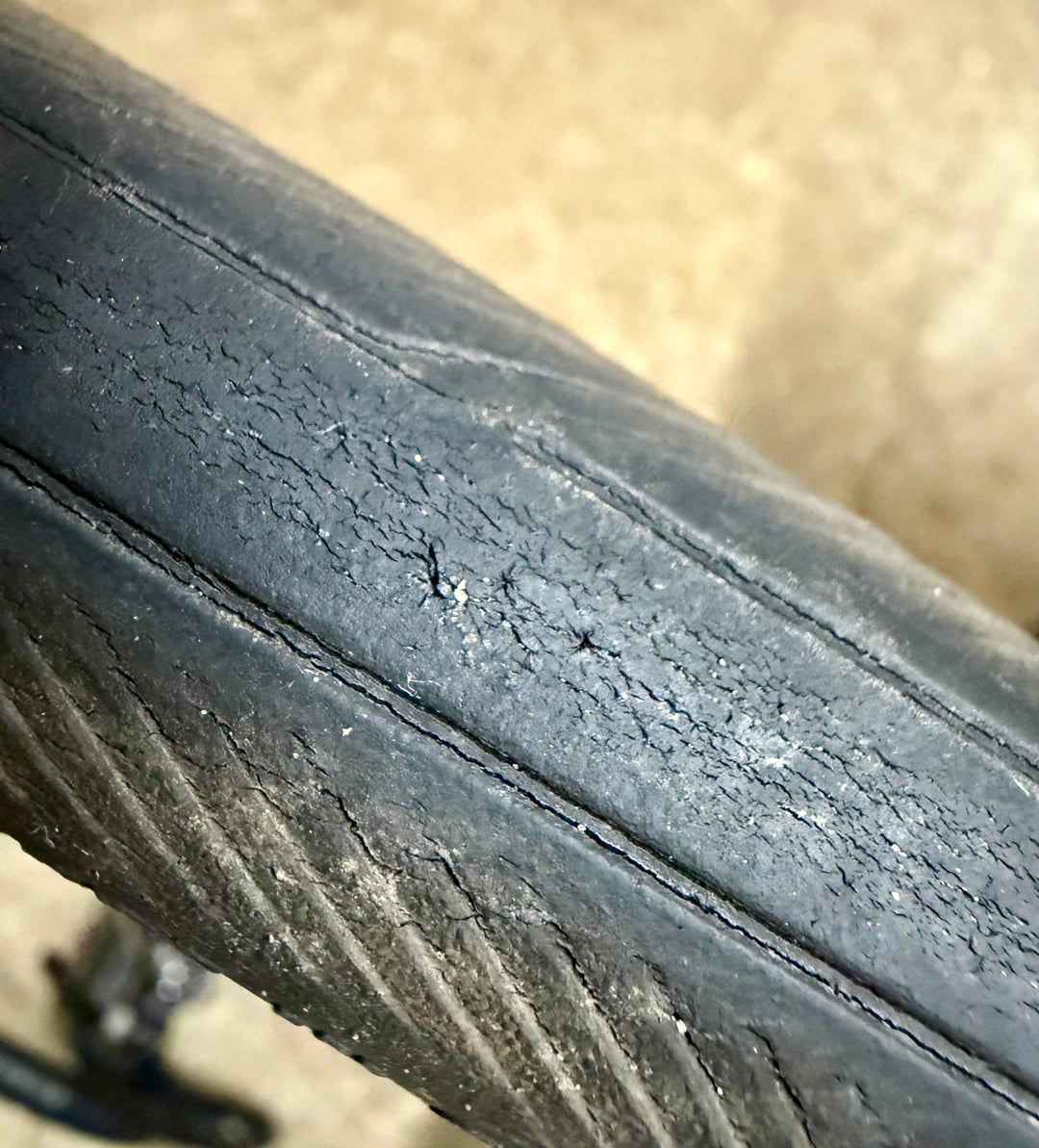
Tires cracking = dry rot. Whether or not you replace them is up to you. Common sense would suggest yes.
Davidedwards1973 on
uhhhhhhhh yes.
Lumpy_Crow_6022 on
Thank you Gents!
Swimming-Chicken-682 on
The stickier the rubber, the faster it dries out. I always prefer grip, so I find myself in this situation on any bike I don’t ride enough to wear out the tread. In my opinion, it’s still always worth it to keep fresh, good tires under my ride! Once they start looking like this, they will pick up glass & debris constantly, flats will increase, and grip will suffer.
Horror-Stand-3969 on
I just ride tires like this. Dry rot happens pretty quickly in Floridas hot humid environment. Haven’t had one fail. YMMV.
qtilman on
Probly good.
AyeMatey on
Is it a beach bike and rarely goes above 7mph? No problem
Otherwise? Replace
bobbiewobie22 on
Yes
awilliamscbus on
Wtf yes
Sensei19600 on
You may have had them on your bike for 2 years, but if there’s a date code on them somewhere I’ll bet they’re actually more like 6 years old
I had the same thing happen with “new” tires purchased at the LBS, 2 years ago. Different brand, tho; “Armadillo”, mfg’d for Specialized. Disappointed,cuz paid full price.
Replaced with Compass 32mm (rebranded as Renè Herse) and am very happy so far.
DLByron on
Replace.
Milked- on
Cracking is dry rot. The dangers posed by dry rot change with speed. The faster you go, the more serious an issue this is.
Giant_Defy_1972 on
Ummmmm… let me think… 🤔 Absolutely. What kind of question is that? 😂
Former_Lock9367 on
Should’ve replaced them YESterday.
justsomegraphemes on
I copy/paste this comment every time I see a post about dry rot. This topic comes up so frequently and the answers are always “yes, replace it” but that’s not a good answer imo:
What is this bike used for? Ultimately that determines the answer, with some additional nuance.
The cracking outer rubber is a different layer than the casing. The casing is the layer that actually keeps the tire together and (if tubeless) keeps the air inside or keeps the tube from ballooning. Since they are separate layers with different materials, dry rot does not imply that the casing is compromised. The biggest risk that dry rot poses is an increased risk for a blowout as the casing becomes more exposed by these small cracks.
This matters more if the tires are lightweight “race” tires, if you ride at high speed, and if they’re tubeless or not. This is because lightweight race tires will have overall weaker puncture resistance which means the already thinner casing is at a greater risk if the rubber is dried out. Tubeless is more likely to rapidly lose air if punctured severely which is obviously a safety consideration if the tire is more prone to puncture.
Overall if you use this bike as a commuter doing 10-15mph around town I would say it’s not a problem, although you could get flats more frequently. However if you use this bike for fitness and descend down winding roads at 30+mph that same little bit of added risk becomes unacceptable (in my opinion) because a blowout is always going to be way worse in that situation, as well as the fact that traction is reduced on cornering because the rubber has hardened and lost suppleness. “Tires cost less than dental work” as they say.
Rubbertutti on
Maybe. People confuse dry rot for fatigue. Rubber is less pliable when cold so being flexed cold causes cracks.
Dry rot would affect the whole tyre, whole thread cap, shoulders and the sidewalls no just the centre and shoulders. It’s exposure to uv light that causes a tyre to perish.
Either case you can safely ride until the tyre is worn or the cracks reach the carcass.

19 Comments
Yes.
I suspect they were a few years old when you bought them….and those are done.
Replace
Tires cracking = dry rot. Whether or not you replace them is up to you. Common sense would suggest yes.
uhhhhhhhh yes.
Thank you Gents!
The stickier the rubber, the faster it dries out. I always prefer grip, so I find myself in this situation on any bike I don’t ride enough to wear out the tread. In my opinion, it’s still always worth it to keep fresh, good tires under my ride! Once they start looking like this, they will pick up glass & debris constantly, flats will increase, and grip will suffer.
I just ride tires like this. Dry rot happens pretty quickly in Floridas hot humid environment. Haven’t had one fail. YMMV.
Probly good.
Is it a beach bike and rarely goes above 7mph? No problem
Otherwise? Replace
Yes
Wtf yes
You may have had them on your bike for 2 years, but if there’s a date code on them somewhere I’ll bet they’re actually more like 6 years old
I had the same thing happen with “new” tires purchased at the LBS, 2 years ago. Different brand, tho; “Armadillo”, mfg’d for Specialized. Disappointed,cuz paid full price.
Replaced with Compass 32mm (rebranded as Renè Herse) and am very happy so far.
Replace.
Cracking is dry rot. The dangers posed by dry rot change with speed. The faster you go, the more serious an issue this is.
Ummmmm… let me think… 🤔 Absolutely. What kind of question is that? 😂
Should’ve replaced them YESterday.
I copy/paste this comment every time I see a post about dry rot. This topic comes up so frequently and the answers are always “yes, replace it” but that’s not a good answer imo:
What is this bike used for? Ultimately that determines the answer, with some additional nuance.
The cracking outer rubber is a different layer than the casing. The casing is the layer that actually keeps the tire together and (if tubeless) keeps the air inside or keeps the tube from ballooning. Since they are separate layers with different materials, dry rot does not imply that the casing is compromised. The biggest risk that dry rot poses is an increased risk for a blowout as the casing becomes more exposed by these small cracks.
This matters more if the tires are lightweight “race” tires, if you ride at high speed, and if they’re tubeless or not. This is because lightweight race tires will have overall weaker puncture resistance which means the already thinner casing is at a greater risk if the rubber is dried out. Tubeless is more likely to rapidly lose air if punctured severely which is obviously a safety consideration if the tire is more prone to puncture.
Overall if you use this bike as a commuter doing 10-15mph around town I would say it’s not a problem, although you could get flats more frequently. However if you use this bike for fitness and descend down winding roads at 30+mph that same little bit of added risk becomes unacceptable (in my opinion) because a blowout is always going to be way worse in that situation, as well as the fact that traction is reduced on cornering because the rubber has hardened and lost suppleness. “Tires cost less than dental work” as they say.
Maybe. People confuse dry rot for fatigue. Rubber is less pliable when cold so being flexed cold causes cracks.
Dry rot would affect the whole tyre, whole thread cap, shoulders and the sidewalls no just the centre and shoulders. It’s exposure to uv light that causes a tyre to perish.
Either case you can safely ride until the tyre is worn or the cracks reach the carcass.