
Hi everyone,
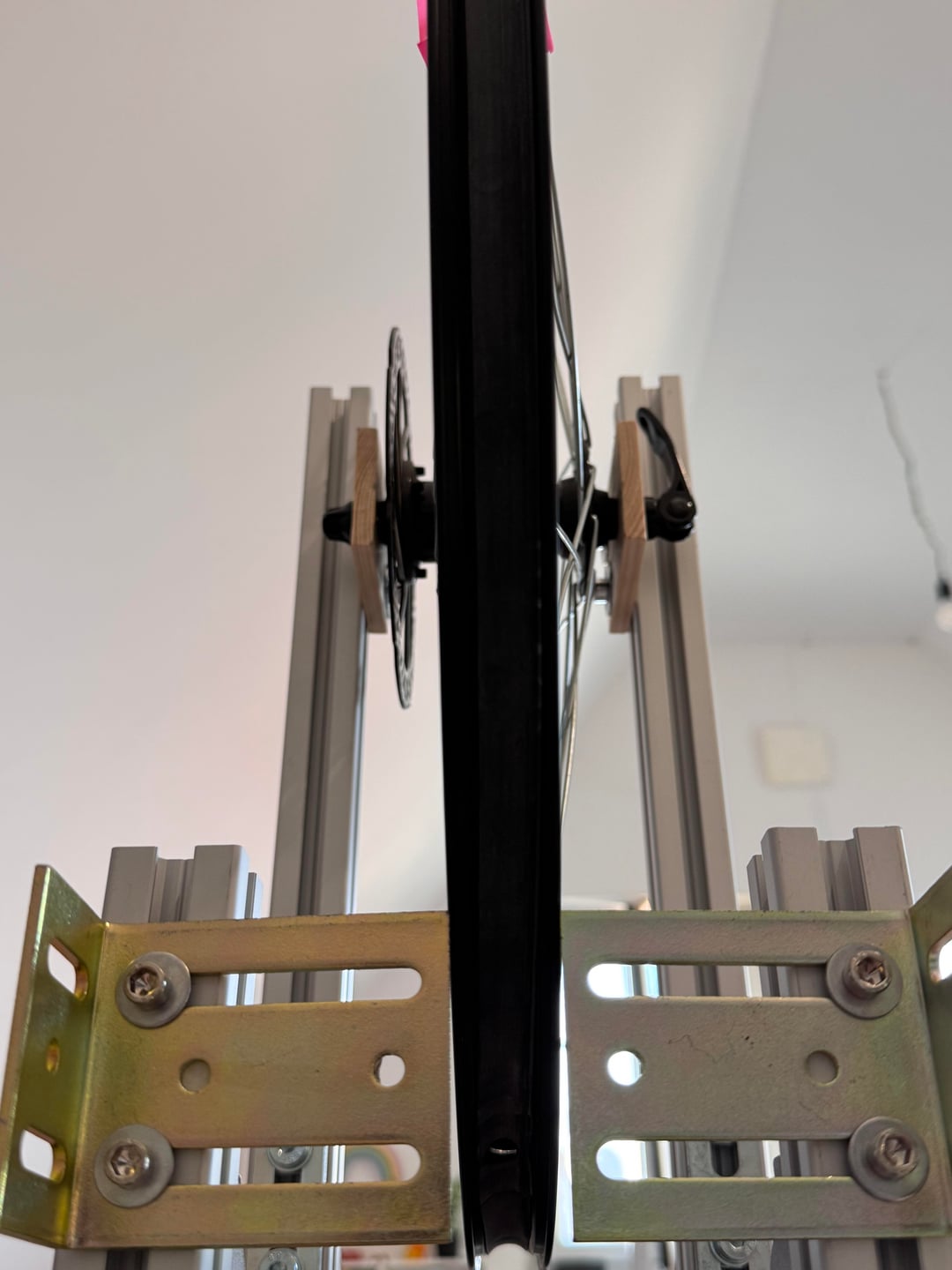
I built a DIY wheel truing stand from aluminum extrusion. Truing the wheel and removing the lateral runout worked great.
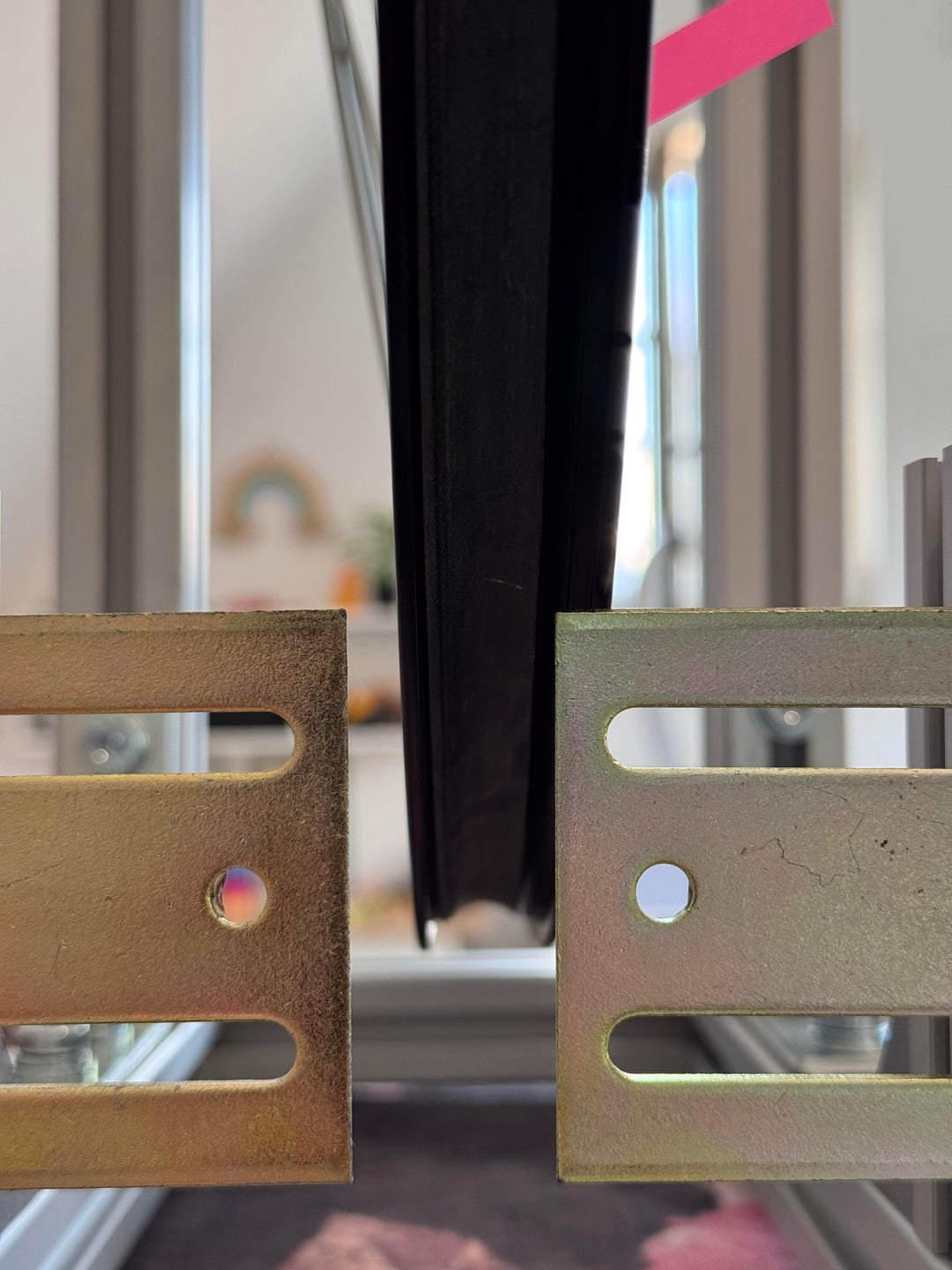
Just to check everything, I flipped the wheel around in the stand. To my surprise, the rim was no longer centered at all.
What am I missing?
The truing stand is perfectly straight and symmetrical—I measured everything carefully—so I’m confident the stand isn’t the problem.
My thinking was: if the hub is 100 mm wide and the rim is centered exactly halfway between the locknuts, then flipping the wheel shouldn’t change its position in the stand. It should run in the exact same place in both directions, like in the first picture.
Is this simply because the wheel isn’t dished correctly, or have I overlooked something else?
Thanks!
by FarEntrance8600
13 Comments
Is your wheel dished
You need to independently check the dish of the wheel.
If you flip the wheel and it’s no longer centered, then two things are wrong: dishing of the wheel is off, and your feeler gauges are off.
Try putting a known-good wheel in there. If your stand is good, it’ll land dead center and flipping will show no gap. But I’d wager it doesn’t…
A wheel dishing tool is very helpful here. But for a quick check, lay the wheel on a table so it is balancing on the end of the axle. (Edit: this won’tbe accurate unlessyou are certainthat the axle spacingis perfect. Betterto put some sort of spacer on the lock nut to rule that out.) Measure the distance from the table to the closest surface of the rim. Now flip the wheel over and measure this same distance. If those distances are different, your wheel is not centered relative to the axle, which means the dish is not correct, but your stand could be accurate. If the distance is the same on both sides, then your truing stand is not calibrated to true a correctly dished wheel.
2 things:
1. Your wheel is not dished correctly.
2. Your truing stand is not centered either, because if it was number 1 wouldn’t have happened.
Don’t bother trying to get the stand perfectly centered. That almost never works even in professional stands.
Just true the wheel with the feeler on one side only, and flip the wheel periodically to use the same feeler as your reference point. As you get it more and more centered, the difference when you flip it will get smaller and smaller. And once you have it down to your target tolerance (e.g. 0.5mm) flipped both ways, you are done.
Your truing stand either isn’t perfectly centered (It’s extremely difficult to make a truing stand that’s perfectly centered in all dimensions) or it isn’t locating the axle repeatably when you mount the wheel. What do your stand’s dropouts look like? Best if they have a “V” shape to repeatably locate the axle.
If the wheel is centered on the stand, then not when you flip it, your stand is not centered. Be it the gauges or anything, but if the wheel was centered on a centered stand, flipping it shouldn’t change anything.
First, you should check your wheel dish with a dishing tool; it’s a readily available tool made by several manufacturers. Truing stands are ok with this but a dishing tool is really required.
Next since you built your own truing stand, I would get a truing stand calibration tool. Considering the unsurety of this whole process, you have to check your stand with a 100% reliable calibration tool. Even another wheel could be off.
Buy a dishing tool and correct it. Park WAG-4
Check the dish of the wheel by placing two cups on on a flat surface, placing the rim on the cups, and using a ruler or caliper to measure the distance from the surface to the flat of the locknut. Flip the wheel, measure again, if they’re different by more than 1mm you’ve got some dishing to do.
Your wheel is probably centered within the flanges, but the disc brake on the non drive side moves the flange inboard, meaning that symmetry between the flanges is actually dished over to the drive side relative to symmetry between the 100mm OLD.
You already have a very accurate dishing tool and didn’t know it. On a flat surface set the wheel on three cans so that the rim touches the cans. Stack pennies under the hub until they almost touch, flip the wheel over and observe the gap, flip it back….. You now know what to do.
I don’t think your stand is perfect. Even the $500 professional ones found at bike shops aren’t perfect. Either use a dish gauge or do what you did and flip the wheel around. Keep dishing and flipping until it reads the same no matter which direction the wheel is.
Only drive train (rear wheels) are dished. This is a front