
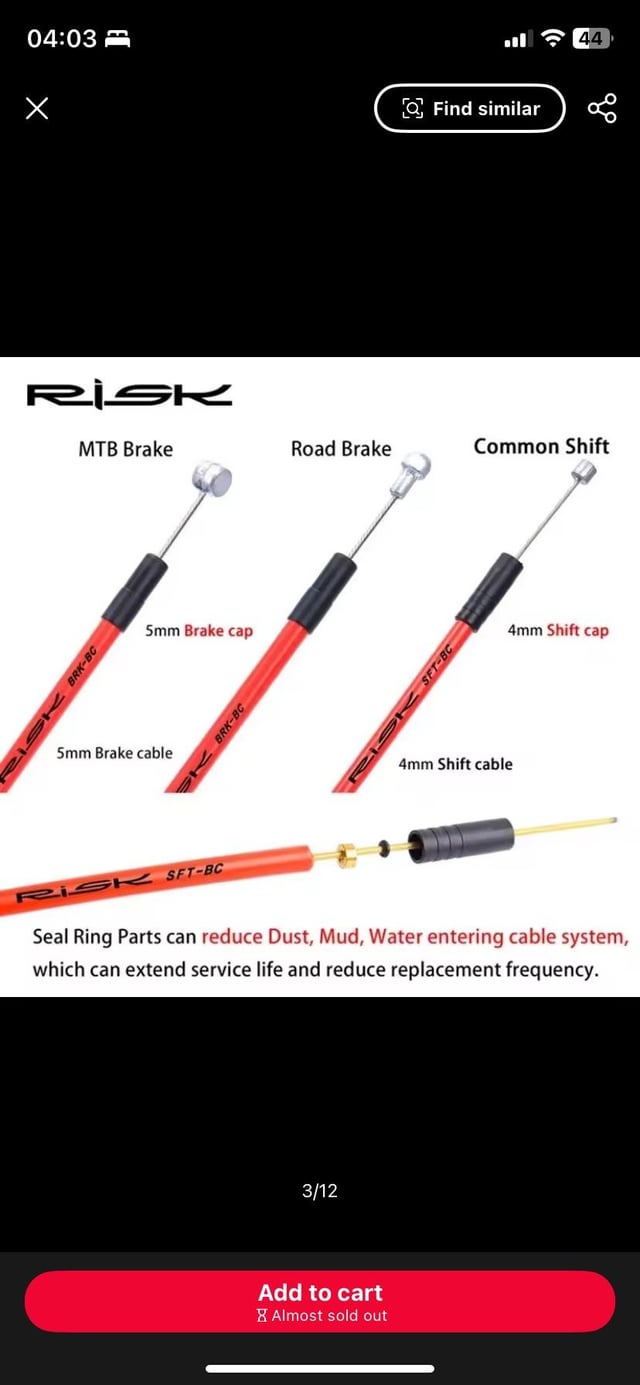
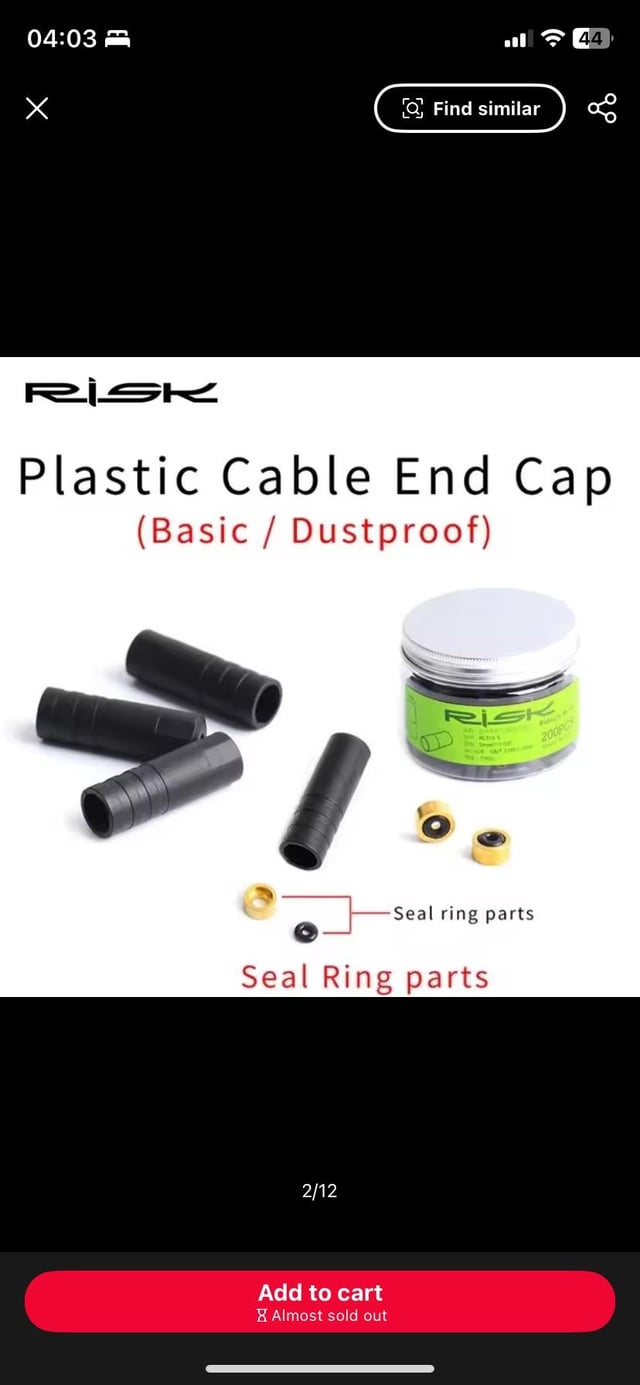
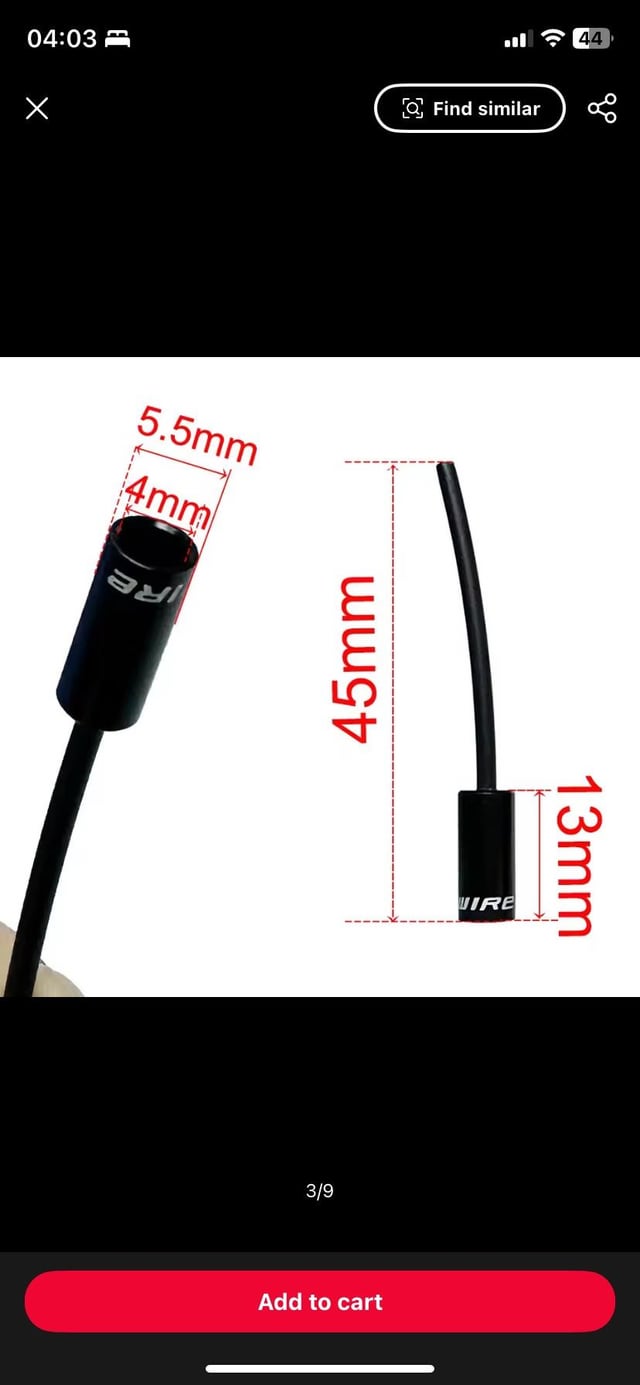
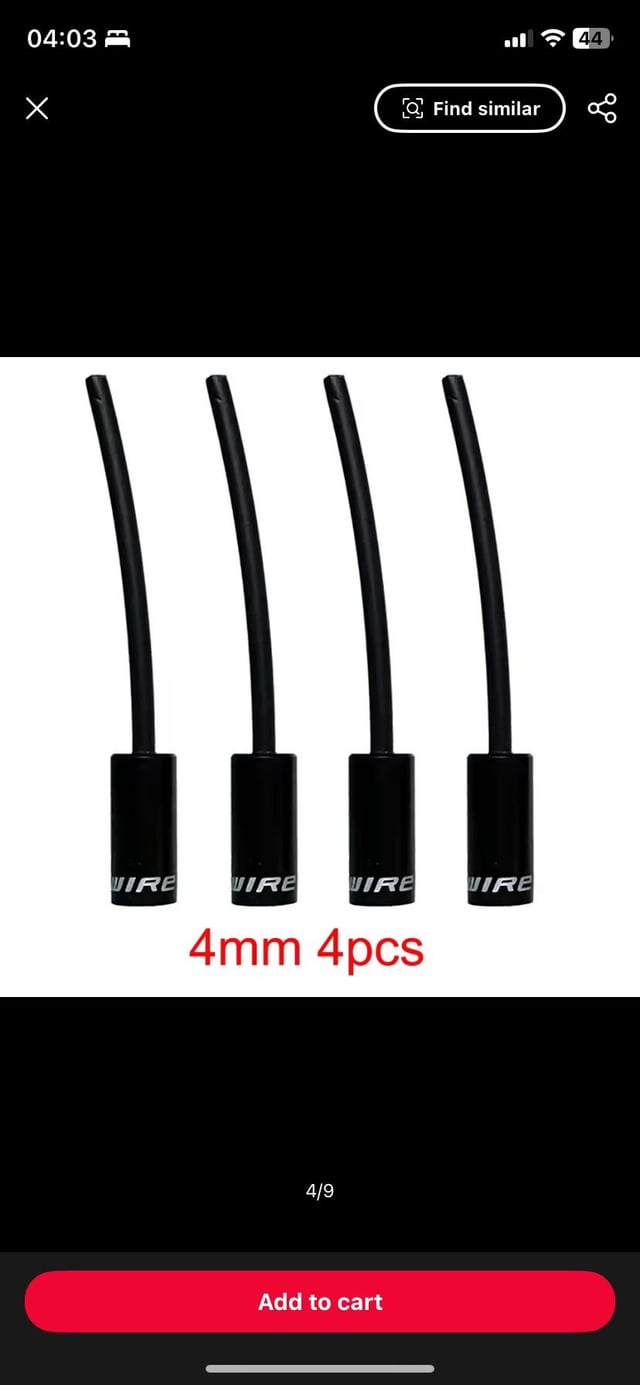
i’m making a beater commuter for winter and always had a problem with cables rusting in the housing and freezing when water poured in. wich would help?
by mikroprocesor
i’m making a beater commuter for winter and always had a problem with cables rusting in the housing and freezing when water poured in. wich would help?
by mikroprocesor
9 Comments
Get hydraulic brakes
Personally I would just buy a pack of cables in bulk and replace them more often. These seem more like gimmicks to try and help on your situation.
These look like snake oil that will introduce unnecessary friction into your system and make shifting feel like crap from day one, and probably degrade further as time goes on.
Speaking of oil however, when you refresh your cables, drop a few drops of wet chain line into the cable housing before you thread the inner cable into it and that’ll solve all your rusty cable woes. This has the added advantage of costing you almost nothing AND improving shift quality.
best practice is just to use waterproof grease and coat the cable before you slide it into the housing. the more grease the better. the grease should be smeared into all the exposed portions of the cable as well to keep water out and corrosion at bay. it’s not there for lubrication, it’s there as a water barrier.
the black coated cables with smooth exteriors are my favorite ones, and seem to last the longest in harsh commuter conditions, but still require annual replacement.
I use risk housing and it seems to work okay. Probably have a few thousand miles on it with no issues
Are you using stainless steel cables? Cheap galvanized cables tend to rust really quickly but I’ve had his luck with stainless steel cables
Are you doing full length housings? That is the most important thing.
Here’s what we do in my shop (Wisconsin). Yes, use sealed ferrules and all that blah blah blah. But, we take standard marine grease and mix in a little bit of mineral oil. The grease keeps it moving, keeps out water, all that, but the mineral oil drops the freezing point. I know it sounds crazy, but we all use it. Also, we tested it in a chest cooler. We took a few pieces of cable/housing with sealed ferrules on each end. ( couple feet each ). One had no lube at all, just the housing ferrules and cable. One had the same with some shimano cable grease. One had the same with marine grease. One used a low temp specific lube (muc off, which usually blows). And the last had our mix.
The results were not surprising. The worst two were no lube and marine grease. The no lube felt crunch when pulling it through, the marine grease was sticky. The shimano grease also gummed up.
The muc-off was okay, but not worth the price.
The clear winner was marine grease mixed with mineral oil. You might not like or want this to be the answer, but it just works.
The best solution is to run your cable/housing as full length as possible, with sealed ferrules, along with winterized greased to keep it moving and not freeze.
I get it that people will want to argue all kinds of stupid points, but my answer keeps my customers running all winter and not coming back.
Obviously, each bike is specific and nothing applies to everything.
I use Shimano Optislick coated shift cables in my year-round commuter (Chicago) and I haven’t had to change cables in 3 years. Snow, slush and all. It’s a full-housing system into a Deore XT mech with the tongued end cap. Pretty impressive and trouble-free!