
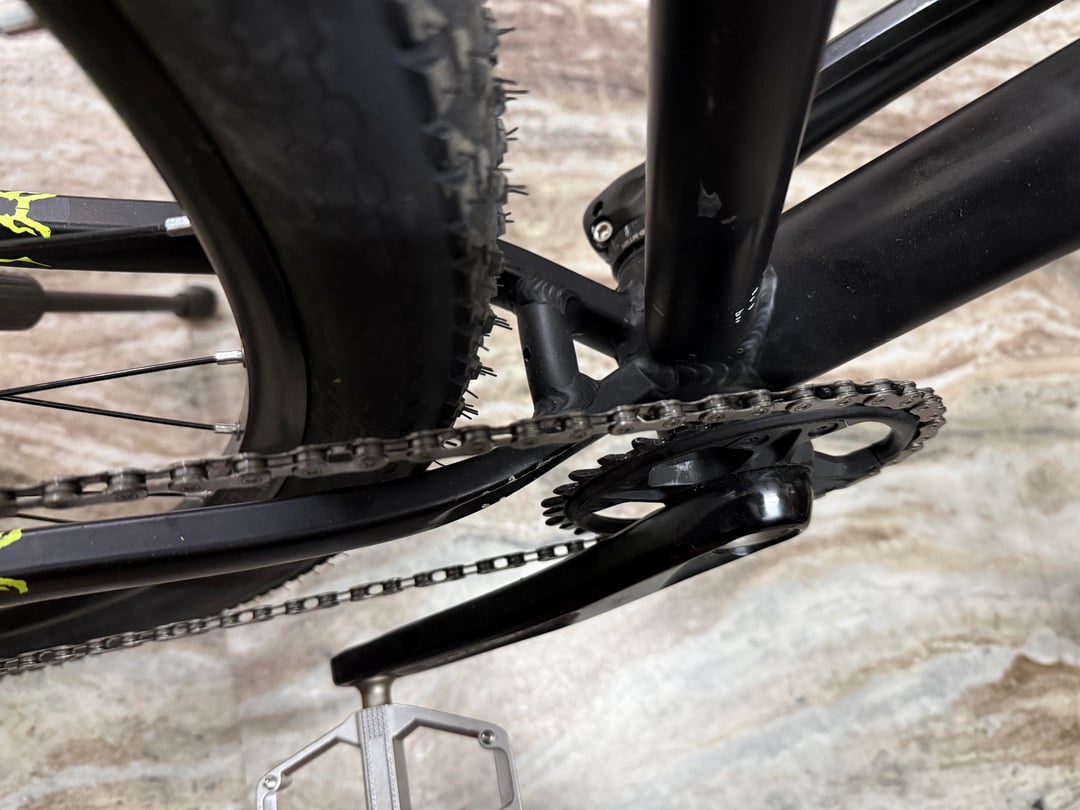
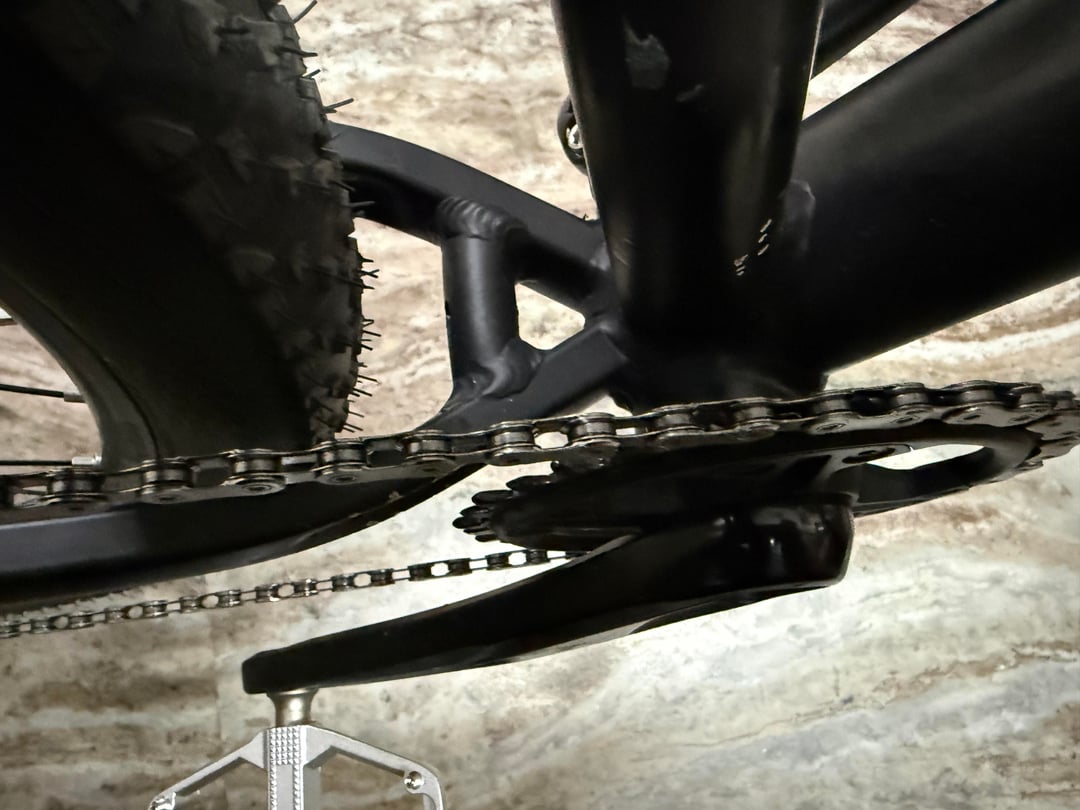
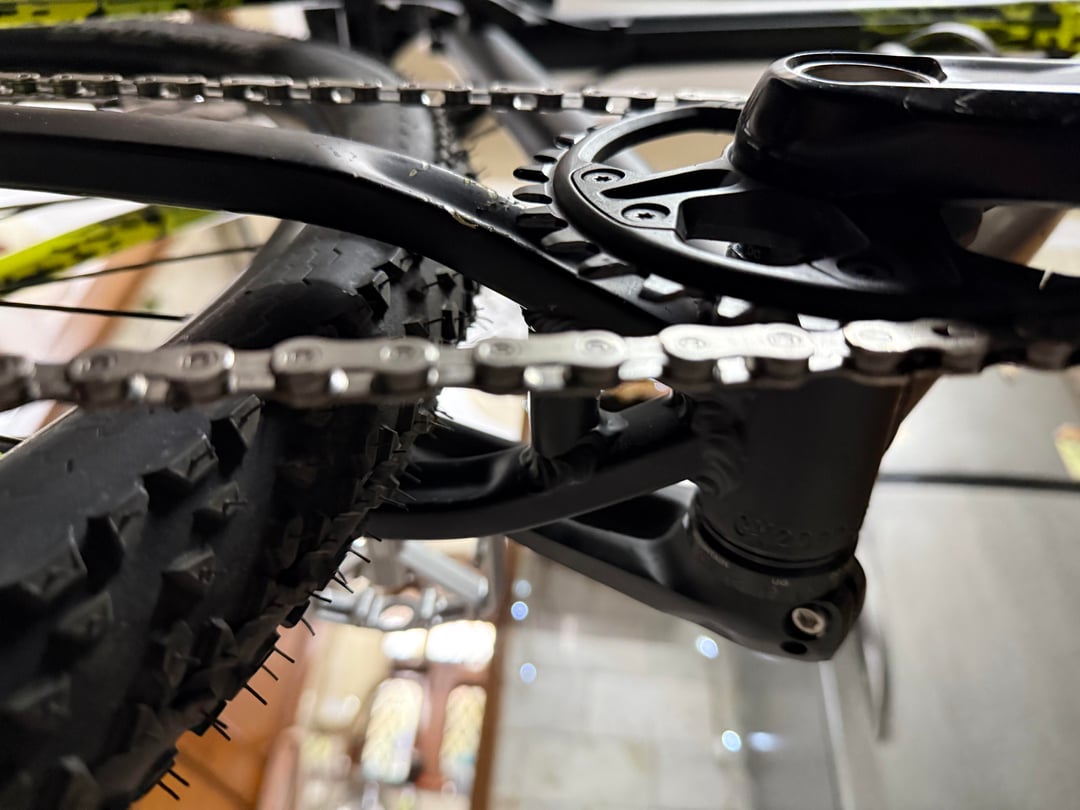
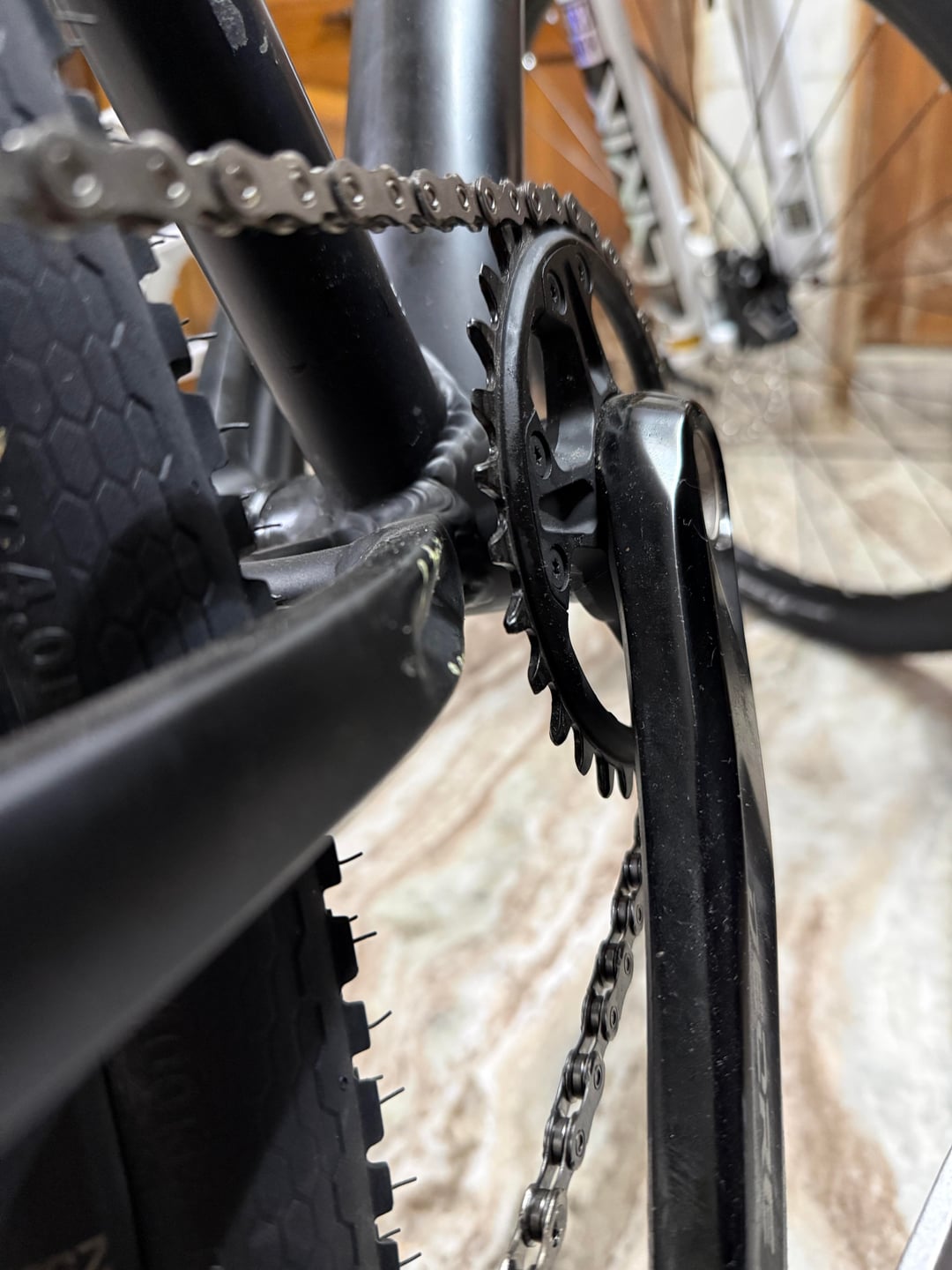
I am currently running the stock 32t chainring that comes with the Shimano M6100 crankset. I want to get taller gearing for road riding because I already feel like reaching for a couple of more gears even when on the smallest 10t cog. I’m guessing a 36t would fit given the clearance, just wanted to get opinions from the community here. TIA!
by N10nit
9 Comments
Check the manufacturer’s website for the correct answer.
Find a chaining that is one tooth too big to fit…
Drop 2 teeth
Fit a chain….
It’s now too big, drop 3 teeth.
Biggest good fit achieved.
The teeth on a 36-tooth ring should be about 8 mm further out, so I don’t think it’s a problem.
I think 36 would def work from those pics but might as well try a 38 first to see if you getlucky
I’m pretty sure all 38 would have same diameter but prob some one else
Knows for sure. The amazon ones are easily returnable so
Maybe try those for ease
btw this company has a 36t chainring at 152.2mm, and a 32 at 136.1mm.
[https://www.wolftoothcomponents.com/pages/chainring-diameter-by-tooth-count](https://www.wolftoothcomponents.com/pages/chainring-diameter-by-tooth-count)
No limit, dude. Frame will adapt, that’s why chainrings have teeth…
The best way to know is to measure it yourself. Use a straight edge held on the inside of the current chainring (or eyeball it) to find where on the chainstay a large chainring would just touch. Measure the distance from there to the center of the axle. Measure the diameter of the current chainring and divide be two to get the radius. Divide the first distance by the radius of the current chainring and multiply that by 32 and round down- and that’s the biggest number of teeth that will clear the chainstay.
This ignores the effect of the height of the teeth and so may be slightly conservative. But only slightly conservative, so even if it’s close I’d round down. (The diameter of a chainring in inches should be ((number of teeth x pi / 2) + height by which the teeth extend above the midpoint of the chain, because chain pitch is 1”).
OP, the distance between those teeth is 0.5 inch. Your chain also has a spacing of .5 inch (this has been the industry standard). So in theory, a 32T chainring is 16 inches in circumference, a 36T is 18 inches in circumference. You can compute the difference in radius between those two chain rings. The guy who said 8mm is correct, don’t know though if you’re planning to use larger than 36T as Shimano can go up to 38T
How much clearance so you have? Every extra tooth as approximately^1 2mm to chainring radius.
^1) Above 10 or so teeth the chain wrap (which determines chainring diameter) starts to resemble a circle, and every extra tooth adds ½” to circumference and thus ½” / π / 2 ≈ 2mm to radius.