
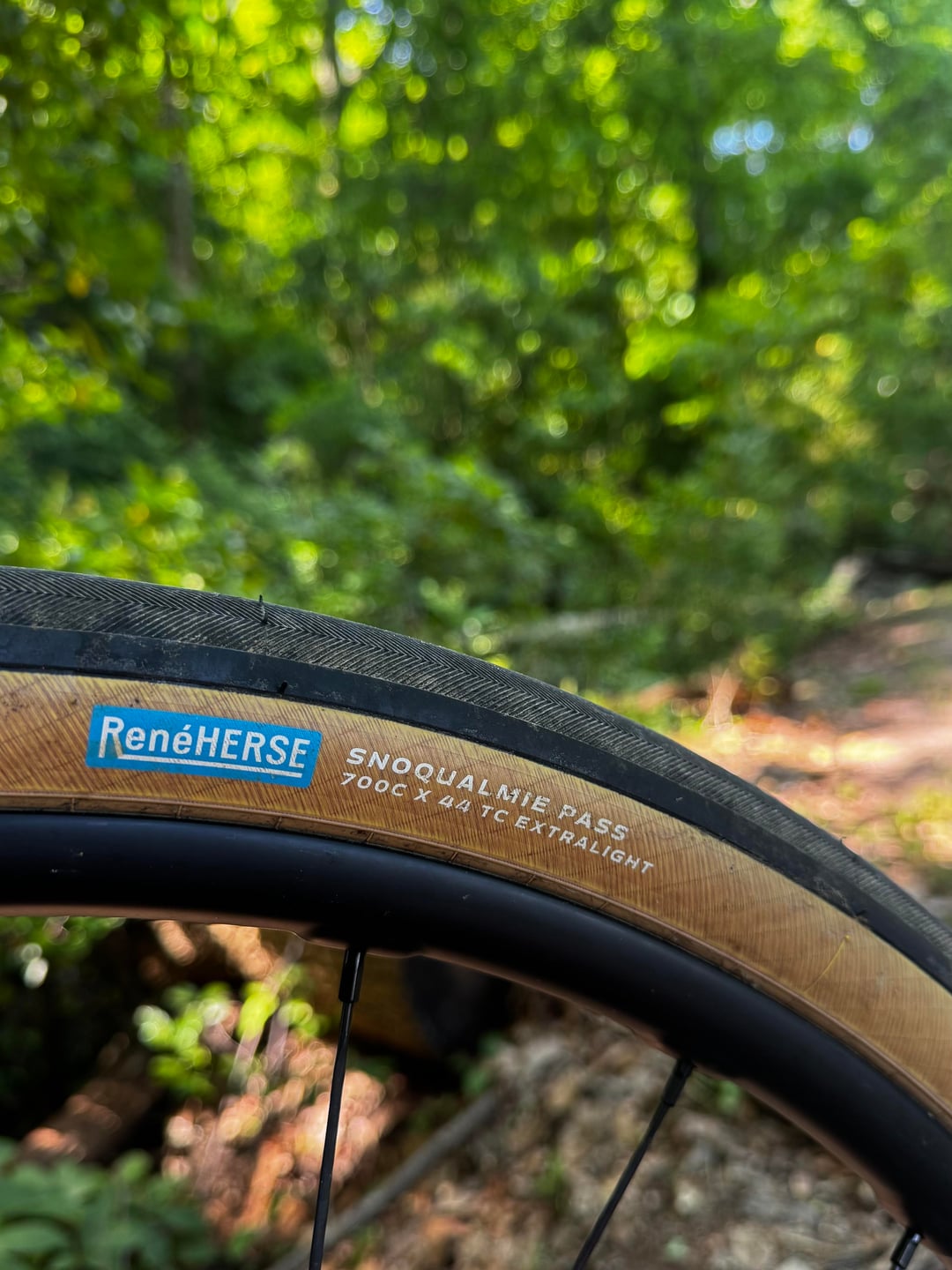
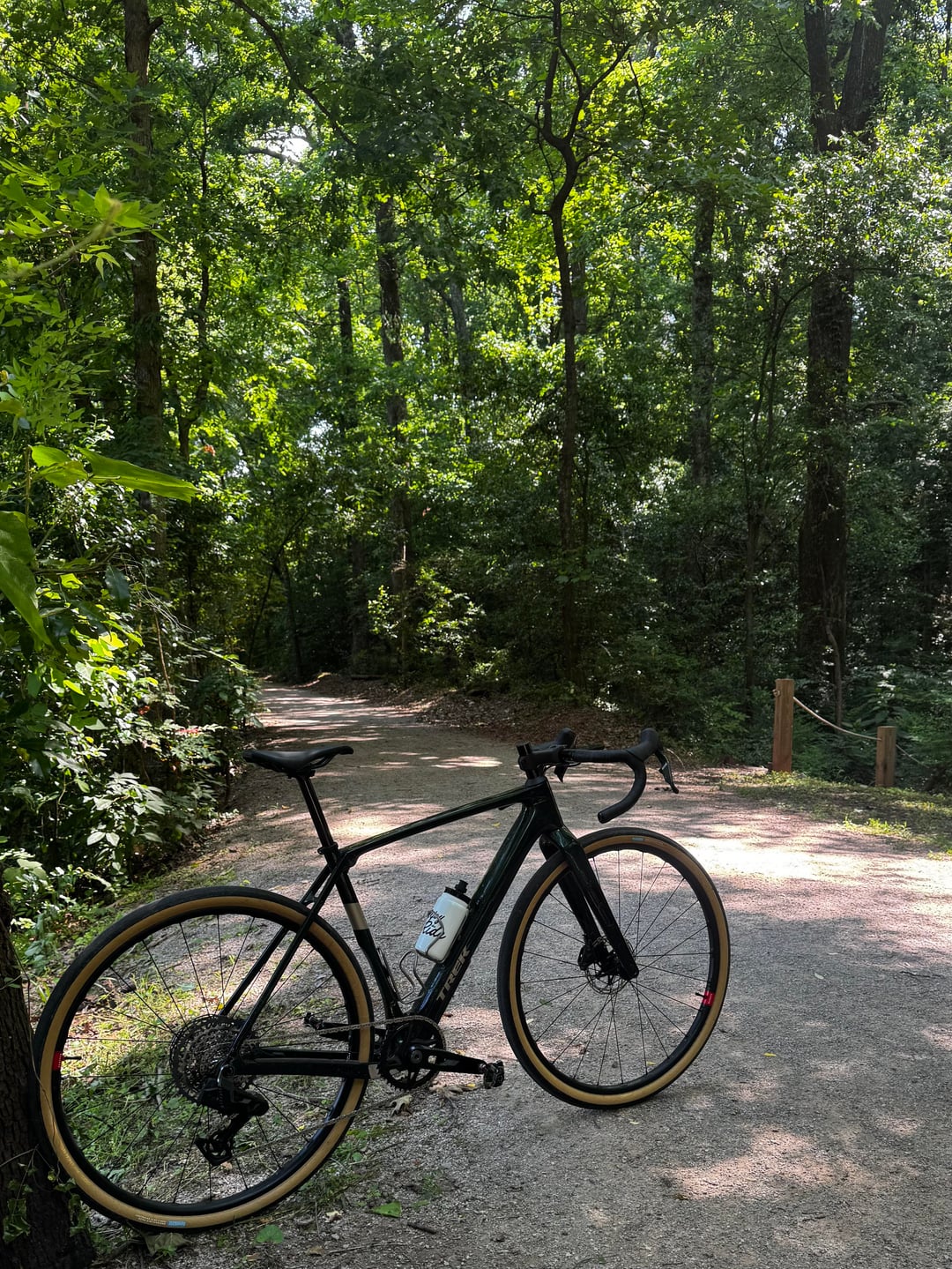
Per Rene Herse, "All-road tires don’t get any better than this! We name our tires after the passes in the Cascade Mountains that inspire them: Snoqualmie Pass was the route of the Olympian Hiawatha express train to Seattle. Today, a trail heads up the pass, with spectacular views as you traverse the old railroad trestles. You’ll enjoy the speed and grip of the supple casing on the paved sections of the climb, and the large air volume will have you float over the rough gravel rather than grind through it."
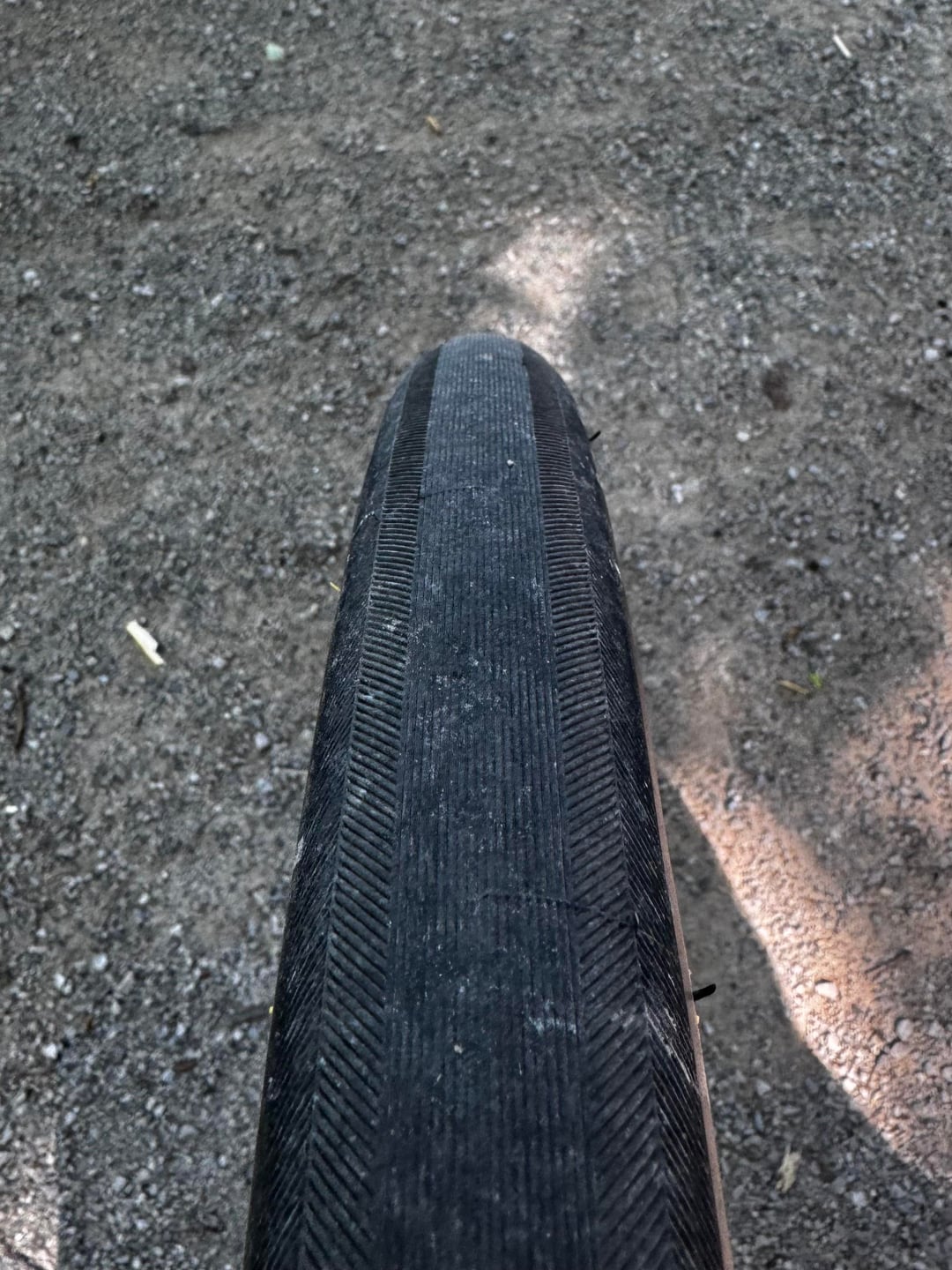
RH optimizes their tires for real world performance, so many will be excited to see results here in the real world for what is their most supple construction option – the Extralight. I measured the sidewalls on these at 0.40 mm thick, which is easily the thinnest of any tire I have tested. They took and held air well…actually even better than the Standard casing Oracle Ridge I tested last spring. My set weighed an average of 338 grams and had a flat bead to bead width of 111 mm, airing up to right at 44 mm wide and 41 mm tall on a 25 mm internal width rim. Tubeless setup with Orange Seal Regular, as usual.
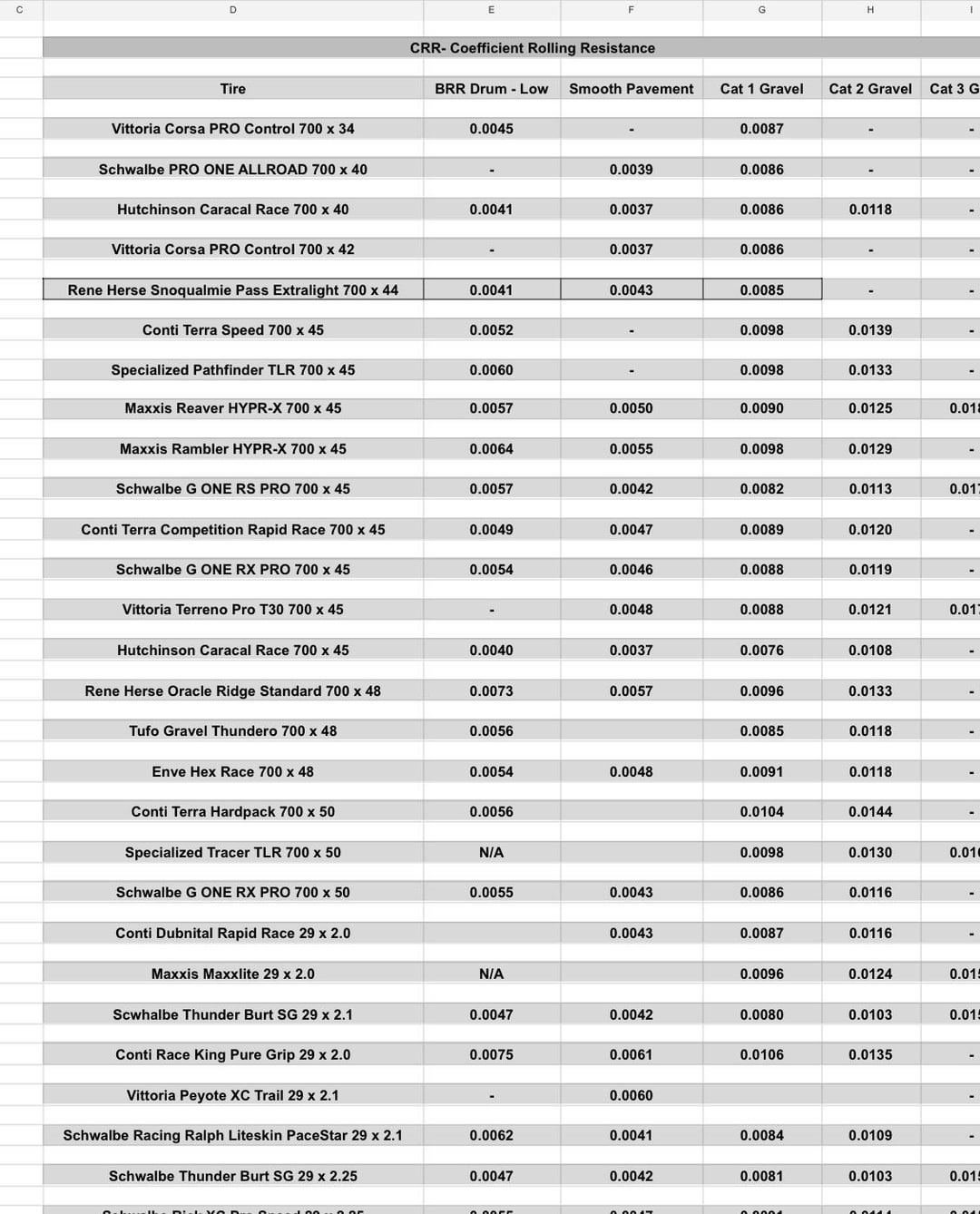
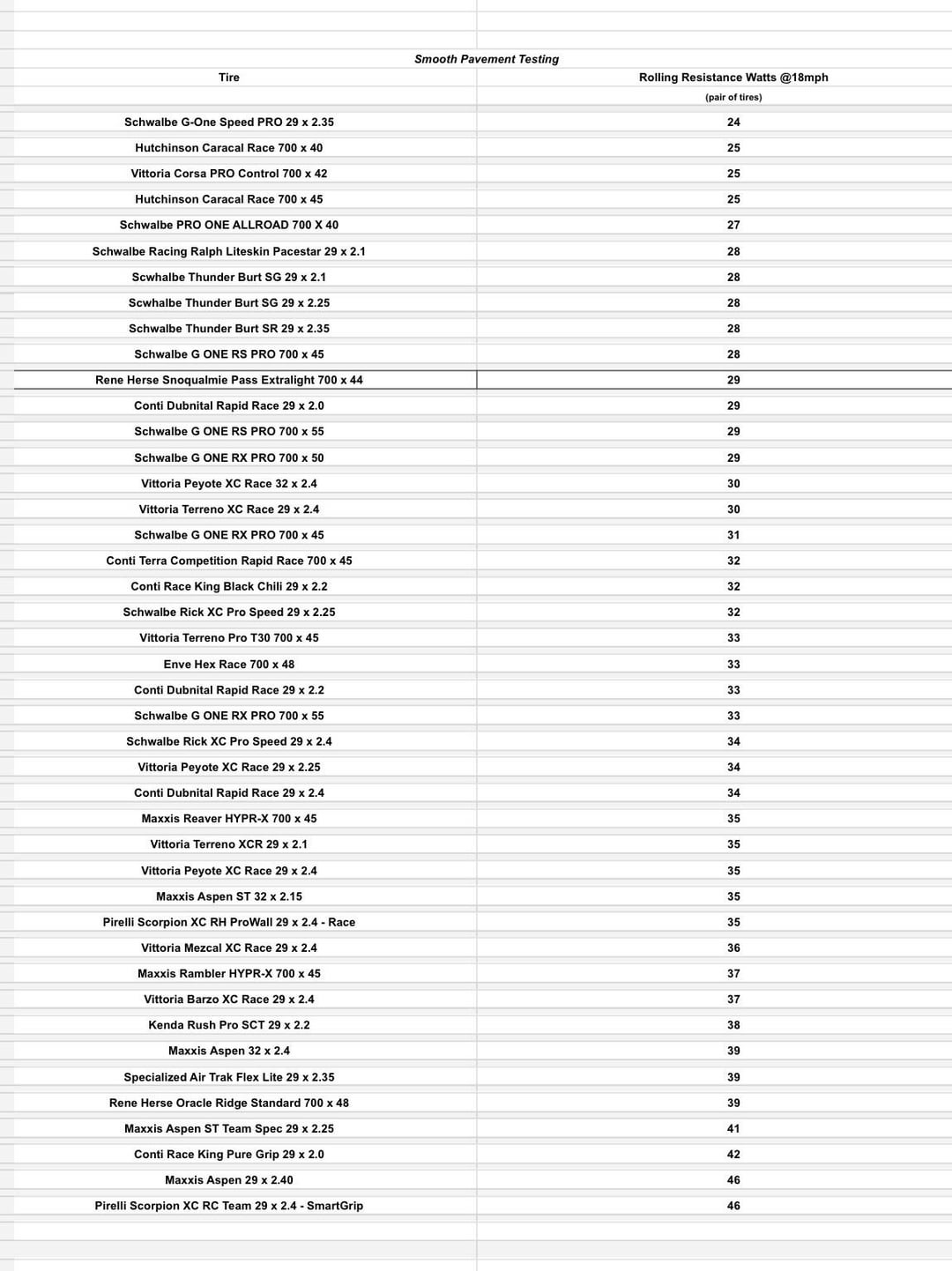
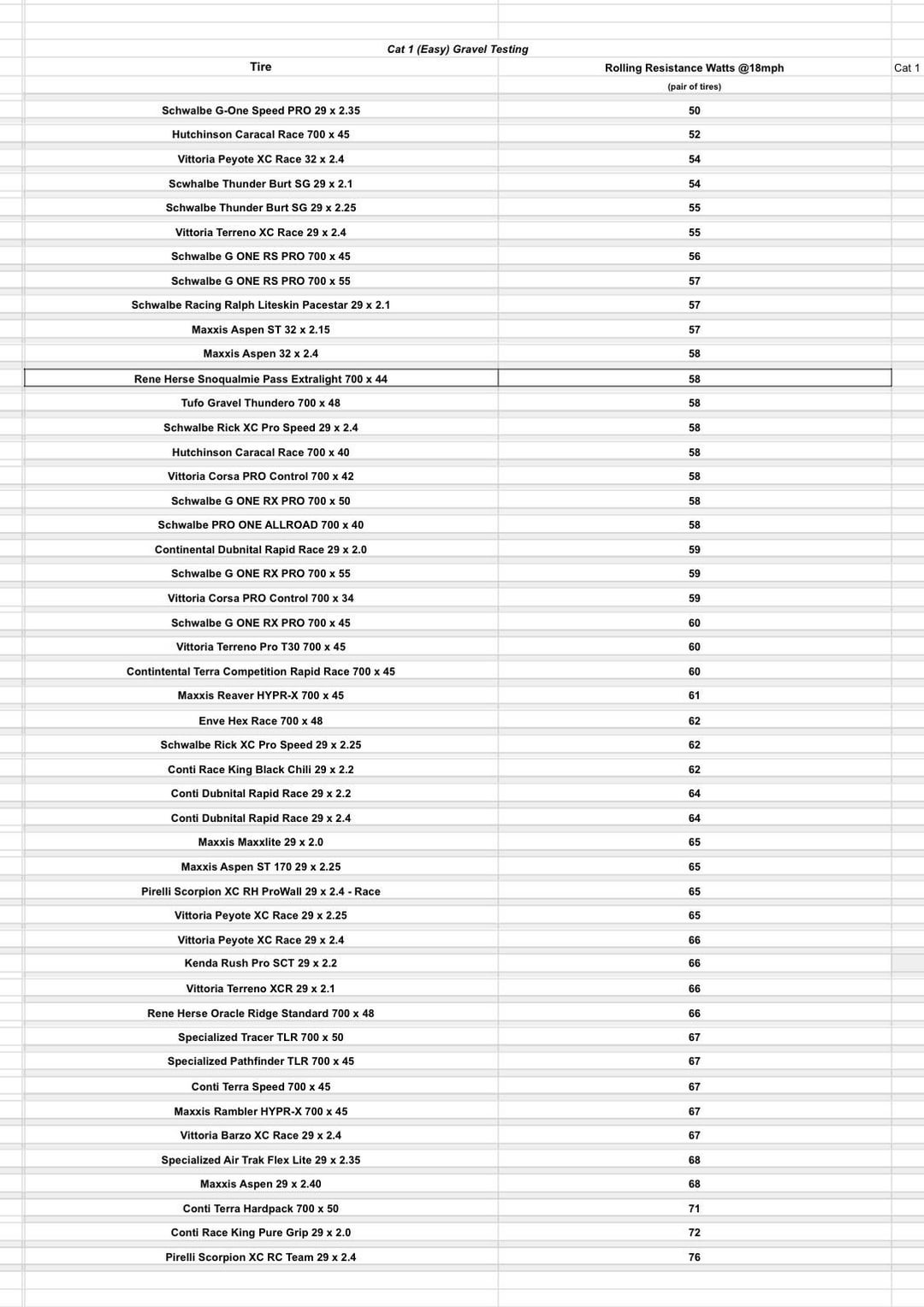
I have tested a few other tires in the 40-45 mm size range, which gives us some interesting comparisons on smooth pavement as well as easy gravel which many will consider the RH slicks for. These were pretty quick on pavement and Cat 1 Gravel, but a bit off the pace of the absolute fastest options on both surfaces. I think this size range of all road slicks is a good one, as it allows for comfort as well as performance. I had no issues with these RH slicks, and for anyone not into the minimalist sidewall construction of the Extralight, RH has beefier options with the same compound and tread.
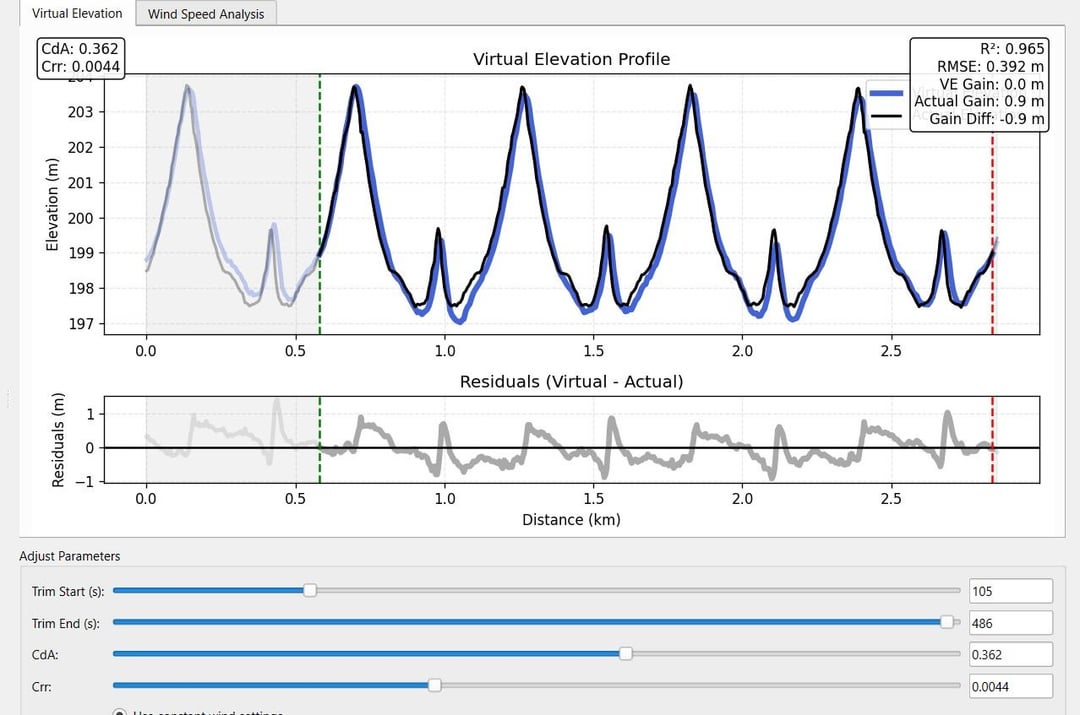
After recently having the chance to analyze some well done timed lap style testing, I will stick to my guns that well done Chung Method/Virtual Elevation is easier, faster, and has better repeatability and accuracy. All outdoor results here are from my own VE testing.
Everyone wants to know…what pressure am I using? Obviously, larger tires will require lower pressure than smaller ones to get the best speed and handling in general…especially off road. The Wolf Tooth Advanced calculator is very good in my usage for gravel and mtb tires. The Rough Gravel setting seems to get quite close to best pressure for not only rolling efficiency (yes, even on gravel that’s not super rough) but also comfort and handling. I will start with that based on the measured tire size, go ride some, recheck pressure once the tire warms up, then reasess the setting based on how the tire is riding. If it feels obviously harsh, go down 1 psi…. If it feels squirmy or I am smacking the rim on hard hits, I will go up 1 psi, maybe 2 in that situation. Often I end up sticking quite close to what the calculator says initially but it isn't written in stone. Rolling efficiency is actually almost identical (reference some testing I posted spring 2025 for this graphically) across a bigger span of tire pressures off road than most realize, which means it is quite easy to get the pressure where the tire will be fastest…the rest is fine tuning to rider preference. Even though I’m testing, I am also enjoying being out there so take the extra steps to see how the tire performs best. Ultimately there is no magic “best” pressure… it is up to rider preference with no real speed penalty unless you really mess it up one way or another, and that is a big reason I am explaining this in such detail. It’s not to justify my results, it’s to encourage folks to keep an open mind about how they set their tires and get the best ride possible. All the Smooth Pavement testing I do is with the tires set to the PSI I would use for riding on average pavement, so in practice about 5-7 psi higher than I would use for off road riding.
by gravykarrasch
6 Comments
Sorry unrelated to this tire but a question on testing tire in general. Corsa 42 in your test performed outstanding but BRR it didn’t. What do you think causes such discrepancy?
I had way too many flats with ultralights
Schwalbe G-one Pro….. The best tire for Gravel.
Panaracer also good.
I’ve ridden Snoqualmie Pass and you want a lot more puncture protection.
How about the paper thin sidewalls shredding like tissue test?
Awesome, I grew up near snoqualmie pass! If that isnt reason enough to buy idk what is