
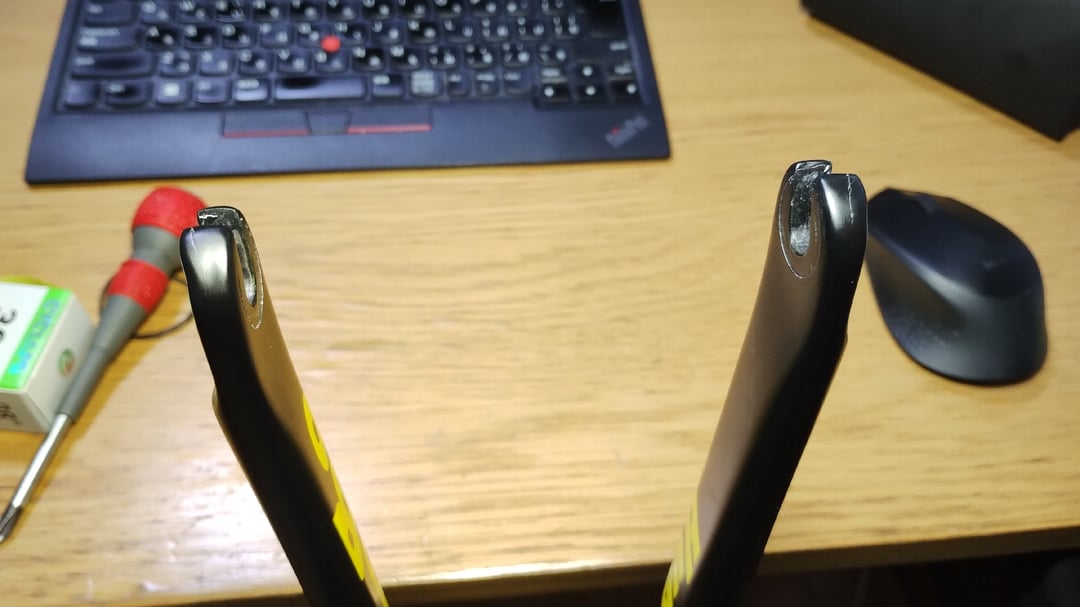
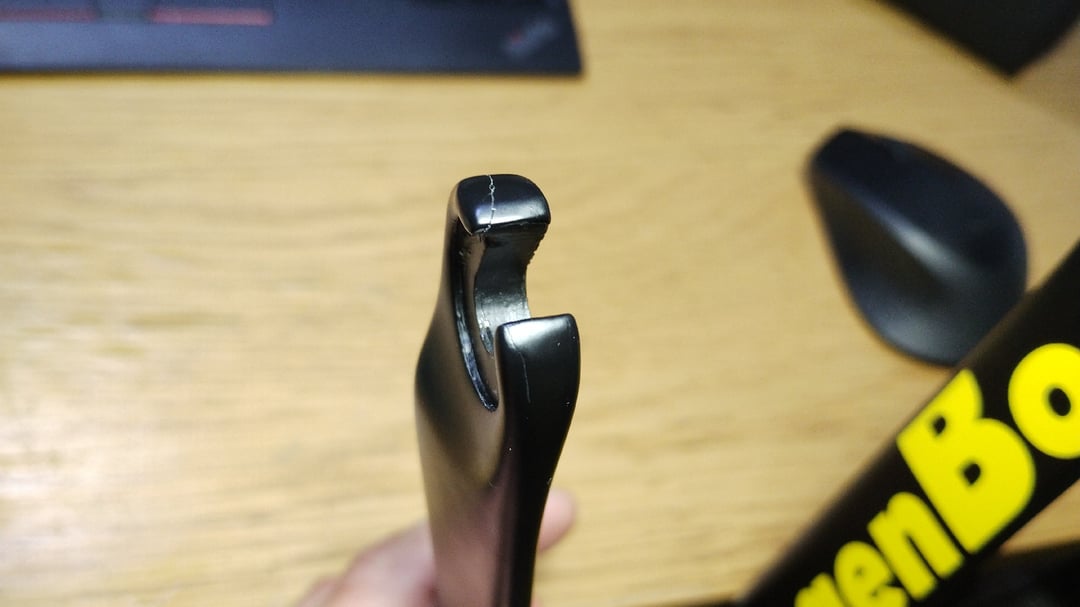
I broke a carbon fork and I'd really like some input on what happened.
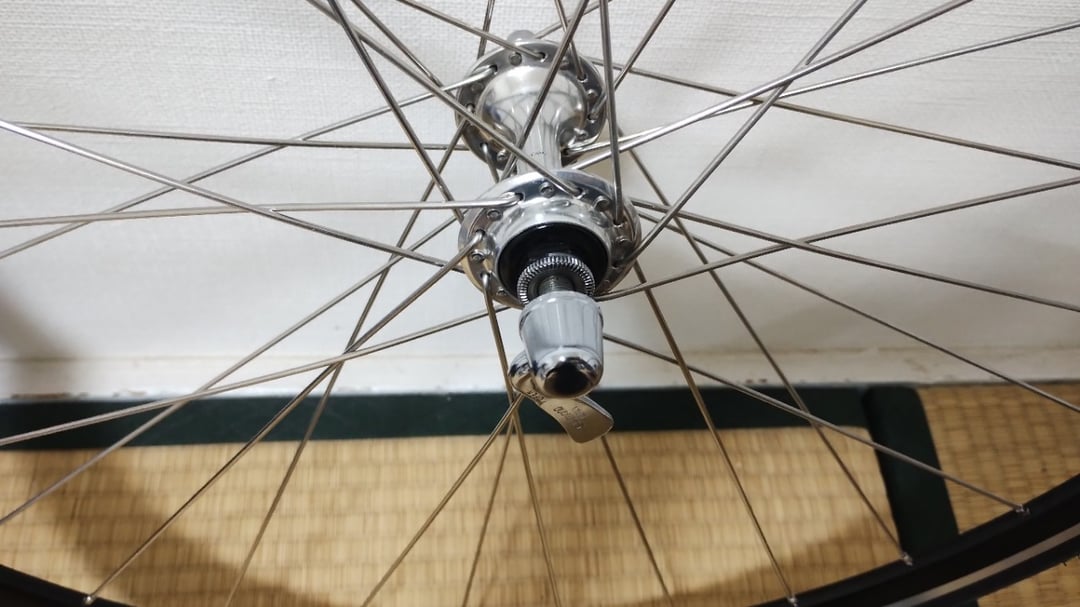
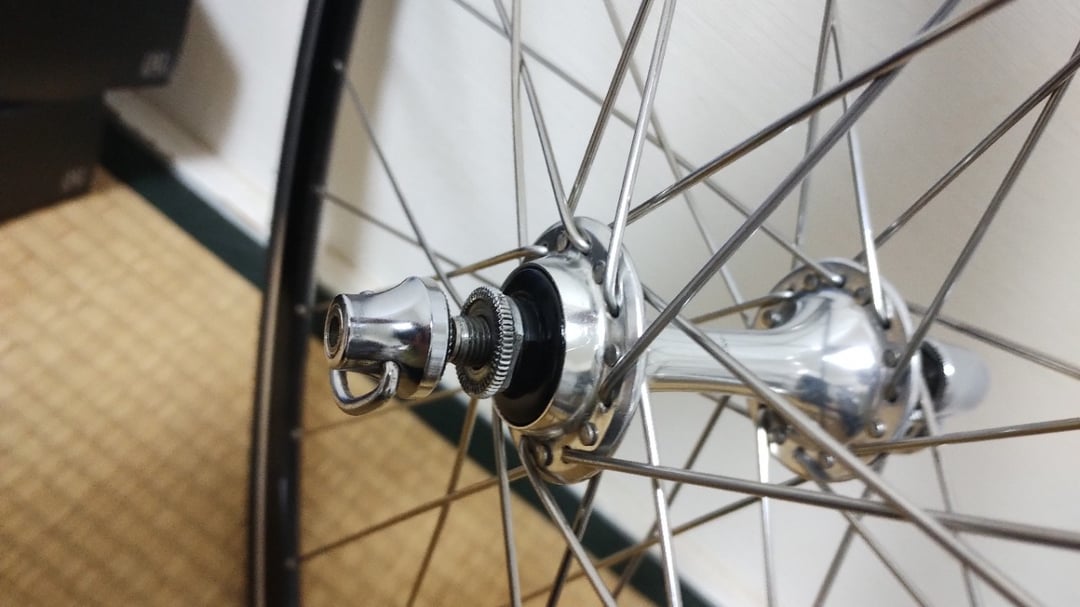
I installed a late-1980s/early-1990s Suntour Superbe Pro front hub with a Shimano 7400 Dura-Ace quick release into a Chinese-made carbon fork. The fork has full carbon dropouts with no aluminum or other metal inserts. When I closed the QR, a vertical crack appeared in the dropout. There's a photo attached.
I couldn't figure out the cause on my own, so I asked an AI about it. The answer I got was that vintage hubs like the Superbe Pro have serrations on the axle end faces, which were designed to bite into steel forkends as an anti-slip feature back when steel forks were the norm. Apparently this design doesn't play well with carbon dropouts that lack metal inserts, because the serrations dig into the carbon laminate and cause delamination or splitting.
This was the first time I'd ever heard of this issue. Since it was just an AI's answer, I wanted to ask the Reddit community whether anyone has actually encountered this, or heard of it as a real failure mode. Does the explanation actually hold up?
For context on the fork, it's Chinese-made and pretty much unknown internationally, but it's from a brand with a solid reputation within China and I bought it directly from Taobao, a Chinese domestic e-commerce site. I don't think the fork itself is defective. I'm fairly sure the failure came from my parts combination.
A bit about my background. I have plenty of experience building and maintaining steel and aluminum bikes, and I build my own wheels too, but I've always avoided carbon. This was basically my first time working with a carbon component.
Thanks in advance for any insights.
by scura_vrc
12 Comments
Honestly yeah the AI is pretty spot on here. All-carbon dropouts are just a terrible idea in general, and this is a great example of why. I wouldn’t use forks with carbon dropouts but if I did I’d stick to hubs and skewers with flat aluminum faces.
The only carbon dropouts I’ve ever used were on a 2015 era felt, and they were a real pain in the ass. They weren’t hollow carbon though, they were completely solid resin/fiber. Over time they wore down, so I had to crank down the QR to keep the wheel aligned. Would not recommend.
These, however, look hollow or close to it, and weak against compression. I would never trust a no-name brand carbon drop out.
You basically answered yourself. Good job on that. Superbe Pro hubs are delicious though, it’s easy to see why you’d want to keep using them, even w/ a carbon fork. RIP to the fork, it’s straight to the bin.
You bought a carbon fork
My felt fr5 from 2019 that ive been riding since has full carbon dropout for both f and r and i have not had issues (finger crossed) i think this is more of a qc issue than material issue.
Carbon dropouts are just a terrible idea. The ones I’ve seen and own all have notable wear and have to be careful about possible.slippage.
The hub may be 96mm and not 100mm spacing so it bent the drop outs inwards too much. But I would not know without measurements.
Here’s a clue… “Chinese made shit”.
Nice keyboard, a real connoisseur 😉
Keep in mind how QR axles work vs thru axle.
A QR axle keeps the wheel on solely through clamp pressure on the dropouts. A thru axle screws into the dropout and less pressure is required so the axle does not loosen at the threads.
I don’t know the exact torque spec to hold a QR lever closed: I’ve never attached a torque wrench to a QR lever. But since all my QR forks, including those with carbon blades have metal dropouts, I presume their pressure tolerances are high.
I presume this Chinese fork has an exact torque number for QR axles. No one can be expected to follow this: you, I and every other rider and mechanic just closes the lever by hand.
Almost all carbon forks have metal inside the dropouts. Companies which have no US address and do not take warranty returns might not.
The fork went wrong, hope this helps