
Dear bikepacking community,
We followed – but didn’t complete – the original route of the badlands race, starting in Granada and cycling around Andalusia for 780 km back to Granada, covering 14,000 metres of elevation gain. The original route is 816 km and 14,480 metres.
Timeline and facts
We set off on 25 March and finished on 8 April 2026, witnessing the transition from winter to summer in Europe and Easter. We split the route into 10 days of cycling, 1 rest day and 1 day each before and after our flights. A quick note: The race winner – Rick Steffens – completed the entire route in 38 hours, in summer. Looking back, in my opinion, that’s simply mad.
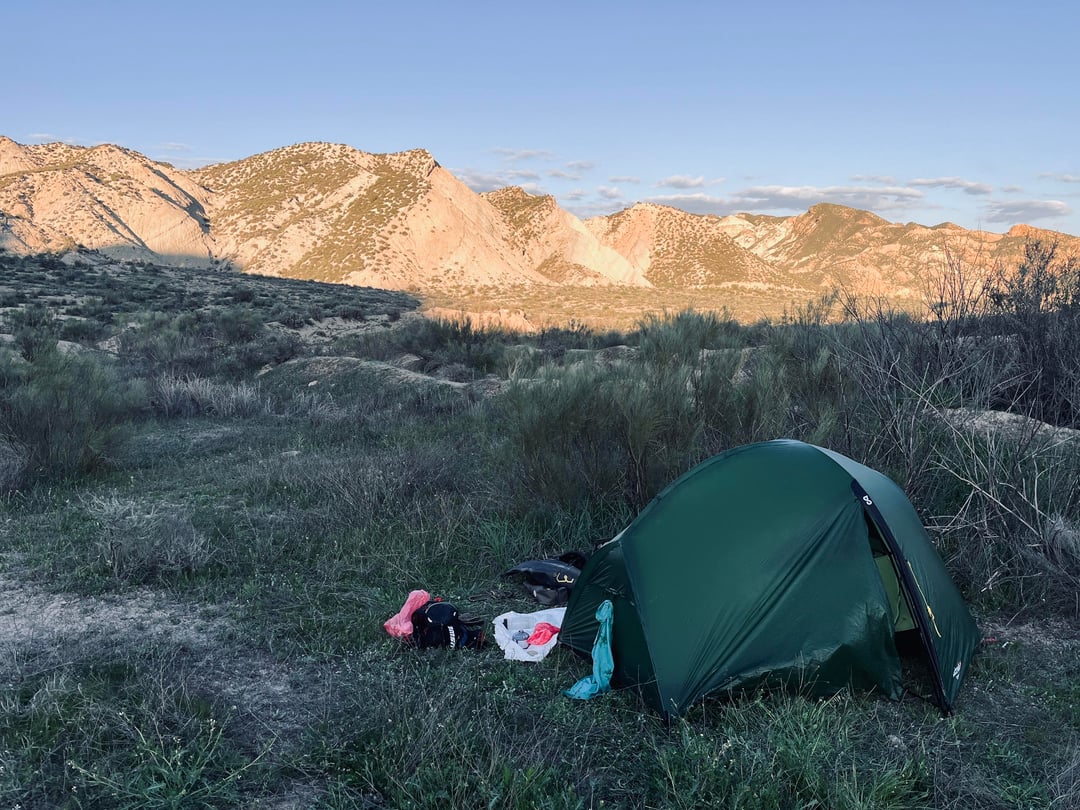
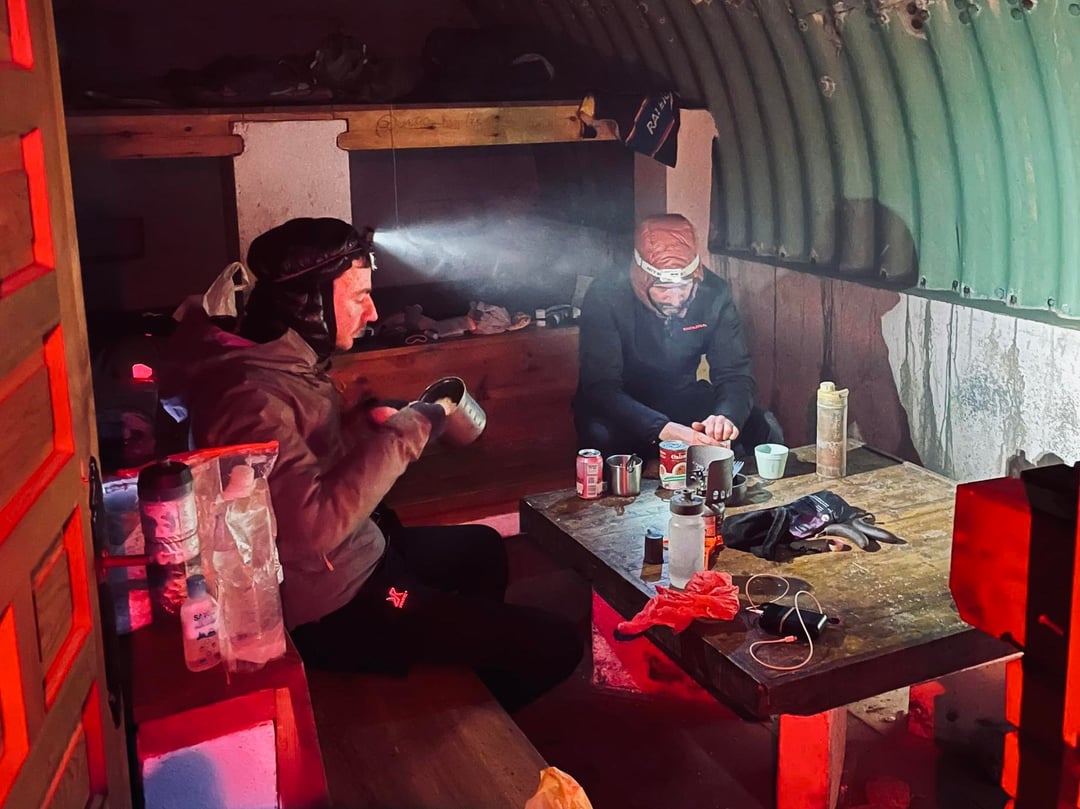
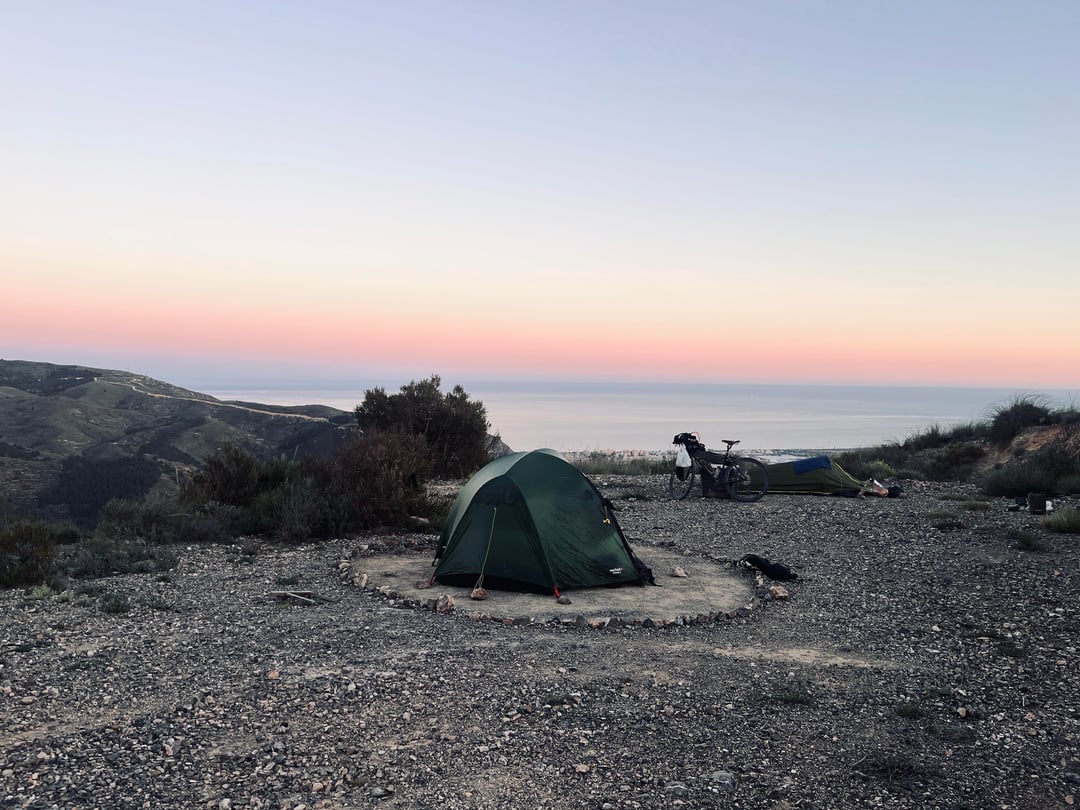
At night, temperatures dropped to 2°C – meaning we needed winter cycling and camping gear. During the day, however, it was sunny – around 15-25°C and not too windy.
The route
As the race follows more or less the same route every year, there is a roadbook, which was very helpful to us. Water and food supplies can be an issue on this route. We took a filter and around 2.5 litres each and were fine.
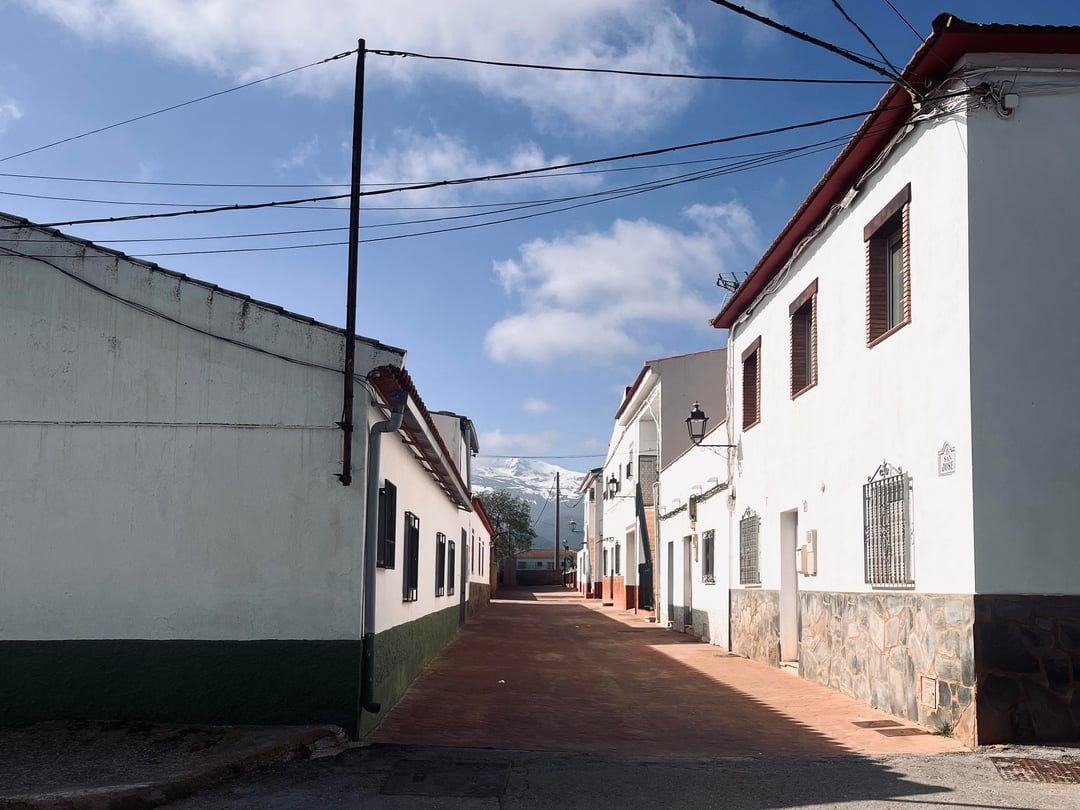
There is a café in almost every village where you can get snacks, water and drinks. There are usually small supermarkets too, though they’re often closed rather than open due to the siesta.
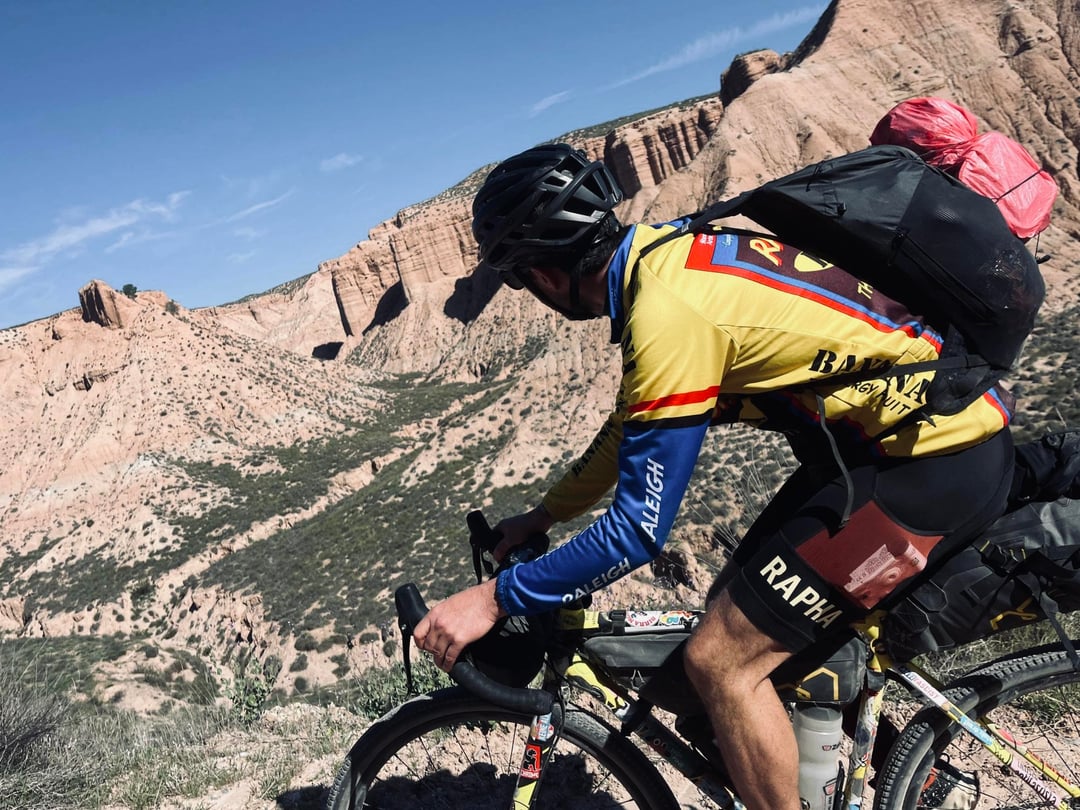
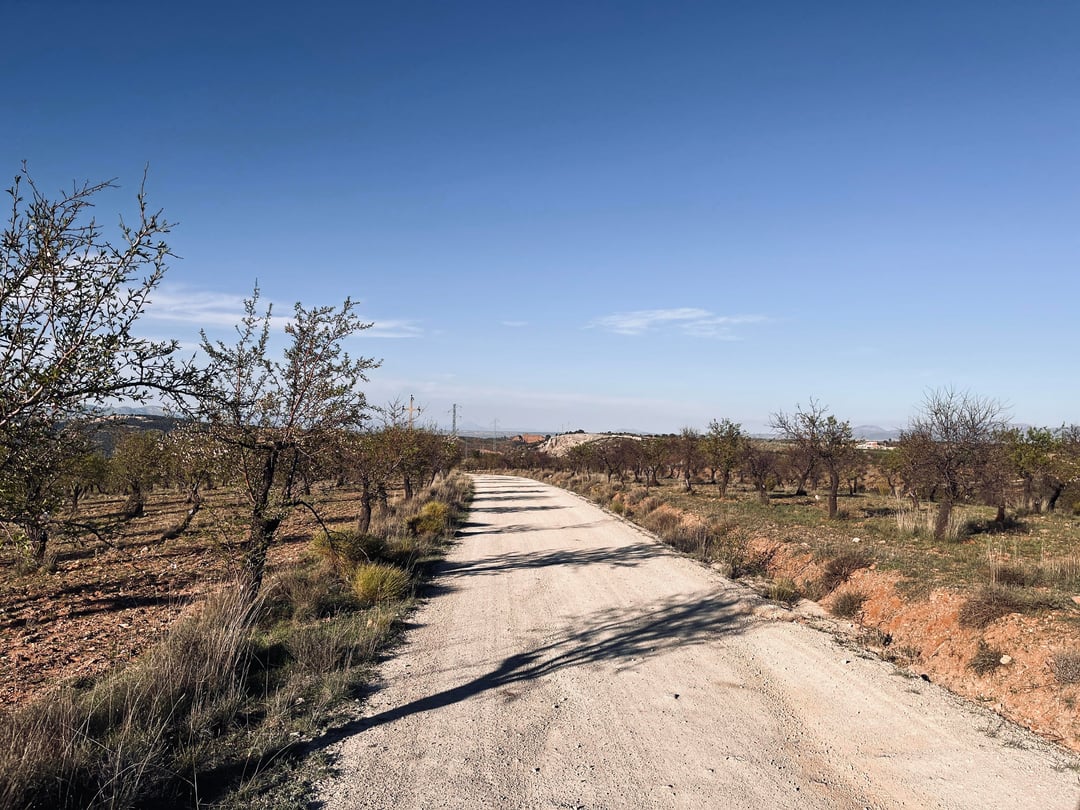
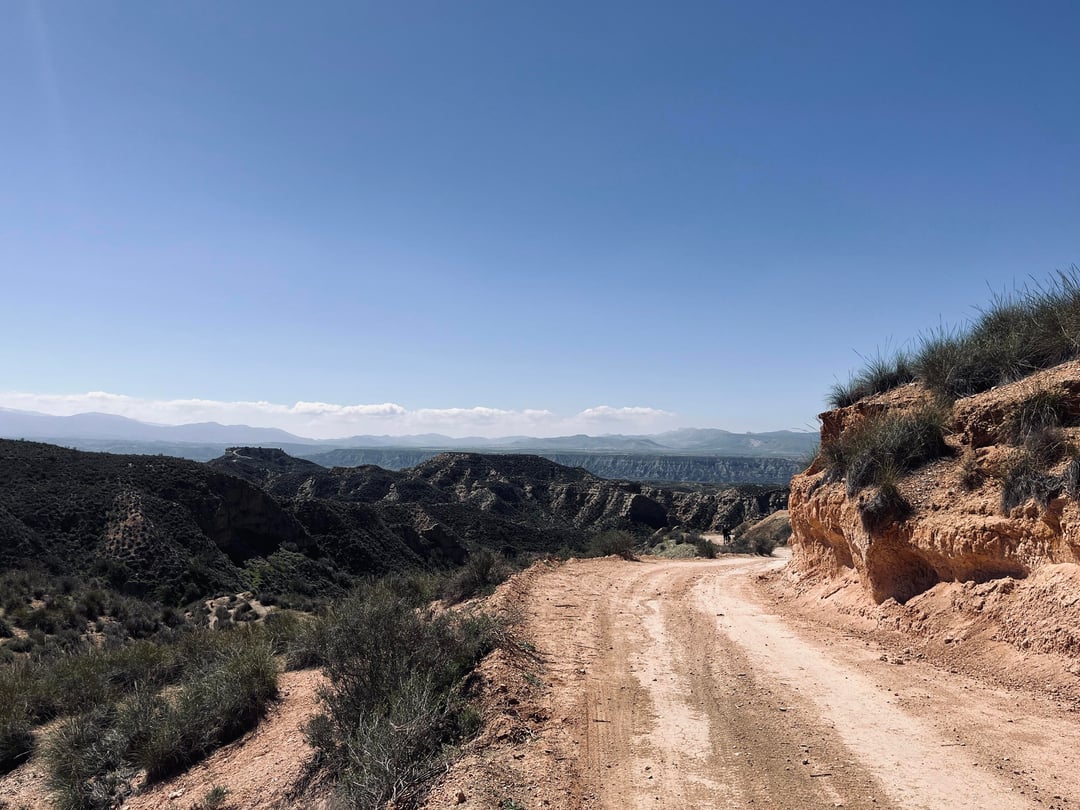
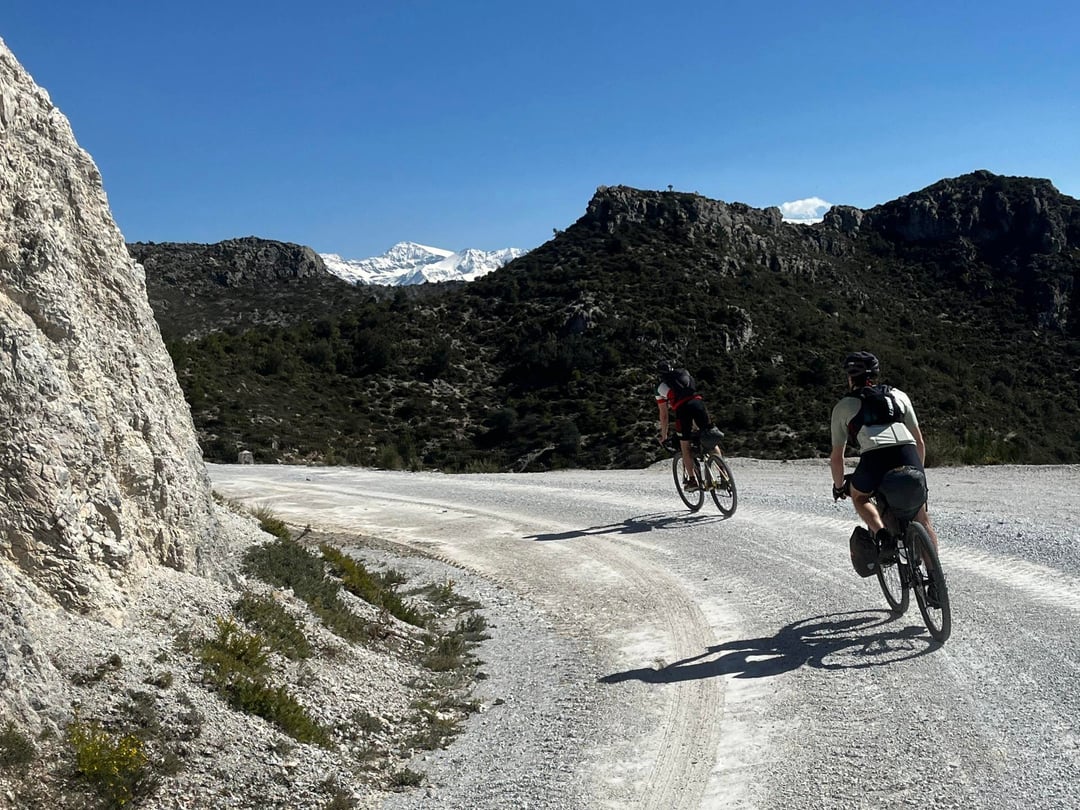
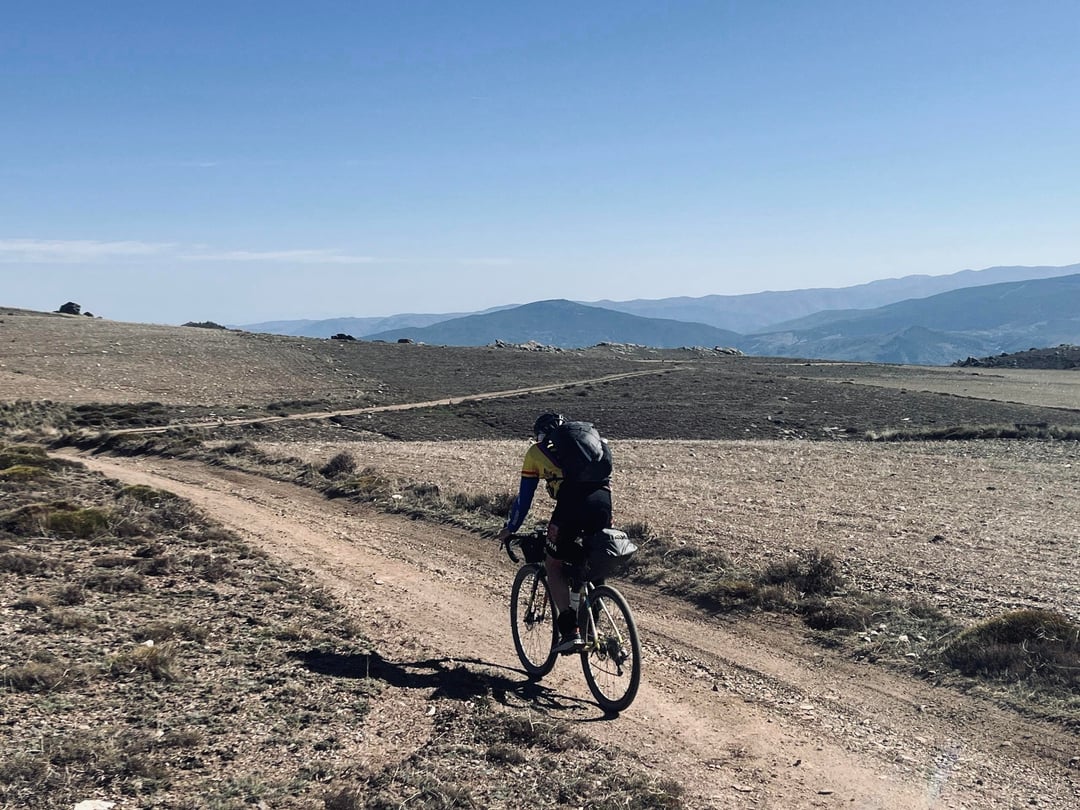
The terrain was mostly stony, ranging from gravel to larger stony patches. 90% of the paths were unpaved, but in good condition. When it’s hot, it can get very dusty in places due to the wind whipping up the dust.
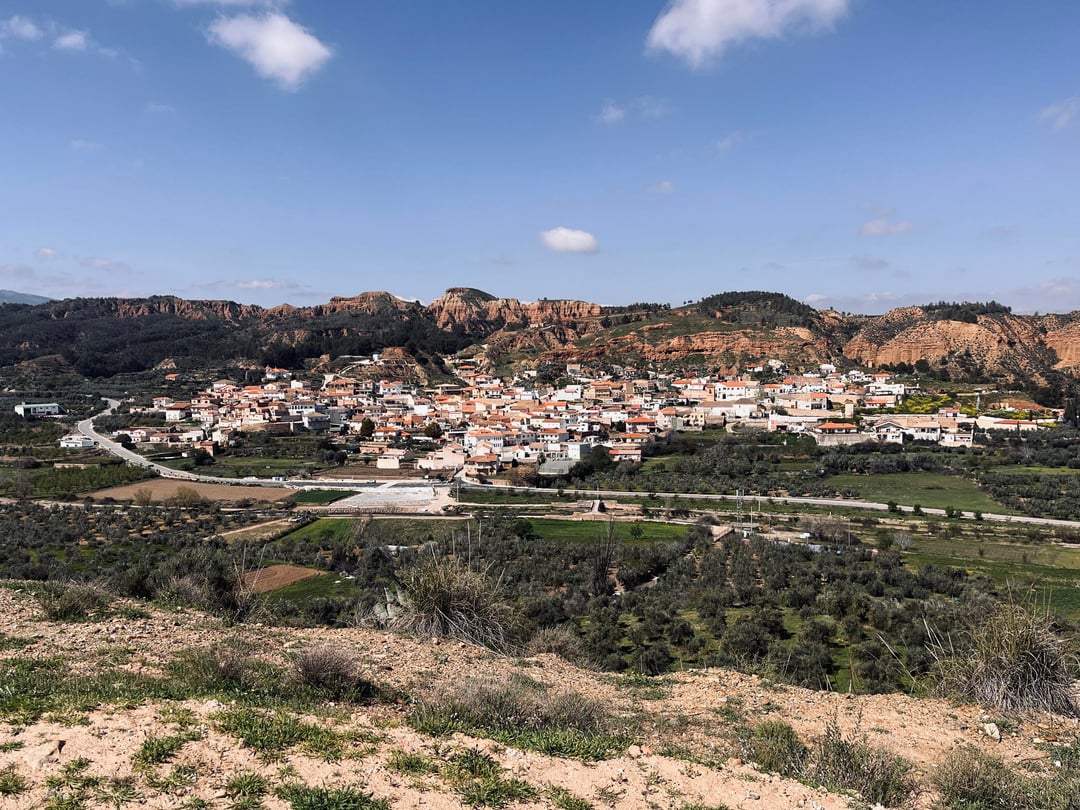
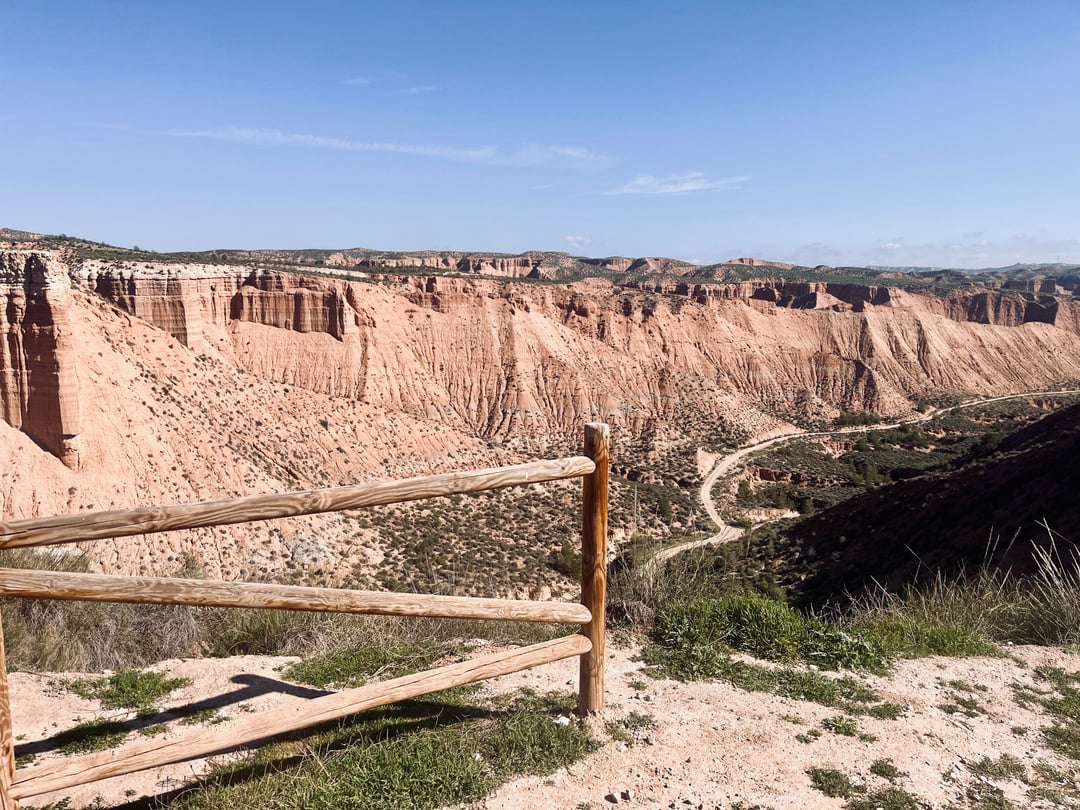
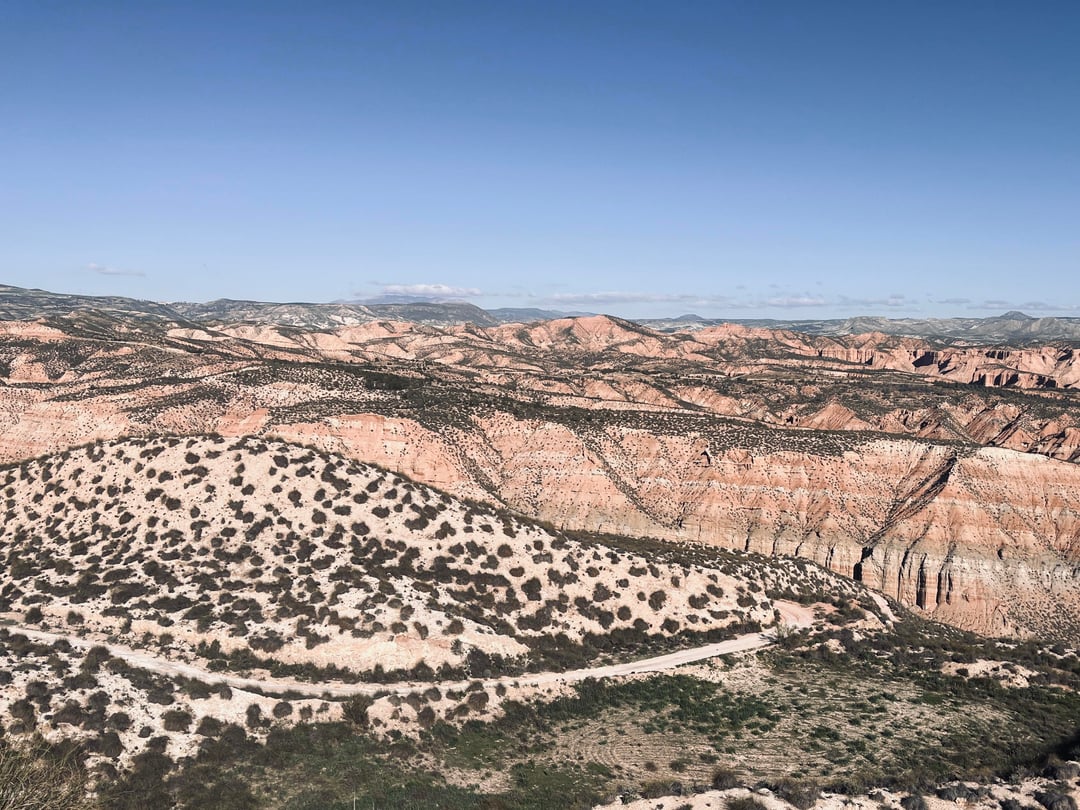
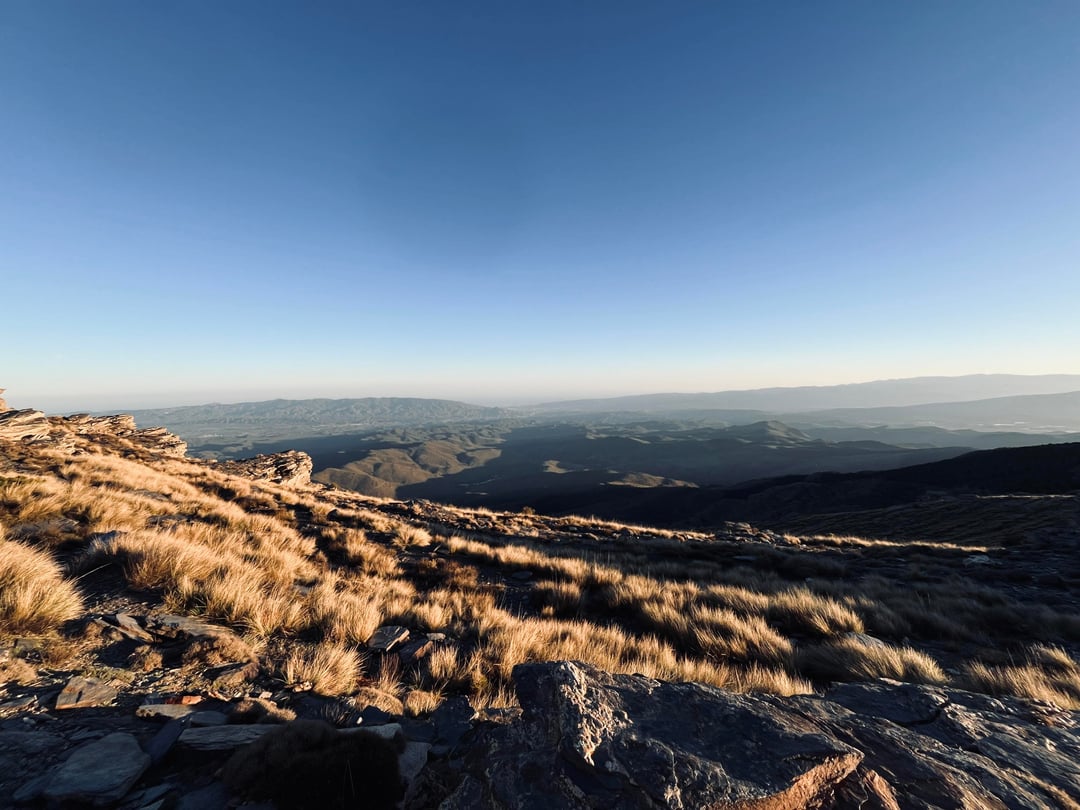
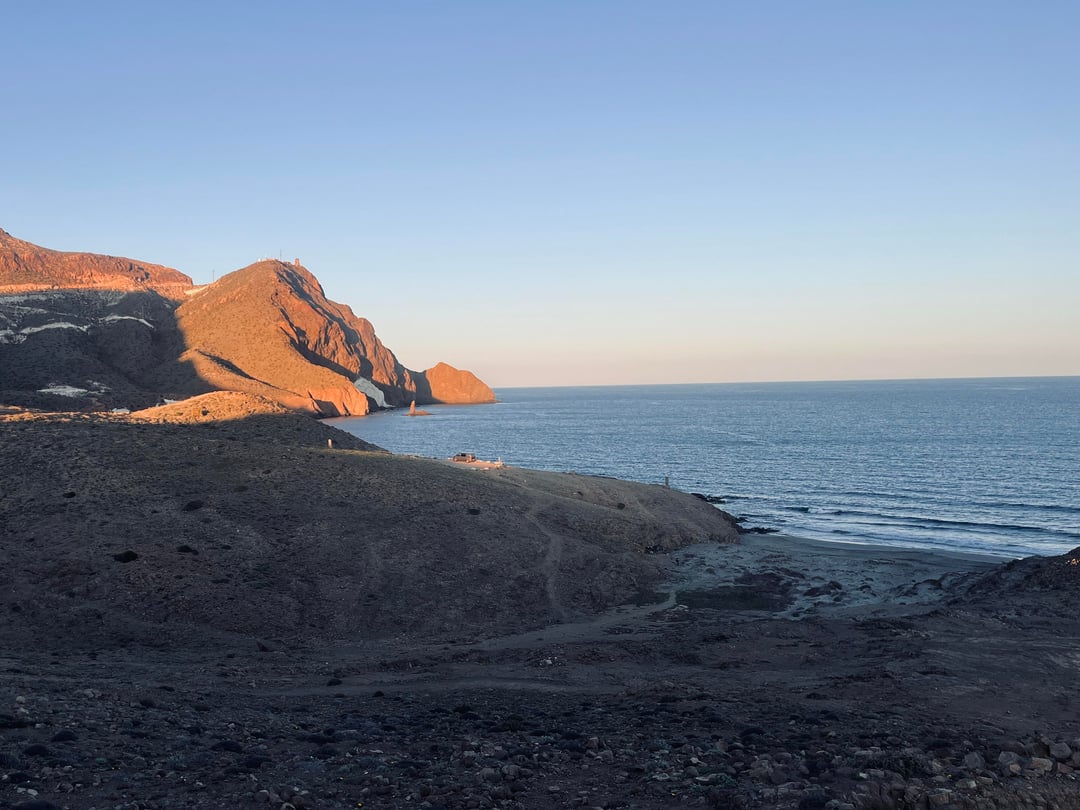
The variety of different landscapes is incredible and something I’ve never seen in Europe before. There are low mountain ranges, desert, high mountains, coastal roads and towns.
We didn’t do the last part from Sierra Nevada back to Granada due to lack of time.
Food and Culture
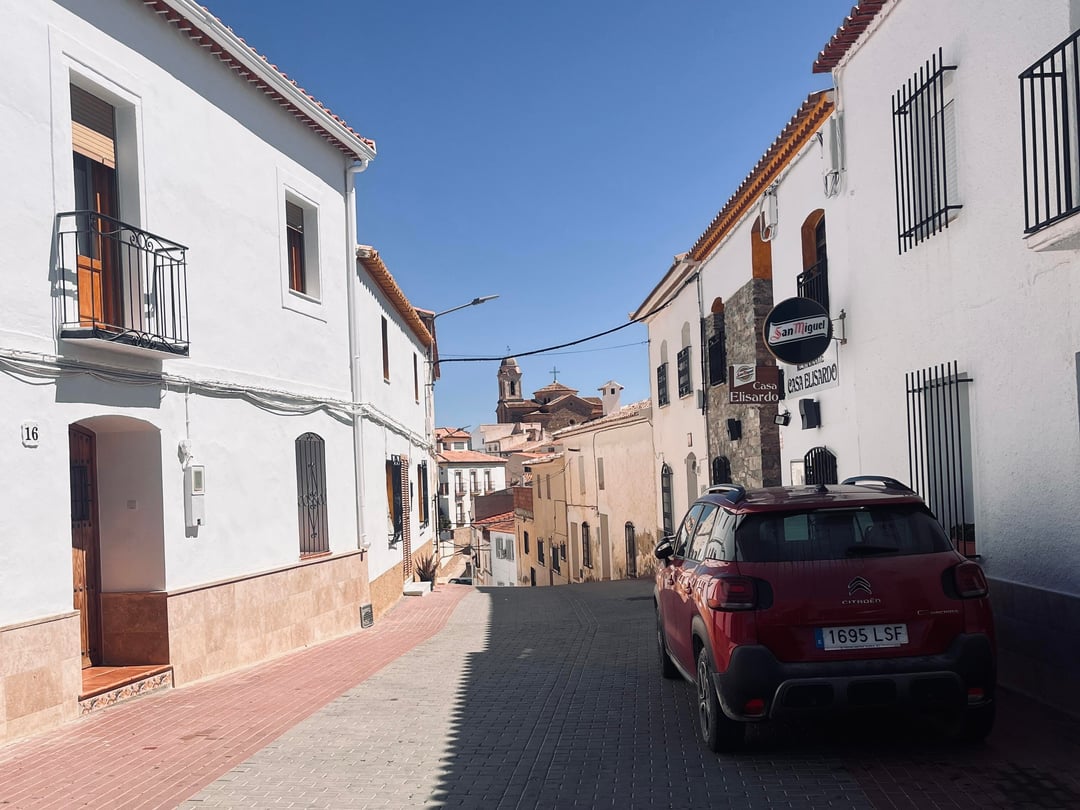
Anyone familiar with Spain knows that life takes place outdoors. In the spring sunshine, people chat in cafés or simply sit outside. There are hardly any villages without a bar.
Speaking a few words of Spanish is definitely helpful, as very few people speak English. Prices are low – by German standards – and there is a plentiful selection of fried food in restaurants. Unfortunately, the fact that there were only chips and meat on offer made lunch somewhat unsatisfying for us.
The closer you get to the Mediterranean, the more prevalent the towns of greenhouses become, where fruit and vegetables grow all year round. The route often passed through these towns, and the extent of the rubbish and monocultures was considerable. From some hills, you could see the white plastic sheeting of the greenhouses stretching for miles.
Almond trees, olive groves, vineyards and citrus trees line the route. Some sections of the route are very barren, whilst others are lush and green.
Riding and camping
We found the people in Andalusia to be very friendly and considerate. Drivers, in particular, never caused us any trouble and gave us plenty of space when overtaking.
With a bit of time and patience, we always managed to find a nice spot to sleep outdoors and never had any problems with local residents or the like.
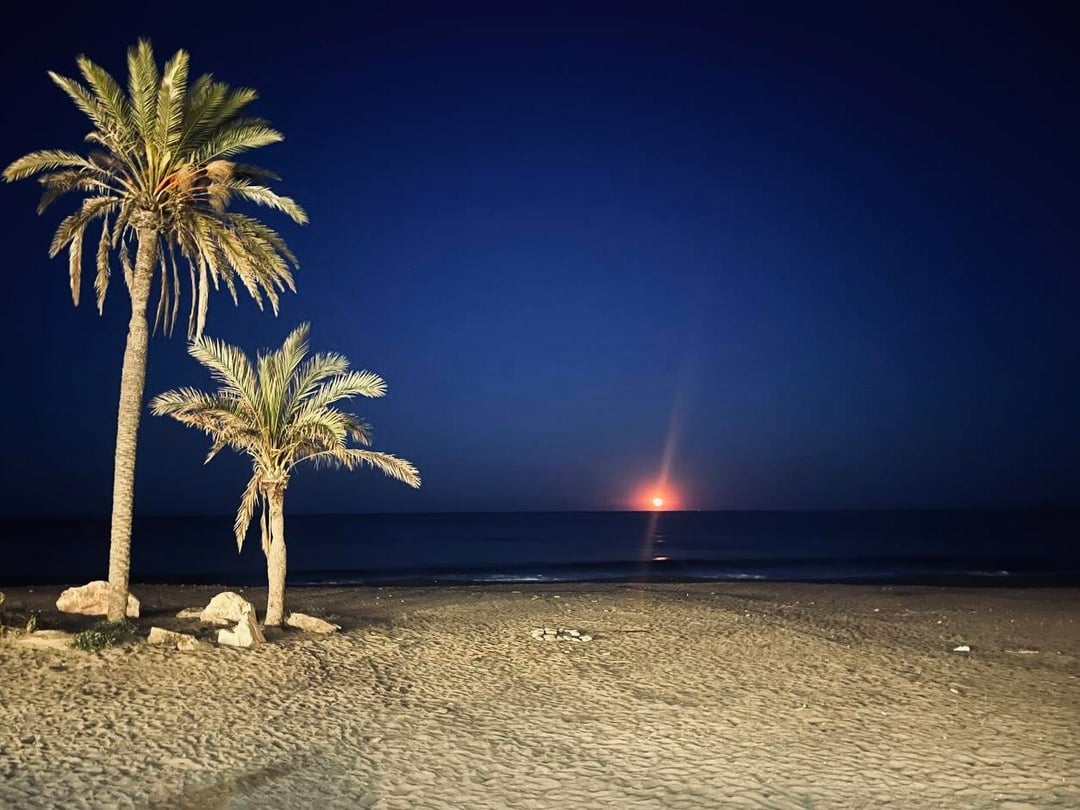
There were areas where we didn’t see a single soul for hours on end. Once we reached the coast, it was noticeably busier and there were other cyclists too – mostly day trippers and road cycling groups.
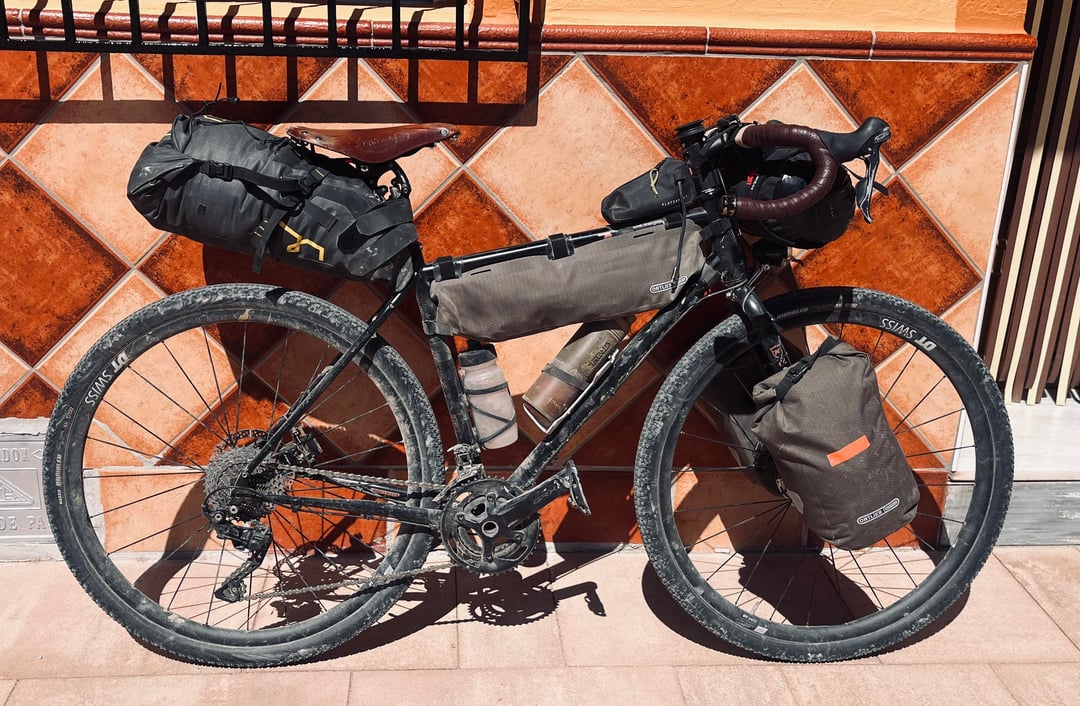
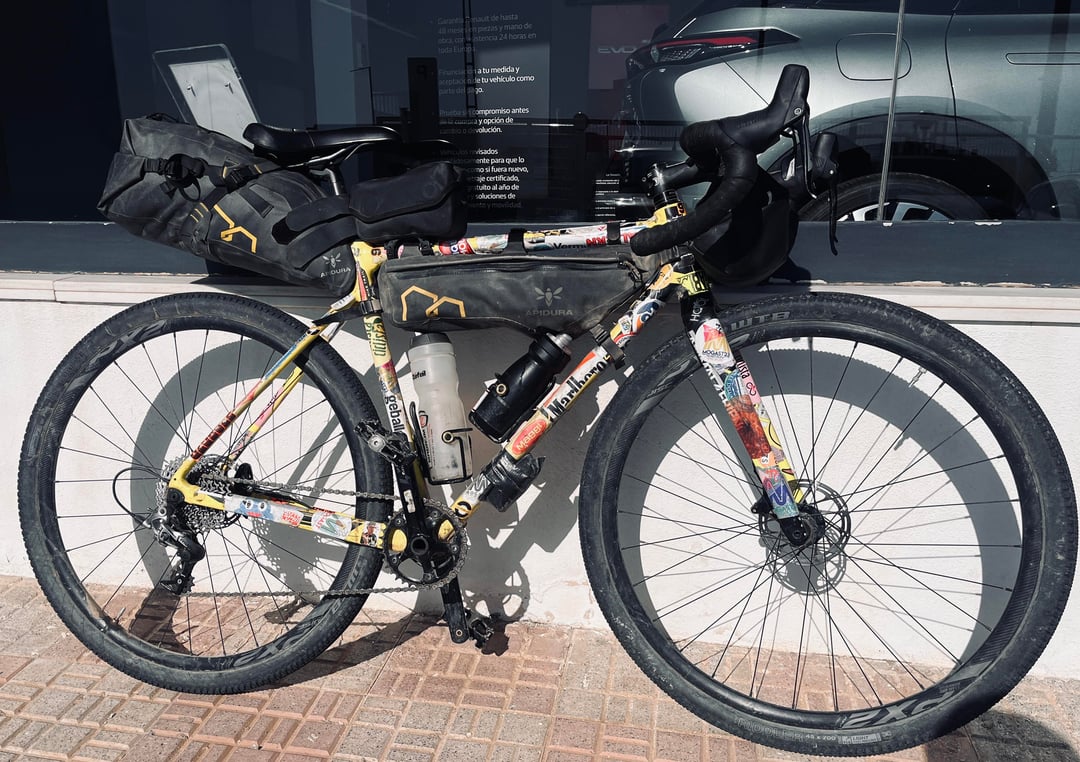
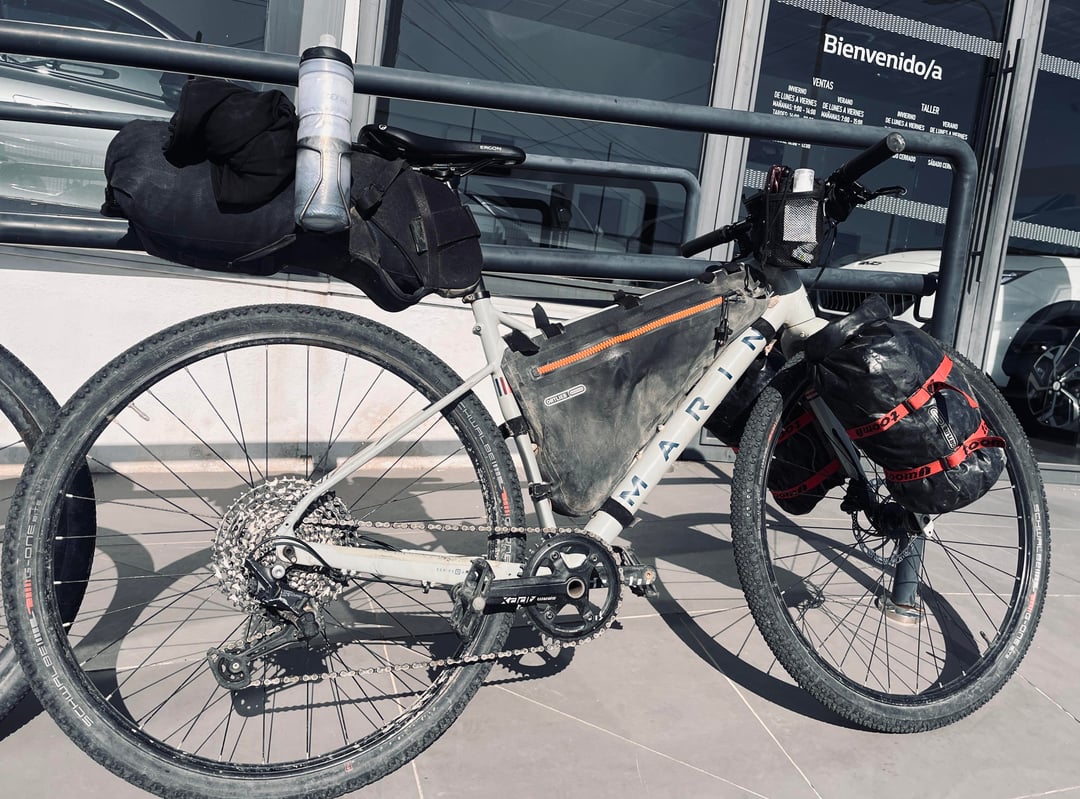
We had 50 mm tyres and no suspension forks fitted to our bikes. Tubeless tyres are highly recommended on this route – I had two punctures with a tube. It’s advisable to carry enough repair parts with you, as the only bike shop is in Almería and it was closed when we arrived, even though it should have been open – according to Google Maps. Probably because of Easter.
Finally, I’d like to say that I’d recommend this route to anyone who enjoys cycling in remote areas.
A few little tips:
– Read the route road book carefully, mark the service points and note the opening times.
– It’s better to pack a little more warm clothing than you think you’ll need, as temperature fluctuations can be quite significant in places.
– Fitting new brake pads before a tour like this is a actually a no-brainer, but it’s particularly important here as there are many very steep descents and you’ll brake a loooot.
– Mobile data coverage was mostly good, but offline maps are helpful.
– Cash comes in handy in bars and cafés.
– Wouldn’t recommend tyre widths under 45mm, as almost everything is unpaved. I used a suspension seatpost and would do it again anytime.
– There are sections of the route that are very narrow and were sometimes a bit tricky to navigate with my panniers. I might leave them off – if possible – to keep the setup as streamlined as possible.
––
If you have any questions or comments, please feel free to leave a comment.
––
by theycallmegiovanni
3 Comments
Congrats! Sounds like a great time. I had a go riding Badlands a few years ago and it killed my (admittedly very cheap) bike! Fantastic course but not at all for the faint hearted ,I thought. 10/10 would do again. Keep riding
That’s an amazing trip, great pictures
Awesome. thanks for sharing and respect for making the trip happen. It is proper country that is so beautiful