
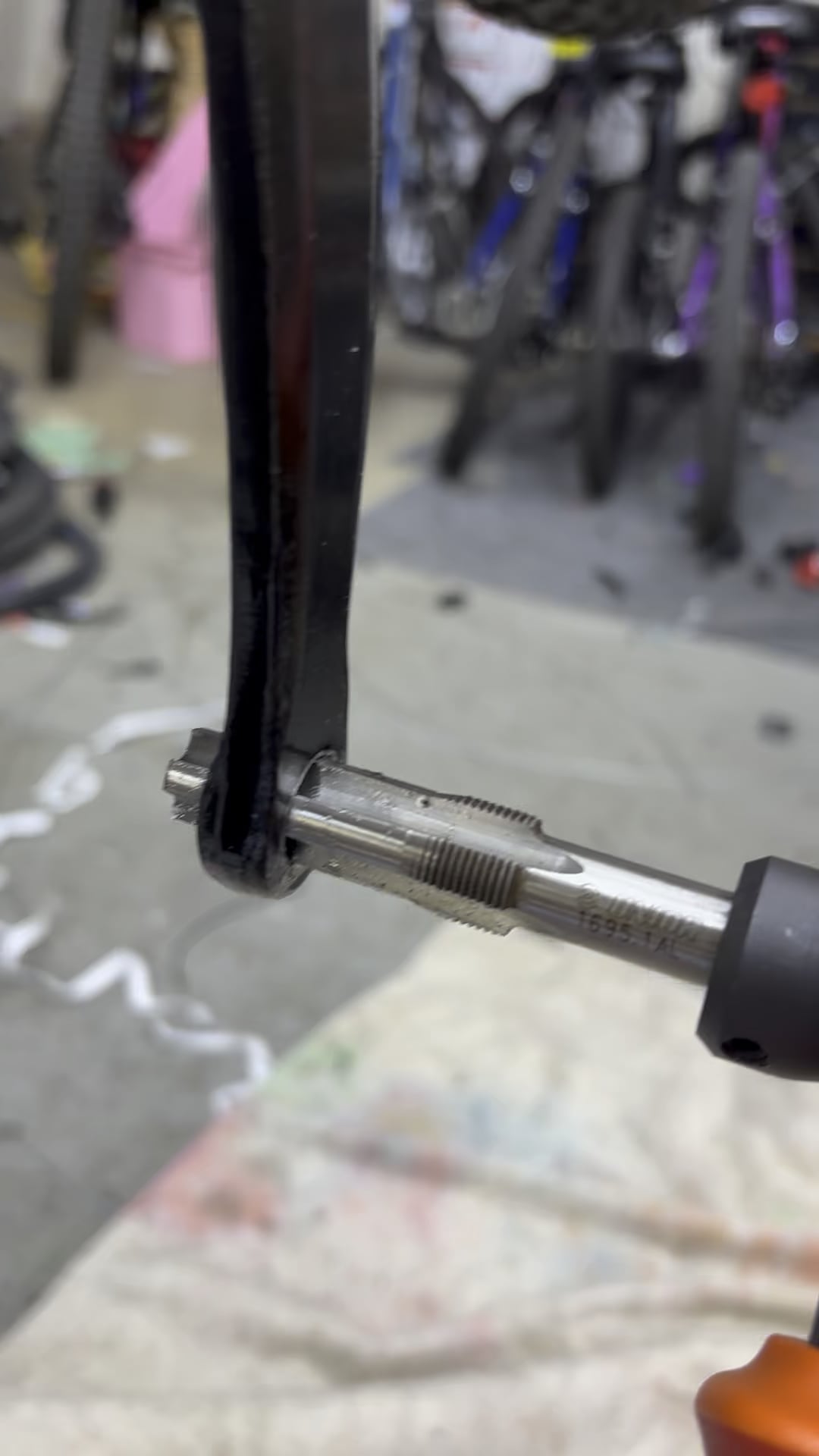
It’s been a while since I’ve rethreaded a crank arm, but I’m pretty sure it’s supposed to continue cutting at this point, but nothing is cutting it just spins
by brannonglover
It’s been a while since I’ve rethreaded a crank arm, but I’m pretty sure it’s supposed to continue cutting at this point, but nothing is cutting it just spins
by brannonglover
5 Comments
There probably isn’t enough metal left to retap it. Aside from replacing the crank, use a larger tap and a helicoil sized to the size of the spindle.
You have to apply some pressure on the tool. I usually remove the crank arm and stick it in a vice so I can apply some downward pressure.
That tool is designed to cut out the old threads, widen the hole, then create new threads for the insert thats why it’s tapered. As a result the tap won’t pull itself through until you get to the threaded portion.
Additionally, I use green Loctite (I think it’s 290, I’ve also used Permatex’s version), as I understand it, it’s a permanent thread locker that expands slightly to prevent the insert from spinning loose once installed. But read Unior’s instructions to see what they recommend and read the thread locker instructions to see how long curing time takes before installing a pedal
Left crank is reverse threaded and that’s a L tap. The cutting edge of the reamer is not being used because you’re turning it the wrong way
When I worked as a bike mechanic I used to haev to do this sometimes and I actually had a left-handed tap for it. A problem I often ran into was that the aluminium in the arm was too soft to keep a proper thread. It would just be completely mangled afterwards and wouldn’t hold the pedal. And since these were customers bikes I could really do much about it. I did find that for the other side you could use a thread insert for spark plugs and it would work decently but for the left-handed thread side there was no solution other than to just swap out the whole crank.
I did once get a customer bike in once where I couldn’t remove the pedal and when I checked it he had drilled a hole straight through the side of the crank and the pedal and put a locking pin in each one. It actually worked well in keeping the pedals in their places.
Don’t do it with everything floating in the air moving and bouncing. Take the crank off and clamp it somewhere to make your life easier, so you can actually apply some force to push the tap in. Also everything here looks bone dry, you should be liberally using cutting oil