
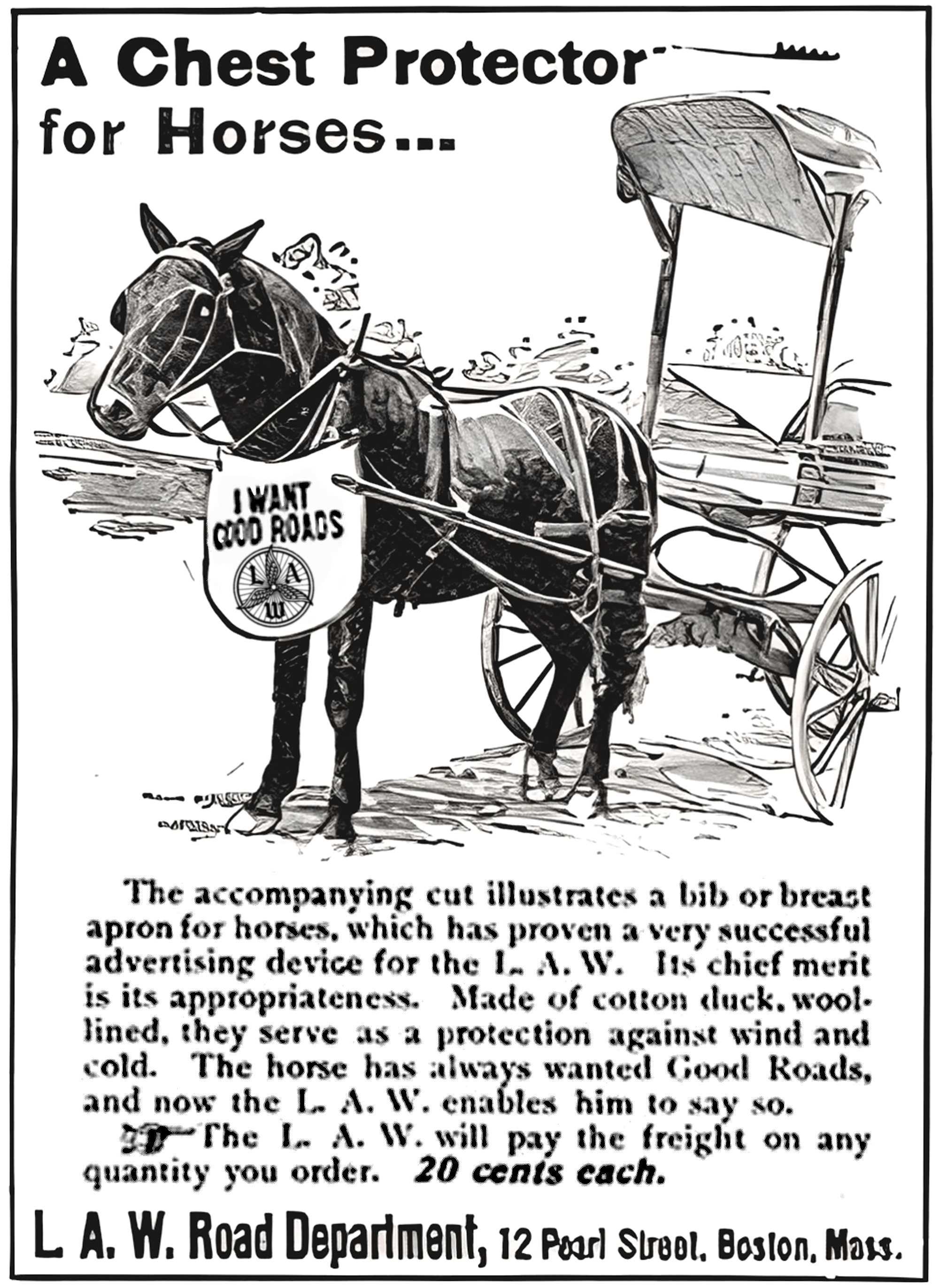
The League of American Wheelmen was a top advocacy group for the improvement of roads and highways in the United States long before the advent of the automobile.
In the late 19th century, the Good Roads Movement was founded and led by the League, which began publishing “Good Roads” magazine in 1892.
by BicyclesRecycle
1 Comment
That they did. They also fought laws requiring bikes to ride on sidewalks in the mid-1900s. Improved paving, adjusting street drains, fixing potholes, reversing laws that required sidewalk riding, etc? All excellent wins.
But they also fought sidepaths and multi-use trails (unless design speed was at least 30mph). They fought traffic filtering / modal filters, bike lanes, and other traffic-calming designs even if those things in no way eliminated vehicle traffic from accessing a street.
Their goal was not equitable streets, their goal was to ride fast. This is where the phrase “I’m a cyclist myself, and bike lanes are a hindrance!” comes from, (and variations on that phrase, obviously).
They deserve credit for their wins, but that does not mean they are without fault — every hero is part villain, and in their case the villainy-half empowered planners and civil engineers to pursue sprawl, congestion, and other consequences of vehicle-only transportation systems.
If your neighborhood has sidewalks between the houses, but not connecting to the nearest shopping center — that was classism and sprawl. If you have six-lane primary roads that you have to wait three or four light-cycles before you can cross safely (or you have to cross in portions), this is why. If the only people using bikes on streets around you are quasi-Olympians, these guys are a big part of how we got here. They are not the *only* reason, but when city planners were trying to think about how to balance kids and neighborhood trips with bikes, strollers, etc. and motor vehicles, groups like League of American Wheelmen empowered the planners who said “everyone has, and will use, cars, make sidewalks optional and just build more parking lots!”.
They weren’t after equitable streets, they were after streets that allowed “real” cyclists to ride fast, and fought every proposal that threatened this. And for over half-a-century, they won. Now we just consider “car priority” normal and have a hard time imagining streets that allow (but do not require) a car or truck.