3 of my 5 bikes have aero seatposts, but those are all proprietary, and best of luck if you break or damage it, because a replacement is hard to find. I don’t have to worry if they are straight though. It’s really not hard to align a round post though, been the standard for a really long time.
crabcrabcam on
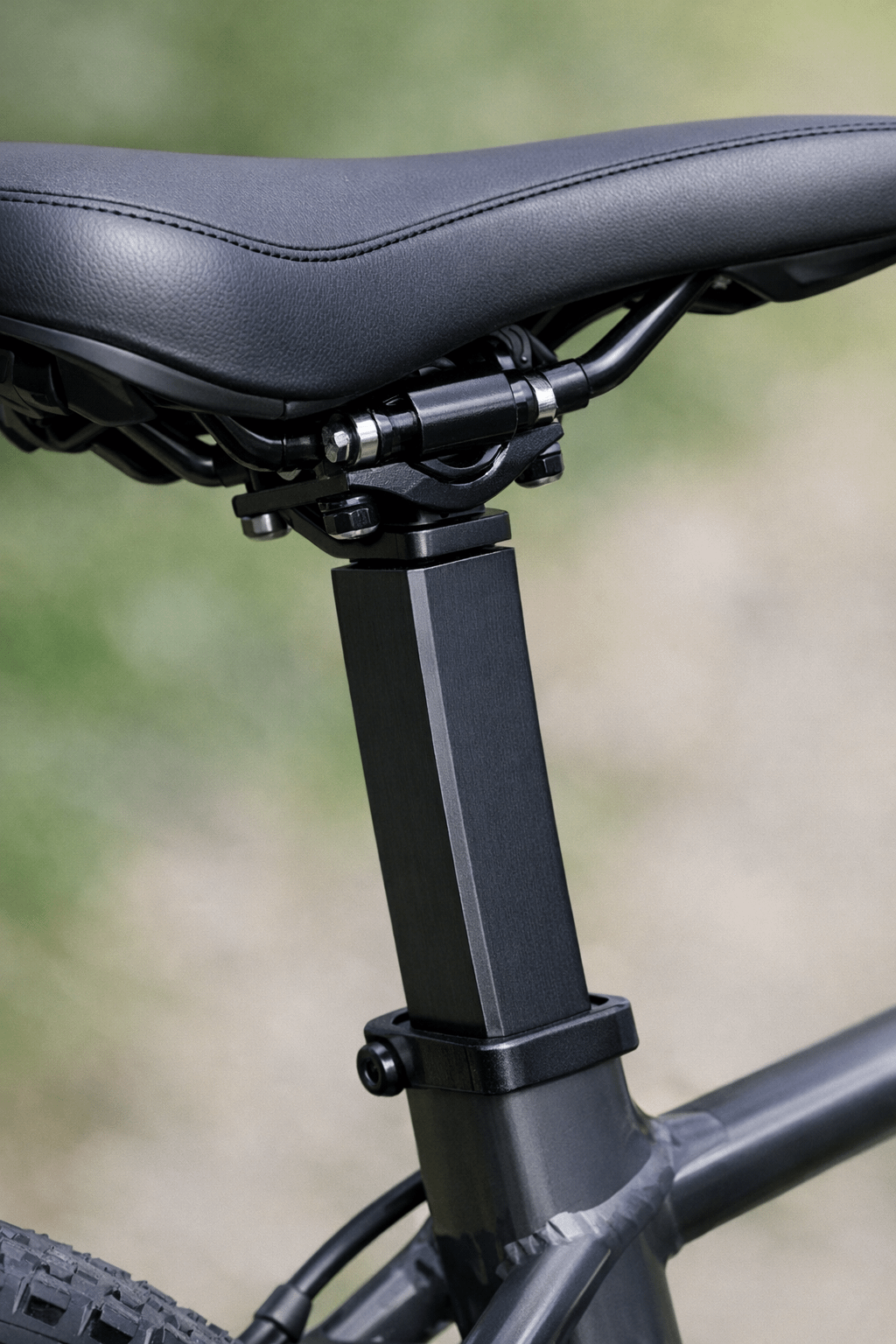
Hard to make a square tube, and it has stress points so likely to crack or bend where a tube spreads the load much more evenly. Even when we see triangular seatposts (or D shaped) it’s a rounded triangle.
It would also mean that if your saddle was poorly made, or the seatpost wasn’t aligned from the factory there’d be nothing you can do (that kind of thing happens all the time, you just don’t notice it because you can twist the seatpost)
Pacety1 on
Cant really compress a square
RandomNumberPlease on
In engineering terms, circles are better
psyentologists on
Because a square tube weighs ~30% more than a round tube of comparable length, is more expensive to make, and more difficult to work with. Square isn’t really a good idea anyway, it’s much better to shape the tube aerodynamically rather than ride with a massive flat profile directly into the wind.
StevoLDevo on
Finishing the inside of a square tube to the point another square tube will easily slide up and down in it is a much more expensive and difficult process than if they were round.
Keeping the saddle aligned is one of the many reasons dropper posts became so popular. Also…it’s not that difficult to align your saddle.
grahamfiend2 on
The trek Domane has a D shaped post that is aero at the front but flat/ish at the back. That does the job of making sure the seat is straight.
Due_ty on
Giant do d-fuse (D shaped) seat posts that auto align, work really well 👍
icyhotmike on
If seat ever got knocked like from a fall then I imagine there would be internal frame stress/damage as well since the square post is fixed in place whereas a round post can spin inside the frame.
Pagiras on
An excellent question from someone who considered in school they won’t use physics, math or geometry in their life anyway.
A circular tube offers the best all-round rigidity, practicality and ease of manufacture. If manufacturing standards for the tube, frame or seat are anything but perfect, you will have incorrigible alignment issues with square components. Also I’d like to see you tighten a square equilaterally. Also, aerodynamics, but that is a whole different story, because high-end aero bikes have flattened circular tubes. They also usually have incredibly high manufacturing standards and additional engineering solutions for adjustments.
Vetnoma on
on top of all the other stuff in this thread, also because you need to be absolutely perfect in terms of you margin of error in manufacturing. If you drill the hole just slighly off, the top part of you seatpost just slighly is off center or twists in use,… you will have for ever a misaligned seat post.
Now all these problems can be dfealt with, if you allow yourself to throw money at them (for examle on a high end roadbike), but on a normal bike it is just better to avoid these problems entierly by using a round one and so making the bike cheaper
gayWomanlover on
to add to the list of reasons everyo es saying. when i fall off my bike id rather the saddle do a lil spin vs snapping in half or getting bent.
knusper_gelee on
the idea is that when you want to fasten a seatpost, you tighten the surrounding (metal) seattube, the seattube wraps around the post, making perfect contact.
you cant do that as good with other shapes… there will be gaps that will lead to squeaking and grinding noises with each pedal stroke. that also leads to weak points in both frame and post.
in other solutions:
carbon frames: a wedge pushes the post against the seattube. works, but it doesnt hold the post nearly as good. with regular, non-maintained daily driver bikes, they would slip, get overtightened and fail. carbon drivers often have to fiddle around with friction paste to get the seat to stay where they want.
indoor / spinning bikes: they have a threatened hole in the seattube with an adjusting screw that pokes in corresponding holes in the seatpost. the post isnt fixed, it just sits on the screw. its heavy, bulky, ugly and you can only set the seat in fixed increments.
plus:
the ability to twist the seat from left to right has a big advantage… when the seatpost gets stuck, you can (most of the times) wiggle it free. just ask someone with a carbon frame with a stuck seatpost. often leads to the frame and post being a total loss. you can only pull straight up…
whenitrainitpour on
Anyone who has ever had to remove a jammed in aero seatpost will tell you, round posts are the best, (the only shape you can twist in the same shaped hole 😅)and also more seatpost standards mean less aftermarket options- if the original brand discontinues making spare seatposts, you’re stuffed.
herrybaws on
Circle strong.
Adorable_Wolf_8387 on
Some people actually need slight misalignment because their anatomy isn’t symmetrical.
lucidexium on
Square tubing would add cost and complexity, and subjectively I’d say they’re ugly (and would make bicycle frames ugly). Overall no real benefit over traditional circular tubing. Centering a saddle is not difficult.
Working-Soft3546 on
Cus bikes don’t have square seat posts
Doc_Raphy on
I’m no engineer but based on square tubes on gym equipment seats, square tubes tend to develop some degree of play/movement over time even if it was a solid cnc fit when the equipment was brand new.
getsu161 on
Making parts for precision fit is easy (turning outer diameters, reaming inner diameters) less so with squares.
derpityhurr on
Counter question: Why would you change the entire structure of a bike frame, overcomplicate it and introduce 10 new problems just to get around an issue that takes literally 10 seconds to fix?
Besides the seatpost being misaligned really being a non-issue unless you move it every day, there’s already existing and better ways to keep a seatpost from turning like slot and key designs that don’t require changing the shape of the seat tube.
Duster929 on
Same reason trees don’t have square trunks.
Ambitious-Concern-42 on
You are actually asking why the tubes are not square, which u/crabcrabcam has already answered.
rexspook on
Math mostly
BD59 on
Not aero.
Giant has those D shaped posts, and several other manufacturer have oval or otherwise aero posts that can’t be twisted.
uniquecleverusername on
My crack isn’t perfectly symmetrical, so I keep my seat 33° left of center for my 34° angle butt crack. (It’s not an exact match, but it’s more comfortable with that setup).
SunshineInDetroit on
Those welds are horrible.
ziggybeans on
Some people are built with a slight off-center rotation… Square seatposts are gatekeeping for you elitist perpendiculars. /s
metengrinwi on
wait, people worry about their seat being misaligned??
drdietrich on
I don’t understand engineers that would do this. Round bar, cheap, tested, strong and easy to get everywhere. No you go the distance and make your manufacturing a pain just to sell a few replacement parts for a few hundred euros.
RunningAtTheMouth on
Cost/benefit.
Round posts work exceptionally well and are relatively cheap. If the tube is a little large or a little small, the up tube slot & clamp can accommodate it. If the seat itself is a little off, it can be straightened. If it’s a little rusty (or sandy, or anything), it can be twisted to loosen it up and adjust.
Square tubes are more expensive to produce. Square holes have stress points at the corners (even rounded ones) that are greater than a simple round hole. If the tube is a little off in size it is more difficult to clamp it effectively. If it’s rusty or sandy it cannot be twisted to knock it loose. If the seat clamp is a little off, it’s off for good.
The average cyclist, and even the mid-high level cyclists, won’t spend more for something that offers no practical improvement. For those folks that WOULD spend the money, there is not enough demand for the manufacturer to invest in the tech to make it work.
Darnocpdx on
All the stress of square tubes is focused on the four corners when plumbed vertically, the flats are relatively worthless structurally.
Tilted like a seat post, most of those stress land only the two back corners.
The round tube, spreads those stresses much more evenly around most of the entire circumstance as seat post, offering much greater strength.
The people saying one shape is more expensive, are wrong. Metals stock is generally priced by weight, shape isn’t a consideration, though not all mills manufacture all shapes, so the discrepancies in your area in pricing are likely due to availability and shipping chargers and possibly tariffs etc.

33 Comments
Not very ærö bro
3 of my 5 bikes have aero seatposts, but those are all proprietary, and best of luck if you break or damage it, because a replacement is hard to find. I don’t have to worry if they are straight though. It’s really not hard to align a round post though, been the standard for a really long time.
Hard to make a square tube, and it has stress points so likely to crack or bend where a tube spreads the load much more evenly. Even when we see triangular seatposts (or D shaped) it’s a rounded triangle.
It would also mean that if your saddle was poorly made, or the seatpost wasn’t aligned from the factory there’d be nothing you can do (that kind of thing happens all the time, you just don’t notice it because you can twist the seatpost)
Cant really compress a square
In engineering terms, circles are better
Because a square tube weighs ~30% more than a round tube of comparable length, is more expensive to make, and more difficult to work with. Square isn’t really a good idea anyway, it’s much better to shape the tube aerodynamically rather than ride with a massive flat profile directly into the wind.
Finishing the inside of a square tube to the point another square tube will easily slide up and down in it is a much more expensive and difficult process than if they were round.
Keeping the saddle aligned is one of the many reasons dropper posts became so popular. Also…it’s not that difficult to align your saddle.
The trek Domane has a D shaped post that is aero at the front but flat/ish at the back. That does the job of making sure the seat is straight.
Giant do d-fuse (D shaped) seat posts that auto align, work really well 👍
If seat ever got knocked like from a fall then I imagine there would be internal frame stress/damage as well since the square post is fixed in place whereas a round post can spin inside the frame.
An excellent question from someone who considered in school they won’t use physics, math or geometry in their life anyway.
A circular tube offers the best all-round rigidity, practicality and ease of manufacture. If manufacturing standards for the tube, frame or seat are anything but perfect, you will have incorrigible alignment issues with square components. Also I’d like to see you tighten a square equilaterally. Also, aerodynamics, but that is a whole different story, because high-end aero bikes have flattened circular tubes. They also usually have incredibly high manufacturing standards and additional engineering solutions for adjustments.
on top of all the other stuff in this thread, also because you need to be absolutely perfect in terms of you margin of error in manufacturing. If you drill the hole just slighly off, the top part of you seatpost just slighly is off center or twists in use,… you will have for ever a misaligned seat post.
Now all these problems can be dfealt with, if you allow yourself to throw money at them (for examle on a high end roadbike), but on a normal bike it is just better to avoid these problems entierly by using a round one and so making the bike cheaper
to add to the list of reasons everyo es saying. when i fall off my bike id rather the saddle do a lil spin vs snapping in half or getting bent.
the idea is that when you want to fasten a seatpost, you tighten the surrounding (metal) seattube, the seattube wraps around the post, making perfect contact.
you cant do that as good with other shapes… there will be gaps that will lead to squeaking and grinding noises with each pedal stroke. that also leads to weak points in both frame and post.
in other solutions:
carbon frames: a wedge pushes the post against the seattube. works, but it doesnt hold the post nearly as good. with regular, non-maintained daily driver bikes, they would slip, get overtightened and fail. carbon drivers often have to fiddle around with friction paste to get the seat to stay where they want.
indoor / spinning bikes: they have a threatened hole in the seattube with an adjusting screw that pokes in corresponding holes in the seatpost. the post isnt fixed, it just sits on the screw. its heavy, bulky, ugly and you can only set the seat in fixed increments.
plus:
the ability to twist the seat from left to right has a big advantage… when the seatpost gets stuck, you can (most of the times) wiggle it free. just ask someone with a carbon frame with a stuck seatpost. often leads to the frame and post being a total loss. you can only pull straight up…
Anyone who has ever had to remove a jammed in aero seatpost will tell you, round posts are the best, (the only shape you can twist in the same shaped hole 😅)and also more seatpost standards mean less aftermarket options- if the original brand discontinues making spare seatposts, you’re stuffed.
Circle strong.
Some people actually need slight misalignment because their anatomy isn’t symmetrical.
Square tubing would add cost and complexity, and subjectively I’d say they’re ugly (and would make bicycle frames ugly). Overall no real benefit over traditional circular tubing. Centering a saddle is not difficult.
Cus bikes don’t have square seat posts
I’m no engineer but based on square tubes on gym equipment seats, square tubes tend to develop some degree of play/movement over time even if it was a solid cnc fit when the equipment was brand new.
Making parts for precision fit is easy (turning outer diameters, reaming inner diameters) less so with squares.
Counter question: Why would you change the entire structure of a bike frame, overcomplicate it and introduce 10 new problems just to get around an issue that takes literally 10 seconds to fix?
Besides the seatpost being misaligned really being a non-issue unless you move it every day, there’s already existing and better ways to keep a seatpost from turning like slot and key designs that don’t require changing the shape of the seat tube.
Same reason trees don’t have square trunks.
You are actually asking why the tubes are not square, which u/crabcrabcam has already answered.
Math mostly
Not aero.
Giant has those D shaped posts, and several other manufacturer have oval or otherwise aero posts that can’t be twisted.
My crack isn’t perfectly symmetrical, so I keep my seat 33° left of center for my 34° angle butt crack. (It’s not an exact match, but it’s more comfortable with that setup).
Those welds are horrible.
Some people are built with a slight off-center rotation… Square seatposts are gatekeeping for you elitist perpendiculars. /s
wait, people worry about their seat being misaligned??
I don’t understand engineers that would do this. Round bar, cheap, tested, strong and easy to get everywhere. No you go the distance and make your manufacturing a pain just to sell a few replacement parts for a few hundred euros.
Cost/benefit.
Round posts work exceptionally well and are relatively cheap. If the tube is a little large or a little small, the up tube slot & clamp can accommodate it. If the seat itself is a little off, it can be straightened. If it’s a little rusty (or sandy, or anything), it can be twisted to loosen it up and adjust.
Square tubes are more expensive to produce. Square holes have stress points at the corners (even rounded ones) that are greater than a simple round hole. If the tube is a little off in size it is more difficult to clamp it effectively. If it’s rusty or sandy it cannot be twisted to knock it loose. If the seat clamp is a little off, it’s off for good.
The average cyclist, and even the mid-high level cyclists, won’t spend more for something that offers no practical improvement. For those folks that WOULD spend the money, there is not enough demand for the manufacturer to invest in the tech to make it work.
All the stress of square tubes is focused on the four corners when plumbed vertically, the flats are relatively worthless structurally.
Tilted like a seat post, most of those stress land only the two back corners.
The round tube, spreads those stresses much more evenly around most of the entire circumstance as seat post, offering much greater strength.
The people saying one shape is more expensive, are wrong. Metals stock is generally priced by weight, shape isn’t a consideration, though not all mills manufacture all shapes, so the discrepancies in your area in pricing are likely due to availability and shipping chargers and possibly tariffs etc.