
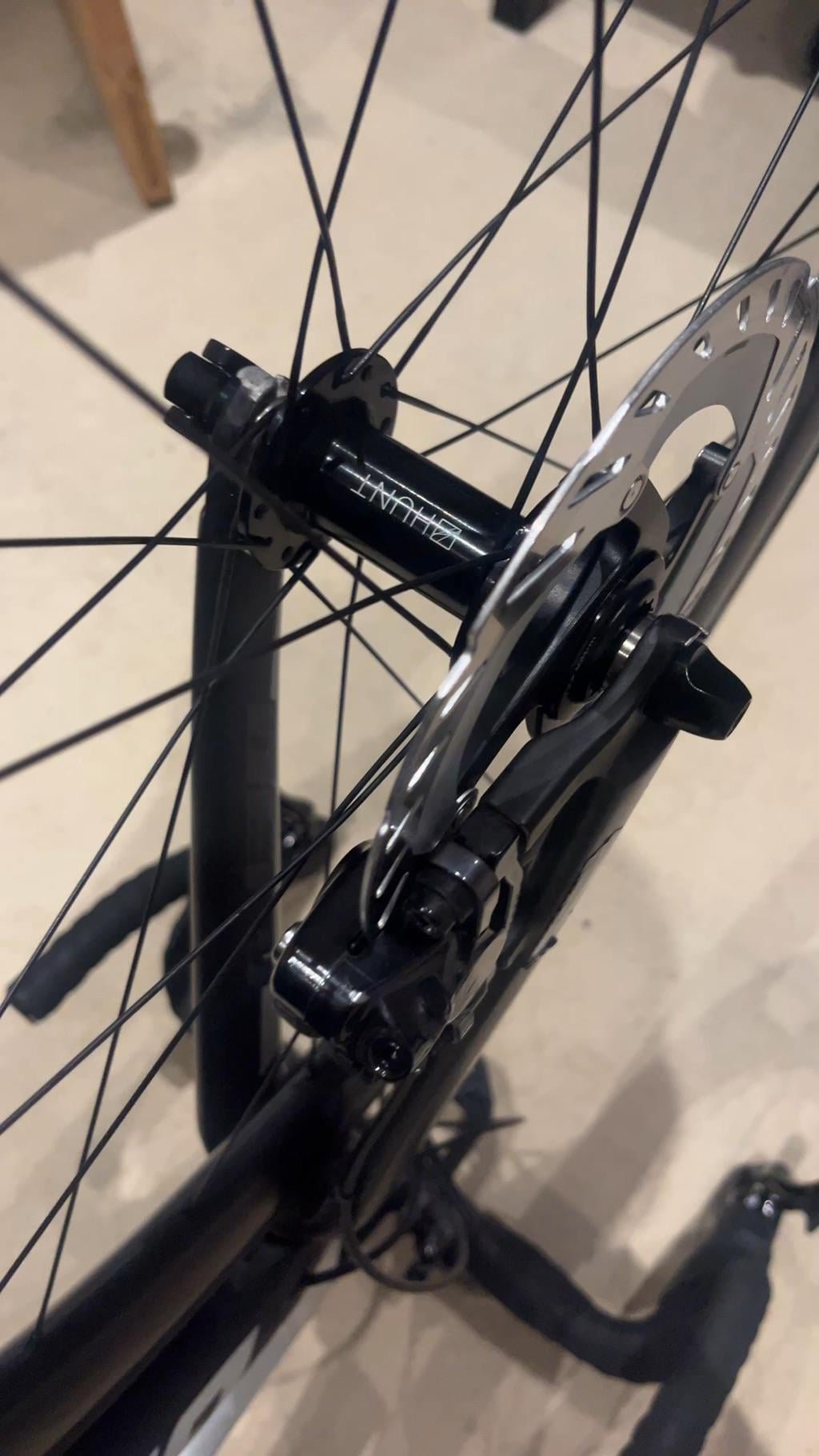
Front disc brake constantly rubbing – tried everything
Back wheel seems to be fine
I’ve got constant rubbing from my front disc brake. I recently changed the wheelset. The old wheelset had a bit of rubbing, but with the new wheelset it’s much worse. The rotor on the new wheelset is different from the old one, although I wouldn’t think that alone should cause this much rubbing.
I’ve tried all the usual fixes:
– Loosened the caliper, squeezed the brake lever, then tightened it again
– Repeated this multiple times
– Replaced the brake pads
– Pushed the pistons back in and tried resetting them
None of this has fixed the issue and the rotor is still rubbing.
The caliper is a Shimano RS785.
Any ideas what else I should check?
by Dividedbyzeromusic
6 Comments
The loosening the caliper, squeezing the brake lever and tightening thing rarely works in my experience. Ultimately you just have to center the caliper over the rotor without the brake engaged 🤷🏽♂️ now that’s not always an easy task, if your caliper mounts on your fork may need facing or so on. And even when centered you may need to true some spots if there are sections of the rotor hitting the pads. I’d take it to your LBS and see if they can ascertain what may be going on if nothing improves. If it’s a constant rubbing you’re just going to chew through brake pads and rotors at a much more accelerated rate. Not to mention you’ll be slower, as you’re being slightly impeded with every rotation of the wheel.
Which part of the caliper is rubbing?
If it is the pads on the face of the rotor it is an alignment issue.
If it is the caliper body on the top of the rotor you have a sizing issue which can be resolved by using a couple of small washers under the caliper or mount adapter.
Rumors say it’s unwise to use hydraulic disc brakes upside down.
Nevertheless, the caliper is not centered plus the disc itself is not true. It can be a pain in the arse to make it run rub-free. But it’s always possible – under the condition of a true disc and a propperly centered caliper.
Put the brake against the light. Look into the gap, center the caliper with you left hand and half-tighten the upper screw. Adjust caliper again and tighten the lower screw. Than tighten the upper screw.
put a torchlight behind the caliper, turn the wheel, see how the rotor rub, then push the caliper manually or bend the rotor slightly with adjustable spanner.
A personal observation is that position of the calliper in relation to the disc can be affected by the amount of tension on the QR screwer. Check you have the tension as tight as you normally do – consistency is important.
I concur with others that squeezing brake and tightening bolts rarely works. Though once centred I may apply brake when making final torque adjustment to bolts to remove risk of calliper – though I suspect this is a false and unnecessary course of action.
My approach is to eye-ball the calliper over the disc with the pads fully retracted. Giving a first pass at centring the calliper. Next I engage brake several times until pads settle into position. During this step I’m also looking to check pads are moving equally from both sides and retracting. If not then I clean and manipulate pistons until happy they are working unimpeded.
Next I fine tune the calliper using eyes and ears. This usually highlights any deformation on disc which I can then address.
While fine tuning I tend to alternate between two bolts trying to move only one end of the mount at a time. When tightening up alternate between bolts.
One last bit of advice – it’s sometimes necessary to over compensate a mount position knowing it will move slightly in one direction under tightening.
All in all I find the whole process takes an abundance of patience!
Good luck