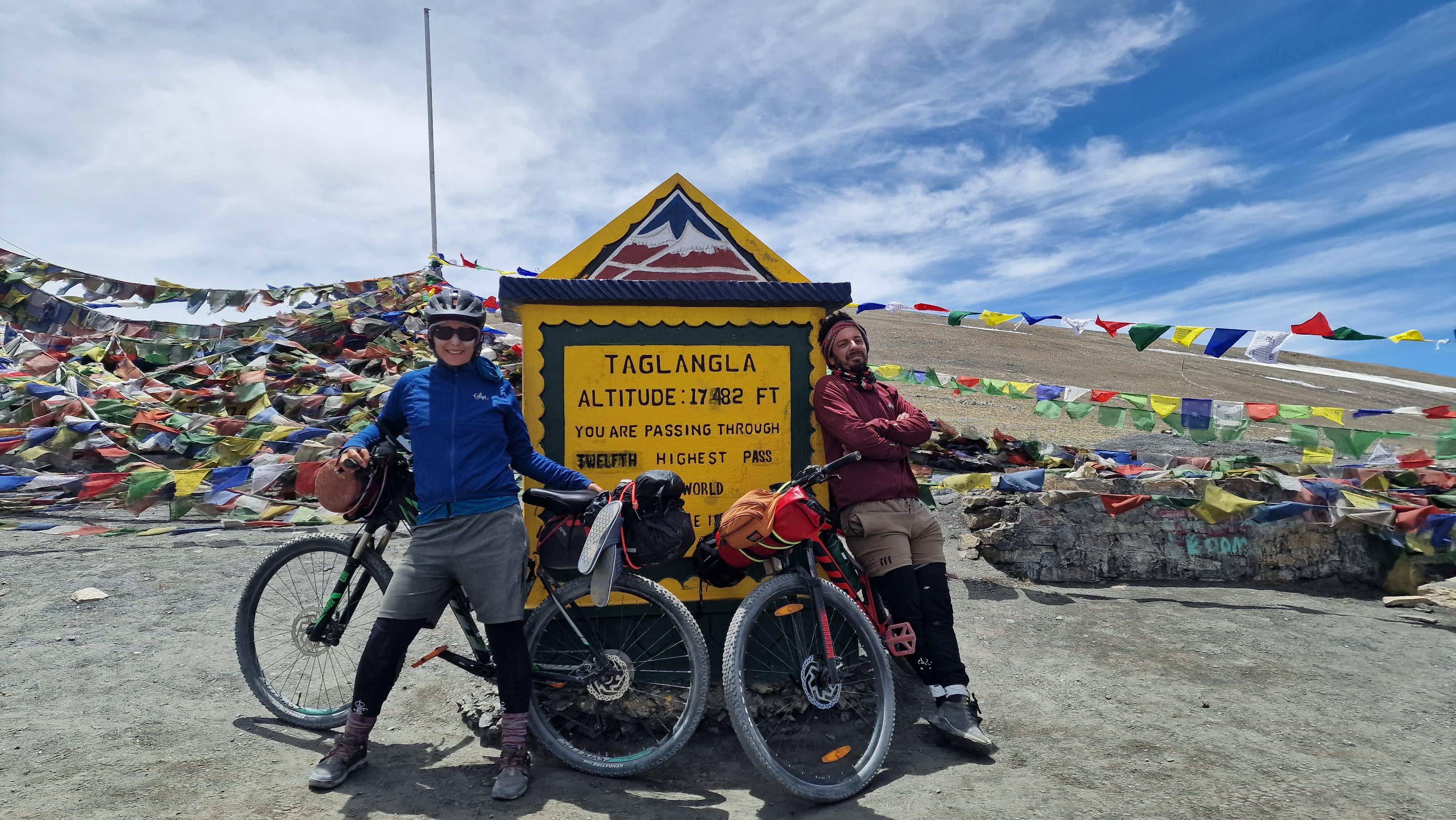
Nothing as high as your image, but I’ve cycled many of the highest passes in Colorado in the 11-12k+ range. I just spend at least a couple days at elevation ahead of time (~10k ft near Leadville) and send it.
naambezet on
Amerongse Berg 6900 cm altitude, it was fine. Bit out of breath when I reached the top
buenti on
4000m in Bolivia, was so hard for me, but men, I wish I could do that route again was beautiful
kaur_virunurm on
Some road around Gondar, Ethiopia. 2200 m. We were coming from Simien mountains, and 2k altitude was like a breath of fresh air.
Most difficult pass: Transfaragas highway, Romania, just over 2000 m. We had all our camping gear with us (approx 20 kg per bicycle). I was nearly dead when I reached the high point on the pass. And then some good soul from our group handed me a cold beer. I will never forget this moment when torture became bliss in a split second 🙂
Morall_tach on
I’ve ridden both 14ers with paved roads in Colorado, Pikes Peak at 14,115 ft (4,302 m) and Mt. Blue Sky at 14,266 feet (4,348 m). To be honest, I don’t really think the altitude made a huge difference. Didn’t feel harder, I just felt a bit slower.
On Pikes Peak, the portion above 12,000 feet is an average grade of 7% for 5.3 miles and I averaged 5.1 mph, and on Blue Sky that portion is 4% for 10 miles, and I averaged 6.7 mph. Heart rate in the 150s, low cadence.
Those numbers are about the same as my climbing numbers at much lower elevations. For example, another ride I did had a climb of 8.4 miles at 5.1%, I averaged 7.7 mph, similar HR and power output.
570rmy on
5000m in Bolivia. It wasn’t too bad as I was acclimated after being at elevation for so long. Although when I dropped down 300m to 4700 I noticed how thick the air was 😂
I didn’t do anything special. I was exhausted, but it didn’t seem much different than the big climbs I did at lower altitudes. It probably helped that I rode there from sea level, so I was always acclimatizing along the way.
guitarromantic on
2100m on Teide in Tenerife. I didn’t go to the very top as the crater is there and you have to take a tourist cable car thing to the actual summit.
The climb is fairly gentle for most of it (around 5%) but it’s _long_, I think it’s 30km or something from sea level to the top.
I didn’t feel much of the altitude effects there – the summit is 3700m and you feel it more there. The main thing was the weather: I was sweating and thirsty on the way up, and chilly and shivering on the way down (until I got to warmer regions anyway).
MTB_NWI on
700 feet…Copper Harbor Michigan….yup, I live in the midwest lol.
Biggest climb I’ve ever done in a single ascent was 650ish feet in Vee Hollow in Townsend North Carolina.
SnuffyMcfluff on
4300 meters. I kept an eye on HR and never allowed myself to go anaerobic. It was a hard day but all in all fun. Just stay in your zone and all is good.

10 Comments
Nothing as high as your image, but I’ve cycled many of the highest passes in Colorado in the 11-12k+ range. I just spend at least a couple days at elevation ahead of time (~10k ft near Leadville) and send it.
Amerongse Berg 6900 cm altitude, it was fine. Bit out of breath when I reached the top
4000m in Bolivia, was so hard for me, but men, I wish I could do that route again was beautiful
Some road around Gondar, Ethiopia. 2200 m. We were coming from Simien mountains, and 2k altitude was like a breath of fresh air.
Most difficult pass: Transfaragas highway, Romania, just over 2000 m. We had all our camping gear with us (approx 20 kg per bicycle). I was nearly dead when I reached the high point on the pass. And then some good soul from our group handed me a cold beer. I will never forget this moment when torture became bliss in a split second 🙂
I’ve ridden both 14ers with paved roads in Colorado, Pikes Peak at 14,115 ft (4,302 m) and Mt. Blue Sky at 14,266 feet (4,348 m). To be honest, I don’t really think the altitude made a huge difference. Didn’t feel harder, I just felt a bit slower.
On Pikes Peak, the portion above 12,000 feet is an average grade of 7% for 5.3 miles and I averaged 5.1 mph, and on Blue Sky that portion is 4% for 10 miles, and I averaged 6.7 mph. Heart rate in the 150s, low cadence.
Those numbers are about the same as my climbing numbers at much lower elevations. For example, another ride I did had a climb of 8.4 miles at 5.1%, I averaged 7.7 mph, similar HR and power output.
5000m in Bolivia. It wasn’t too bad as I was acclimated after being at elevation for so long. Although when I dropped down 300m to 4700 I noticed how thick the air was 😂
https://preview.redd.it/e4ylg5b2q3jg1.jpeg?width=1472&format=pjpg&auto=webp&s=f32c7631636f1a3c93b96657d92ef324586bbd1a
I didn’t do anything special. I was exhausted, but it didn’t seem much different than the big climbs I did at lower altitudes. It probably helped that I rode there from sea level, so I was always acclimatizing along the way.
2100m on Teide in Tenerife. I didn’t go to the very top as the crater is there and you have to take a tourist cable car thing to the actual summit.
The climb is fairly gentle for most of it (around 5%) but it’s _long_, I think it’s 30km or something from sea level to the top.
I didn’t feel much of the altitude effects there – the summit is 3700m and you feel it more there. The main thing was the weather: I was sweating and thirsty on the way up, and chilly and shivering on the way down (until I got to warmer regions anyway).
700 feet…Copper Harbor Michigan….yup, I live in the midwest lol.
Biggest climb I’ve ever done in a single ascent was 650ish feet in Vee Hollow in Townsend North Carolina.
4300 meters. I kept an eye on HR and never allowed myself to go anaerobic. It was a hard day but all in all fun. Just stay in your zone and all is good.