
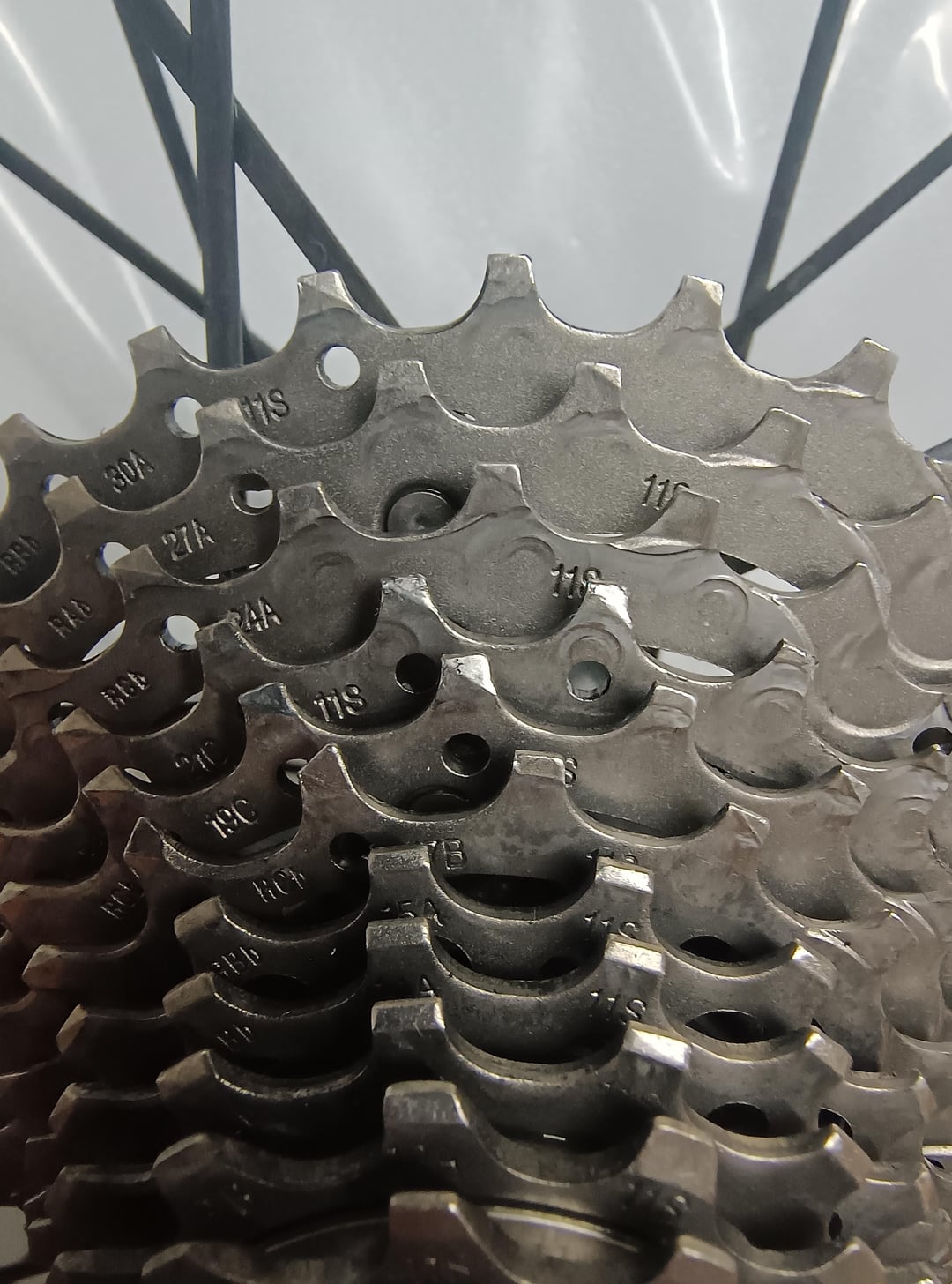
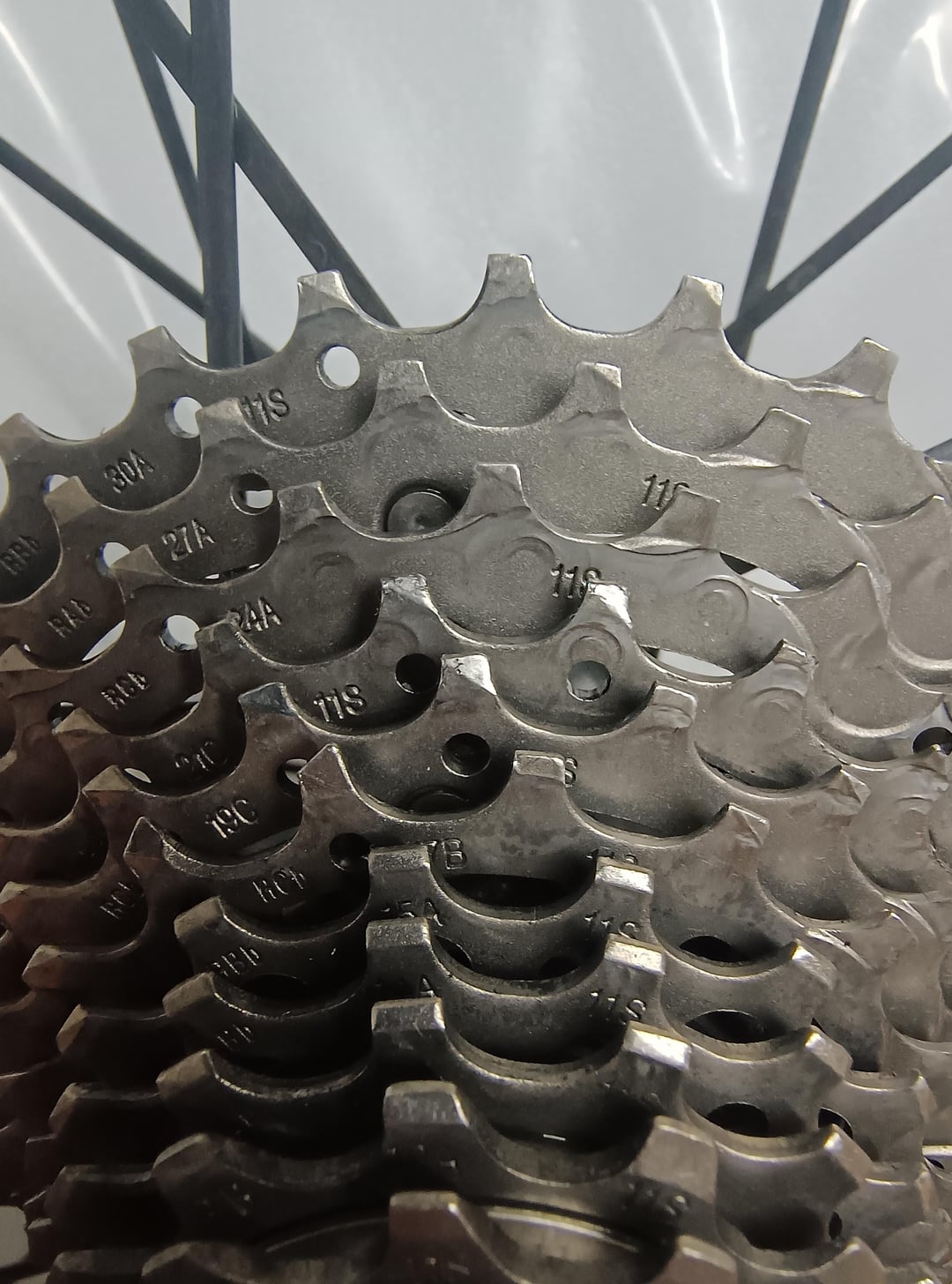
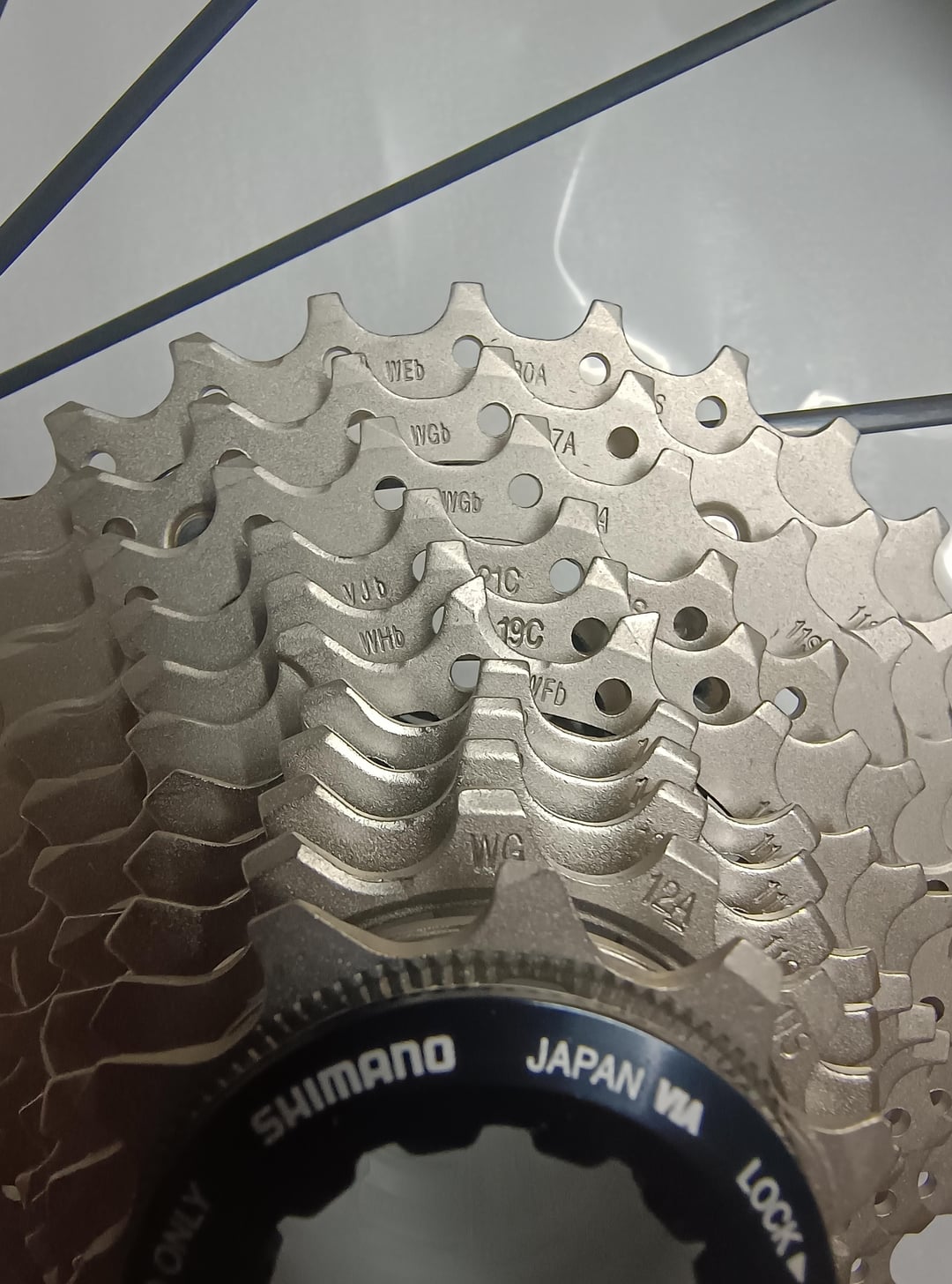
My current cassette has almost 31,000 km on it, so I decided to buy a new one as a replacement.
After comparing the old cassette with the new one, I don’t see a huge difference overall. To my non-expert eye, only the 21T sprocket looks noticeably worn.
In your opinion, does the old cassette actually need replacing, or could it still be fine to run?
by Anticima
9 Comments
Def seen a lot worse still functioning, and I agree about the 21t. If it worked with a new chain I wouldn’t have a problem continuing to use it. You can get something like a Rohloff HG-check for a slightly more objective assessment of wear.
Generally you can’t tell visually unless it’s super far gone
Surefire way to tell if a cassette is worn: If a brand-new chain skips on it.
The one thing that causes the most premature wear on a cassette and chainrings is a severely-stretched chain.
I replace the chain whenever it reaches 0.5% stretch to prolong the life of the cassette for as long as possible.
The picture is your old cassette? Honestly doesnt look very worn to me….kudos for the upkeep.
But like the other commenter said, easiest indicator is a skipping chain.
I see little to no “peening” on the teeth from slipping. I do not replace cassettes until they start slipping or break. The more often you replace your chain, the longer a cassette will last. Worn out stretched chains are the number one cause of premature cassette failure.
How it “looks” isn’t what matters, but that said, it looks BARELY used. I can’t believe that has 31,000 KM on it. My cassettes are usually garbage after just 2000-3000 miles. Granted mine is on a mountain bike and I’m often climbing up rock faces pedaling as hard as I can but even so, thats crazy. Are the cogs on the old cassette aluminum or steel?
I can see some obvious wear on the old cassette – weather it’s enough to slip or prematurely wear a chain is a different question. I’d probably keep the old one around for a backup.
Pro mechanic/shop owner. Chains don’t stretch like string cheese. The rollers wear on them. The chain, cassette, chainwheel (s), and jockey pulleys on the rear derailleur wear in together. Once the rollers on the chain wear, they do not land squarely in the valley between the gear teeth, leading to skipping, popping, and ratcheting. If a rider is a hard/slam shifter (Shifting on the power stroke during a climb), burrs, bent, and broken teeth are all likely to occur on the cassette gears. If the drivetrain is not kept clean and lubed, it wears out faster. We hear the JRA stories in the shop all the time. Drivetrains don’t lie. We inspect them closely, and their condition shows us how to proceed.
You can’t really tell by looking at cogs or chainrings, you have to observe how a new or near-new chain performs with it; if it’s not meshing smoothly with any of the above then it’s worn.
These things are a game of fractions of a millimeter is why.