
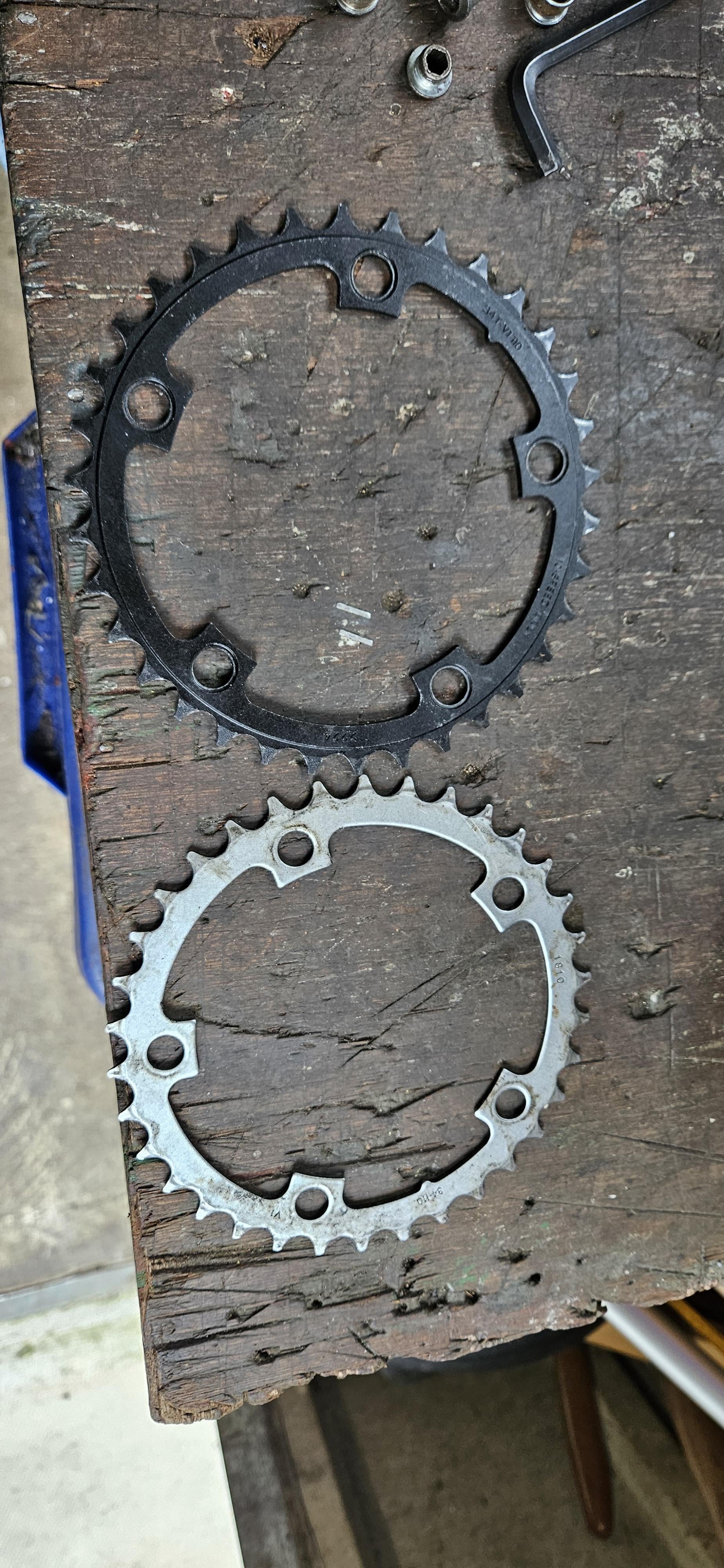
Bought new chainring, 34/110t , the new one has a slight ridge in it and potentially slightly wider (0.5-1mm if that.. ) Other than that same spec?
Why does it skip on new one and not old one?
by bradrly
Bought new chainring, 34/110t , the new one has a slight ridge in it and potentially slightly wider (0.5-1mm if that.. ) Other than that same spec?
Why does it skip on new one and not old one?
by bradrly
6 Comments
Did you replace the chain as well?
If you replace the chain as well and it still slips on the chainring, then there could be a compatibility issue in regards to what speed the chain is and what speed the ring is meant for.
I’d suggest details on what chain, rings etc for not detailed responses.
Is the shoulder of the new ring interfering with the teeth properly meshing with the links or is it the thickness of the ring itself? If indeed the chainring’s too thick, what’s the speed of your new chain. That is, is it 8, 9 10, 11 spd, etc? If your replacement ring is meant for an 8 or 9 spd drivetrain and your cassette’s cog count is north of that, your chain may not have sufficient internal width to properly mesh.
Most likely you are riding with a elongated chain that worn into the old chainring. Buy a Park Tool CC-2 Bicycle Chain Checker, or clone, and verify that the chain is the right length. These are foolproof, and just easier for most people to use on a regular basis.
By the way, if you ride with a stretched chain it basically ruins the gears. Because the chainrings are aluminum and only 2 of them, it tends to ruin them first, but eventually it will impact the cassette. This is because you engage just one tooth. By doing this, it then wears a groove into the gear tooth, shaping it to the chain. This give the illusion of working, but it has just worn away material.
If you rigorously replace your chain at 1.5% to 1.7%, the entire drive train will last longer.
Agree with others. It’s probably your cassette. Skips in the smallest cogs and not the the bigger cogs on the cassette, I’m guessing? If so, you just need a new cassette or freewheel.