
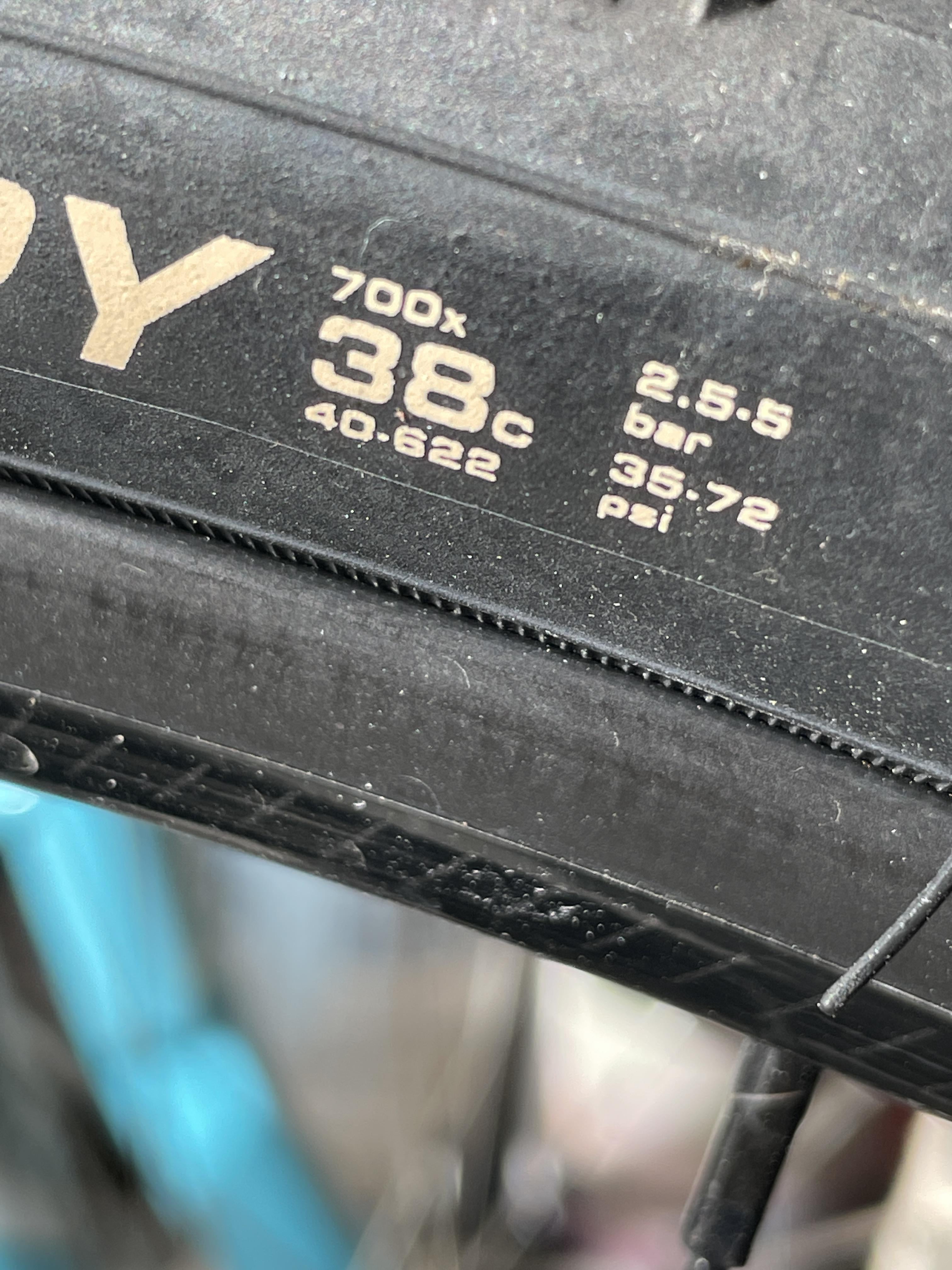
Both my bike and my kid’s bike both have 700×38 tires, but just looking at them I can tell that they are not the same width. My tires are actually 36mm and his tires are just over 42mm. His tires are even marked as 38mm, and then have 40 under it. Well, that’s confusing. Is there any real standardization with tire widths? Am I missing something basic?
by Spiritual-South-442
14 Comments
> Is there any real standardization with tire widths?
Absolutely not. We are talking about a field where 700c, 28” and 29” are all the same size, and 27” is bigger than all those. 650c is the same as 26” which is different from 650b which is also 27.5”, with 27.5” being smaller than 27”.
The width of the rim has an influence on how wide the inflated tire will be.
The width of the rim can change the final shape of the tire, any of the following can explain the difference: both bikes in question have different rims, both bikes have different makes/models of tires, one/both of the bikes is using a different width of rim than the tire manufacturer(s) used when measuring the tire.
Casing is 40. Tread is 38
40-622 is when they measure the casing according to they way ETRTO demands (which doesn’t account for how much tread there is)
700x38c is kind of a guesstimate of what happens when the tire goes on a typical width rim. Having a wider or narrower rim also affects how wide the tire ends up.
The casing can also stretch when inflated or over time, depending on how it’s made. Installing the same tire tubeless usually winds up wider than with a tube.
Basically it’s hard to measure squishy things.
Width of inner rims matter. My tires for instance are 32c but measures 34mm with 25mm inner rim width wheels.
In addition to the rim size effect and the inconsistent ways in which manufacturers measure them, tires also tend to grow wider with age and use.
Labeled size different than etrto is somehat common. Maybe etrto measure is 40 but manufacturer labels as 38 for whatever reason maybe the tread width is a little narrow compared to the absolute widest part of the casing. I wouldn’t worry about too much.
They have to imprint the mold with the measurements before they actually make the first tire, so they really have no idea how big the tire will be (other than experience and guessing).
Some manufacturers make different rim assumptions, some try and report expected true size, others report conservative assumptions and want to guarantee their tires will never be oversize and be unable to fit a frame. Others are just inconsistent.
I recently replaced tires with same brand, expecting that 2.8” would be bigger than their 2.6” for a ride with a lot of loose sand. Old ones measured 2.63”, new ones 2.61”. Grrr.
Nah, just send it!
Also don’t forget that the height of the tire can vary wildly even if width is the same (which it basically never is even for the same brand) and that factor impacts handling characteristics (especially for mtb)
Rim width is what you are missing.
What’s you rim width?