
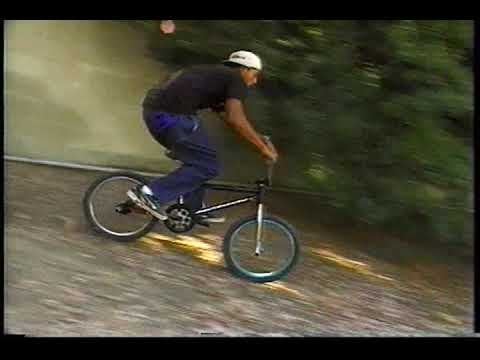
I’m pretty new to BMX and I just discovered mid-school bikes thru the [Role Models – Ride BMX 1998 video](https://youtu.be/8rl1cuRBOUw). I thought they were really intriguing since they’re noticeably different to the BMX bikes i see today. I got a couple of questions about mid-school bikes for the people who were around that time could answer.
Are there any differences in the mid-school frame and the new-school frame? Why were the front sprockets so big and the handlebars small? And why were the seats raised high?
Did they serve any practical purpose, or gave an advantage in the style of riding they did? Or was it kind of like a thing that everyone had, similar to how skaters in the 90s had such small wheels.
​
by spitshinemcgee
3 Comments
So, sprockets were the standard 44t size as bmx hadn’t at that time got cassette hubs which allow a much smaller rear cog, our bikes back then used a freewheel and those mostly were 16t, you couldn’t run anything smaller. Bars were smaller mostly, just because! That was the style of the time, taller bars did exist but were almost only used by bmx race guys, in fact taller bars didn’t start to make a return till around 2003’ish and even then they were around 8-8.5″.
Seat height is mostly because that’s how tricks like barspins were achieved, the seat was gripped between your knees, the same applied for suicide no-handlers. How those tricks changed and were later learned, meant a differing technique that meant a high seatpost wasn’t as necessary.
And last but not least, frames were built with much thicker tubes, gussets, thicker dropouts, and the geo was more all round as well, since freestyle bmx meant riding everything. This means considerably heavier frames, as the thought process was thicker and heavier meant stronger, which isn’t really true as such, but it’s why a good percentage for bmx frames were 7-8 lbs. You’ve got to bare in mind, these were the best bikes of their time, and in a lot of cases, the era saw many firsts as bmx got much crazier, so the riding was incredibly tough on bikes where riders were figuring out tricks.
Difference between a mid and a modern frame? Geometry was all over the place at that time and there were more bikes made for a specific purpose.
You’d have much longer chain stays on most bikes and the rear dropouts would be overbuilt but have a smaller space for a smaller rear axle. Quite often the dropout would act as a bit of a hub protector.
We now use micro-gears but there the same ratio as the old dinner plates and 18t sprockets. We ditched those when tooling and materials got better and strong enough to produce smaller parts that could take similar strain.
Bars got tiny it was the trend for a while. It’s because mid school bikes had shorter top tubes so your legs/knees could catch a bar.
Seat height was because people didn’t wip as much as they do in modern riding. High seat is useful for gripping for barspins and no handers. Also better for getting your point of balance in a nose manny.
I don’t know why the hell the short seat post thing took off. I’m 6 feet tall and always had a hell of a time gripping the seat with my knees unless I raised it.
I suppose it could have been a weight thing. Back then bikes were so damn heavy we’d take any slight advantage we could get to shave weight. I remember at one point BMXplus ran an article about how to “safely” cut down your dropouts. That’s how fucking crazy the “save weight” got 😂.