
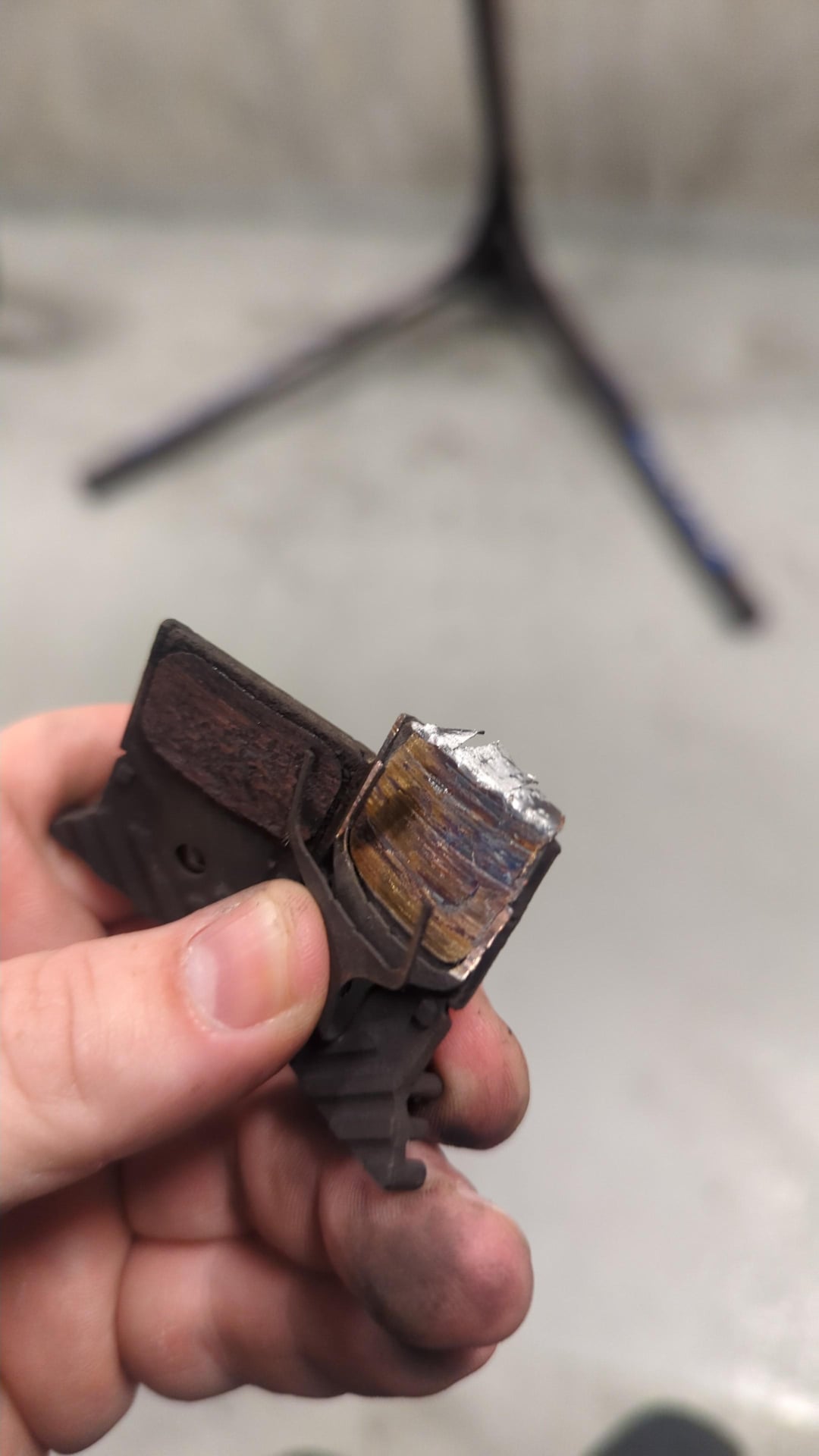
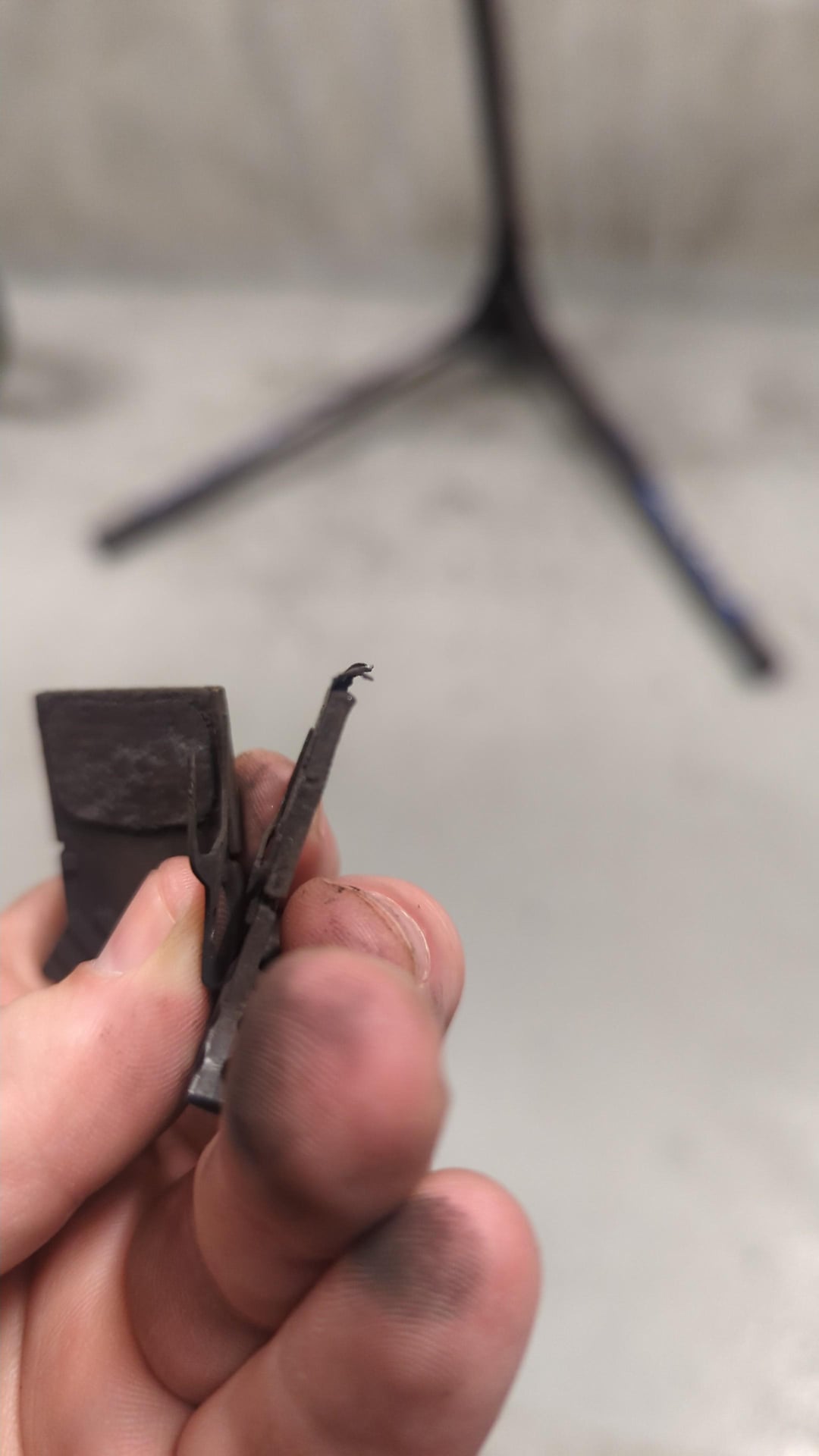
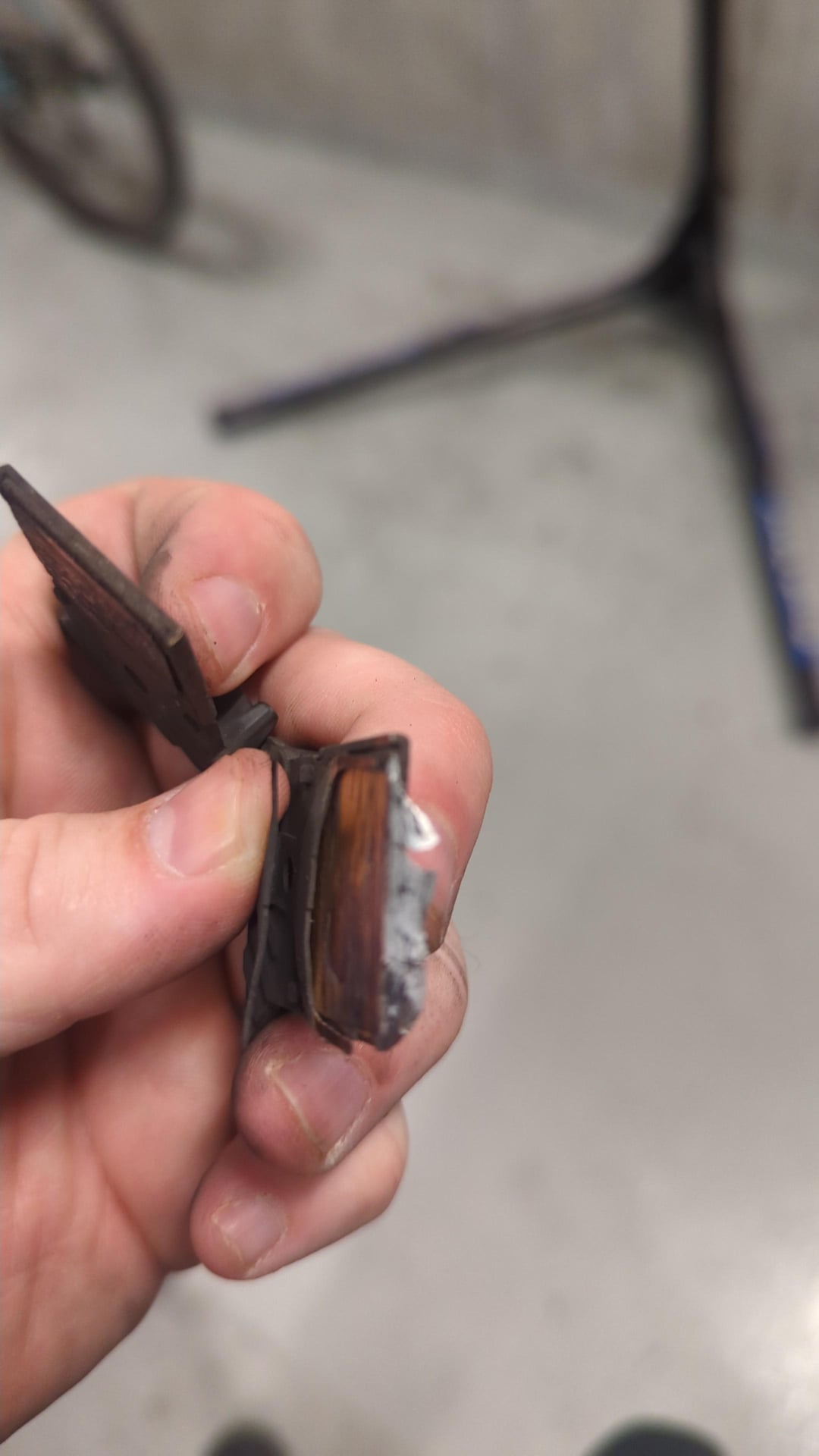
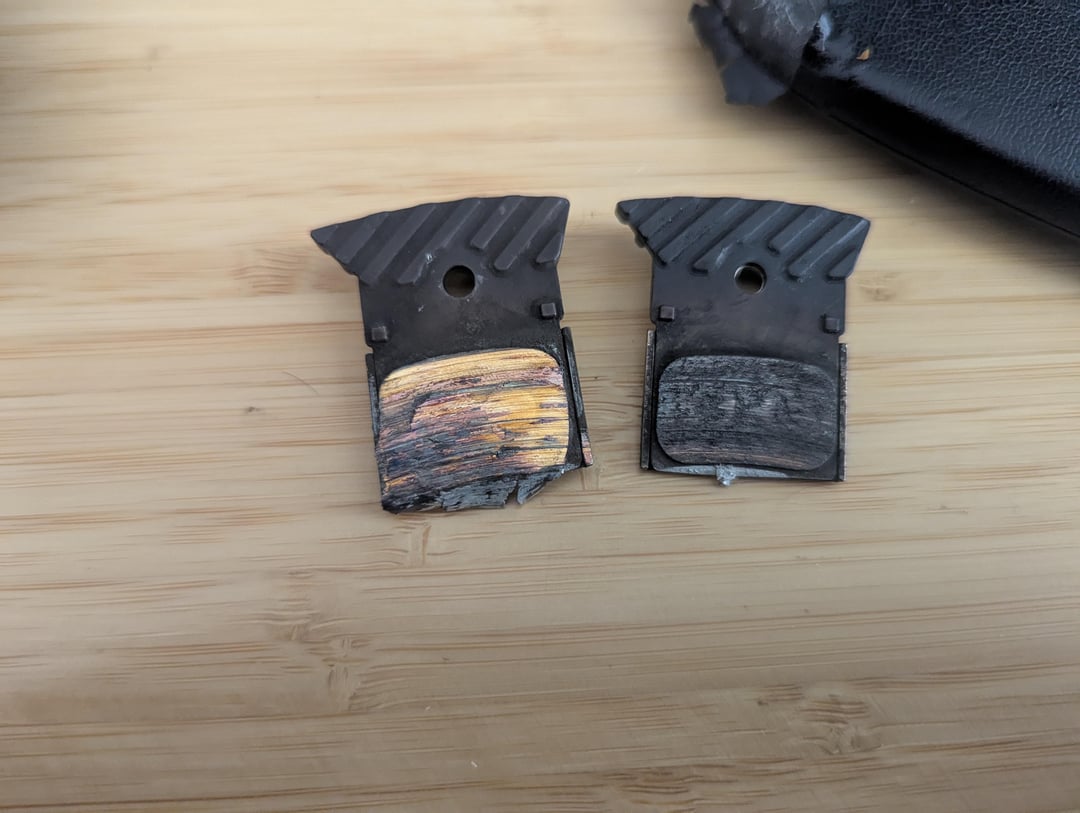
I'm struggling to understand how to describe it. For background I probably put 60 or 80 km on the pad after I first noticed the squealing before actually swapping them out.
I've never seen anything like this before (maybe only changed pads like 20 times). In the rainy cold winter I have certainly ridden pads longer than this.
I was just curious if it meant anything that I should worry or change. In one the pictures you'll see another pad, I don't know for sure if it came from this brake but I guess there is a little bit of it, however in that case, it's not the pad material but the bottom and backing but on this one the pad material seems to melt into whatever is being smooshed off the bottom.
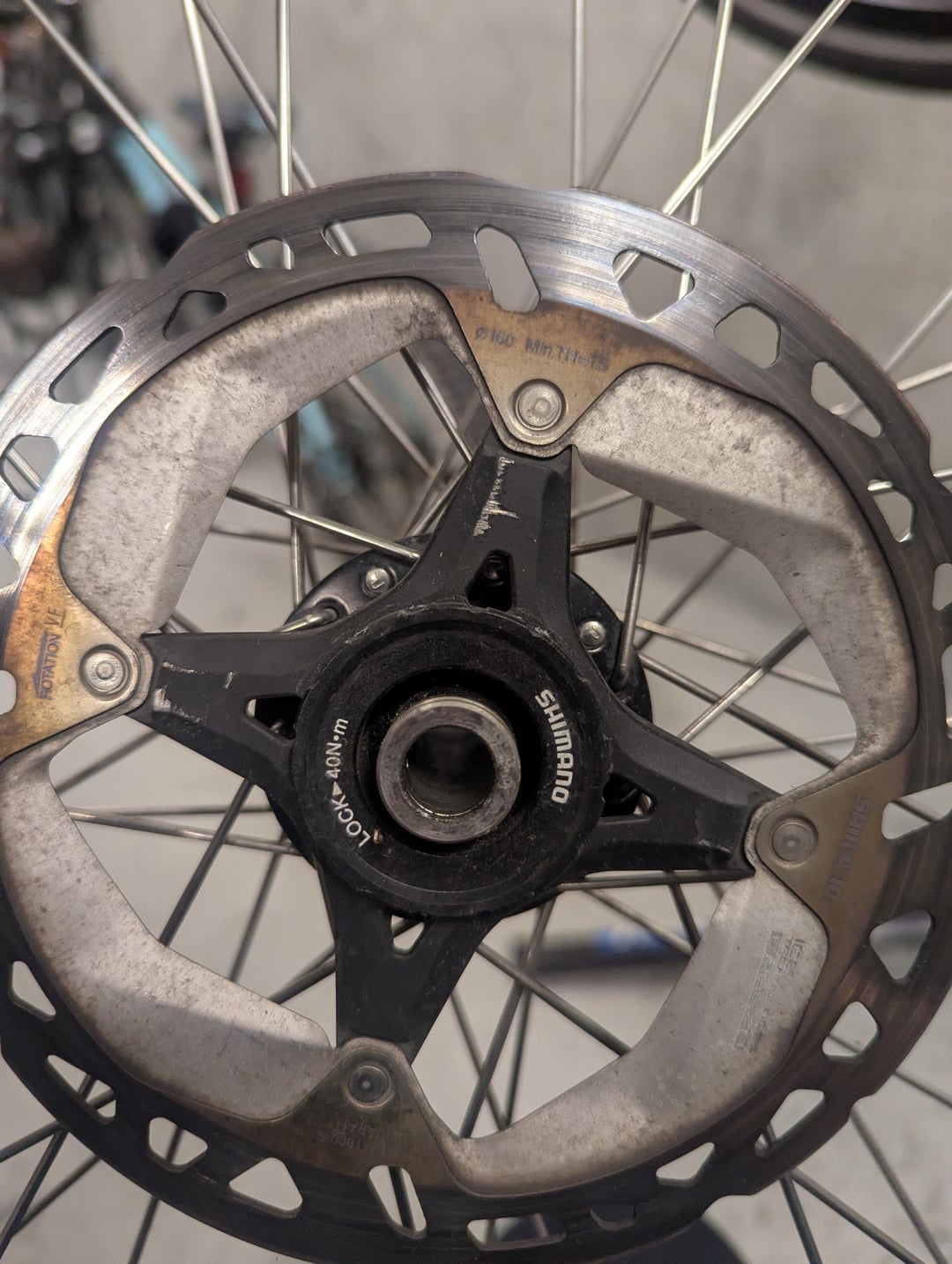
I also included a pic of the rotor.
These are Shimano BP-L04C-MF pads and are my front rotor.
I guess maybe something that has changed is that before I would say I would use my rear brake 95% of the time but for the past week or two, I've been trying to exclusively use the front.
I guess one thing I notice with these brakes is that when I am coming down a hill and brake with them my front rotor does seem to sound noisey and rub upwards of a few minutes after.
Any answers appreciated, thank you.
by SJrX
5 Comments
I mean you went past replacement point. Replacement point is before the pad material is fully exhausted. On the other hand you seem to have heat dissipation issues. You’ve got ice tech pads and rotor so maybe a larger rotor would be the solution.
Looks like you were metal to metal for a while, but the other pad looks mostly untouched.
Were your rotors centered in the calliper when they were changed / when was the last time you had a proper bleed?
Looks like perhaps the piston(s) on one side are toast so it’s all coming from the other side, prematurely wearing that pad out.
The only thing I can reason is that you are overheating these pads so much the metal in them is literally melting and getting sloughed off once softened. Your rotor also shows heat discoloration and your pad springs look charred/covered in soot, which is which is consistent with my theory. Using one brake would increase the heat you are loading into that brake’s parts compared to if you were using both brakes, since you’re loading all your kinetic energy (in the form of heat) into a single brake caliper rather than two, and furthermore that halves the amount of surface area available to shed that heat, so the cooling rate is halved compared to if you used both brakes equally.
Despite this idea, I have never seen pads melt or wear in 80km like this so honestly this baffles me. Normally you hear people complain of rotor warping and pad fade and brake fluid boiling before it ever gets so bad. Do you live in a mountainous area and/or are you/your bike very heavy (i.e. do you ride an e bike?)? Either factor would increase the amount of kinetic energy per km you are asking your pads to dissipate.
In any case, use both brakes instead of just one. Try to divide your heat loading evenly across both. If you’re still having problems, get bigger rotors or even a brakeset with bigger pads with more surface area for heat shedding.
You abused those pads well beyond their useful life, entirely consuming braking material and then metal backing material.
The correct way to brake pad is periodic inspection for remaining thickness not “wait until they squeal and then keep riding a bunch”.
You’ve also done heat damage to your rotor (and possibly the aluminum spider).
I assume that’s caused by re-entry from a low earth orbit