
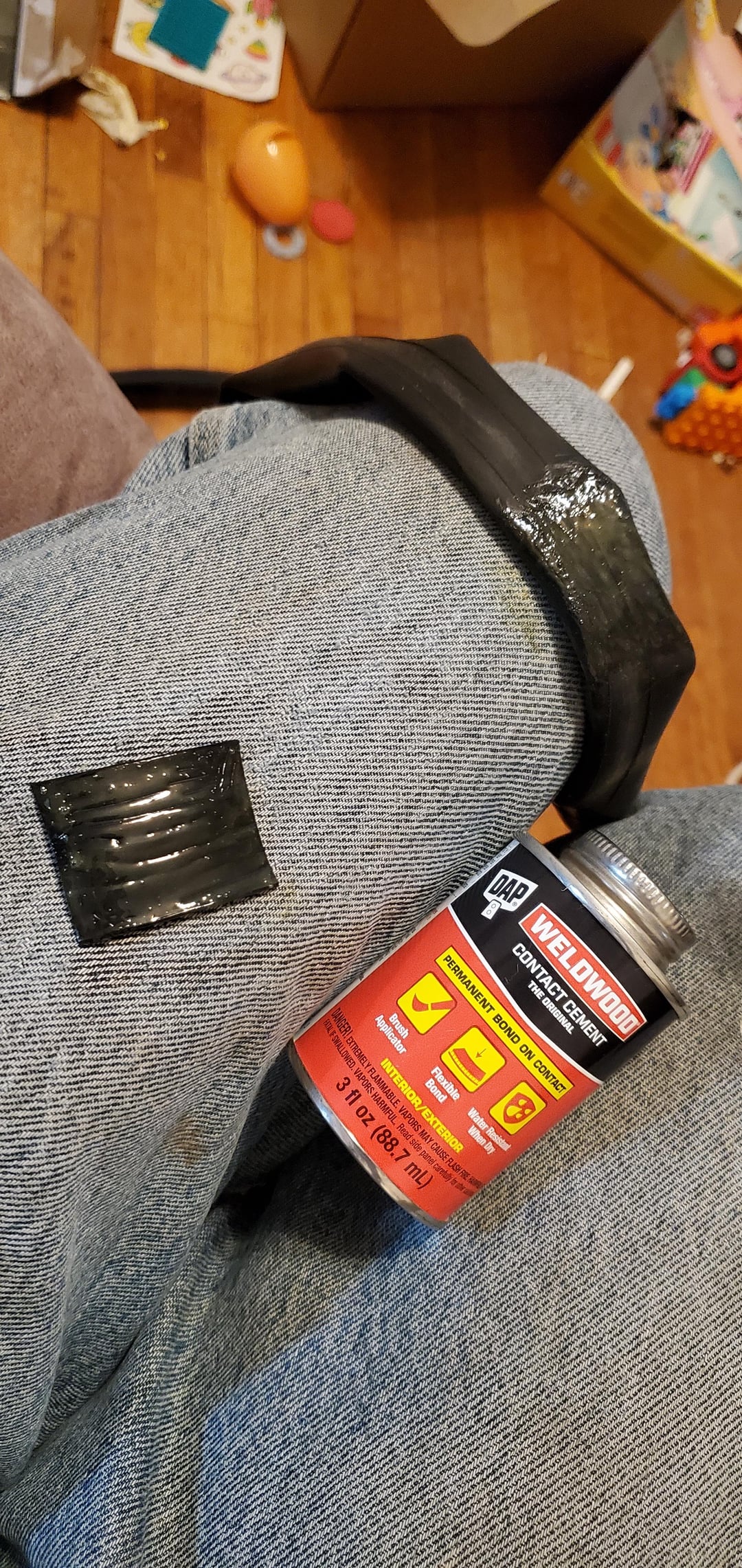
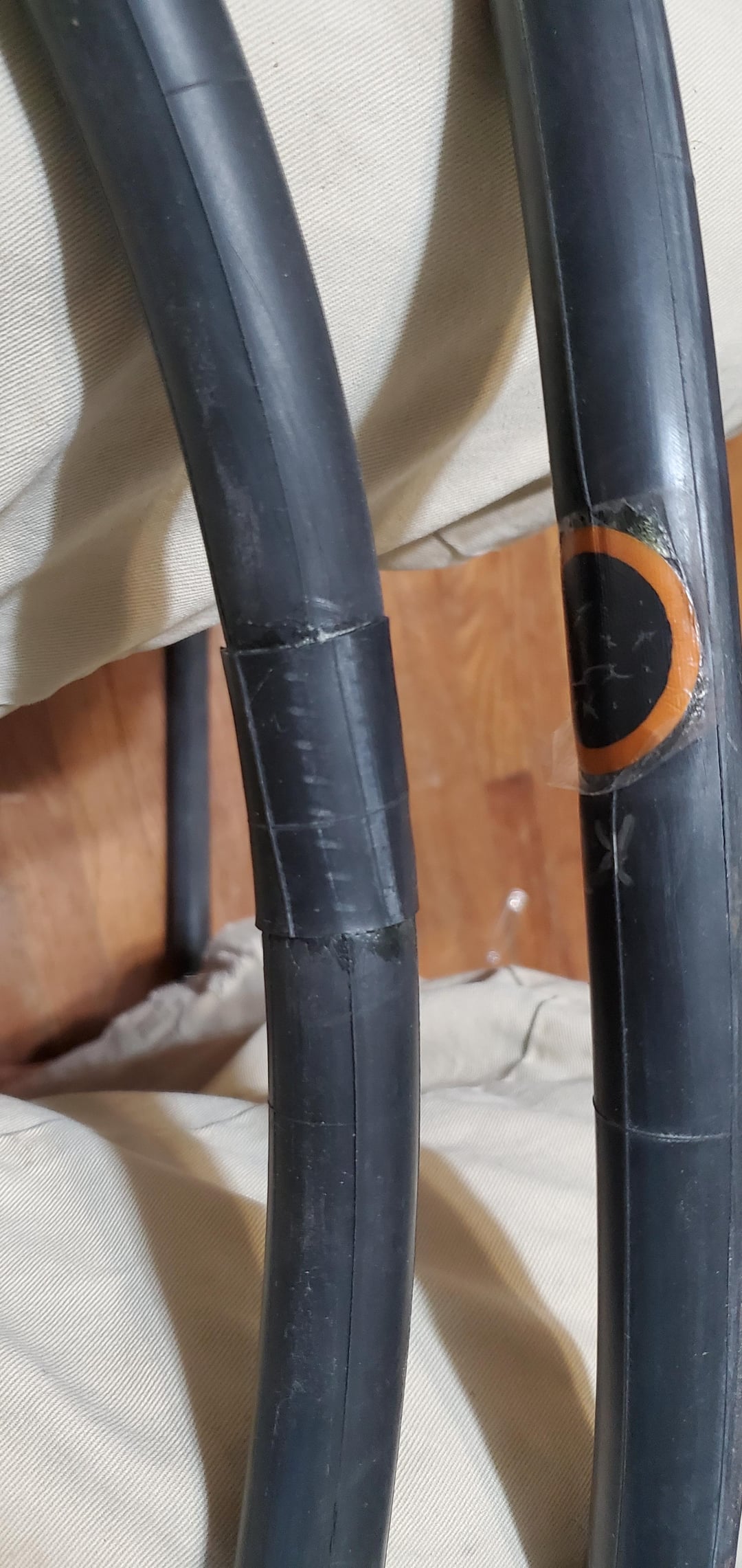
My dad told me he used old parts of tubes to patch his tires on his cross country trip ( road from ks up west coast got sick in SD, milage but not sea to sea). Been having a terrible time getting patches to work lately so I gave it a try. It worked and I didn't go to half the work of sanding I did to get the other patch to stick.
Think I'll be using up worn out tubes for patches from now on.
by bionicpirate42
6 Comments
The secret is using the good glue.
Bro. A new tube is like $7.
“Glue free” patches exist. And TPU tubes.
Yup. I’ve done this for years. Same brand of contact cement. I usually wait until I have 6 or so tubes to patch and do them in one go, 60 grit sand paper. Only issues I’ve had is if I didn’t sand enough, didn’t remove the dust from sanding well enough (rubbing alcohol), or didn’t let the adhesive fully dry first.
I usually round the corners of the patch, necessary or not, I don’t know.
Before moving the patched tube back into rotation I put it in a tire and pump it to max pressure, and make sure 24 hours later it hasn’t lost more air than a new tube would.
Make sure to give the glue a good stir before using, and screw the lid down tightly after use (I use channel locks until the lid bottoms). After several uses, the solvent will evaporate and leave the cement very thick, almost like a glob of rubber, at that point it is trash.
I tried this approach (albeit with my rubber sandals). Used vulcanizing glue when they came apart, and it didn’t work. Then I put a bike patch on them, and it worked. I think the secret is that patches have unvulcanized rubber on their lower side, and it allows them to bond with vulcanized rubber. Then again, my sandals probably have different composition from inner tubes.
Park Tool Super Patch all day long. No glue and have never failed me. Comes in a tiny carrying case the size of a quarter.