
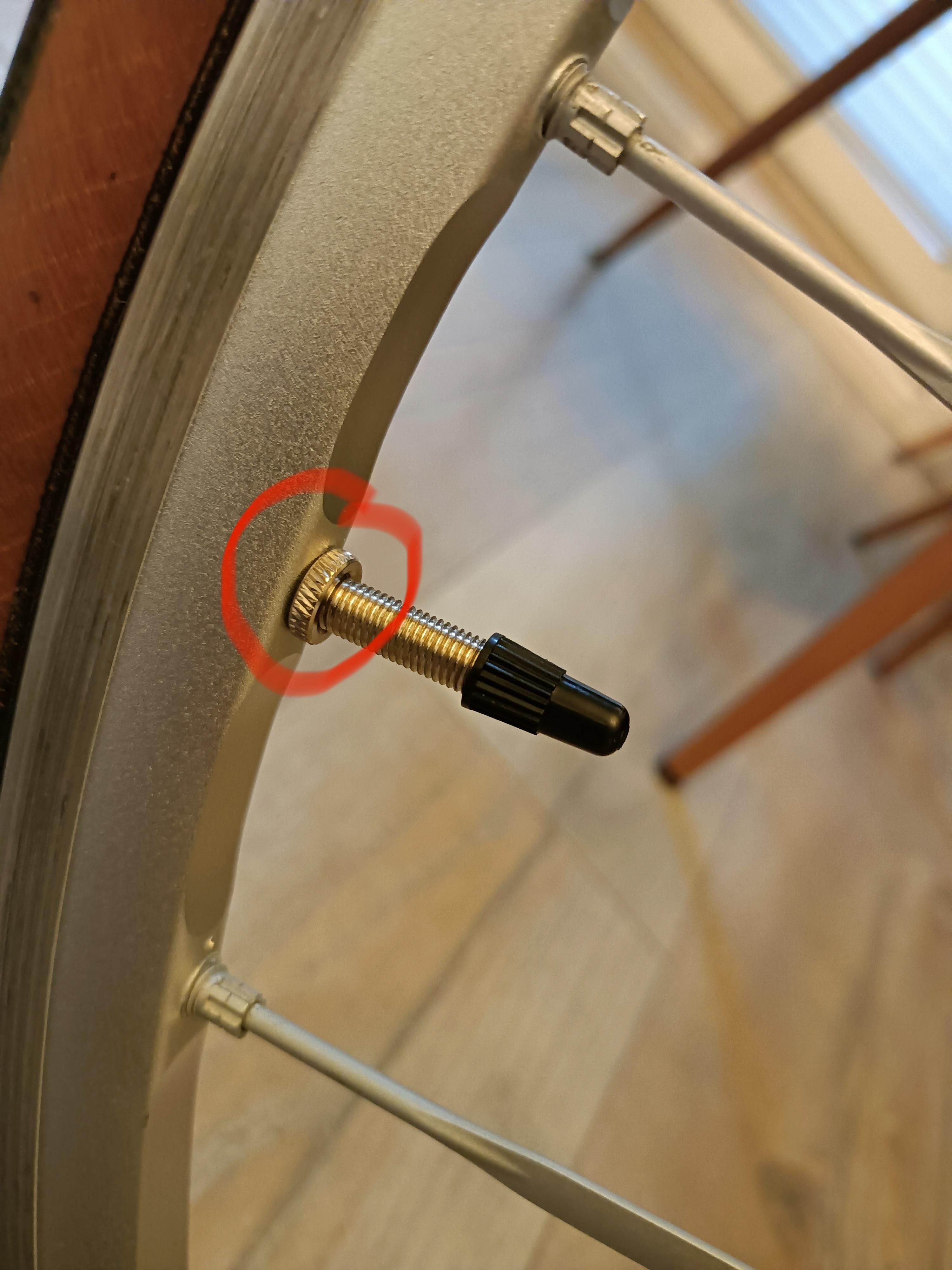
They always seem to go loose because of vibrations, should I screw them harder or something. Or just don't use these at all?
by FroshenSCP
They always seem to go loose because of vibrations, should I screw them harder or something. Or just don't use these at all?
by FroshenSCP
21 Comments
I like them so the valve stays in place during installation.
I usually just throw them away. On some rims you can damage the tube if you tighten them down and it pulls the tube into the valve hole.
I usually tighten them just enough to stay there till the next time I pump up my tires (about every 3 days). Their main purpose is to basically hold it in place. If you choose not to use them or have lost them, you’ll be fine.
They’re only there to stop them rattling around, you could remove if you want or just snug it down with your fingers until it’s tight
Keep old one and use as a locking ring on new valve. Good for tubeless setup as over tightening the valve can cause a leak and stops it rattling itself loose.
I find they stop the valve rattling if noises bug you, they can also cause rattling because they come loose all the time sooo
An alternative solution is to remove the nut, remove the cap, take a piece of electrical tape and push it over the stem onto the rim.
If it’s a tubeless valve use it. If it’s a tube you don’t really need it, but it’s helpful when installing.
I go finger tight as hard as possible, and then slightly more with pliers. But not too much or you’ll rip the tube.
The point of the nut is to stop the tube sliding with the tire in a situation that the tire slips on the rim.
Rule 60
Yes, they are useful and decrease the chances of flats near the tip as it bends around the opening.
Working in a shop we always leave these super loose. They’re a huge cause of flats when they’re tight.
Functionally they don’t really have a purpose other than helping line up the tube during install. I would leave them off but most people complain if they’re missing.
Use a small rubber o ring in between it and the rim and it’ll stay tight and stop the rattling of the stem in the valve stem hole.
Sure, suggest 15nm, maybe 25nm if you have carbon rims.
They’re helpful when changing or inflating a tire. This is an incredibly convenient place to store it for when you need it. As someone who rides fixed and appreciates a quite bike these are a must imo. Mine don’t loosen, harder maybe?
Tubeless yes, tubed not really. Also might depend on your rim and valve hole. Some hole diameters are larger thus you get a rattle.
With innertubes I never use them, when I did use them I have had valves that tore off from the innertube, didn’t happen anymore after.
I grease the bottom few stem threads then lightly finger tighten the ring. The grease keeps it from making any noise and does a bit to stop it from coming loose. Without grease i found they come loose with any amount of finger tightening.
When the tube is deflated the valve stem doesn’t push into the rim. Also, it means the tube doesn’t slip so the valve is at an inconvenient angle which I remember happening all the time with Shrader valves when I was a kid.
If you have a press-on pump head, the nut makes it slightly easier to push on the head without having the valve disappear into the rim.
That is the nut’s only possible value. Many tubes these days don’t even have threaded valves, making it impossible to use a nut.
The valve cap, on the other hand, serves no purpose at all.