Leave it as it is and just buy a singlespeed/fixie
monfuckingtana420 on
Best bang for your buck is to find a used wheelset (or just a rear wheel) and a slightly more modern crankset that you can put a new chainring on. Go new for chainring, chain, cog/lockring, and tires. The rest of the conversion is just taking off stuff you don’t need and finding used parts. Ideally you can find a bike co-op near you for parts and tool time
GANGofFOURSTAR on
leave it alone, not everything needs to be converted
jibbris on
It seems too big for you
skido4 on
I have a conversion, used parts are always the answer.
franglaisflow on
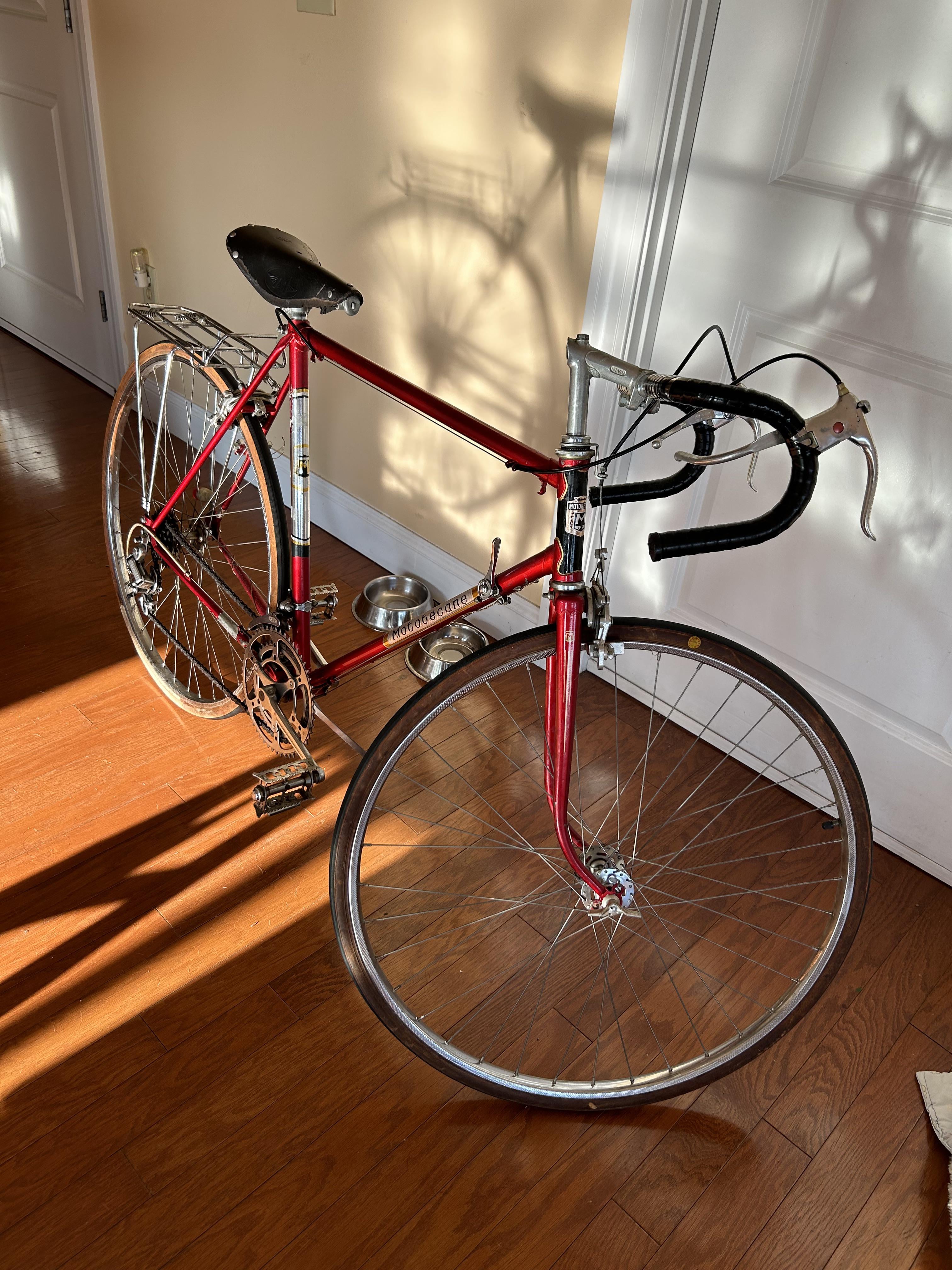
Don’t, that is a classic French bike.
Avan_Nikita on
Don’t use a vintage road frame as a fixed-gear ride. I did it once and pretty much regretted it.
1. The bottom bracket area of vintage road bikes-especially if the bike was regularly ridden rather than stored-is not strong enough to handle the force of backpedaling while modulating speed. It might hold up for a while, but under excessive force, the threads can start to strip. French bikes, in particular, tend to have thinner metal in the bottom bracket area. (I’m currently working on a Motobecane C5.)
2. Bottom bracket height is another issue. While you can get used to cornering, riding fixed on a road frame isn’t safe because the pedals sit closer to the ground, increasing the risk of pedal strikes.
3. After spending time and money converting a road bike, you’ll likely end up buying a proper track frame anyway. Instead, leave it as is, give it some maintenance, and enjoy the gears from time to time. Plus, with enough clearance for 32mm tires, it’s already a great setup.
4. Motobecanes, in particular, have some unusual parts, often with French (or sometimes Swiss) threading. I ran into a situation where I couldn’t find a modern cartridge bottom bracket replacement. Now, imagine putting extensive wear on the crankset while riding fixed gear-it’s a real pain to source those parts when they eventually need replacing.
BeligerantBob on
The cheapest way to do is to use a W-07 lock washer, a spanner-style headset lock nut, and a threaded cog. You have to dremel a keyway in your hub for the washer. Then you screw on the cog, put the washer on with the inner locking tab in the keyway. You lock everything with your steering stem lock and bend the tab of the washer into one of the spanner slots of the lock nut.

8 Comments
Leave it as it is and just buy a singlespeed/fixie
Best bang for your buck is to find a used wheelset (or just a rear wheel) and a slightly more modern crankset that you can put a new chainring on. Go new for chainring, chain, cog/lockring, and tires. The rest of the conversion is just taking off stuff you don’t need and finding used parts. Ideally you can find a bike co-op near you for parts and tool time
leave it alone, not everything needs to be converted
It seems too big for you
I have a conversion, used parts are always the answer.
Don’t, that is a classic French bike.
Don’t use a vintage road frame as a fixed-gear ride. I did it once and pretty much regretted it.
1. The bottom bracket area of vintage road bikes-especially if the bike was regularly ridden rather than stored-is not strong enough to handle the force of backpedaling while modulating speed. It might hold up for a while, but under excessive force, the threads can start to strip. French bikes, in particular, tend to have thinner metal in the bottom bracket area. (I’m currently working on a Motobecane C5.)
2. Bottom bracket height is another issue. While you can get used to cornering, riding fixed on a road frame isn’t safe because the pedals sit closer to the ground, increasing the risk of pedal strikes.
3. After spending time and money converting a road bike, you’ll likely end up buying a proper track frame anyway. Instead, leave it as is, give it some maintenance, and enjoy the gears from time to time. Plus, with enough clearance for 32mm tires, it’s already a great setup.
4. Motobecanes, in particular, have some unusual parts, often with French (or sometimes Swiss) threading. I ran into a situation where I couldn’t find a modern cartridge bottom bracket replacement. Now, imagine putting extensive wear on the crankset while riding fixed gear-it’s a real pain to source those parts when they eventually need replacing.
The cheapest way to do is to use a W-07 lock washer, a spanner-style headset lock nut, and a threaded cog. You have to dremel a keyway in your hub for the washer. Then you screw on the cog, put the washer on with the inner locking tab in the keyway. You lock everything with your steering stem lock and bend the tab of the washer into one of the spanner slots of the lock nut.