
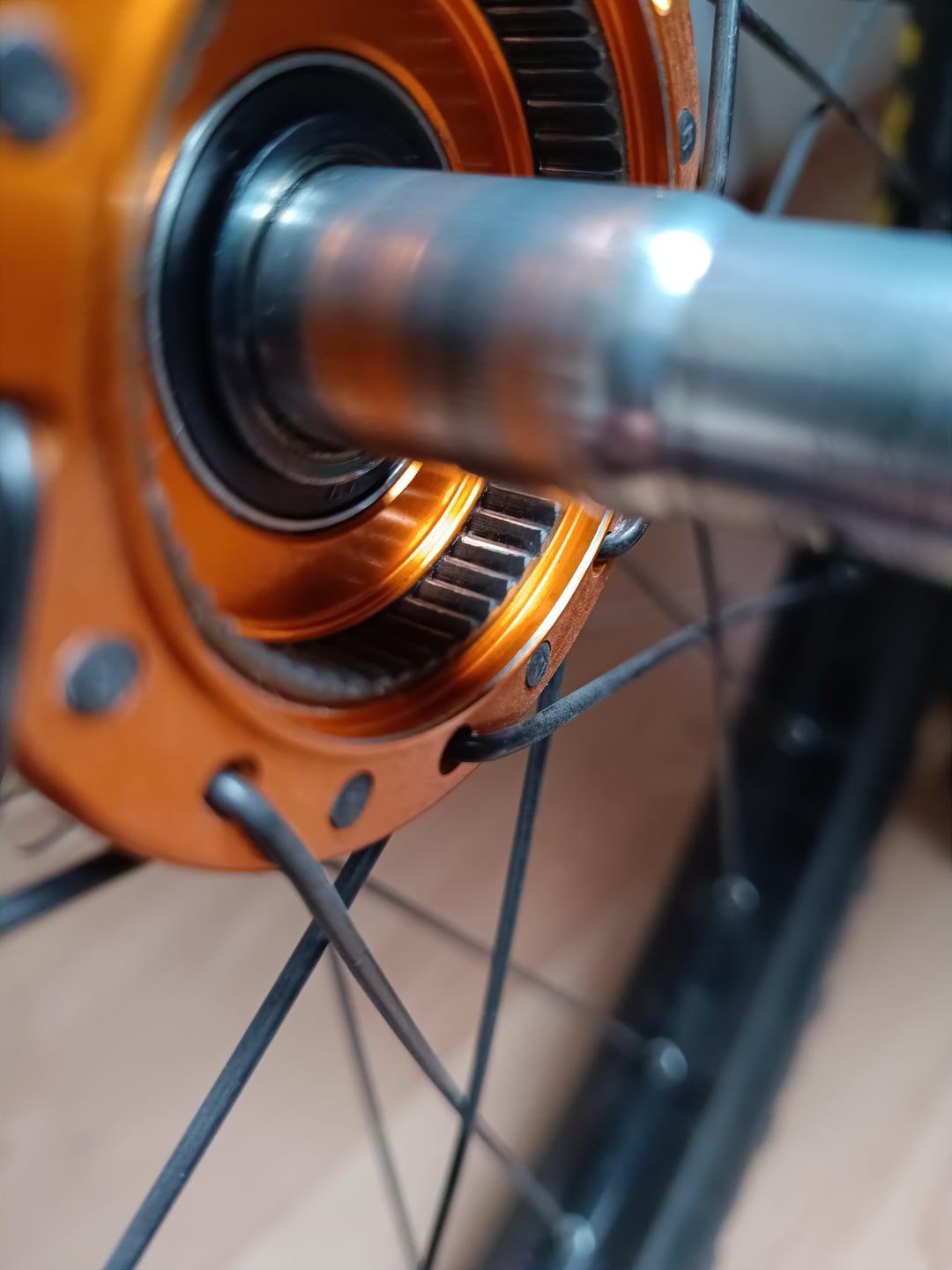
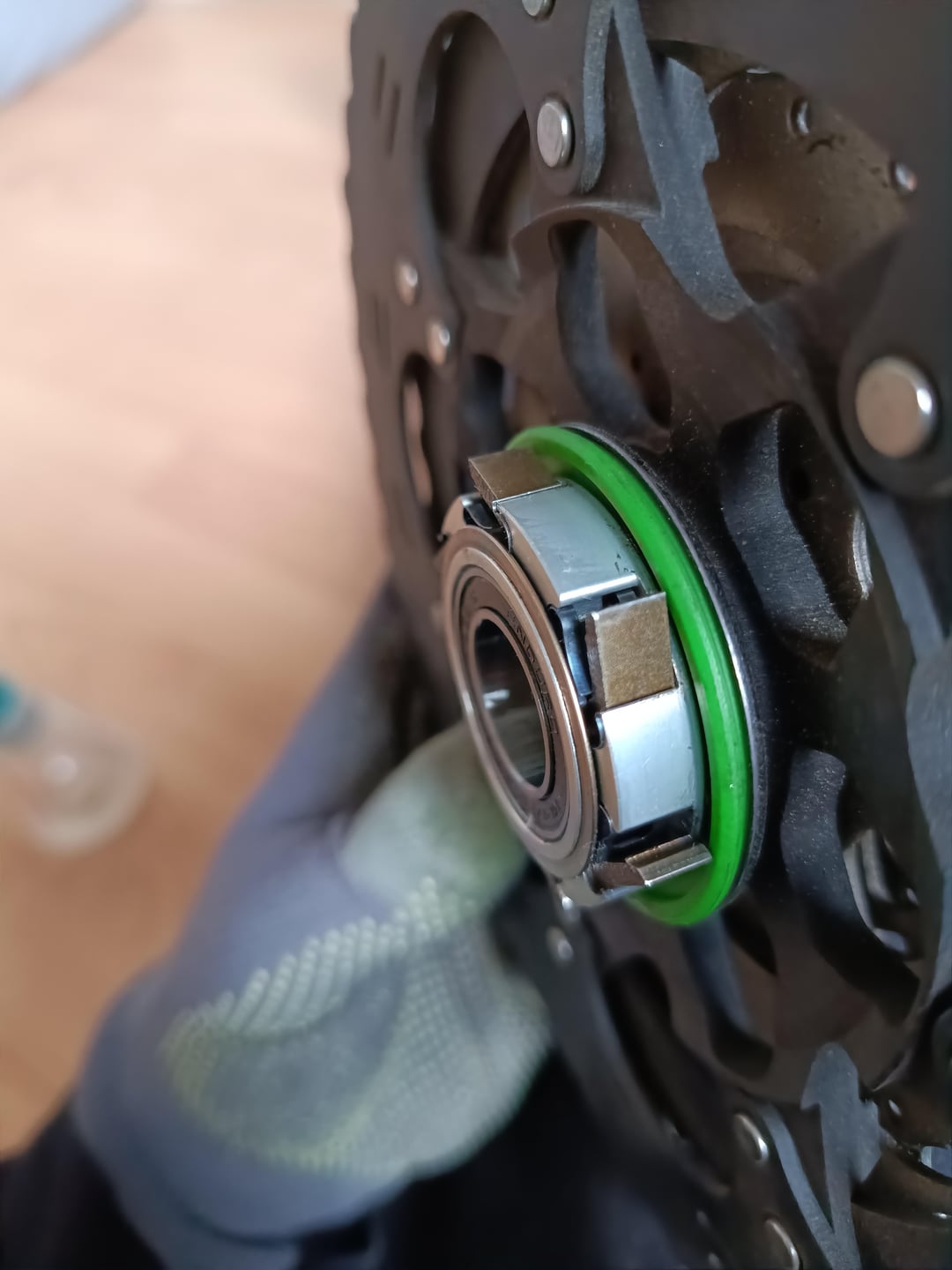
Has anyone else had this issue with their pro 5s? I've had the pawls occasionally slip on me and after a little while I got worried, so I opened it up only to find shards of ratchet ring all over my freehub. In the first pic you can see the shiny metal areas on it where the force from the pawl broke the top half of the teeth off of the ring. Btw I already contacted hope and they said it can be warrantied. Just wondering if other people had similar things happen to the same and/or more expensive hubs eg.: i9 hydra.
by rathymilan_
1 Comment
Higher engagement = less durability.
This is true of basically any pawl or ratchet drive based hubs. DT Swiss 54t ratchets fail way faster than 36t. Hydra hub failures a quite common (though usually the axle goes first, because their design depends on the aluminum axle flexing to engage the pawls). Mavic and ENVE’s shared ratchet system started with a 40t option only, and they introduced a 24t ratchet because the 40t couldn’t withstand high-torque MTB applications for long (much less e-bike loads).
Higher engagement requires shallower teeth on the ratchet or pawl ring. So while they engage faster and more frequently, the engagement surface has much less depth, making it less capable of withstanding force, and making wear and tear more noticeable, much faster. Higher engagement hubs are also more sensitive to grit and contamination, requiring more frequent maintenance to ensure their performance and durability.
There are some exceptions – Chris King’s helical spline almost never fails, due to the long engagement profile and the way pedaling force engages the splines (but does depend on more frequent service for best performance). Sprag clutch systems like Onyx uses are incredibly durable and serviceable, at the cost of additional drag.
Honestly, the pursuit of higher engagement comes with serious downsides that most riders fail to consider. And most riders also seriously overestimate their willingness or ability to service and clean their hubs. It’s basically useless on road and gravel bikes, and not critical for most casual MTB riders.