
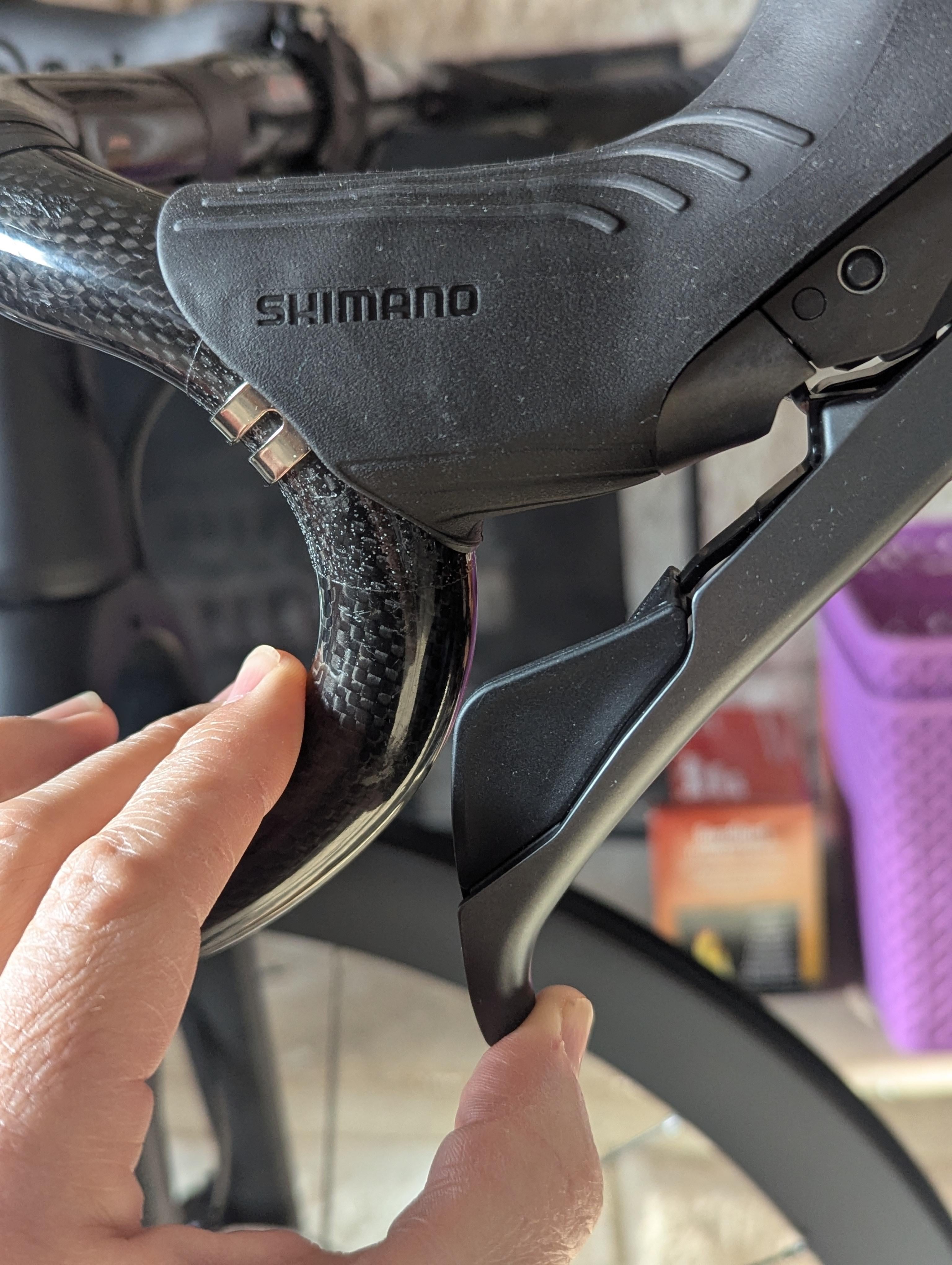
Installed new GRX hydraulic brakes. Did the complete bleed while following along the park tool video. Burped the line at the handlebars until there were no bubbles. The brakes engage pretty early but there seems to be a lot of slop. The picture shows where the most resistance is… Way more than half the reach of the lever. I don't really have a frame of reference to know if this is normal or if I still have air in the lines. Help!!
by lowroll53
8 Comments
Yeah your instinct is right, there’s still air somewhere. This is the rear brake? It’s notoriously more difficult to bleed. Keep bleeding until it feels tight at the lever with the bleed block in
I got the same problem after bleeding my shimano tiagra rear brake.
I’d appreciate advice or some learning material. I also watched the Parktool video, but I believe the air is still there.
I like to do 4-5 bleeds to get all the air out. Just make sure you close the funnel and valve on the caliper between refilling the syringe
Is it just me or would filling the entire system from the bottom up with the syringe so that the entire volume is circulated, get rid of the air bubbles? It seems logical but I’m guessing it’s wrong.
By complete bleed, do you mean you pushed hydraulic fluid in/out through the caliper while having the cup attached to the brifter port? I see you mentioned burping and that’s totally fine for a touch up but I would go a step further when installing new lines.
And did you make sure there were no low spots in the brake line path so the air bubbles had a continuous uphill path to follow? Often brake lines form a U shape where they descend after the caliper to get around the BB. This needs to be angled up for optimal bleeding.
I had the same problem with my GRX rear brake. The Park Tool video is a great guide. I found, in addition to rotating the bars to allow bubbles to rise from the reservoir to the cup, I had to rotate the bike in the stand to ensure the caliper was at the lowest point possible.
A trick I use that isn’t canon to the Shimano instructions is to disconnect the caliper from the bike and reorient it to try and lead any air bubbles within the caliper to the caliper’s bleed port. Bonus points if you do this with the funnel off and a strap or helper holding the brake to pressurize the system, in theory this should make the bubbles more mobile. Then, orient the caliper so the caliper bleed port is the high point, install the syringe, and pull *into* the syringe. This can draw some stubborn air out of the caliper, where air is most noticeable.
You probably already know the next part, but [lever orientation](https://www.parktool.com/en-us/blog/repair-help/brake-bleeding-for-shimano-drop-bar-hydraulic-brakes-using-the-bkm-1) is really important with these levers.
Definitely sounds like air. You can try zip tying the lever in the squeezed position, then hang your bike up vertically overnight (ie. lever at the top).
By morning the air may have made its way to the top and you can do a quick lever bleed (after removing the zip tie) to sort it.