
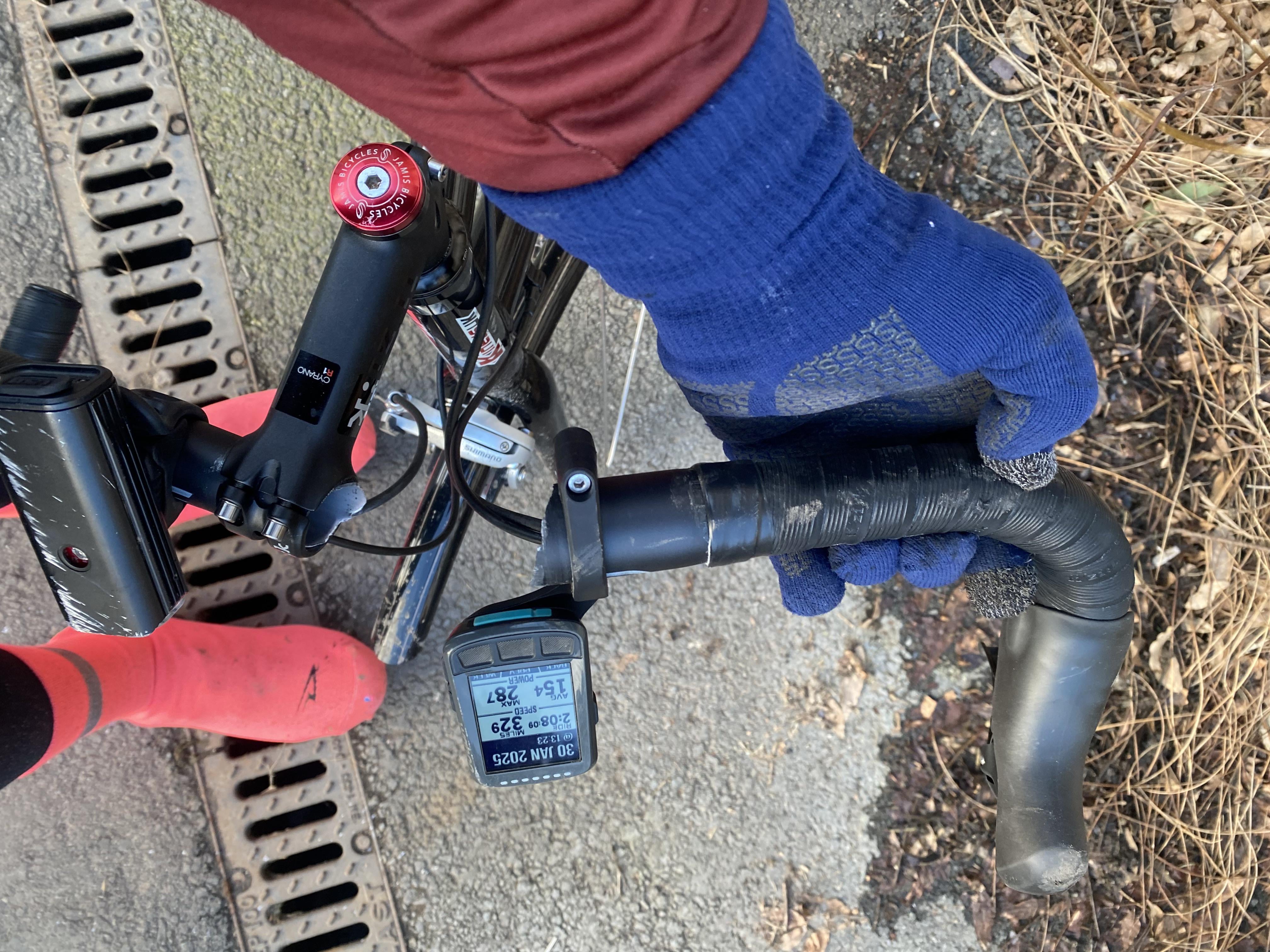
Had my aluminium bars snap while riding. Thankfully I am fine apart from some road rash. What could have caused this?
Had them since 2016. I had the stem changed in November by a professional mechanic who I have used to 10 years.
They have creaked since then however I just attributed this to the stem interface (this was probably stupid in hindsight?
by JWard6
14 Comments
overthightening and or a crash/microfractions that work itself up the ladder to a full blown crack
edit: 5head me didnt read the describtion correctly.
if anything on your bike makes unusual noise, its because something is wrong. almost always. in critical things such like brakes, handlebars, axles/wheels, ger it checked out, so stuff like that doesnt happen.
A very Heavy left arm/hand maybe.
Stem over tightening. Or impact (over stress) combined with years of stress concentration and crack propagation. Aluminum will crack. It all depends on when. There is no fatigue limit, meaning every flex will cause a crack to form and propagate farther. The number of cycles to failure could be 100 million, or it could be 10. Or all depends on the overall stress and material properties.
Airplanes are made of aluminum and they have specific crack limits, but every airplane wing has cracks and each flight they get larger and larger. Inspections and carefully engineered specs keep everything safe, but 100% of airplane parts will have a crack somewhere. Could be microscopic and take 1000 years to cause a problem, or could be 2 inches long and safe to fly until it reaches 3” long in another 5 years.
Possibly the bolts were over torqued but not necessarily. Often hard use road bikes get bars corroded under the tape from sweat, but this doesn’t look like that. It could just be manufacturing defect that took a while to weaken, signs of this is if some of the metal at the break is dull it means that has been exposed to air for a fair amount of time. 9 years old is a fair amount of use but yes if something in that area creaks it definitely wants investigating! If greasing/carbon assembly pasting the interface/checking the bolt torques doesn’t solve it then I would have been wary. Must have been a scary accident, I’m glad that you’re ok.
Almost certainly due to the stem, could be a (even very small) stress riser or burr on the facing outward edge of the clamp, that would’ve been better checked, and filed smoother. As it is the Fizik stem appears damaged now also, and created an elliptical shear.
Welcome to Aluminium fatigue!
Sudden breakage can happen with any Aluminium that reaches its fatigue limit. Aluminium does not have an indefinite number of cycles when flexing or vibrating while riding and will eventually fail even from low stress applications, given enough of them. Adding high stress riding or a tighter than normal stem clamp can drastically reduce the remaining fatigue strength. That is why usually aluminium frames are overbuilt as to have higher stiffness to enlarge its lifespan and torque wrenches really do matter as well.
Still, Handlebars are one of the most often failing aluminium parts of a bike, so i would not shove this on the bike mechanic. Had an old handlebar break on me too a few years ago. Unlike steel there was no warning, no squeaking or visible cracks unfolding.
Steel or titanium do not have a similar fatigue stress curve as aluminium, but more of a plateau of theoretical infinite strength that is not affected by the flexing cycles. Carbon fiber matrixes too, but that depends really on the specific workmansship. Besides carbon fibre plastic has pother failiure modes than cycle fatigue.
It’s possible that the new stem had poor finish with a sharp edge biting into the handlebar. This is especially bad with an aluminium handlebar, and when an aluminium handlebar fails it’s often catastrophic. Stem surfaces should always be checked before installation, and filed if necessary.
The other option is that at least one of the stem bolts was significantly overtightened. In either case, the responsibility lies primarily with your mechanic.
But never ignore any noise in that interface because otherwise you can really get hurt. Investigate, find the cause, and fix it.
Do you lean on your hoods or hang onto your hoods? Might be a very easy answer. How many km on your bar? Almost ten years is long time for a bar especially if you’re an avid rider. Should’ve gotten new bar with stem creaking is because it was a dry interface, think layer of grease would’ve stopped this noise.
As long as you didn’t eat shit when this happened, chalk it up as a lesson and keep pedaling OP
Creaking is a definitive sign of a crack. All the frames, bars, etc., I have cracked over the years have indicated its going to happen like this (many years riding bmx steel frames). If it happened since you got the stem fitted this would suggest the mechanic overtightened the face plate. You should ask if they used a torque wrench to tighten to the recommended Newton-metre. If you have access to a torque wrench you could check if they’re overtightened or request the mechanic to demonstrate its tightened correctly.
I don’t ride aluminium bars for reasons like this.
“Had them since 2016”
That’s your answer. Aluminum tends to accumulate fatigue and then just snap suddenly without cracking or bending.
Same happened to me in 2012. I had a GT Avalanche 2008 with the stock bars. It snapped in the same way. I got a spine injury that occasionally hurts until this day.
Ironically I ride BMX, Trials, unicycles and other stuff and got the biggest injury on a regular cross country bike during easy evening riding.
In the this case it looks like riding without a front wheel
I’d be interested to see what the exposed metal of the break looks like. Often you can see darker metal where the crack had existed for a while and whiter where the final break happened. I’ve broken bars and other components and frames and this is a typical mode. That creak will be something you’ll listen for in future.
In future, replace bars when you are not confident in them. That doesn’t mean necessarily expensive bars, but plan to replace cheap ones more regularly.
Learn to do your own basic maintenance. Trust me you’ll be far more careful than any professional mechanic. Everything will just take 3-5x the length of