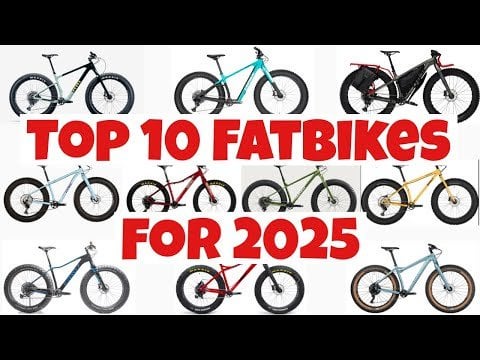
Sorry but you lost me on the Otso bikes- I didn’t bother with the rest. The voytek and the arctodus are not the same bike. The Voytek is a lightweight race bike(both singletrack and distance) and its big selling point is the use of a 83mm superboost BB, meaning its Q-factor is closer to an mtb than a fat bike. Fantastic for knee issues, or having one year-round rig. The arctodus is an expedition bike, and its big selling point is maximum tire capacity(comes stock with 100mm rims and 4.8” tires) and stability under load. As the arctodus is less “sendy” like an mtb, it has a shorter front end, steeper head tube angle, and a much lower BB. It still has a 100mm BB shell like other fat bikes. Yes, both have somewhat adjustable geo, but they come from different starting points. What the two bikes have in common is that both are designed with 5mm offset of the rear rim in order to avoid chain rub on the tire: the voytek has this for reducing the BB shell width and Q-factor, while the arctodus goes in the other direction of maximizing tire & rim width. The arctodus’ Q-factor is what I’d consider as “mitigated:” it has the same Q-factor as say a Mukluk, while other bikes that fit the same rims+tires need extra long crank spindles and/or don’t have 12 speeds.

1 Comment
Sorry but you lost me on the Otso bikes- I didn’t bother with the rest. The voytek and the arctodus are not the same bike. The Voytek is a lightweight race bike(both singletrack and distance) and its big selling point is the use of a 83mm superboost BB, meaning its Q-factor is closer to an mtb than a fat bike. Fantastic for knee issues, or having one year-round rig. The arctodus is an expedition bike, and its big selling point is maximum tire capacity(comes stock with 100mm rims and 4.8” tires) and stability under load. As the arctodus is less “sendy” like an mtb, it has a shorter front end, steeper head tube angle, and a much lower BB. It still has a 100mm BB shell like other fat bikes. Yes, both have somewhat adjustable geo, but they come from different starting points. What the two bikes have in common is that both are designed with 5mm offset of the rear rim in order to avoid chain rub on the tire: the voytek has this for reducing the BB shell width and Q-factor, while the arctodus goes in the other direction of maximizing tire & rim width. The arctodus’ Q-factor is what I’d consider as “mitigated:” it has the same Q-factor as say a Mukluk, while other bikes that fit the same rims+tires need extra long crank spindles and/or don’t have 12 speeds.