
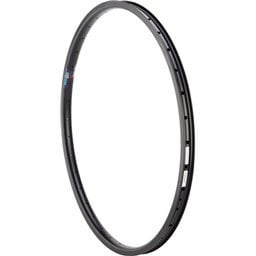
I’m trying to figure out the specs for building a dynamo front wheel for my gravel bike. The bike shop who will be building my wheel recommends 36 spokes and I was wondering if this would be an overkill? What are the downsides of having higher spoke counts? Right now, I have 24 spokes on both front and rear wheels (DT Swiss Gravel LN on a Canyon bike), and having 36 at the front would make the wheels so different! For reference, The new rim is a [Velocity 700c Cliffhanger](https://www.modernbike.com/velocity-cliffhanger-rim-700c-36h-non-msw-black) with Wheelsmith DB14 spokes.
by pooyanni
10 Comments
It is all about total weight – if you want stronger wheels with bigger load rating you increase spokes count.
24 spokes is considered low even by r/bicycletouring standards, let alone bikepacking standards where a lot of popular routes are very rough, even brutal. Broken spokes are probably the number-one complaint of casual cyclists that you share the road with, and it all comes down to not having enough spokes and not having the wheel hand-trued by a master wheelbuilder.
You don’t necessarily need to do 36, that is often seen as overkill, especially in bikepacking contexts where one is likely packing less weight than bicycle-touring contexts. But minimum 32 spokes has always been the most common advice, and that’s why so many respected long-haul-travel hubs come in two versions 32h and 36h.
Downside of high spoke count = Mass
Upside of high spoke count = Reliability. You are far less likely to break a spoke, but if you do, it’s very likely you can continue riding.
I’m assuming these are 700c wheels?
Very few rims come with drillings above 32h these days, and unless you’re carrying some heavy kit, or you’re a heavy rider, I’d stick with 32h so that you can get the right hub & rim combo. A handbuilt 32h rim will be very strong.
I would recommend looking at another rim. Velocity have a spotty rep, and I’ve personally had a bad experience. I will admit it’s been quite a few years since I built a wheel with a Velocity rim, so they could have since upped their game.
High spoke count wheels have more wind resistance at high speeds. Maybe you’re bike packing at 50kph?
I ride nothing but 32 on everything and never have issues
a somewhat related question, are there any issues with having different wheels on the front and back (different rim material and width, spoke counts, etc.)?
There are no downsides except extra weight. Ordinarily I see people deciding between 32 and 36 or maybe 28 and 36, so we’re only talking 4 or 8 spokes. Of course even 12 spokes do not weigh that much. If we were talking racing, maybe it’d be worth being bothered about. But if we’re talking bikepacking, I can’t see the downside of a few extra spokes. But for any kind of touring, 24 seems really low. In general, I figure if there’s going to be an imbalance in the number of the spokes, the rear wheel takes more weight, and should be the one with more spokes, so I’d never deliberately build a wheelset where the front had more spokes, but there’s not real downside other than a tiny amount of weight. The downside I see is that your rear wheel only has 24. If it were me, I don’t think I’d be comfortable with less than 32, but I’m a heavy guy who over packs.
Apart from extra weight, a high spike count wheel will also be stiffer. Which can be good or bad, depending on what you want. 28h is overtaking 32h as the default. I wouldn’t go 36h unless you’re heavy (120kg+).
What do you weigh? How much stuff do you bring? Technique matters a lot in how well your wheels hold up. A 140lb/64kg rider with rough technique is likely harder on wheels than a 200lb/91kg rider who is smooth. In addition to extra durability higher spoke count wheels are often still rideable when missing a spoke. A wheel with 16-20 spokes will often rub on the frame (road bike) whereas if it had 32+ spokes would be able to still be somewhat rideable. Ideally you replace spokes asap when you break one. Typically I build wheels with butted spokes vs straight gauge as they’re a bit lighter, *slightly* smoother riding/more comfortable and arguably less likely to break spokes. I also often intentionally have mismatched spoke counts on my wheels. A rear wheel is inherently significantly weaker than a front with similar rims and spoking due to the hub flanges being narrower and and off center. This makes a significant difference. A 32 spoke front is stronger than a 48 spoke rear. Thus if using similar rims and spoking between the wheels either the front is too heavy or the rear too light. As far as them recommending 36 for both F & R it’s old school lore for touring bikes. Rims got better compared to decades ago (wider + deeper = exponentially stronger in addition better aluminum alloys and possibly carbon) plus boost/superboost = wider hub flanges which radically increases strength. 24 spoke wheels F & R can work for bikepacking but it’s lighter than I would recommend unless the rider + gear is light.