
Recently, I got myself a shiny new bike with TRP HY/RD calipers. From the very first ride, the front brake had the stopping power of a soggy sponge and way too much lever travel. After diving headfirst into countless Reddit threads, the internet jury came back with a unanimous verdict: there was probably air trapped in the caliper. No problem, I thought – I’m a genius. I found the TRP bleed tutorial on YouTube, grabbed my brother’s bleed kit, and got to work.
Here’s where it went downhill. Turns out, my brother’s bleed kit was a piece of junk, and I somehow managed to baptise my caliper in mineral oil. By the time I’d reassembled everything, I was hoping for brake performance so good it’d send me flying over the handlebars. Instead, I got a lovely squeak from the front brake. Fantastic.
I put two and two together and realised my oil-based shenanigans had probably contaminated the brake pads. A quick Google later, I read that you can sand down the pads to remove any absorbed oil. So, like the handyman I am, I grabbed some sandpaper and got to work. Success! The squeak was gone… for all of five minutes. Slowly but surely, the dreaded squeak made its grand return.
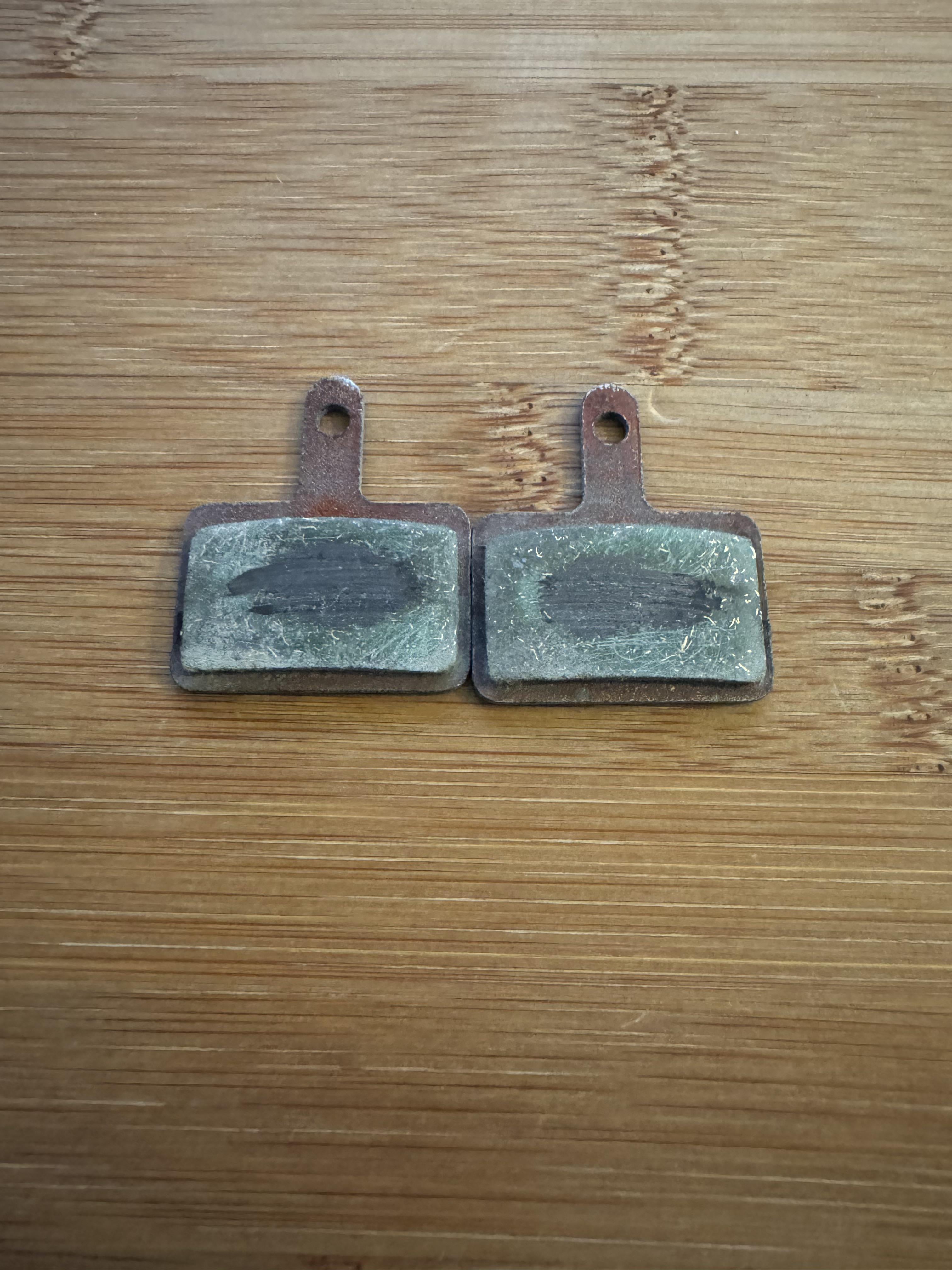
I took the pads out for inspection, and the sight that greeted me was less than ideal (I’ve attached a photo for your viewing pleasure). My guess is I didn’t sand the pads evenly, so now only a tiny portion of them is making contact with the rotor. To add to the fun, it looks like I’ve managed to glaze them as well. Brilliant.
I’ve sent an email to TRP about the caliper because, honestly, I think it’s faulty. In the meantime, I’m left wondering if this entire ordeal is karma for trying to be clever in the first place.
Sorry for the long read!
by Barnies
9 Comments
Did you just scrape the centres of those pads with a screwdriver?
If they have been fitted to a bike and used then they are clearly warped (likely from the factory).
Otherwise without any further information would say buy some new ones
They might be able to be save by baking them in the over, using a torch on them, etc. to burn off the mineral oil. You can help this process by using some fine/medium grit sand paper on the pads too.
You now need to replace your pads and rotors. Rebleed your brake properly.
I will say, I’m going to guess you didn’t bed your brakes in to begin with, which may be why the braking power was lacking. It may have been a matter of bedding the brakes in instead of bleeding the whole system.
Did you buy it from a shop? If so, you should have taken it back to have them fix the issue. It could have been a misaligned caliper and not need a bleed at all.
Yeah unfortunately once the sauce gets on the brake pads usually they’re toast. I’d replace pads, clean everything else thoroughly then refill and rebleed the brakes.
Nice story but you managed to kill your pads.
Those brakes are designed to be paired with Shimano levers. SRAM and Microshift levers are less than ideal and trp does not recommend that setup.
Bleed: it’s common practice to remove pads and rotor and use a bleed block to fit inside the caliper so you don’t contaminate the braking surface.
Trp hyd bleeds are less straightforward and require precise following of the procedure. For a first time go, it’s rarely a success. There isn’t a quick and dirty hack to make it work. Buy new pads and rotor. Bring it to a shop for getting the bleed right.
Next time you do this, bleed everything with the brake pads safely far away from the area. Bleed the system and close it up again, and very thoroughly clean everything with isopropyl alcohol. Make sure you get every last drip of brake fluid and grease and dirt cleaned from the caliper and the rotor and anywhere else. Then put the pads back in
I had a good laugh, especially because of the way you wrote it.
However, I have a bike with a Shimano hydraulic line pretty much in the same status 😅😢😅😢