
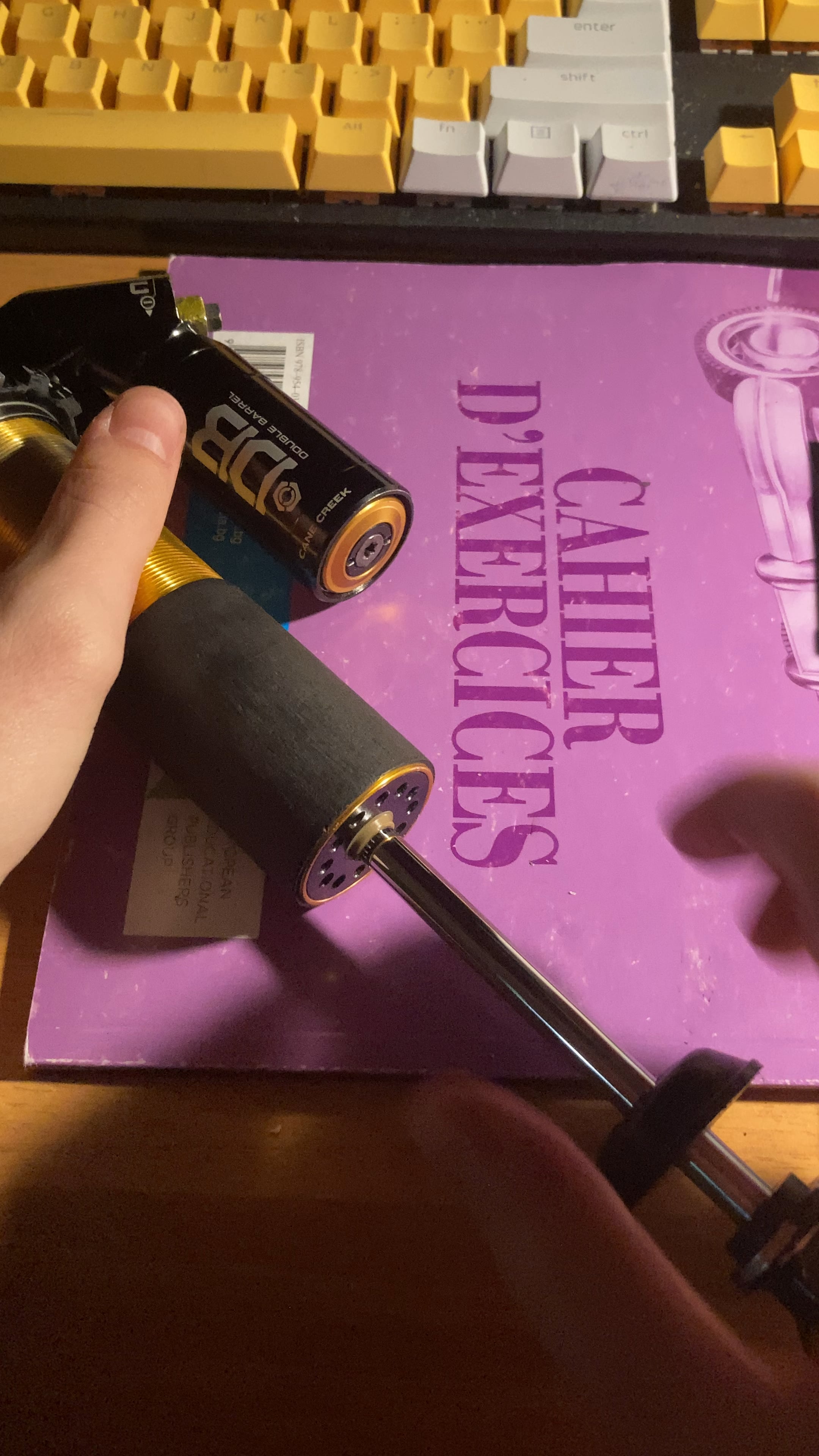
I just bought a cane creek db coil. After learning that it is a 2013 model, i wanted to make sure it works ok, with a few minor inconveniences this is what concerns me the most, the shaft is moving side to side, as if something inside is loose, can someone tell me if it is a problem?
Is this a problem?(ignore the french student book)
byu/averaget150owner inbikewrench
by averaget150owner
4 Comments
Hard to tell without opening it up. So you should maybe get it serviced properly.
Tu pue, tu pette, tu sent la cigarette.
That is totally normal. Shocks need to allow for quite a bit of flex in that area due to all the crazy loads they experience while riding. A lot of shocks actually fail due to the lateral loads being placed on the shock with lazy frame design these days hence why certain frames do not recommend you run certain shocks. Most people would be shocked how much everything flexes while riding …
If it is not leaking and damper sounds well bled, I would run it as is for a bit. Unless it has been sitting/ neglected for awhile in which case service it. You can justify doing a full rebuild every 200hrs of ride time with most shocks.
Can you add a clip of compressing the shock with adjusters open (counter clockwise) sound on?
There is not a ton of pressure in the bladder of the DB coil, but it should spring back slowly without at coil spring installed. If it does not the charge is a bit low and could also be a good reason to server it.
That shock tends to hold up really well as long as it is on a yoke driven design
To add to my first comment; Cane Creeks bad reputation in that era stemmed from Specialized spec’ing the Inline on the Enduro around 2105ish, which just ate shocks due to excessive lateral load on that very spot. That shock had a very narrow shaft diameter. It was not a problem with Cane Creek at all and just a poor choice on Specialized part. But there was a lot of those sold and most people are very ignorant (even in bike shops) … hence the bad reputation they received as backlash from something totally out of their power
You can see modern examples of this with the a lot yoke driven designs snapping DHX2’s and such. Most yoke driven frames have limits on minimum shaft size that is recommended.