
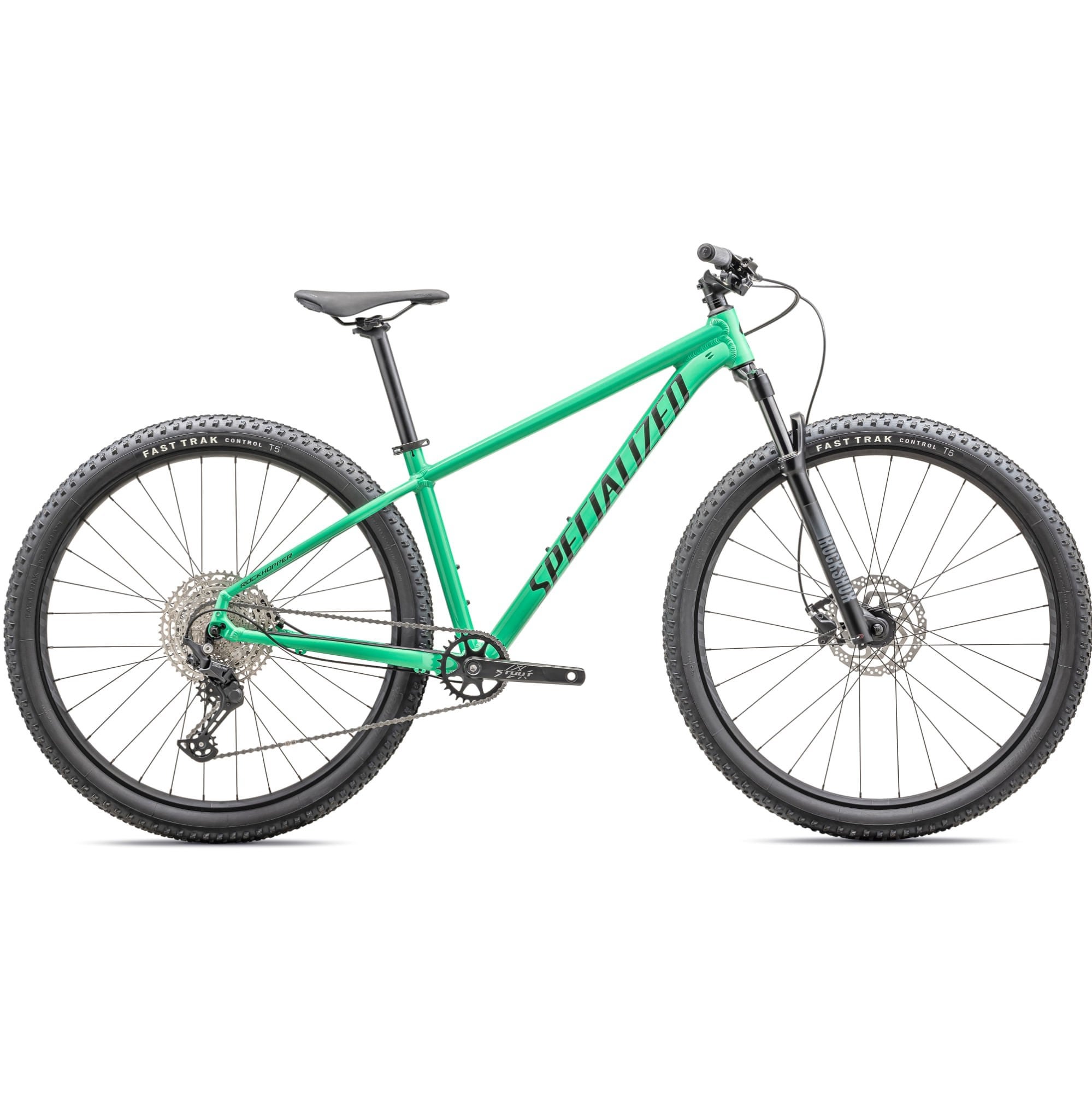
- I'm looking to do a mix of general bike riding but would like to eventually progress into some more technical riding such as jumps and drops.
- Preferable Trying to stay under $1,000 USD
- Nothing but general bike experience, just some minor experience with other action sports.
- Mostly planning on regular riding but also gravel or dirt trails.
I was originally looking ate a Base model RockHopper but it seems as if its a bike that most people progress beyond the ability of the bike sooner than later. With that being said I started to look at some of the Higher end Models.
I had been looking specifically at the Specialized Rock Hopper Expert
But also when doing some more research, found the Polygon Xtrada 7
https://www.bikesonline.com/xtrada-7
https://99spokes.com/compare?bikes=specialized-rockhopper-expert-2024%2Cpolygon-xtrada-7-2024
Which Seems to have comparable specs at a fraction of the price.
I am able to go to a store and look at the specialized bike in person, the other I am not. Not really sure if that matters.
If it has any play in it, I am a bigger guy, around 280, looking to use this as a means of exercise and promoting a new healthy hobby.
Any opinions and other alternatives would be greatly appreciated.
by AustinLikesSoup
3 Comments
I have the Rockhopper, but I’d say the Polygon is probably better overall. More slack head tube, also I believe it is tapered, allowing you to upgrade the fork, bc I will say the fork on the Specialized is better (I have no experience with the RST, but from what I’ve read I would assume the Judy is better.) Drivetrains are basically the same if I recall but you get an extra gear on the Polygon. I’ve heard that 1x12s can be more finicky than a 1×11 but I can speak to that bc I’ve never owned a 1×12.
I’m no expert, just a guy that puts entirely too much faith in my helmet.
Mail order bikes are always cheaper for similar spec. They save money on not paying for bike shops rent and employees and service. Final assembly is up to you – if you are experienced or eager to learn and enjoy working in bikes decent way to save money.
If you have any issues with a mail order bike they can end up being more expensive. Most bike shops will assemble a bike well and offer a free tune up (cables can settle and mess up shifting over the first couple rides).
Both are similarly decent. Upside to the rockhopper is better fork and frame size specific wheel sizes make it more approachable to beginners. Higher end bikes are mostly full 29er but especially an xs or small 29er bike can feel high up and intimidating to a newer rider.
Look, the truth is all the bikes are pretty damned good nowadays. Polygon and similar direct to consumer bikes will give you a little higher spec on components for the same dollar, and there’s nothing wrong with that as long as you have a local bike shop that will maintain the bike for you (or you know how to do so). My advice is to focus on the proper size and fit first. A good fitting bike will let you learn and progress better than a really expensive bike that doesn’t. Generally, a local bike shop is going to be able to help you with that. If you go the direct to consumer route, just make sure you know what fit you need for the kind of riding you’re going to do. A slacker head tube will really feel good on steeper descents for instance. If you intend to ride flat-ish terrain and bike paths, you don’t need that. A steeper head tube will feel more nimble. This is just one example of the trade offs.
No matter where you buy, realize that your budget is more than $1K. If you spend $1K on a bike, you still need a helmet ($80-$200+), and you really ought to think about personal protection (pads, chamois, gloves, etc.). The sport is a whole lot more fun if your ass isn’t constantly hurting while you are riding, and you don’t get banged up when you fall (not if – we all fall).
One other thing – stock pedals absolutely suck, no matter what bike you buy. Seats aren’t much better but if you’re an average sized human you may be able to live with the stock seat for a while. The stock pedals generally have no grip, and when your feet fall off in technical terrain you will get hurt. Plan on buying a pair of pedals ($50-$300).
Last shot – you’ll note prices for components and parts can vary widely. Don’t fall into the trap of buying the most expensive thing out there. Buy what works and fits your budget. Lots of us choose to run a lower end derailleur (for instance) for it’s price point and ruggedness, even if we can afford the really expensive light weight magical super-duper latest greatest thing at three times the price. Don’t get sucked into $$$ = goodness let alone being fast or smooth.
And (really – this is the real last shot) once you do buy a bike and protective gear and make sure it’s fit to you and adjusted properly, go ride on group rides with riders who know your local trails. If you can, ride with more advanced riders and ask them to session difficult (to you) features. That’s the best way to progress in the sport and the best way to have the most fun.