
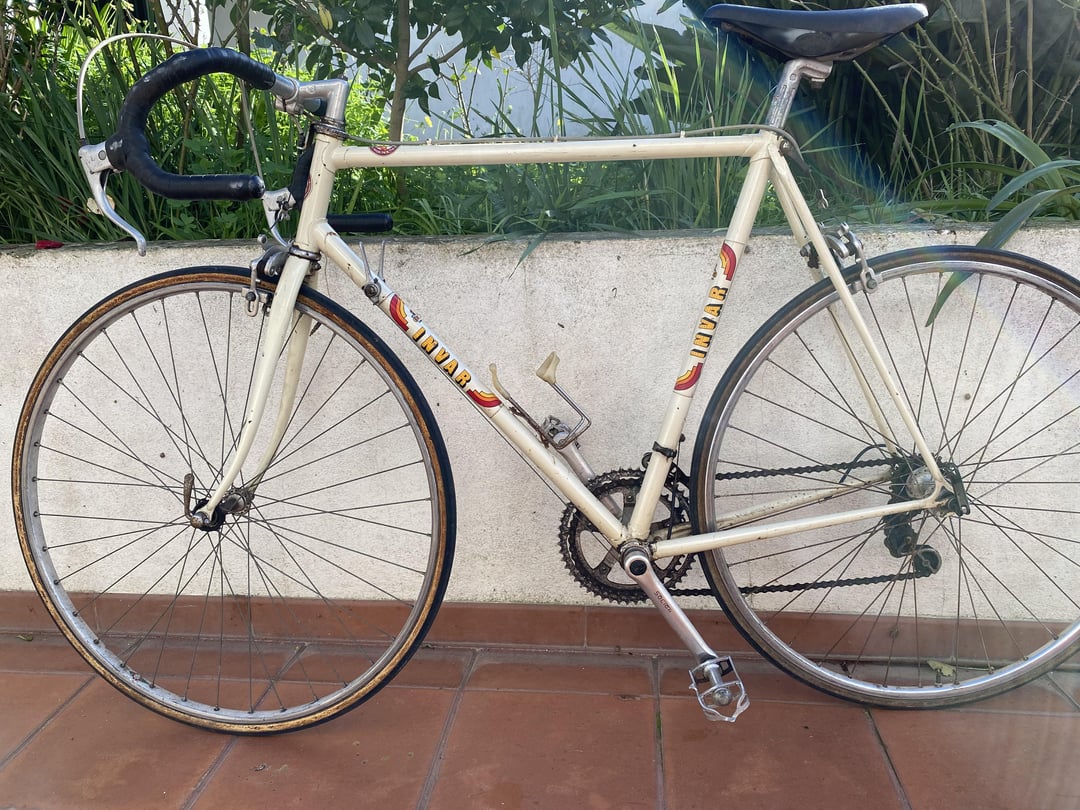
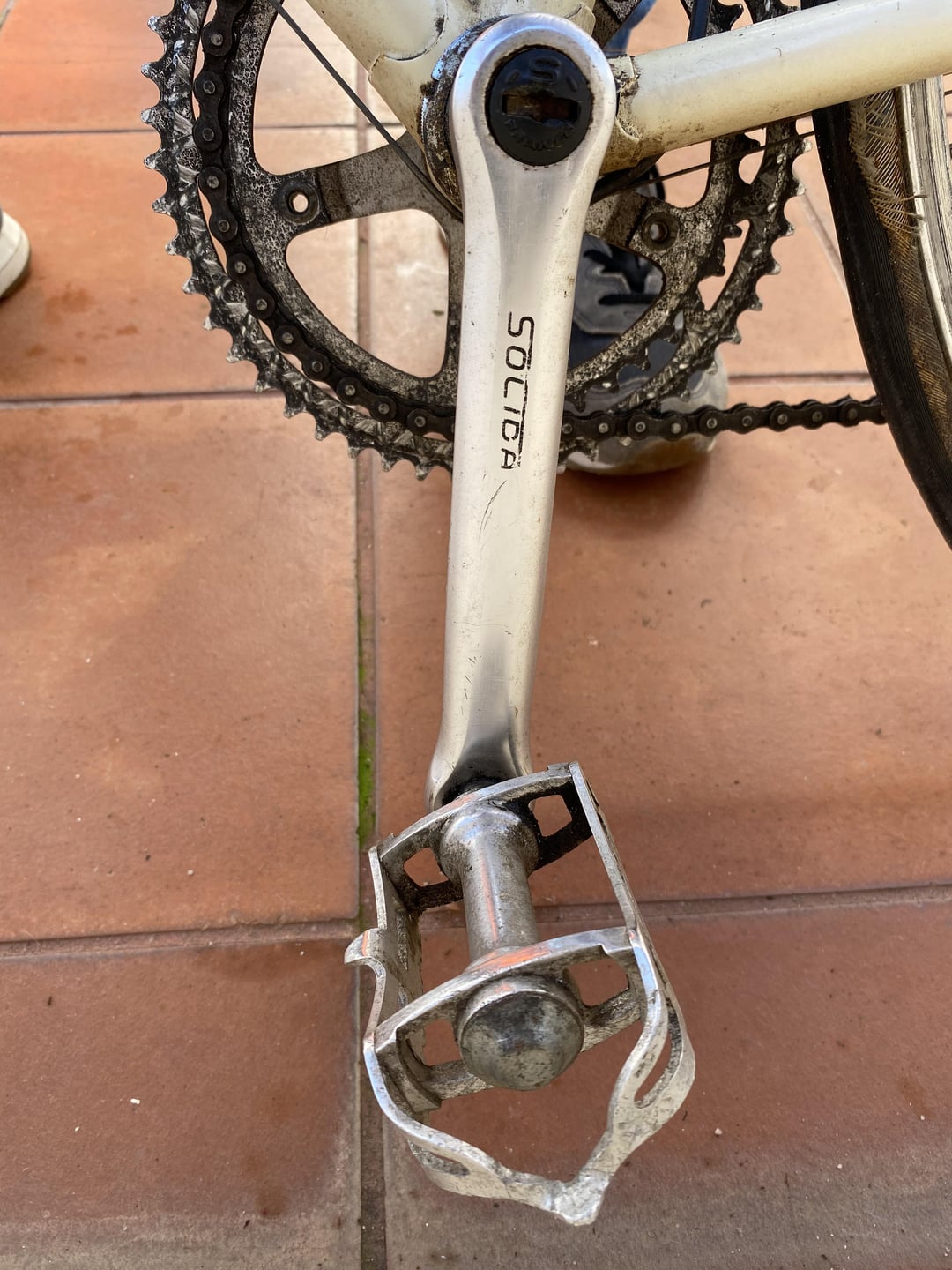
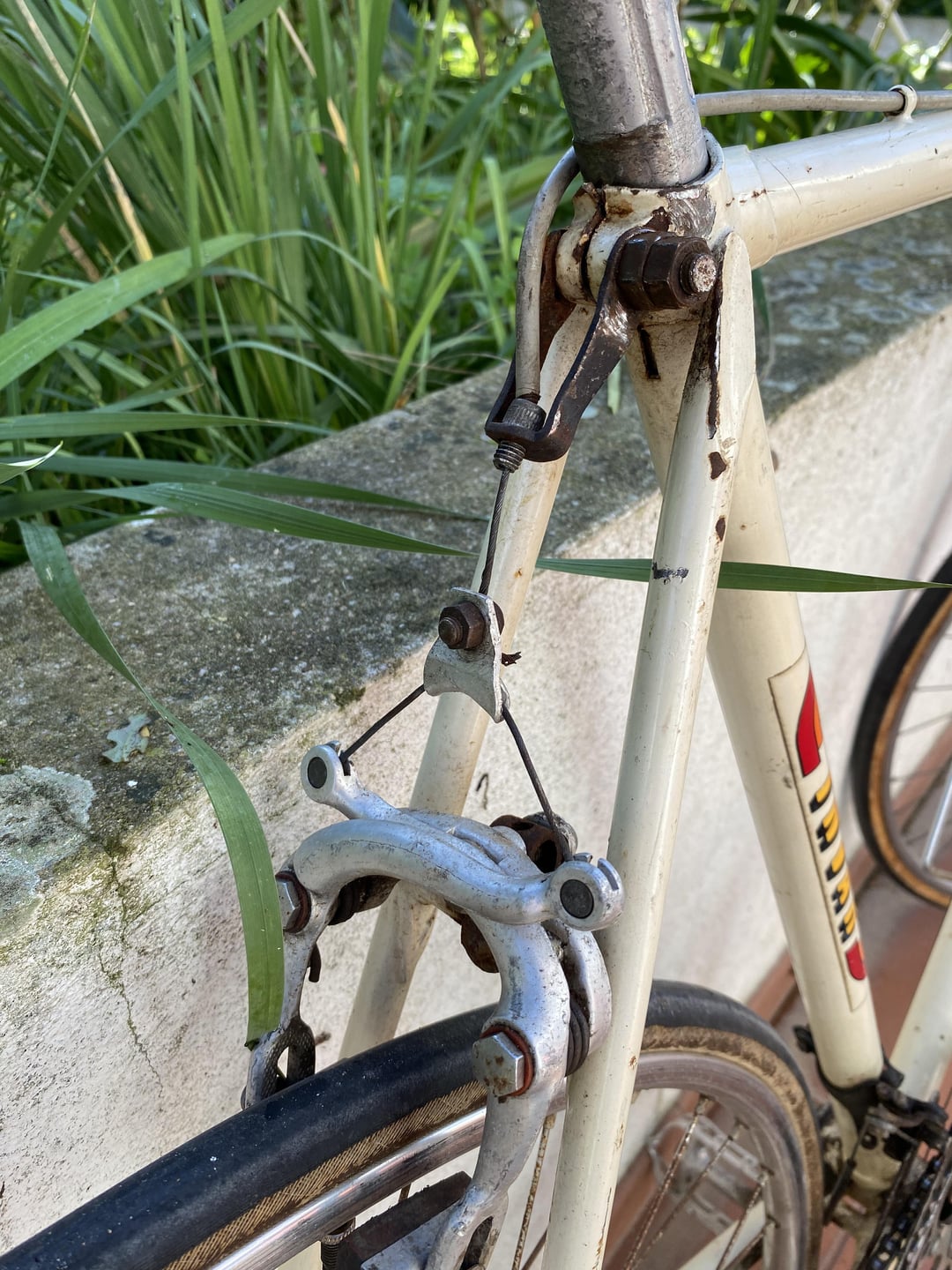
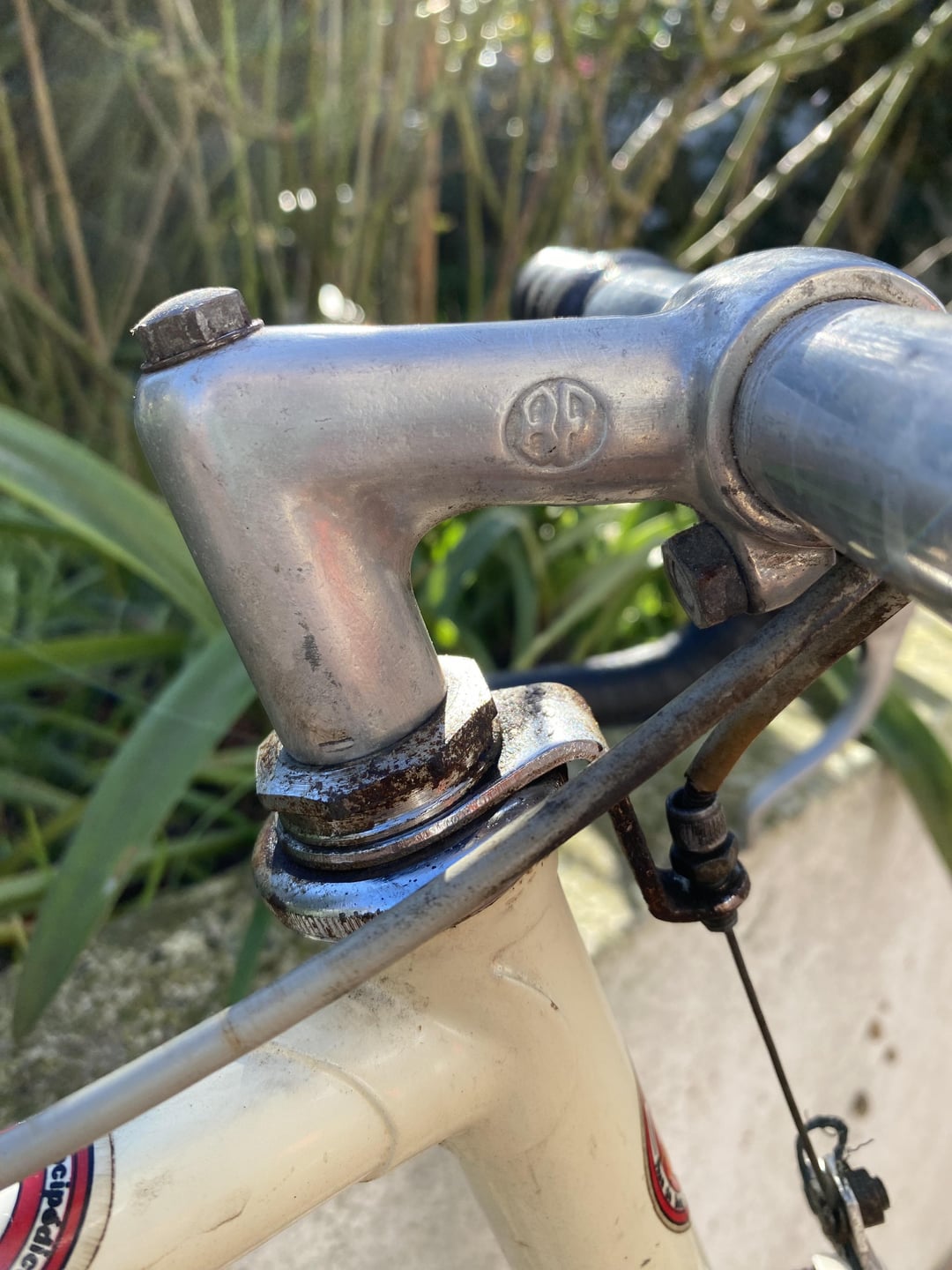
Hi everyone, recently I bought this bike to restore it as better as I can! The first objective is to put it with a good look by keeping it as much original as possible.
When I was a kid I always did my bike maintenance myself. I’ve some knowledge but limited experience. I’ve some questions that you may help me to start.
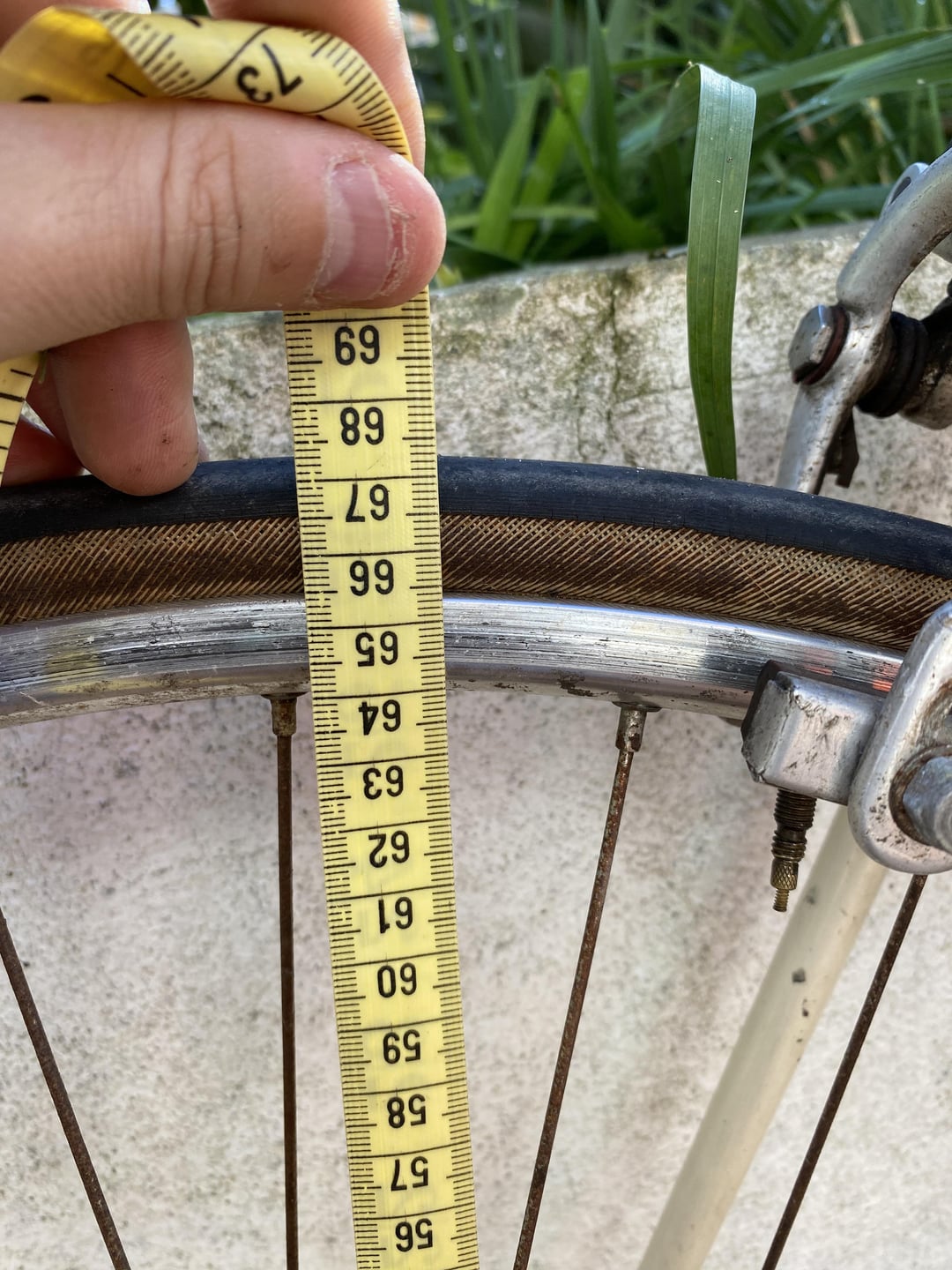
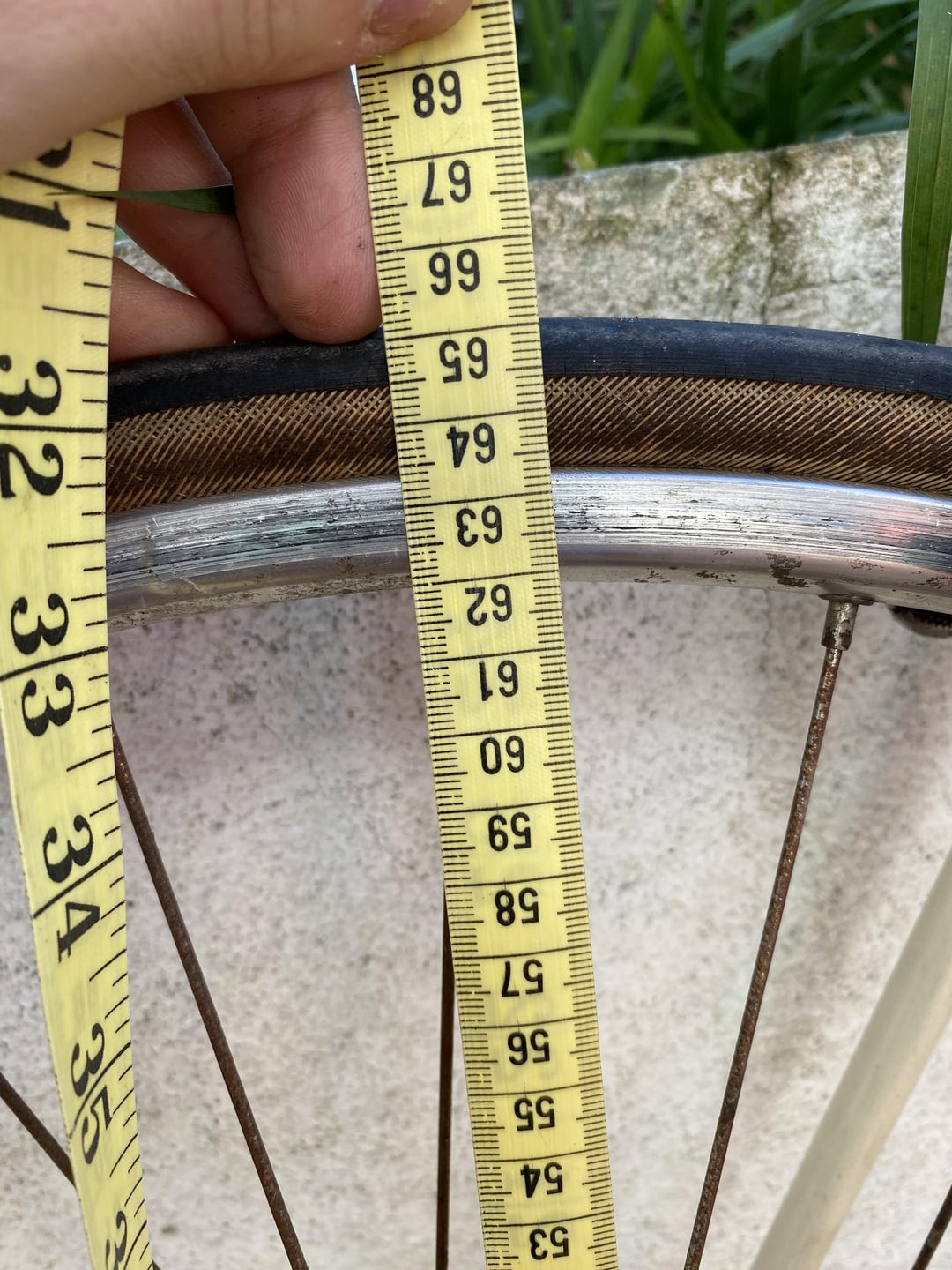
First of all the tyres and rim sizes. The front wheel have an old tyre (just tyre no inner tube, don’t know how to name it), l maybe need to replace the wheel to a regular one with inner tube. The rear wheel is a regular one I left some images measuring the all wheel and just the rim size. Here is my question. I cannot understand the size of the wheel, I believe this is a 635mm rim is this na equivalent to 700c?
Secondly, the frame is kind of in a good shape, and as a start I don’t know if I should do a full repaint or if I should just took care of the little rusty spots and leave it as much original as possible. What do you think?
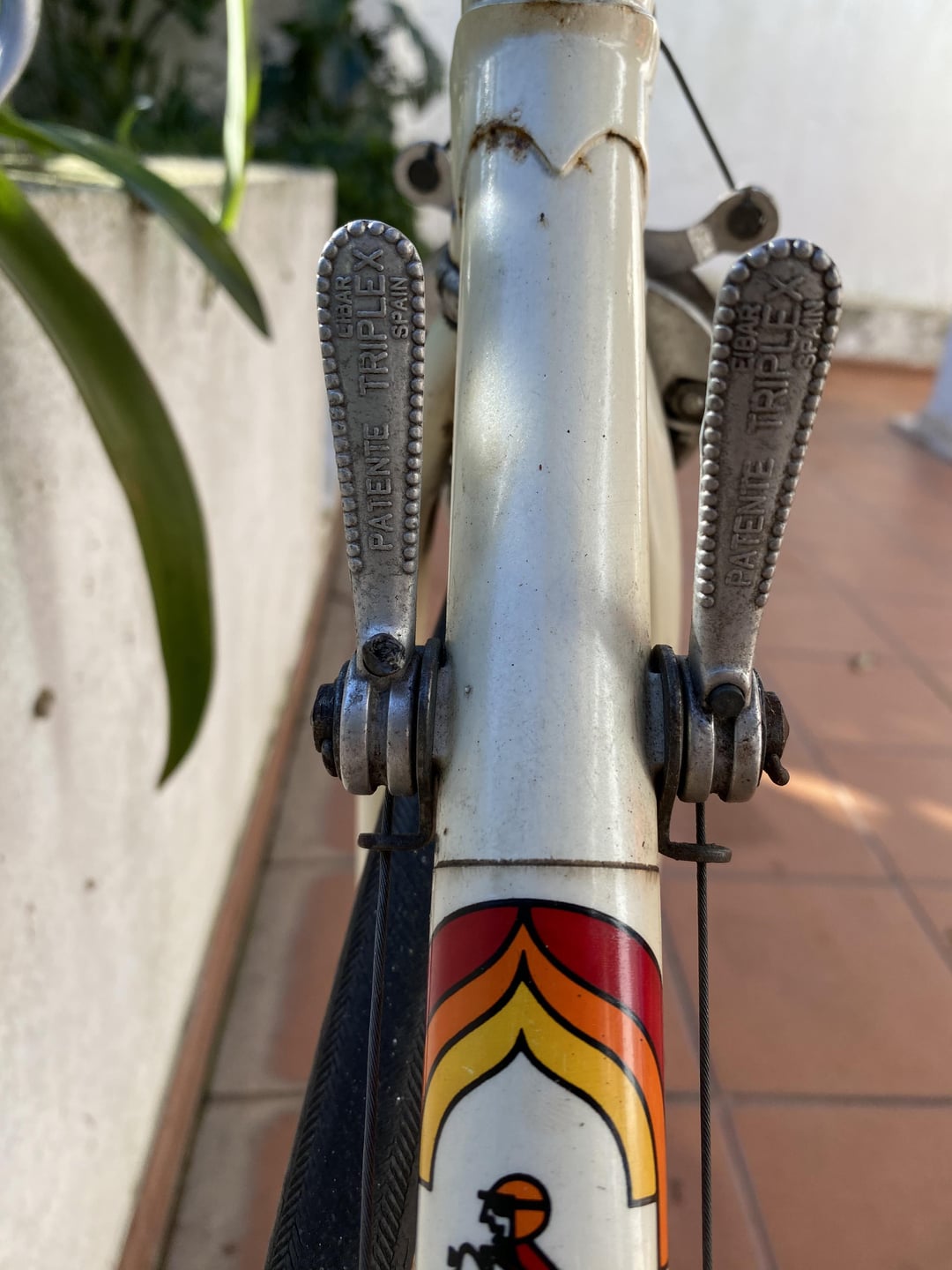
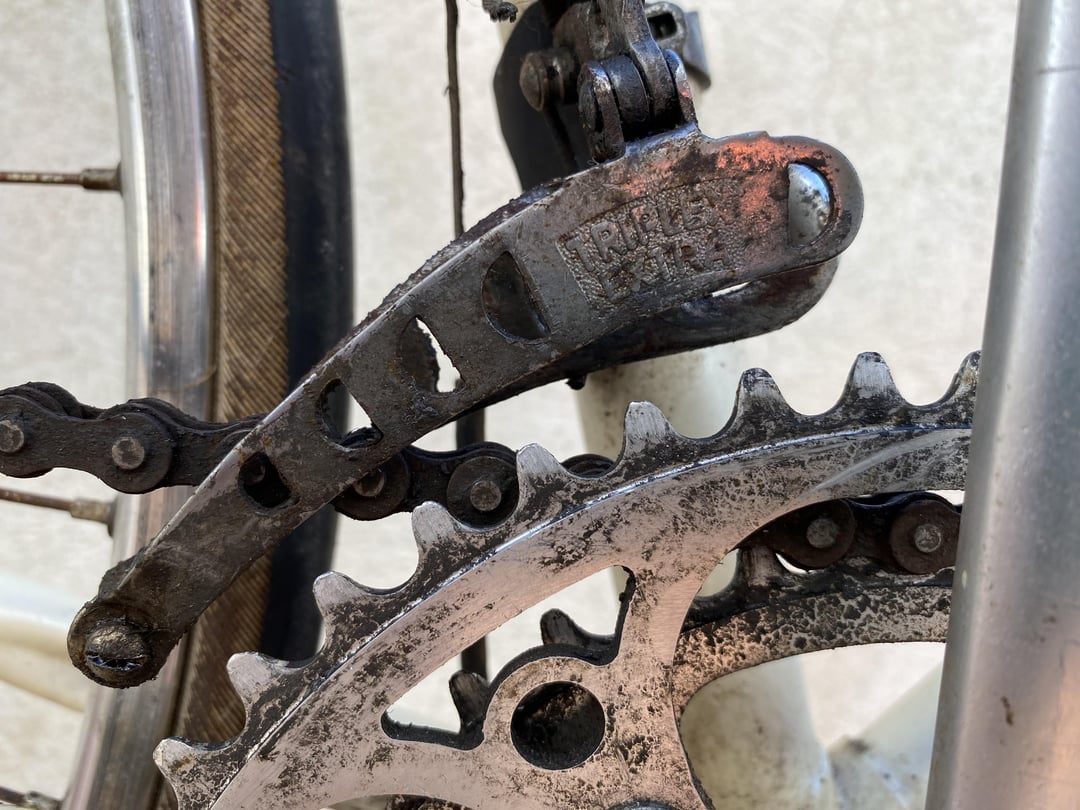
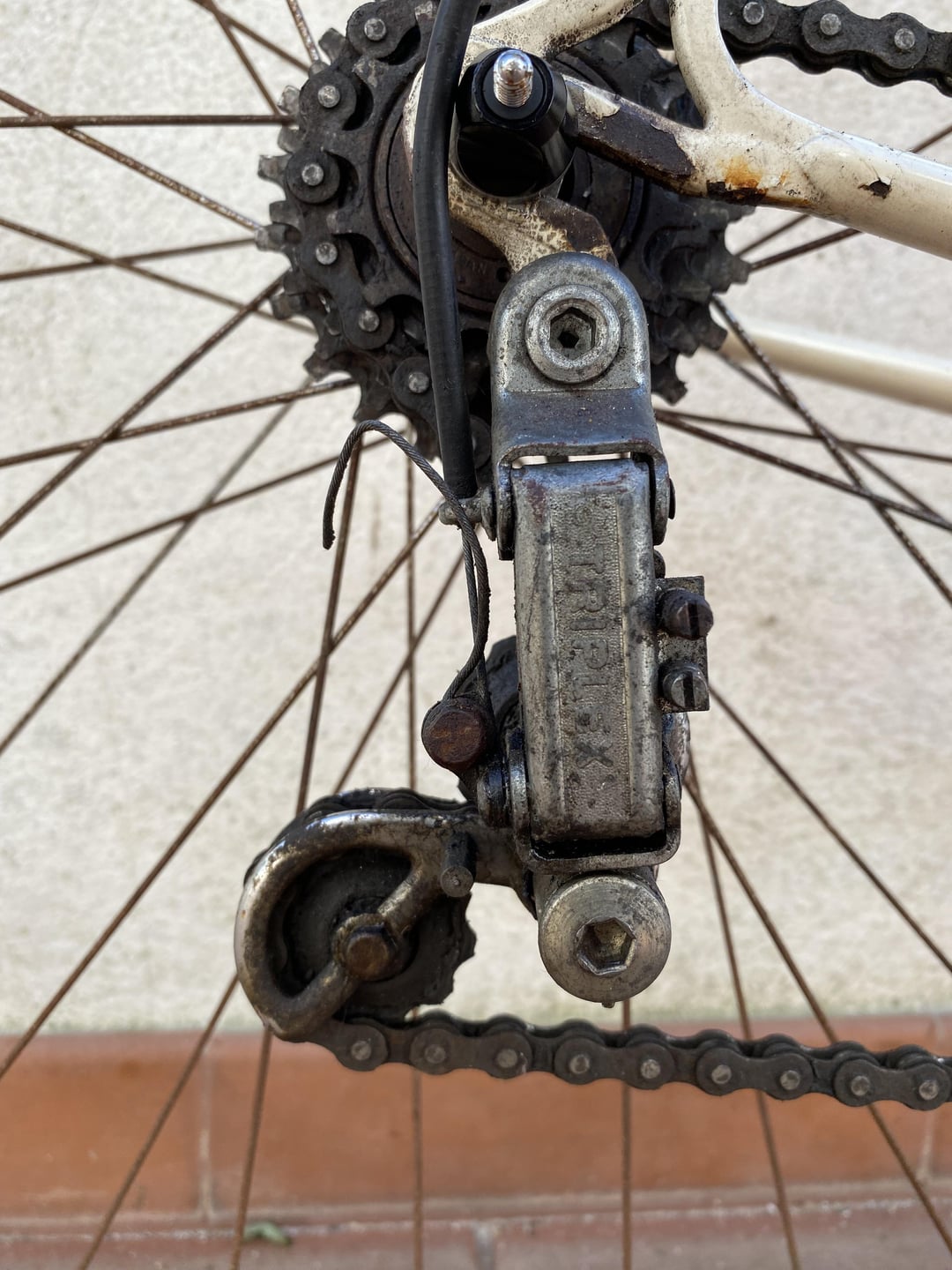
Lastly, other than normal clean and maintenance fixes, do you find any bad components you believe it’s worth it to replace to new ones?
As you may see, this is a white labeled road bike. I live in Portugal and here we always had a lot of local assembled bikes and some with very good quality! Don’t know anything about this one in specific, bought it because it was a good deal!
Thank you!
by ricmalta
4 Comments
635mm is not 700c. It’s called 700b and is an old standard for English, Dutch, Swedish, Indian and Chinese roadsters. Another way of writing that size is F10, F25 and 28 x 1 1/2, which is not the same as 28″ x 38mm (Hey, no one said vintage bikes are easy).
https://www.sheldonbrown.com/tire-sizing.html
Keep the original paint unless it’s completely gone.
The front tire (no tube) could be a tubular tire, here in USA they were called sew-ups in the 70’s where I lived. They are glued to the rim, and the casing is sewn shut (by hand) under a layer of tape. Still available, but you may not wish to stay with this.
Since the front and rear rims are different, one of them is not original. What’s commonly referred to as 700c is a wheel with a Bead Seat Diameter (BSD) of 622 mm. This is measured approximately at the center of the braking surface, but can vary a small amount either way depending on the construction of the rim. If the front is a sew-up, the BSD of that rim will be 622. Compare that to the BSD of the rear wheel. IF they’re the same, the rear is a 700c rim as it’s commonly referred to.
Another less likely possibility is that it’s a 27” wheel. Those have a BSD of 630mm. I think 700c was a lot more common in Europe than in the US until early/mid 1980’s. 27” was the dominant size in the US before the mid 1980’s.
Portuguese guy here. Don’t know much about Invar, I’m writing a portuguese bike index and already had an Ilvar (maybe I misspelled it). Some smaller brands had their frames produced in bigger factories, it happened a lot with Confersil (thanks to the fact they stamped the brand on the head tube). If it still has a sticker/head badge, you might be able to find where is it from.
Frame looks in good shape! I’d definitely clean the rusty spots, only looking superficial. As for the components, I’d give them a good clean and adjustment.
I had a 1970’s Órbita with 27 x 1 1/4 Rigida rims. Decided to keep them, but regret that decision to this day. Finding tires/tubes for it might not be hard, but finding the wheels with these weird, outdated sizes can turn into a pain in the ass. If you plan to ride it regularly, it might be worth replacing with something more standard, like 700c.
Bons restauros!
By the way, I did a 6 day bicycle tour in Portugal last May and had a great time! Beautiful country, wonderful people, and impossible language!