
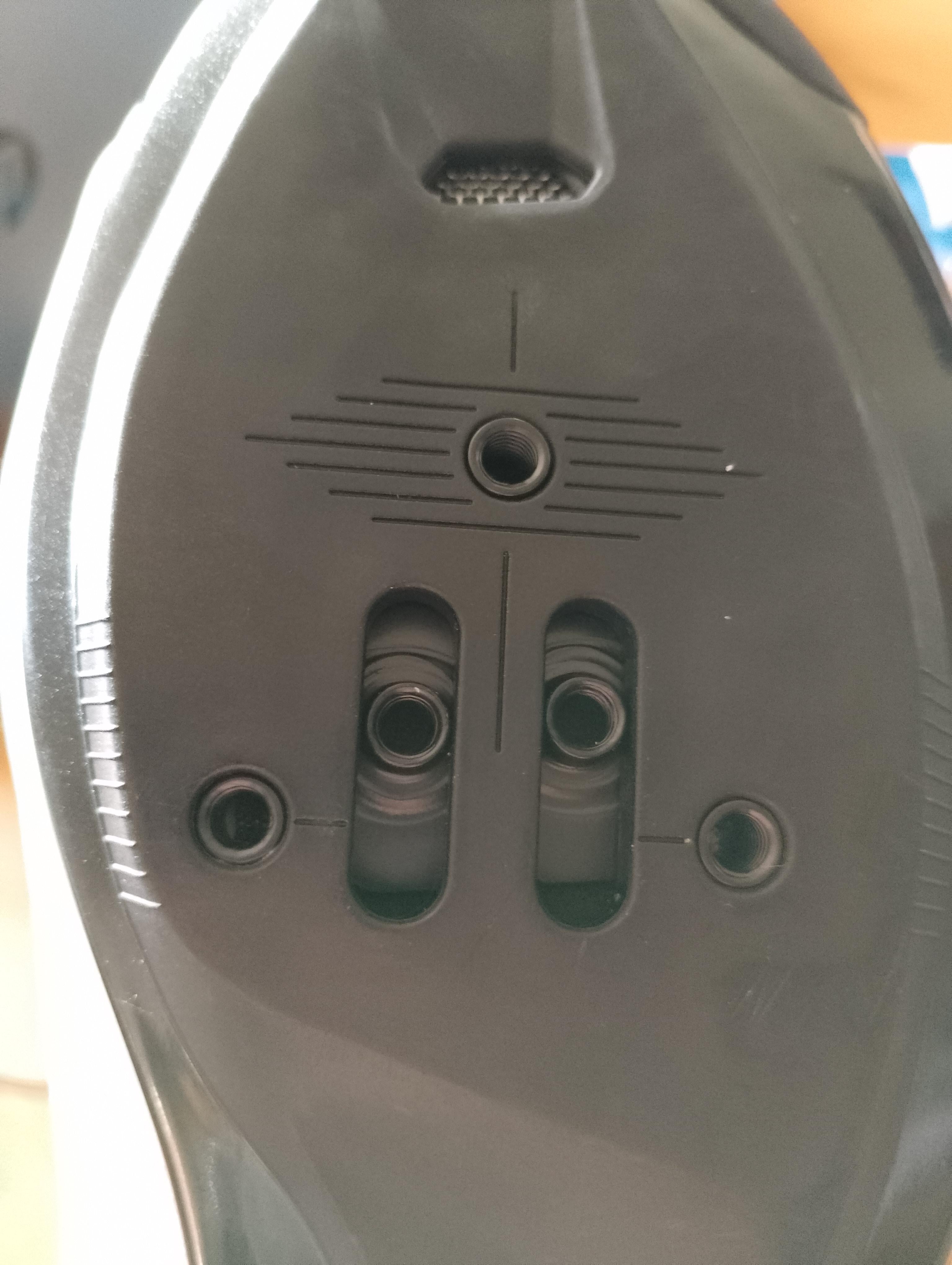
When I tried to attach the clead set, I saw that these things were loose in one shoe (in the other one they’re firm). Is this a problem?
by Yung__Stalin
When I tried to attach the clead set, I saw that these things were loose in one shoe (in the other one they’re firm). Is this a problem?
by Yung__Stalin
3 Comments
Supposed to be loose so you can adjust them up and down for proper ‘ball of foot’ alignment. When you tighten the cleat on, they will be held tightly to the sole of the shoe.
They are supposed to slide.
You want them to be positioned deliberately, so pay attention to where the are when you tighten them down. I’d start in the middle, and adjust with input from bike fit experts. Typically the two bolts are aligned to direction of travel, not rotated unless to solve for something. L/R shoe should always match unless you have a reason not to.
Beware of any knee pain after adjustment, as small changes can have large effects. Don’t fight through it, fix it. Do not use “zero float” cleats unless you have a reason to. Max float is safest.
They won’t be loose once you tighten them up.