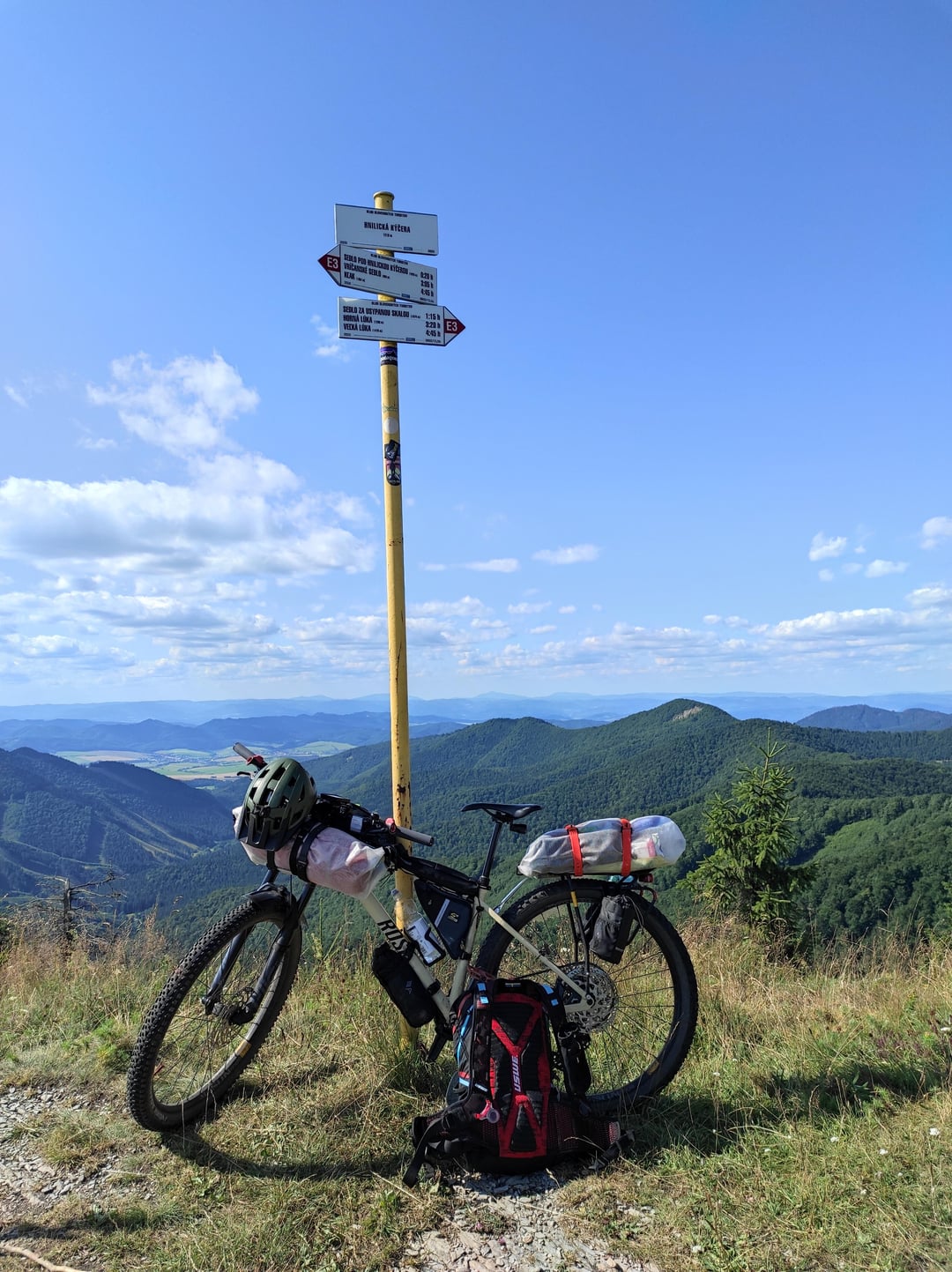
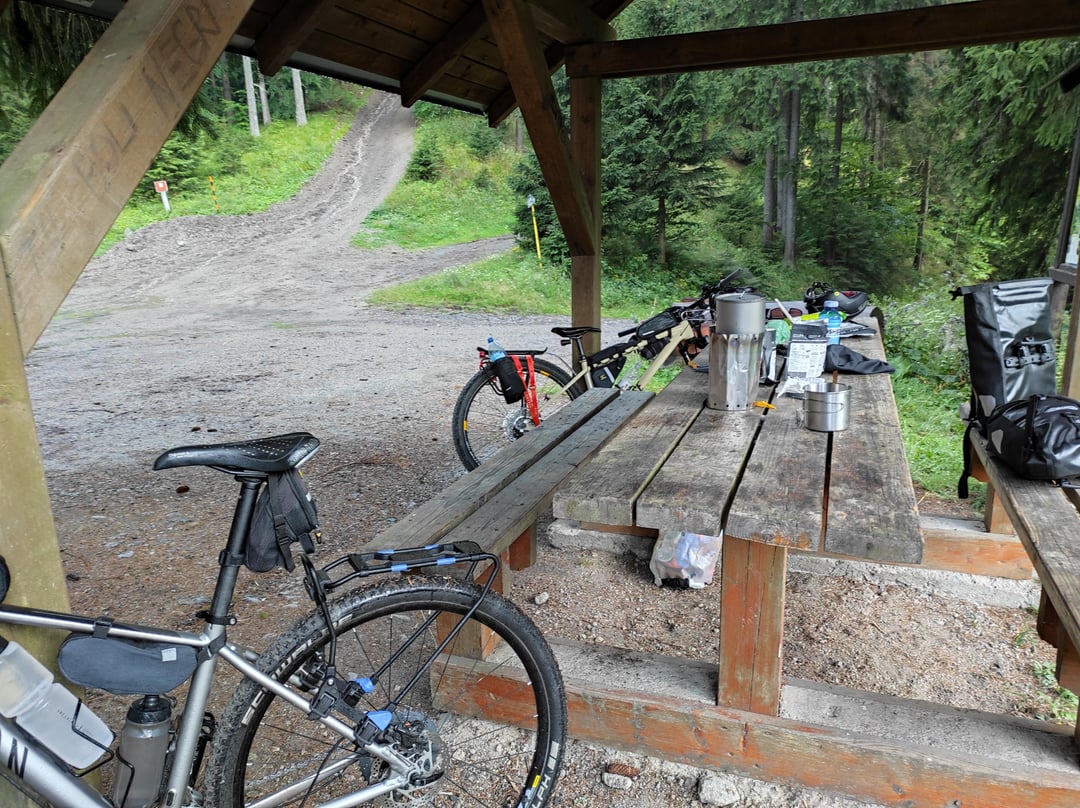
Call it however you want – enduro-packing, mountain bikepacking, whatever. Finally, I had a chance and bit the bullet, going for a few days with my loaded do-it-all-duro bike with a buddy, and decided to share some afterthoughts.
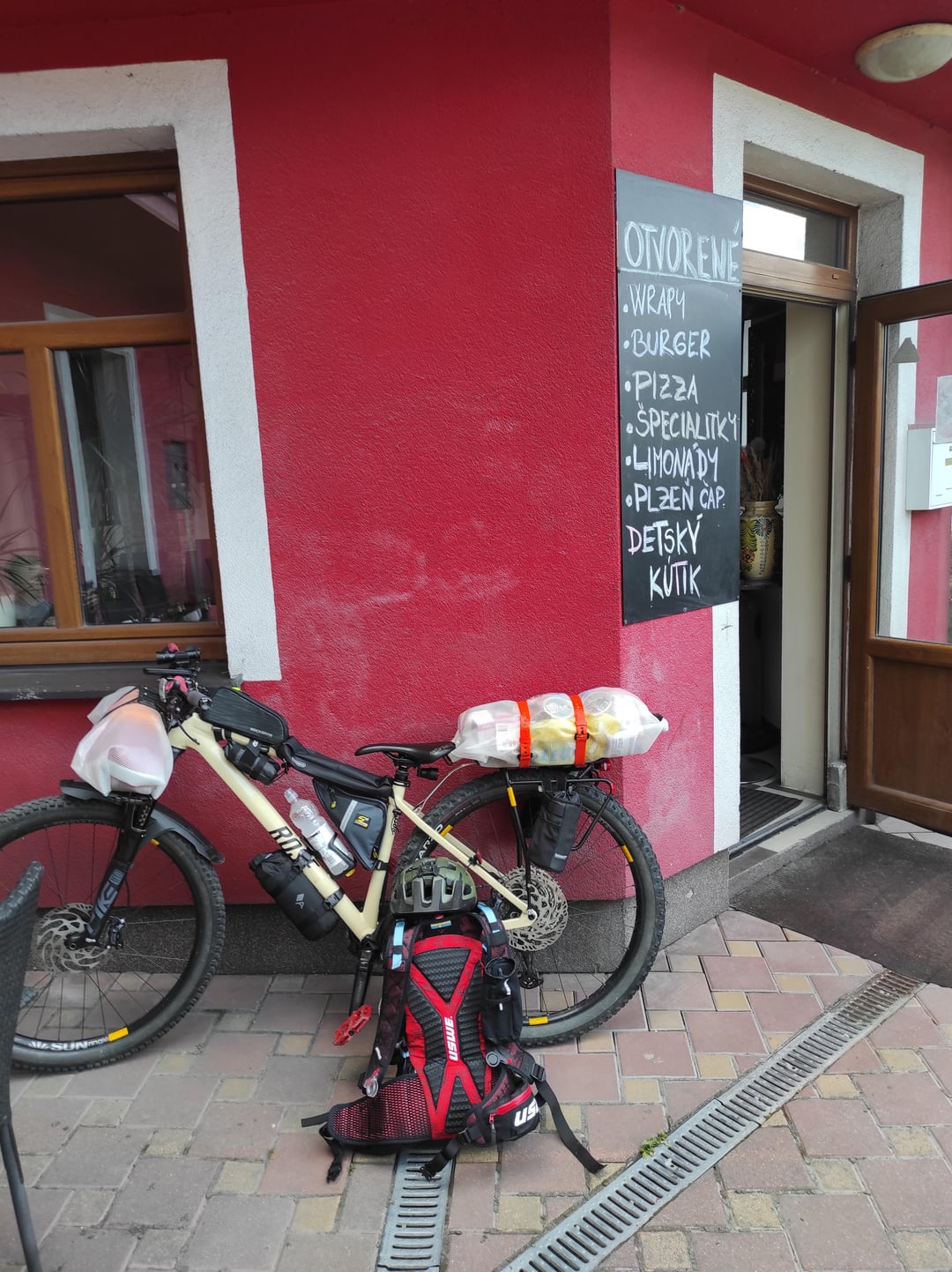
As much as it was possible, I opted for budget-friendly bags. I already had camping equipment, which I use for the multiday trekking trips. +- A list of the eq with comments will be at the bottom of this comment.
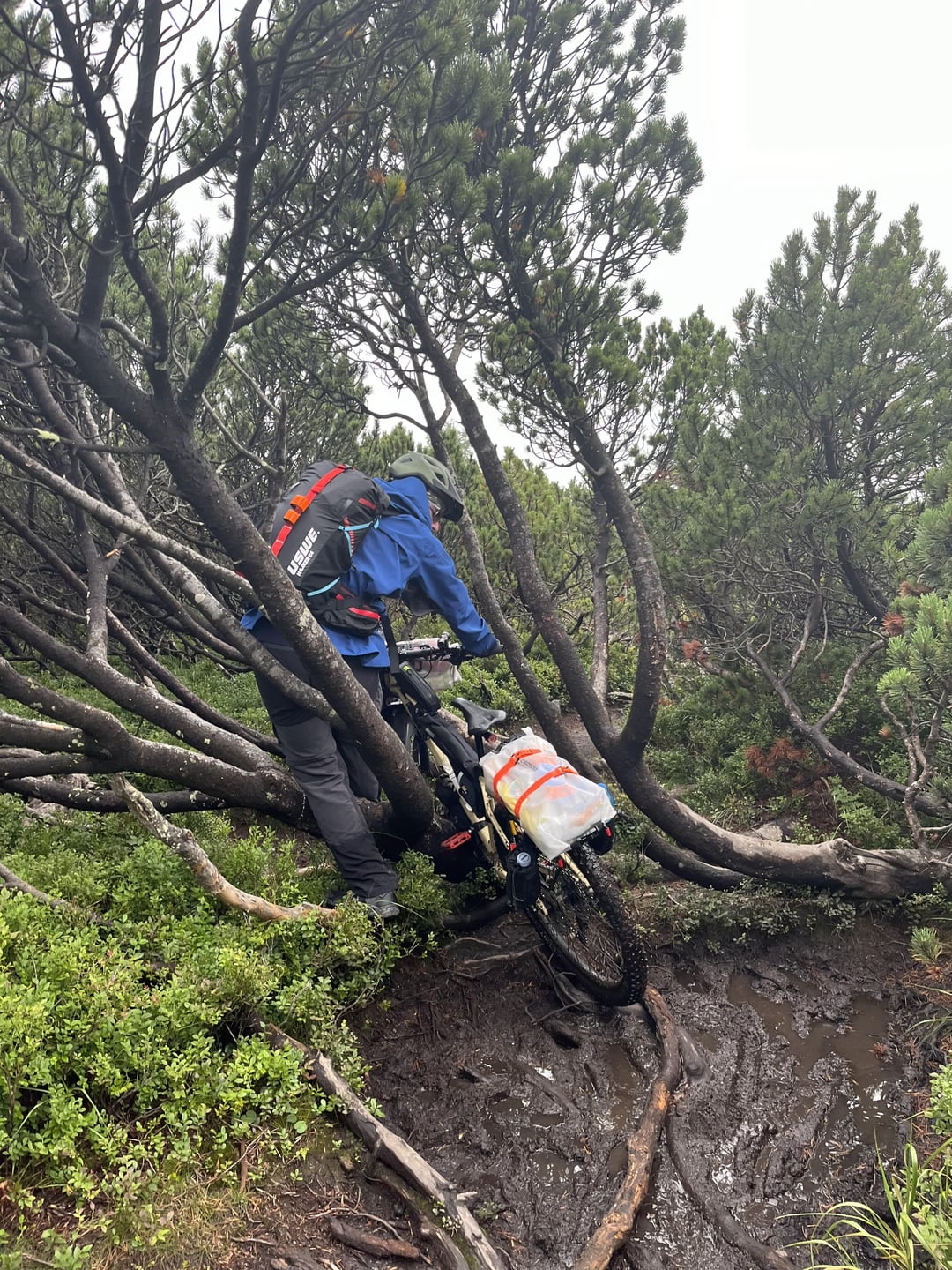
But more important, how was it? What was the reason? As long as the terrain doesn’t get too rough, i.e., doesn’t require scrambling or isn’t extremely steep, you can hike with your bike instead of trekking poles. On ascents, you have some extra weight to push up, but on the other hand, descents are blazingly fast, take no time, and are actually fun. Theoretically, at least. In practice, you should never forget about the Murphy’s law. Plans had to be revised on the fly because we started in the late afternoon instead of the morning, as we had initially planned. That offset the potential places to camp by half a day.
Furthermore, most of the marked water sources were completely dry (a few years back, I had to get down from the mountains there due to a similar drought; last year, I gave up during an attempt to bikepack the whole area due to a week of torrential rains making some paths on the slopes full of clay impassable). Combined with the mostly sunny and hot weather, that leads to the need to carry even more water, creating a positive feedback loop and making ascending even more challenging (bringing an extra sun hat is a great idea for longer hiking segments on ascents!) and sometimes requiring taking a detour. Single, few hour-long rain didn’t help much because everything quickly evaporated from the hot ground. 2.5L of water per person was enough to get to a hut or check a few following sources marked on a map, hoping that some were not dry. (Running completely out of it would force us to descent to the closest village for the water and then waste half a day climbing back up)
What else can go wrong? Well, even if your bags are secure, they are tossed up way more than a hiking backpack, damaging the things in the bags. While not the most disastrous thing to happen on the trip, it is definitely worth keeping in mind when packing the food, water filter, and other things in a single bag together. (In my case, it was the back of the folded Opinel’s edge making holes in a tin foil cover of pâté and bags with macaroni).
Racks should be as simple as possible. Cheap, ~40EUR rear rack worked flawlessly. The universal rack from the SKS on the buddy’s bike (with small panniers) was done after the 3rd day – plastic parts picked up the slack. The rack kept rotating downwards on any bumps, even on asphalt roads touching the tire.
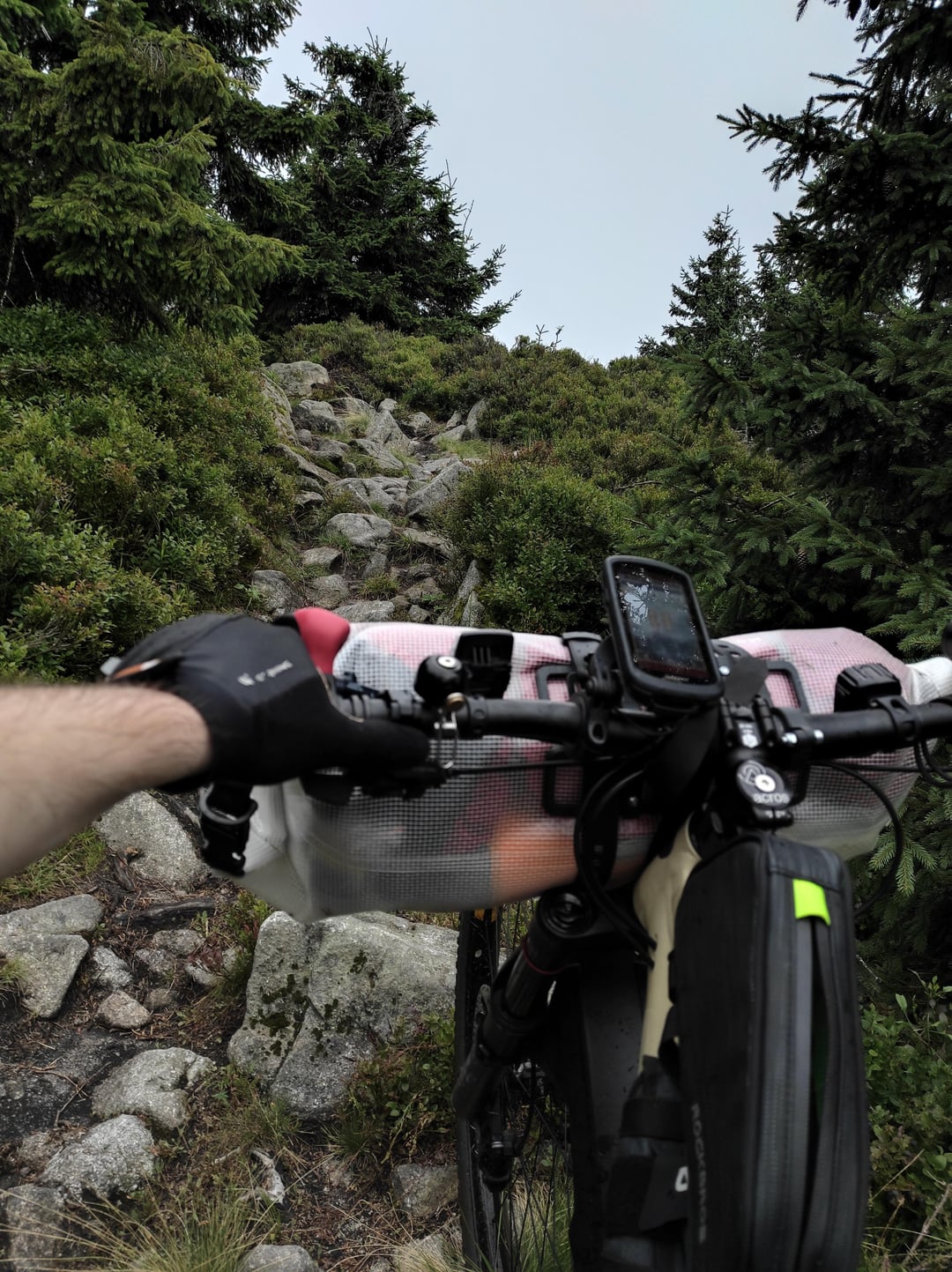
3D printed in the ASA handlebar cradle (https://www.thingiverse.com/thing:5820686) seems promising, but it needs another upgrade to reinforce the clamps. With the current design, a tent + sleeping mat weighs too much. Also, riding technical paths with the 2.5-3kg bag strapped to the backpack isn’t fun 😉
Summing it up, a similar setup should be more reliable on mellower trails. Fireroads, flowy singletracks. Over the rougher terrain, the ability to carry your bike would help speed up the trip (note that I’m discussing it from the perspective of an 85kg guy; 55kg one may have way different opinions about the 25-30kg total bike). That means either hut-to-hut hike-a-biking or aiming for some really ultralight (sub-7kg, water included, I guess?) setup that fits into a ~30L backpack + maybe one small bag on a bike that doesn’t disturb when carrying a bike. Plus, it would make the biking more fun. Trekking with a big backpack instead would have a similar average tempo if we consider the hiking paths up in the mountains. Trading of the ‘free’ descents for the easier climbs. The bike also saves some time moving between the trailhead and the train stations and turns a day of going down from the trail at the end of the trip into an hour or two. Speed-wise, the optimal way to cover such trails may be a trail running with nearly no equipment to carry… But is it all about the speed?

2 Comments
Call it however you want – enduro-packing, mountain bikepacking, whatever. Finally, I had a chance and bit the bullet, going for a few days with my loaded do-it-all-duro bike with a buddy, and decided to share some afterthoughts.
As much as it was possible, I opted for budget-friendly bags. I already had camping equipment, which I use for the multiday trekking trips. +- A list of the eq with comments will be at the bottom of this comment.
But more important, how was it? What was the reason? As long as the terrain doesn’t get too rough, i.e., doesn’t require scrambling or isn’t extremely steep, you can hike with your bike instead of trekking poles. On ascents, you have some extra weight to push up, but on the other hand, descents are blazingly fast, take no time, and are actually fun. Theoretically, at least. In practice, you should never forget about the Murphy’s law. Plans had to be revised on the fly because we started in the late afternoon instead of the morning, as we had initially planned. That offset the potential places to camp by half a day.
Furthermore, most of the marked water sources were completely dry (a few years back, I had to get down from the mountains there due to a similar drought; last year, I gave up during an attempt to bikepack the whole area due to a week of torrential rains making some paths on the slopes full of clay impassable). Combined with the mostly sunny and hot weather, that leads to the need to carry even more water, creating a positive feedback loop and making ascending even more challenging (bringing an extra sun hat is a great idea for longer hiking segments on ascents!) and sometimes requiring taking a detour. Single, few hour-long rain didn’t help much because everything quickly evaporated from the hot ground. 2.5L of water per person was enough to get to a hut or check a few following sources marked on a map, hoping that some were not dry. (Running completely out of it would force us to descent to the closest village for the water and then waste half a day climbing back up)
What else can go wrong? Well, even if your bags are secure, they are tossed up way more than a hiking backpack, damaging the things in the bags. While not the most disastrous thing to happen on the trip, it is definitely worth keeping in mind when packing the food, water filter, and other things in a single bag together. (In my case, it was the back of the folded Opinel’s edge making holes in a tin foil cover of pâté and bags with macaroni).
Racks should be as simple as possible. Cheap, ~40EUR rear rack worked flawlessly. The universal rack from the SKS on the buddy’s bike (with small panniers) was done after the 3rd day – plastic parts picked up the slack. The rack kept rotating downwards on any bumps, even on asphalt roads touching the tire.
3D printed in the ASA handlebar cradle (https://www.thingiverse.com/thing:5820686) seems promising, but it needs another upgrade to reinforce the clamps. With the current design, a tent + sleeping mat weighs too much. Also, riding technical paths with the 2.5-3kg bag strapped to the backpack isn’t fun 😉
Summing it up, a similar setup should be more reliable on mellower trails. Fireroads, flowy singletracks. Over the rougher terrain, the ability to carry your bike would help speed up the trip (note that I’m discussing it from the perspective of an 85kg guy; 55kg one may have way different opinions about the 25-30kg total bike). That means either hut-to-hut hike-a-biking or aiming for some really ultralight (sub-7kg, water included, I guess?) setup that fits into a ~30L backpack + maybe one small bag on a bike that doesn’t disturb when carrying a bike. Plus, it would make the biking more fun. Trekking with a big backpack instead would have a similar average tempo if we consider the hiking paths up in the mountains. Trading of the ‘free’ descents for the easier climbs. The bike also saves some time moving between the trailhead and the train stations and turns a day of going down from the trail at the end of the trip into an hour or two. Speed-wise, the optimal way to cover such trails may be a trail running with nearly no equipment to carry… But is it all about the speed?
Nice, Slovakia?