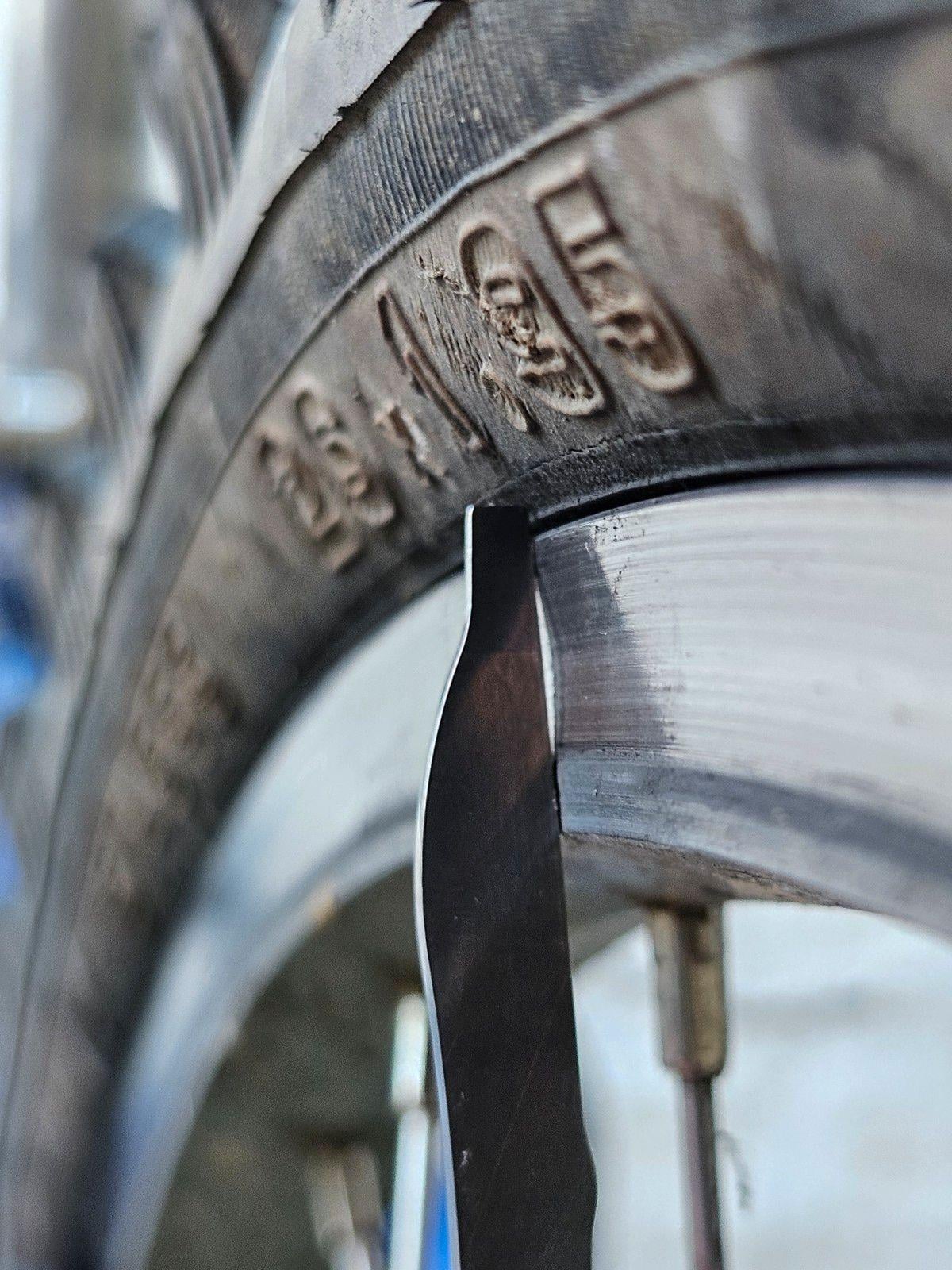
It’s on its way out at best. Another test is, presuming it started with parallel sidewalls (which isn’t all rims), is the top now flared out from pressure. That’s a good conservative litmus test to replace it. The trouble is it’s easy to find a conservative rule of thumb and hard to predict when it will actually explode.
If the goal is for the bike to be rideable indefinitely, i.e. lots more miles, yes go for the replacement now. If the goal is a few more rides until death or the sky falls or whatever, you could save the money.
mtranda on
The only way to properly check is by measuring the actual width of the sidewall and compare it against the manufacturer’s instructions. But at a glance, I would say it’s on its way out. And if it’s a front wheel, I would definitely replace it.
Evo_ukcar on
Most rim brake wheels will usually have a wear groove in the braking surface. When the groove is gone you need a new rim. I would say that was past it’s end of life some time ago.

3 Comments
It’s on its way out at best. Another test is, presuming it started with parallel sidewalls (which isn’t all rims), is the top now flared out from pressure. That’s a good conservative litmus test to replace it. The trouble is it’s easy to find a conservative rule of thumb and hard to predict when it will actually explode.
If the goal is for the bike to be rideable indefinitely, i.e. lots more miles, yes go for the replacement now. If the goal is a few more rides until death or the sky falls or whatever, you could save the money.
The only way to properly check is by measuring the actual width of the sidewall and compare it against the manufacturer’s instructions. But at a glance, I would say it’s on its way out. And if it’s a front wheel, I would definitely replace it.
Most rim brake wheels will usually have a wear groove in the braking surface. When the groove is gone you need a new rim. I would say that was past it’s end of life some time ago.