
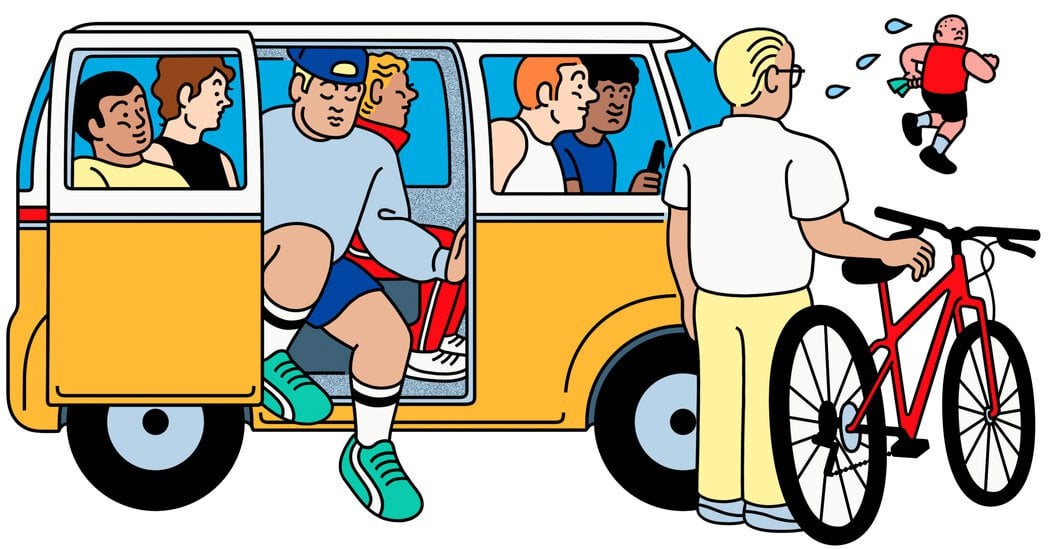
*The New York Times* has a regular “ask the ethicist” feature. The following scenario was [recently discussed](https://www.nytimes.com/2023/08/02/magazine/stolen-bike-reward.html) (paywall) in the context of “whether every promise has to be kept” — in this case, about honoring a “no questions asked” reward for the return of a stolen bicycle.
>My 25-year-old son was using my mountain bike for his grass-cutting business when it was stolen. He felt bad; I felt mad.
>
>I ran an ad: “Mountain bike stolen. $500 reward. No questions asked.”
>
>To my surprise, I got a response from someone, and we set a time to meet.
>
>Then I became worried that I was being set up to be robbed. So I called my son. Next thing I knew there were six hulking 20-somethings tagging along with me in my minivan.
>
>At the agreed-upon meeting spot, the guy appeared with my bike in hand. I got out, then the six big guys got out, and while I’m looking the bike over, they said, in no uncertain terms, that it was not necessary for me to pay for the bike. The guy looked scared, and I wanted things to end safely, so I peeled off half the stack. “How about $250?” The guy took the money and ran off.
>
>Should I instead have given him the original amount? Or do I owe him nothing?
>
>From the Ethicist:
>
>The practice of offering “no questions asked” rewards can be a useful one. The victims get their goods back for less than it would cost to buy replacements. The thieves get some money and pay no penalty, whereas simply putting the goods on the market may put them at risk of exposure and punishment. Win-win! That’s the argument for honoring the practice.
>
>On the other hand, the practice may itself promote petty theft. An opportunistic thief can think, Hey, maybe they’ll offer me a “no questions asked” reward. This is why many governments are reluctant to pay off hostage takers, leery of encouraging more of the same. The stakes are far smaller in cases like yours, but the same logic argues against honoring the practice. (It’s also relevant that, by your account, your six-man football team wasn’t threatening violence; it was convened to prevent it.)
>
>Notice that these arguments aren’t about the rights and wrongs of a particular case. They’re about the merits of having a rule — a rule that says you’ll honor this practice or that you won’t. So-called rule utilitarians think you should commit to the rule that would have the best overall results if everyone followed it. But how are we to know which rule that would be?
>
>My own way of thinking about the matter is simpler: You shouldn’t have to pay people to do what they ought to do anyway. Because this person should never have put you in the situation that led to your offer, he would have had no grounds to object if you chose not to keep the agreement. You would have been free, in my view, to give this fellow nothing.
Several assumptions made and subplots glossed over here …
tl;dr: half a dozen “hulking 20-somethings” arrived at the same ethical conclusion of a professional philosopher.
by ponte95ma
1 Comment
Could be bike gets stolen then ditched somewhere and a third party finds it. Could be third party buys bike not knowing it was stolen then sees add.