
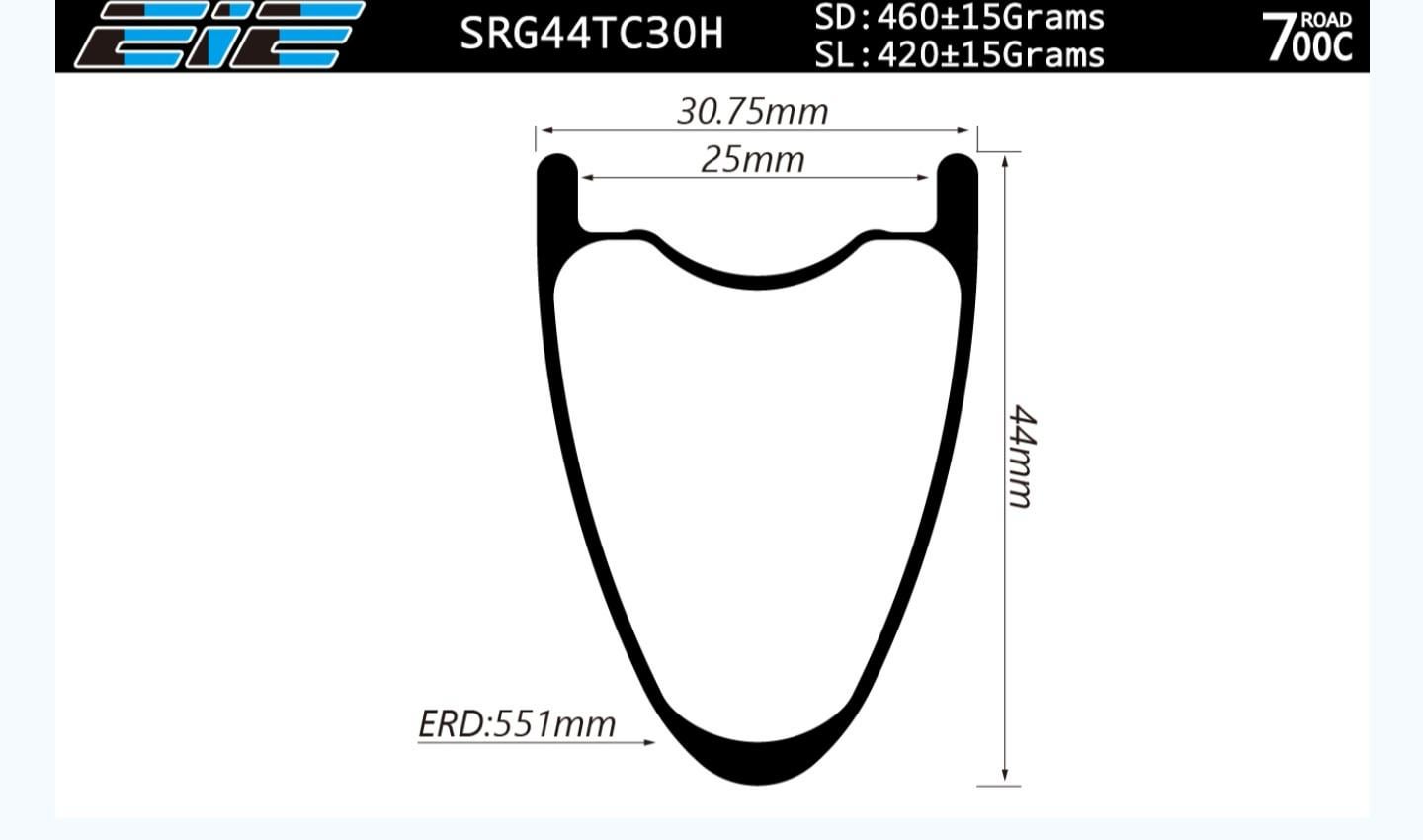
These are my gravel rims that I’m planning on converting as my road rims
Simple question: is 28c too narrow for these rims?
Just airing to the side of safety here, not aerodynamics. I do not mind moving up to a 30c but thought I’d use what I already have in possession
TIA
by g36ecs
13 Comments
Way too narrow. The narrowest tire I would run on that rim is 40 mm, and even that is already narrower than the minimum recommended by ETRTO, which is 44 mm
Edit: I didn’t notice these were hookless. Personally I won’t ride hookless at all.
It is a hooked rim, so it will work with 28mm. The tires will probably measure close to 30mm. The manufacturer even says you can go as low as 23mm, but that is silly.
I would still go for 30mm tires just because they will look, fit and feel better on this rim.
Yes too wide for road. Not the ideal tire shape you want.
https://www.slowtwitch.com/Products/Things_that_Roll/Training_Wheels/Hookless_Road_Tire_Compatibility_8253.html
It seems that according to this article, it’s a maybe. I’d recommend going with 700×30 or 700×32. Especially if you’re heavy, a wider tire wouldn’t need as much pressure to prevent bottoming out, and would be under the max pressure for hookless rims.
One practical point that often goes unsaid: even if you land on/convince yourself of the dogmatic persuasion that this is reasonable, what can’t be argued against is that the tire will have zero to negligible overhang on the rim. That makes it a lot easier to beat up your rims.
I normally use [this chart](https://www.wtb.com/pages/tire-rim-fit-chart), which says that 25mm rims the lowest you should go is 35mm tires. But then it also says that 24mm rims are “optimal” all the way down to 30mm tires.
I would probably say that 25mm rims are too wide for 28mm tires.
Bear in mind; these are hookless rims. That is not a problem at all if you follow the instructions regarding tire pressure and tire compatibility, but it is very important to do so.
30mm is the right choice
I thought road bike wheels these days basically use tyres which are just as wide as the outside of the rim? Zipp allows you to use a 25mm tyre on a 23mm internal width. So doesn’t sound too crazy to use an 28mm on a 25mm rim.
A big problem is that there is no standard for tyre widths. A recent example is that Conti GP5000 tyres are significantly narrower (by about ~2mm) than their GP4000s predecessor even when you buy them in the same size. An “28mm” tyre will probably be more like 33mm when mounted on your rims.
The safe answer is stick with 29mm (labeled width) or greater.
See this recent fantastic article for all of the reasons why:
https://escapecollective.com/thomas-de-gendts-uae-tour-crash-is-a-warning-to-all/
Don’t want to be that guy, but can’t restrain myself. The phase is *erring on the side of caution*. The more you know. Sorry.
I ran 28c tires on ENVE 4.5 SES rims for awhile, same internal and hookless as your rims. You can do it for sure, but really need to keep an eye on your tire pressure. Your absolute maximum is 72.5 psi.
However, it also looks like the minimum ETRTO rating for this set up changed from 28mm to 29mm recently. That said, ENVE is still advertising their 4.5 as being capable of running a minimum of 27c. So, who the fuck knows honestly. This is an issue right now in the cycling world.
I think it is best to go with what ETRTO is saying about this.
For me, personally, I switched from 28c tires to a 30c front and a 32c rear. I wasn’t comfortable having like no head room in my tire pressure. I was basically running the maximum, or close to it. So, if I were to hit a bump or something, my effective tire pressure would 100% exceed the maximum tire pressure rating. Considering blowoffs are a problem right now with road hookless, I thought it best to put a bigger tire on the bike. Quite literally for safety reason.
Apart from what has already been mentioned in the other comments it also depends on your weight. As these rims are hookless they will have a relatively low max. tire pressure and you need to calculate if you can stay below that with the optimal tire pressure for your weight, rim and tire.