
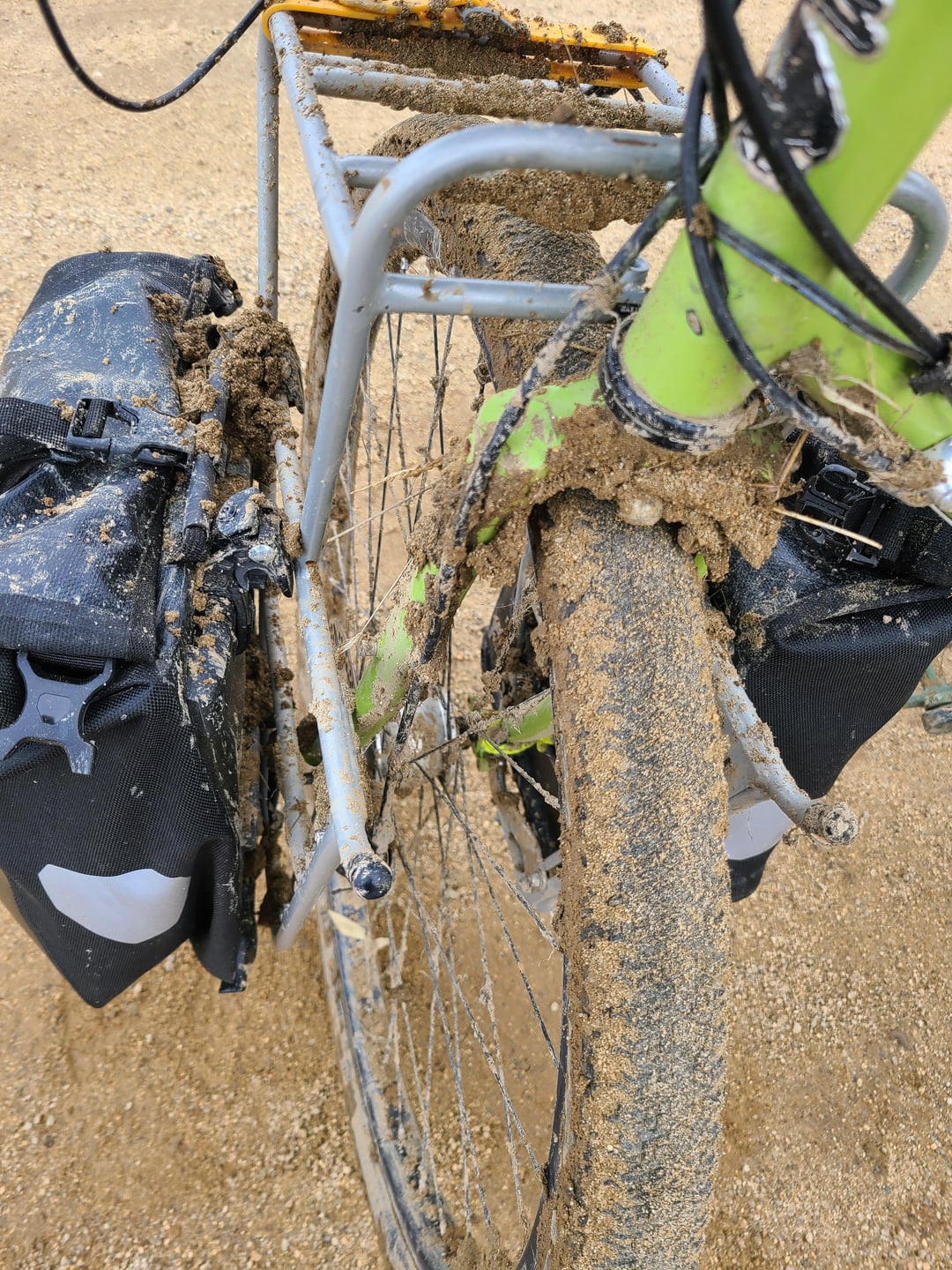
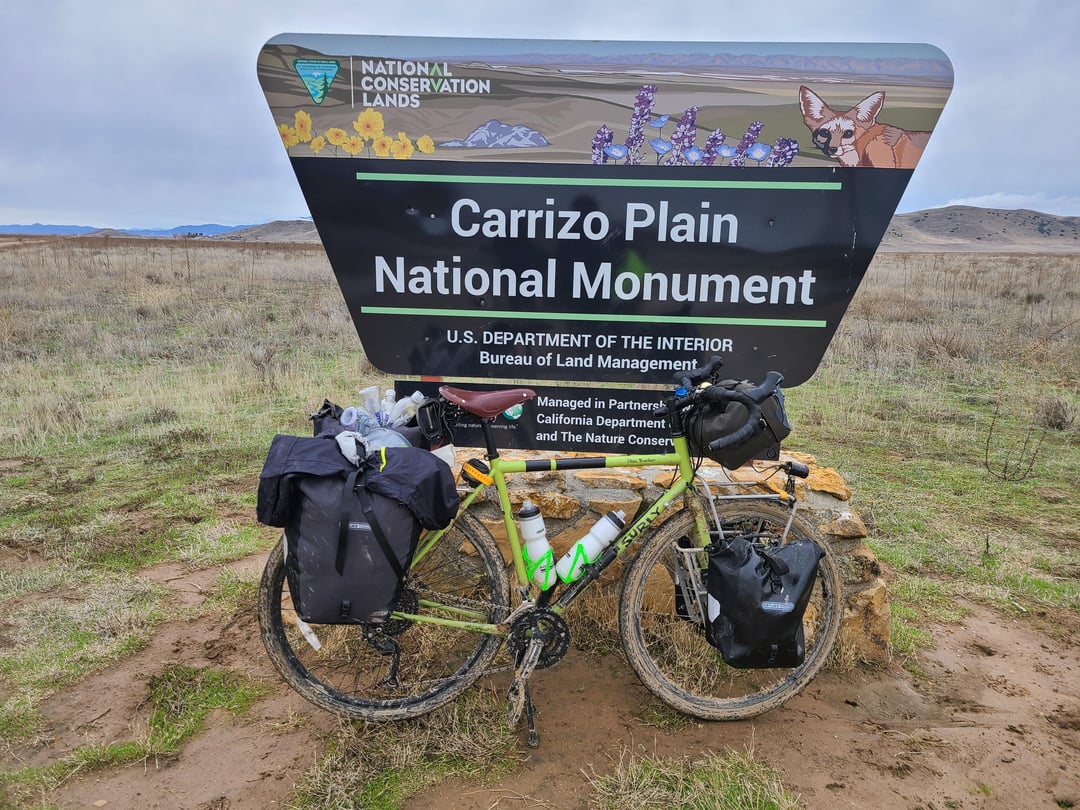
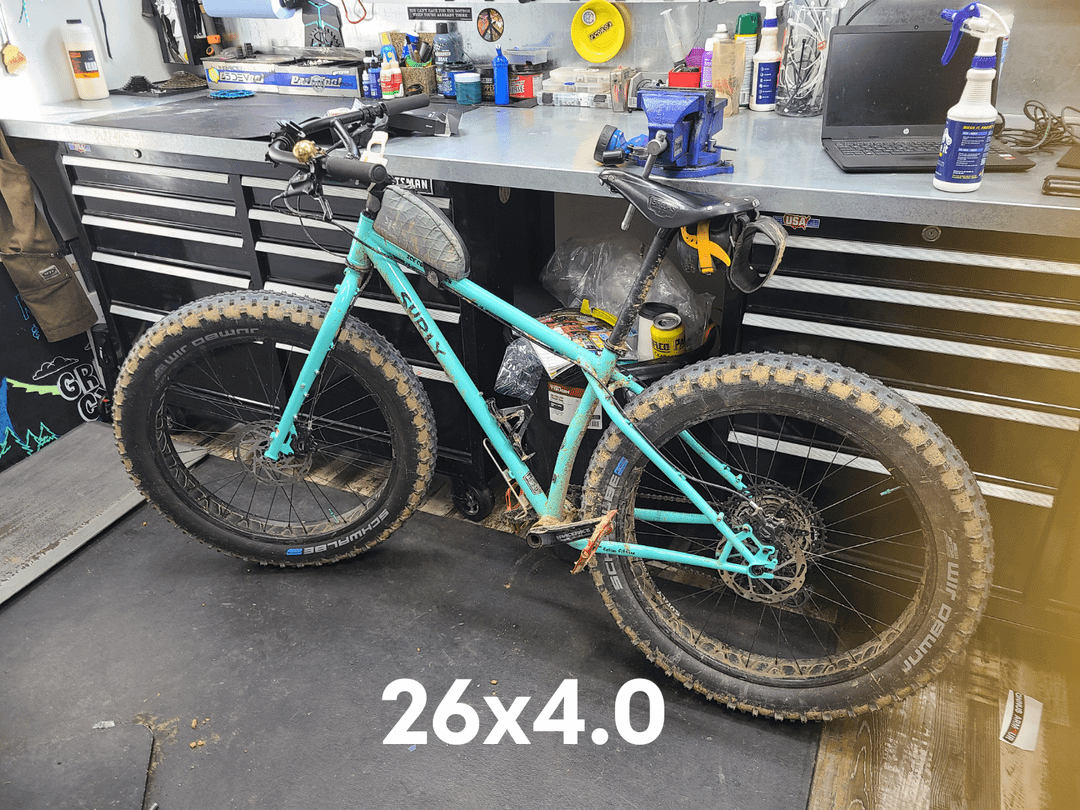
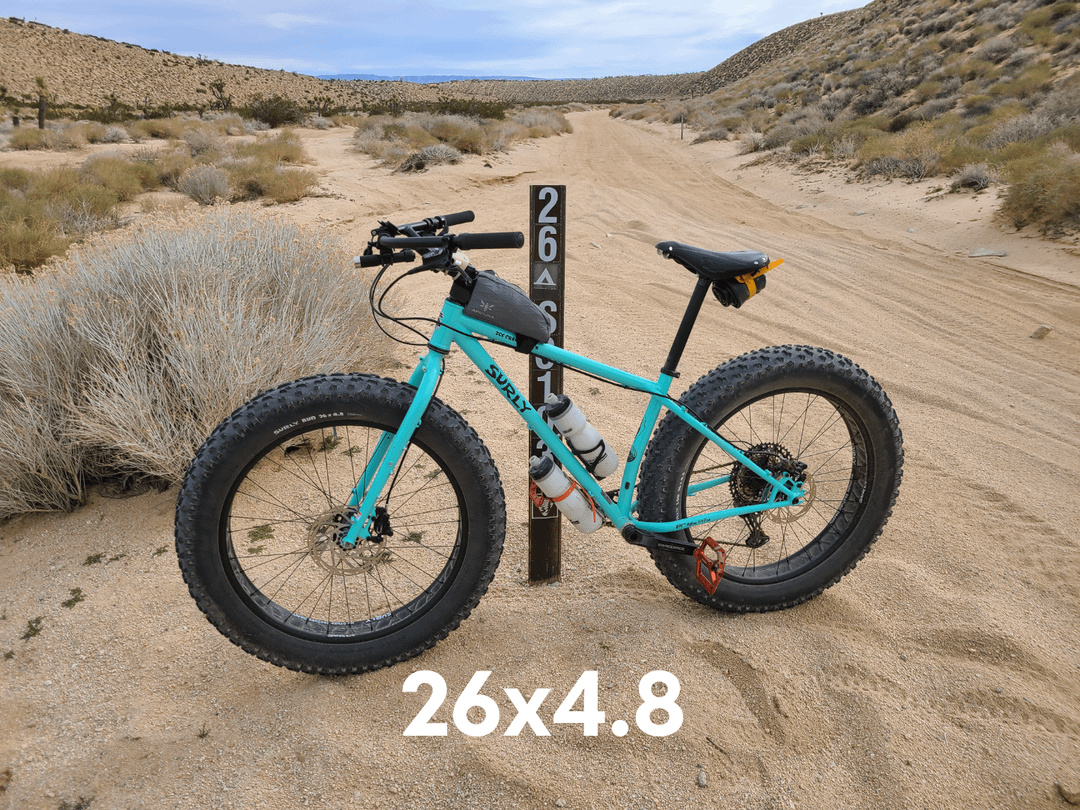
I’ve always dreamed of owning a Surly Long Haul Trucker with the ultimate touring setup. I finally acquired the bike and joined a local bikepacking group. On my third trip, I gained a lot of insight. The shop I purchased the bike from advised against the Trucker, suggesting a bike with larger tires for bikepacking, but I was set on the Trucker. I encountered its limitations, notably when using 700x47mm tires to their maximum capacity. The photo illustrates the mud buildup between the tires and the rim, which was even more severe the previous night. Riding through clay, I veered off the path into a grassy area, where grass clung to the clay, halting my bike completely. At one point, I progressed only a mile in an hour due to constant mud and debris removal. This was my inaugural long-distance bikepacking journey, spanning 160 miles from Bakersfield to Pismo Beach. Another photo features a Surly Ice Cream Truck with 26×4.0 inch tires, which I downsized from 26×4.8 inches for improved clearance. I hope this wasn’t overdoing it. Surprisingly, this bike, fitted with Schwalbe Jumbo Jim tires, offers low rolling resistance.
by TheRealMrVegas
2 Comments
My question is how do you find it comfy with seat in such position?
The ICT does better in loose soil. 26×4+” also does poorly in “peanut butter” mud, which you illustrated in your first photo. It slides side-to-side more than narrow tires too. It will also collect pounds of mud on tires and frame. I typically avoid it whenever possible, but I have had my fair share of rolling through this crud.
If you’re riding a lot of sand, deep gravel, loose and soft soil, you will definitely be doing a lot better with a fat tire.
I went “all-in” on a Surly Wednesday rolling 26×4″. I ride it all year. When I go out for rides, I almost always adjust the air pressure one-four times based on conditions and length of course.
EDIT: FYI, I don’t ride “snow” trails at all with my fatty. I tried it a couple of times; I didn’t like it. I prefer skiing in snow.