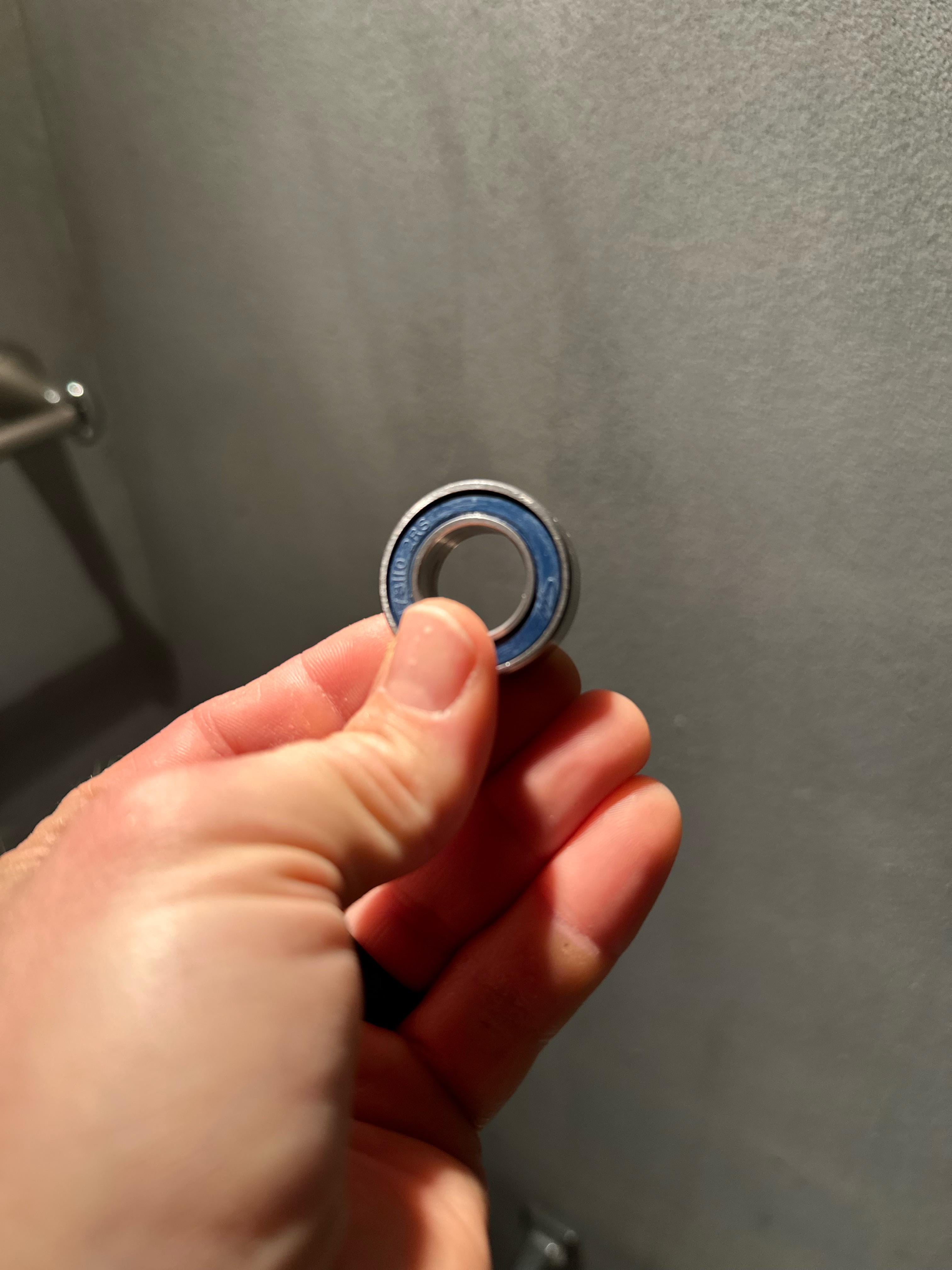
That is a “sealed” bearing. Usually that means replacing them. While it is possible to remove the seal (the blue plastic ring) from the bearing and clean and re-grease them, it is not a good idea.
Getting the seal off is tricky and usually results in damaging it so it is impossible to re-install the seal without gaps in it, and that results in having a no longer sealed bearing. That leads to dirt and water getting in to places it should not be and causing damage.
AJ_Nobody on
You can peel the dust seal open with a razor blade if you’re careful, but IMO sealed bearings are consumables, so I’d just put a new one in. Get the same number as is stamped on the seal.
CargoPile1314 on
You can probably clean them. The seals come out, as others have said. It’s not the easiest to get them out intact but also not the hardest. If you damage the seal past the point of reuse, that side of the bearing can usually be run without a seal on the inside (there are caveats but they’re not very common in the bike industry). They have 2 seals because that’s the cheapest way to buy bearings. Dirt isn’t getting into the bearing from inside the hub or bottom bracket, it’s coming from the outside so the inside seal is superfluous. Also, if the alternative is replacement, trying to reuse has no downside.

4 Comments
Think you just replace
That is a “sealed” bearing. Usually that means replacing them. While it is possible to remove the seal (the blue plastic ring) from the bearing and clean and re-grease them, it is not a good idea.
Getting the seal off is tricky and usually results in damaging it so it is impossible to re-install the seal without gaps in it, and that results in having a no longer sealed bearing. That leads to dirt and water getting in to places it should not be and causing damage.
You can peel the dust seal open with a razor blade if you’re careful, but IMO sealed bearings are consumables, so I’d just put a new one in. Get the same number as is stamped on the seal.
You can probably clean them. The seals come out, as others have said. It’s not the easiest to get them out intact but also not the hardest. If you damage the seal past the point of reuse, that side of the bearing can usually be run without a seal on the inside (there are caveats but they’re not very common in the bike industry). They have 2 seals because that’s the cheapest way to buy bearings. Dirt isn’t getting into the bearing from inside the hub or bottom bracket, it’s coming from the outside so the inside seal is superfluous. Also, if the alternative is replacement, trying to reuse has no downside.