
I decided to replace the brake pads on my bike thinking how hard can it be.
Turns out, its quite difficult if you havent done it before.
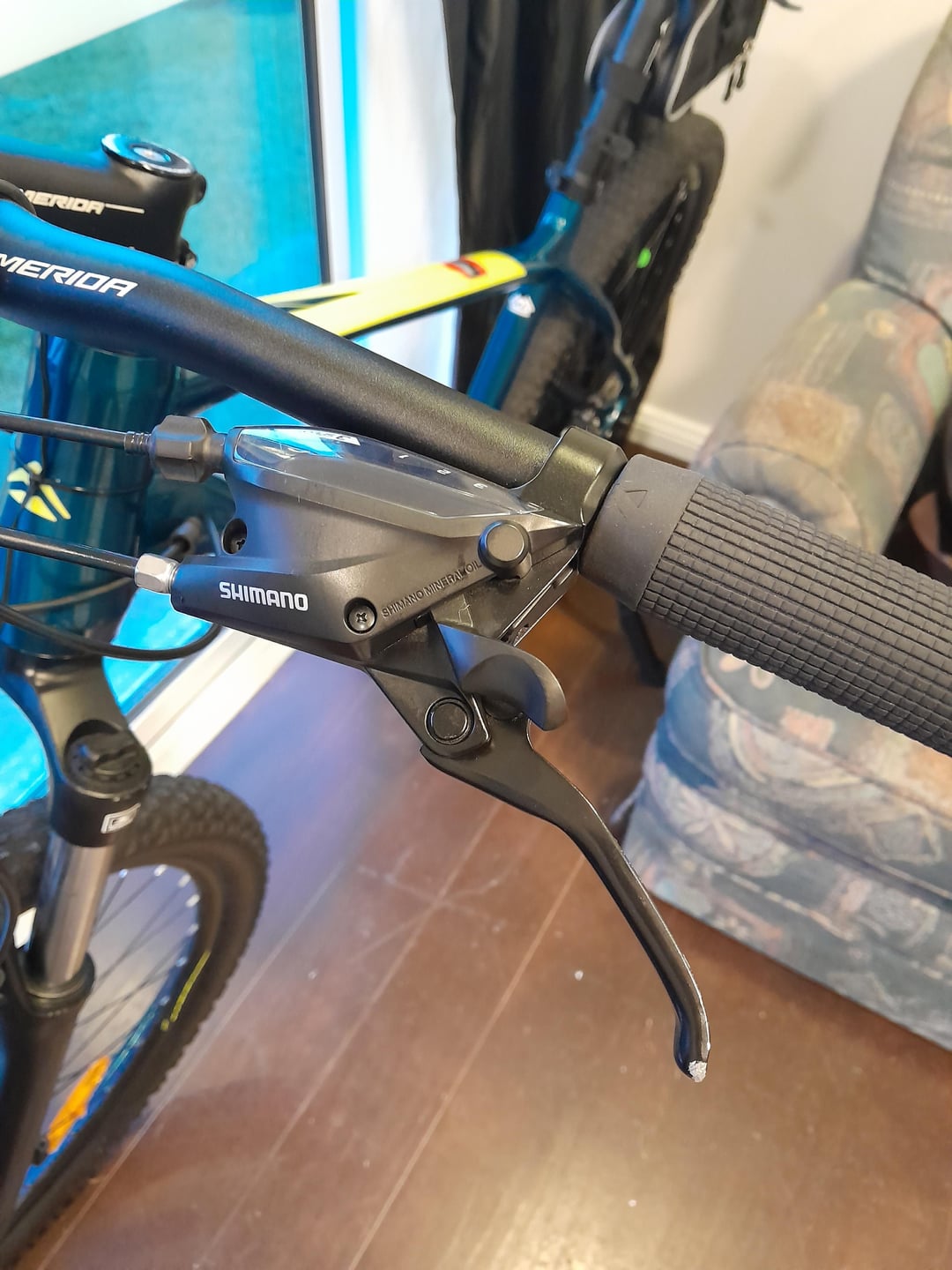
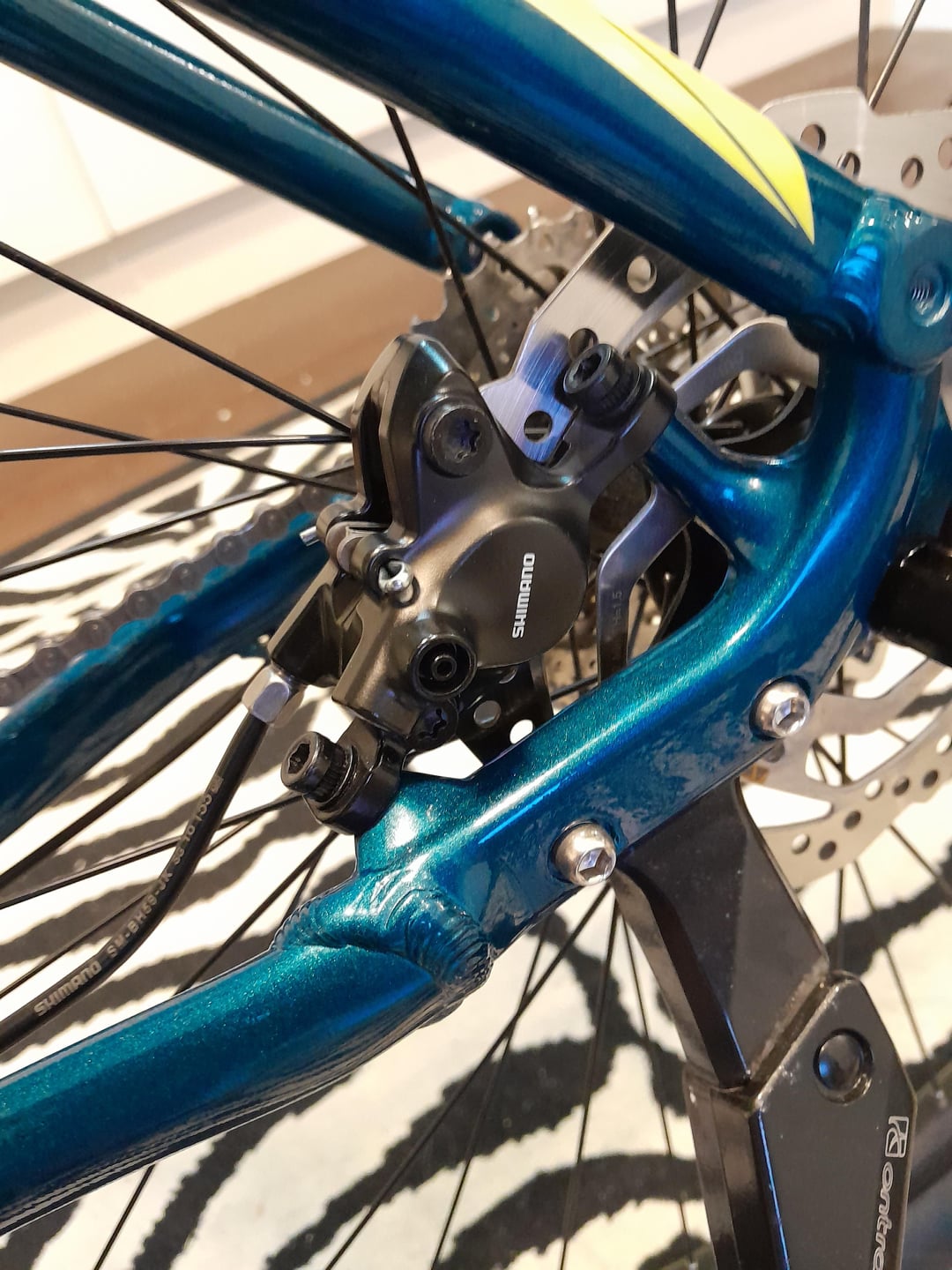
My bike is a Merida big 9 29 inch wheels. Shimano mt200 brake calipers. Im not sure about the levers but will post a photo.
When replacing the brake pads i heard its good to give the calipers a good clean with isopropyl alc. Decided to pump the brake pistons out to give them a clean. Pumped the rear piston all the way out, piston fell out along with all the brake fluid. I managed to push the piston back in and took it to the bike shop to bleed the brakes calibrate the brake calipers.
When i got it back the technician said to keep an eye on the lever as feels the diaphram is now broken from when i pushed the piston back in. He also mentioned the lh rear piston is sticking which explains uneven brake wear. Technician also mentioned the fluid was not the correct shimano red mineral oil. The stuff that came out looked like vegetable oil. It was the same shop i bought the bike from. To be fair ive had other issues with the bike fixed like failing cranking set that was fixed under warranty.
He said it should be fine to ride but now it feels unsafe and i feel unmotivated to ride the bike. I have learned to never mess with brakes be it a bike or car based on this experience, its better for me to leave it to professionals.
Im wanting advice on where to from here. Please advise how easy/expensive it would be the replace the caliper and lever. I would prefer to have both brake sets match. Technician said the front brakes are fine but im skeptical of this too. I will upload pictures of the relevant parts.
I feel like a real dummy for my mistake but it also in some ways feels like a blessing – i wouldnt have otherwise known it was the wrong brake fluid.
Thanks!
by fartsandthefurious
6 Comments
I just wanted to also add the brakes are noisy and soft after replacing the pads. Is this normal?
You learn from these mistakes, it’s easy to do. You can ask the bike shop to do a full rebuild, fixing the diaphragm, but that’s likely to not be economical when the whole brake (lever and caliper) is only around 30GBP. I’d recommend taking the hit and replacing the lot. Brakes are the one thing I won’t compromise on in terms of safety.
Do first, think later.
It’s not that hard if you follow some instructions first – I’d recommend the various park tool videos for guidance before having a go at the next thing.
Don’t be turned off working on your bike because you messed this up – just do some reading/watching/learning before launching in next time.
Regarding your two questions:
1. If you don’t trust the brakes then just get new ones. MT200s won’t set you back too much & having working breaks will be a good thing.
2. Noise & ‘softness’: noise can be lots of things – did you bed the brakes in after getting the pads changed? If not, Google for ‘mtb disc break bed in’ and choose one of the gazillion guides.
I’m not sure what you mean by ‘softness’ – do you mean the lever feels spongy, or that the brakes don’t bite?
If it’s spongy then it needs bleeding (again), if it’s not biting then clean your rotors with some isopropanol or brake cleaner on a clean rag & run through a bedding in procedure.
If they still don’t bite afterward then you might have oil contamination on the pads – for that you want to go back to the shop.
Lastly, regarding the oil colour – it actually doesn’t matter. I’ve seen clear, straw, green & pink stuff. Maxima is green & it is excellent. I myself use the pink shimano stuff, but whatever. In any case, so long as it’s mineral oil it’ll almost certainly be fine.
I’d challenge almost anyone to tell the difference between vegetable & mineral oil by sight alone – colour means nothing.
Given you’re using MT200 brakes (the best cheap disc brakes money can buy) if the mechanic has indicated the diaphram feels busted – I’d replace the caliper, lever and hoses now. They come as a prebleed package – so assuming you have external routing you just swap the parts over without needing to bleed anything.
I wouldn’t bother replacing the rotor – there is a good chance its been contaminated – but you can almost always get ride of rotor contamination by cleaning it really well with isopropyl alcohol and a clean cloth. Make sure you get the cloth and alcohol in the cooling vents along the braking surface.
If you didn’t mess with the front brake – there’s no reason to doubt the mechanic on what they’ve said about the front brake. Just leave that alone.
Finally – there’s no reason to give up working on your brakes. You’ve learnt what not to do and thankfully you’ve learnt that lesson on an easily available low cost part.
Do not let this dissuade you. Some people get lucky for a while and then make this mistake down the line. Other people make the mistake straight away. You’ve learned the lessons needed, so you’ll be careful now. Just replace them if you’re that worried, and follow the instructions properly next time. You’ll ace it next time, I promise you