
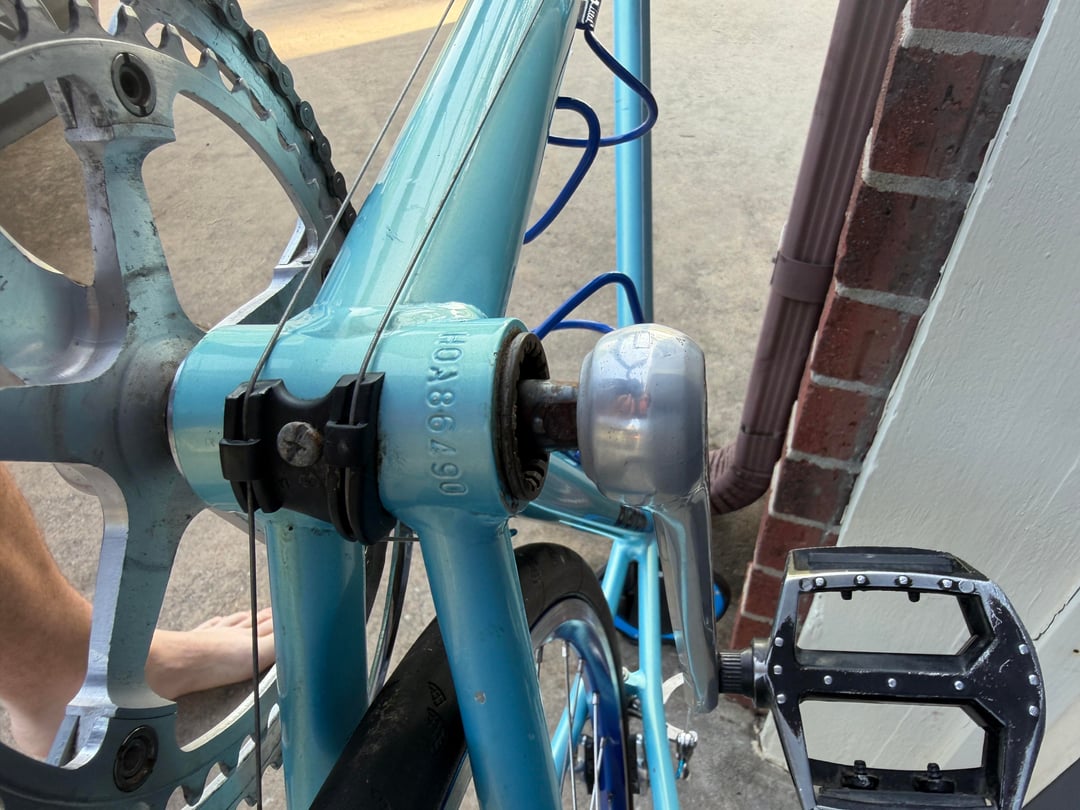
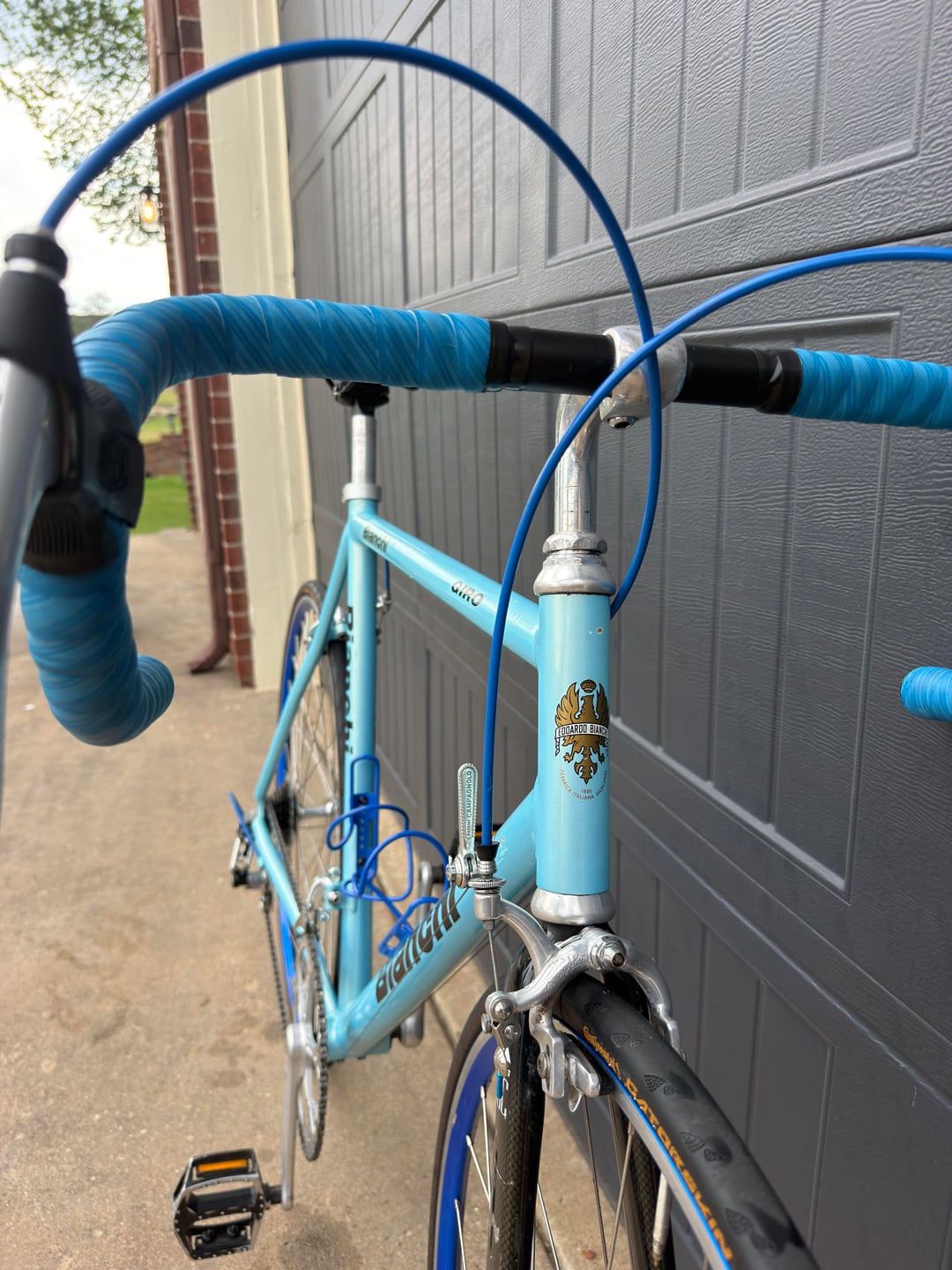
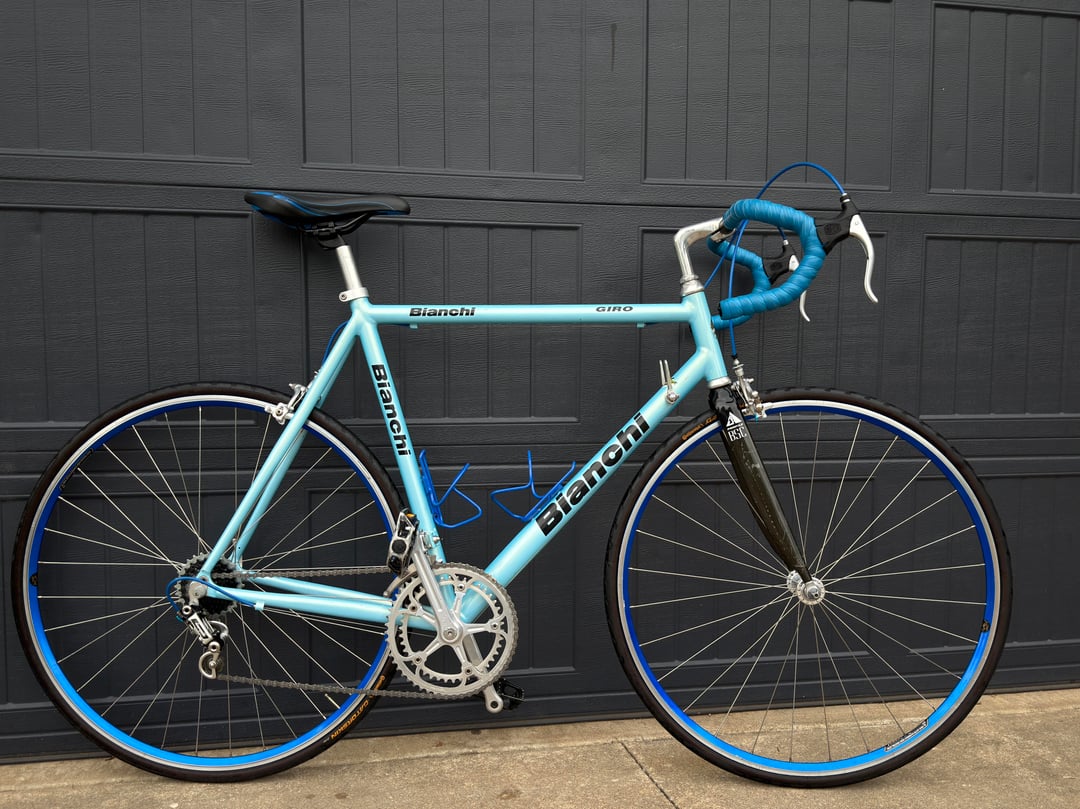
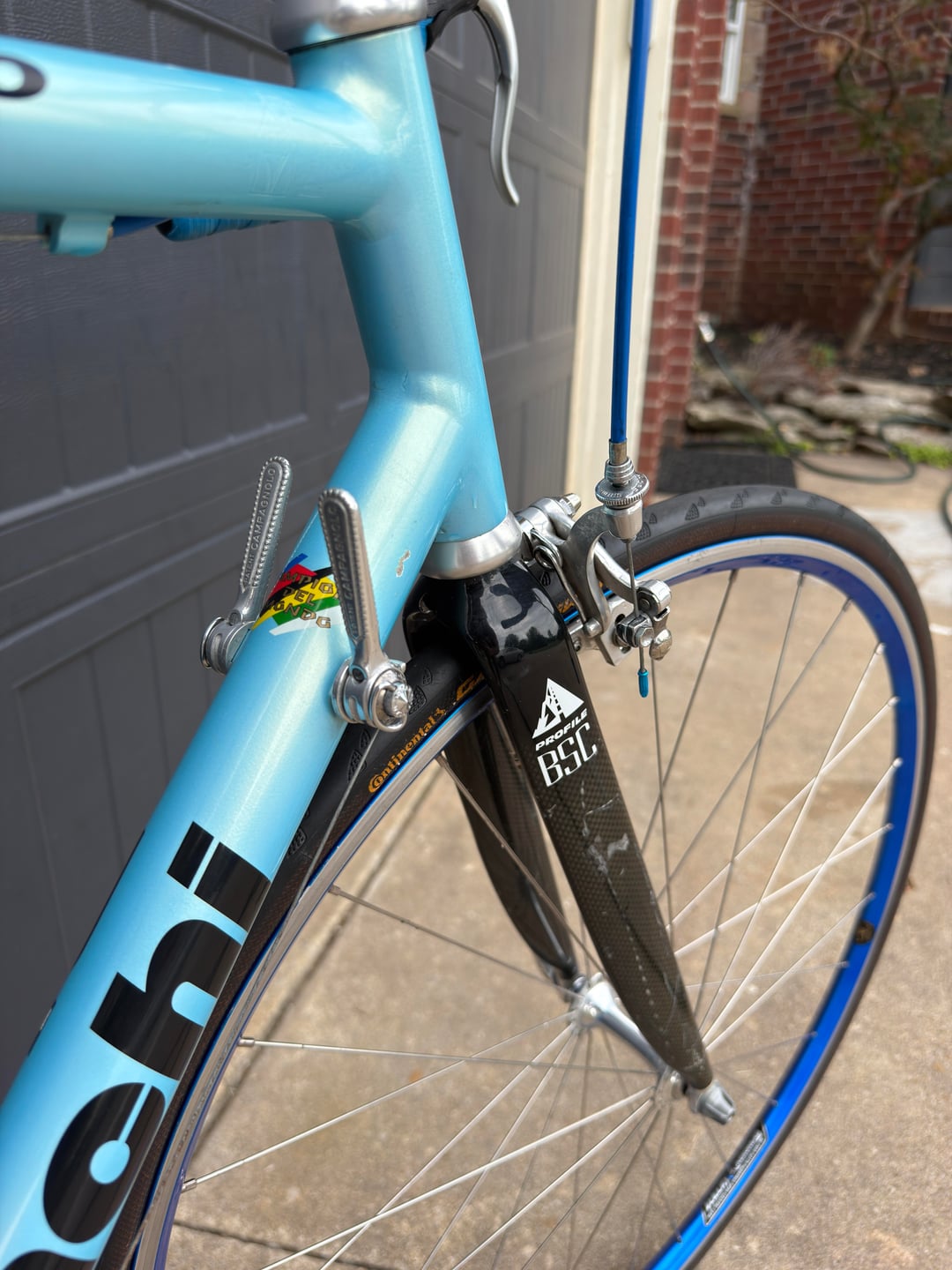
I bought this bike assuming it was mid 80s because of the no. Indexed down tune shifting. But the frame is stamped with Easton Super Lite 7005. So I think it’s aluminum which suggests late 90s to early 2000s. Not sure where to turn for answers. Any ideas?
by PurpleFlurp_
3 Comments
By early 2000s even Campy’s mid level stuff used integrated shifters. I had a Bianchi Volece from the early 2000s with integrated shifters. This bike is from the earlier part of the 90s going by the downtube shifters and aluminum frame. There is a chance that it is from 1990 going by the serial number but I don’t know how Bianchi S/N were formatted. Your best bet of dating it would be to figure out what spec Campy parts are on the bike and what years they were produced.
It is fairly easy to recognize aluminum frames. Welded construction and oversized tubes. It was one of the first things I noticed about it.
All the Bianchi models in the 80’s would have been steel-framed — with noticeably thinner tubing and generally with lugged construction. The parts themselves here are Super Record (at least the rear derailleur is, there could be a mix with other similar-vintage Campy)…the frame is clearly (somewhat oversized tubes with smooth welds) newer aluminum (maybe 1999-ish?) but old enough where it still had downtube shifter bosses — in the late 90’s they would have supported the downtube shifters or used adapters mounted there as cable stops. In the earlier 2000’s they would probably have switched from bolt-on adapter cable stops to dedicated cable stops without the shifter bosses.
definitely aluminum just based on the tubing diameter
The Giro doesn’t show up in catalogs for many of the years around 1997-2003, but Bianchi is also known to have different models depending on US or Euro markets, so it can be hard to check via catalog.
I’d guess only the first number in the serial corresponds to model year, with 8 meaning that it might be a 1999 model made in 1998. Overall due to the spec I’d guess 1999-2000.