
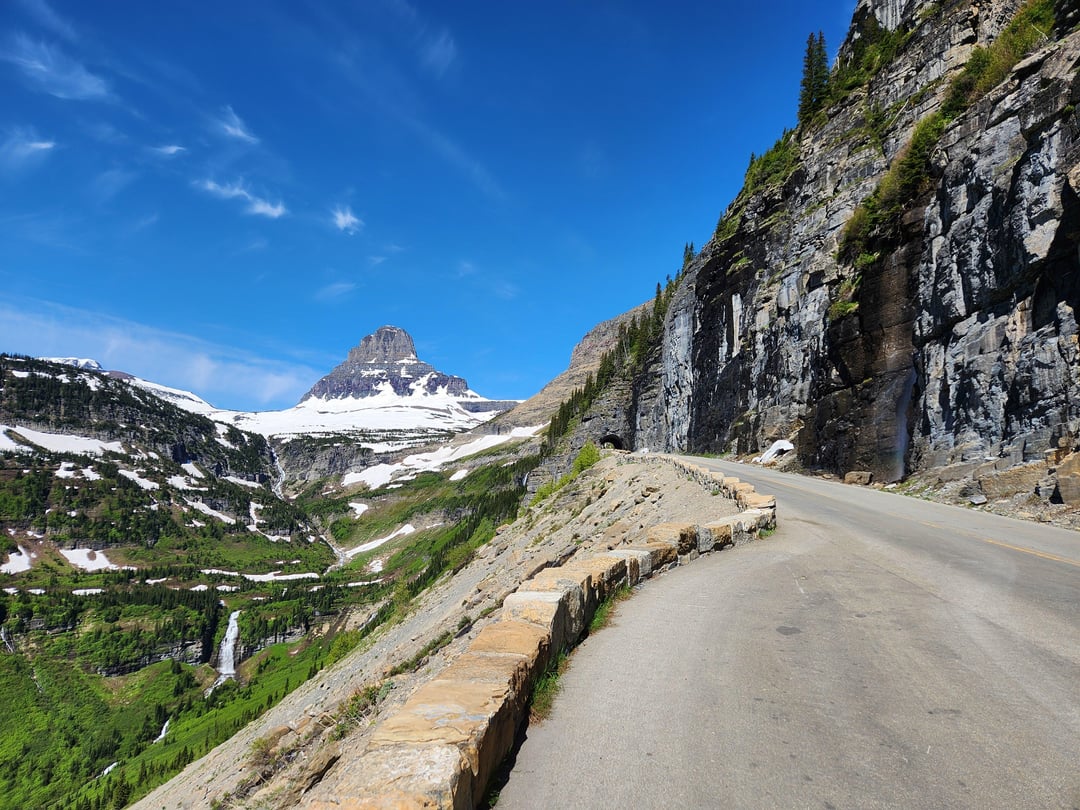
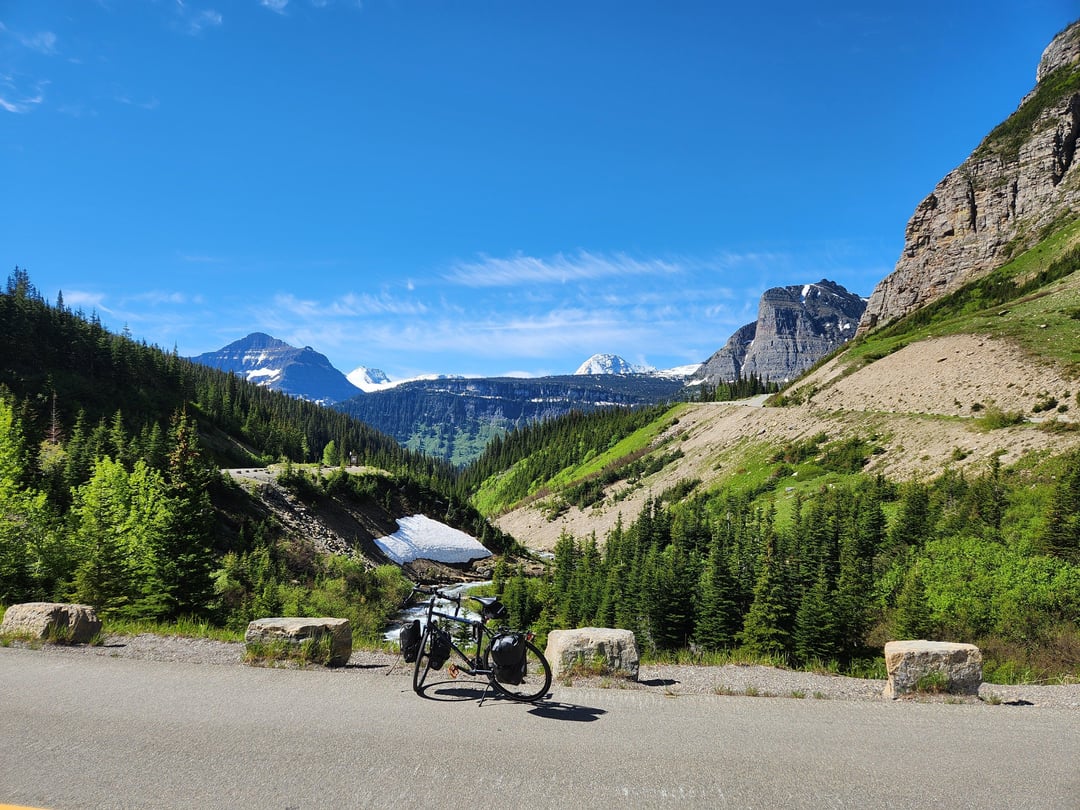
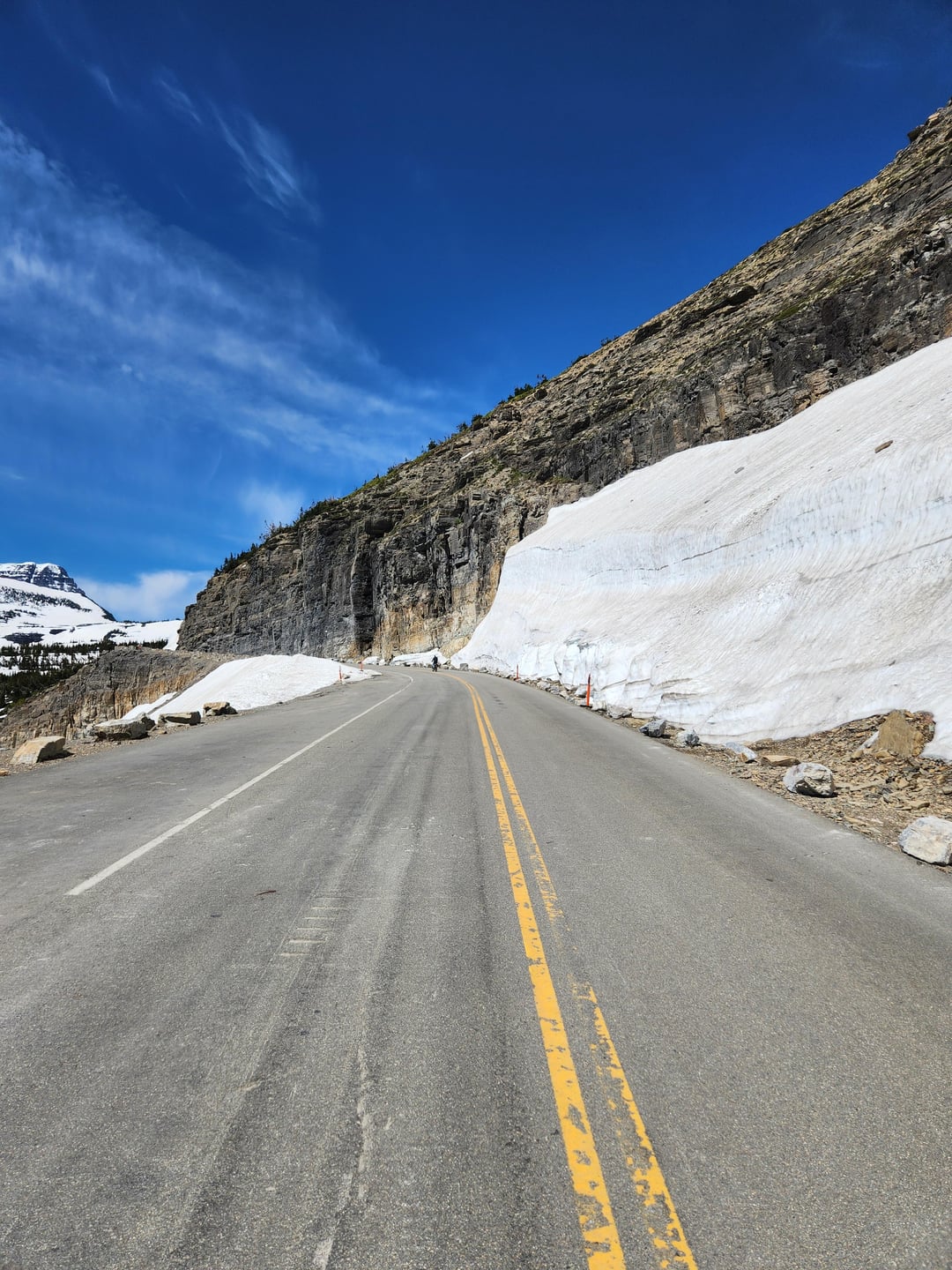
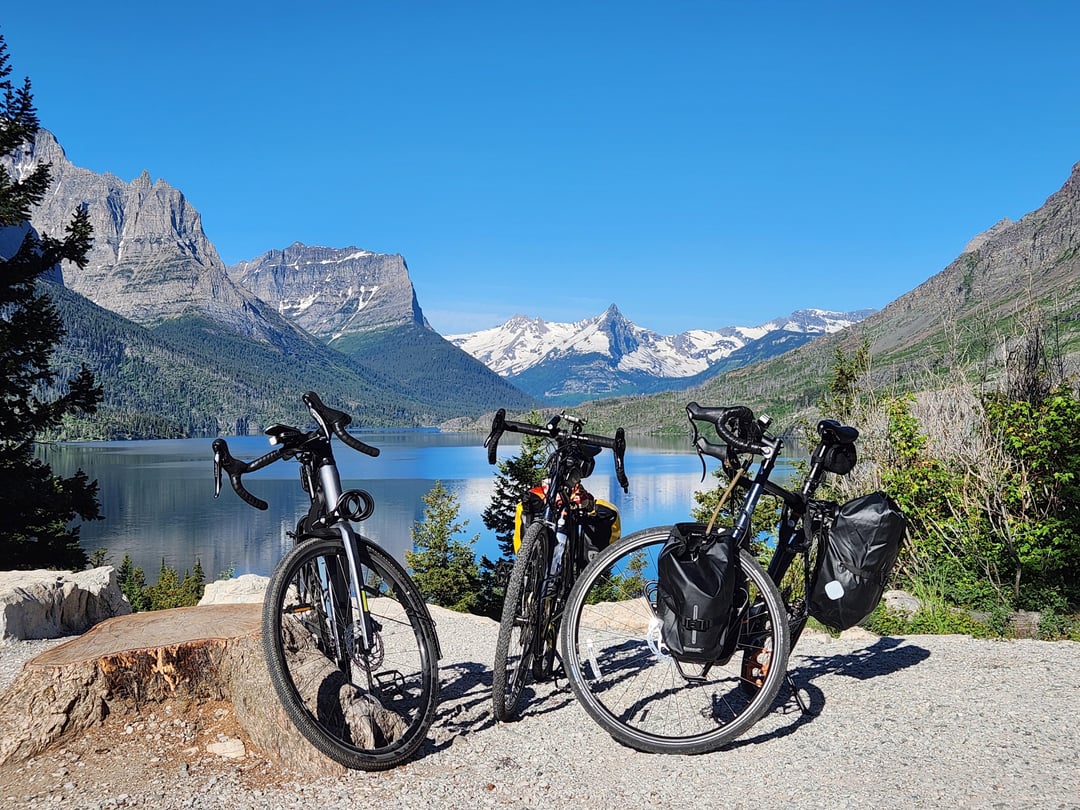
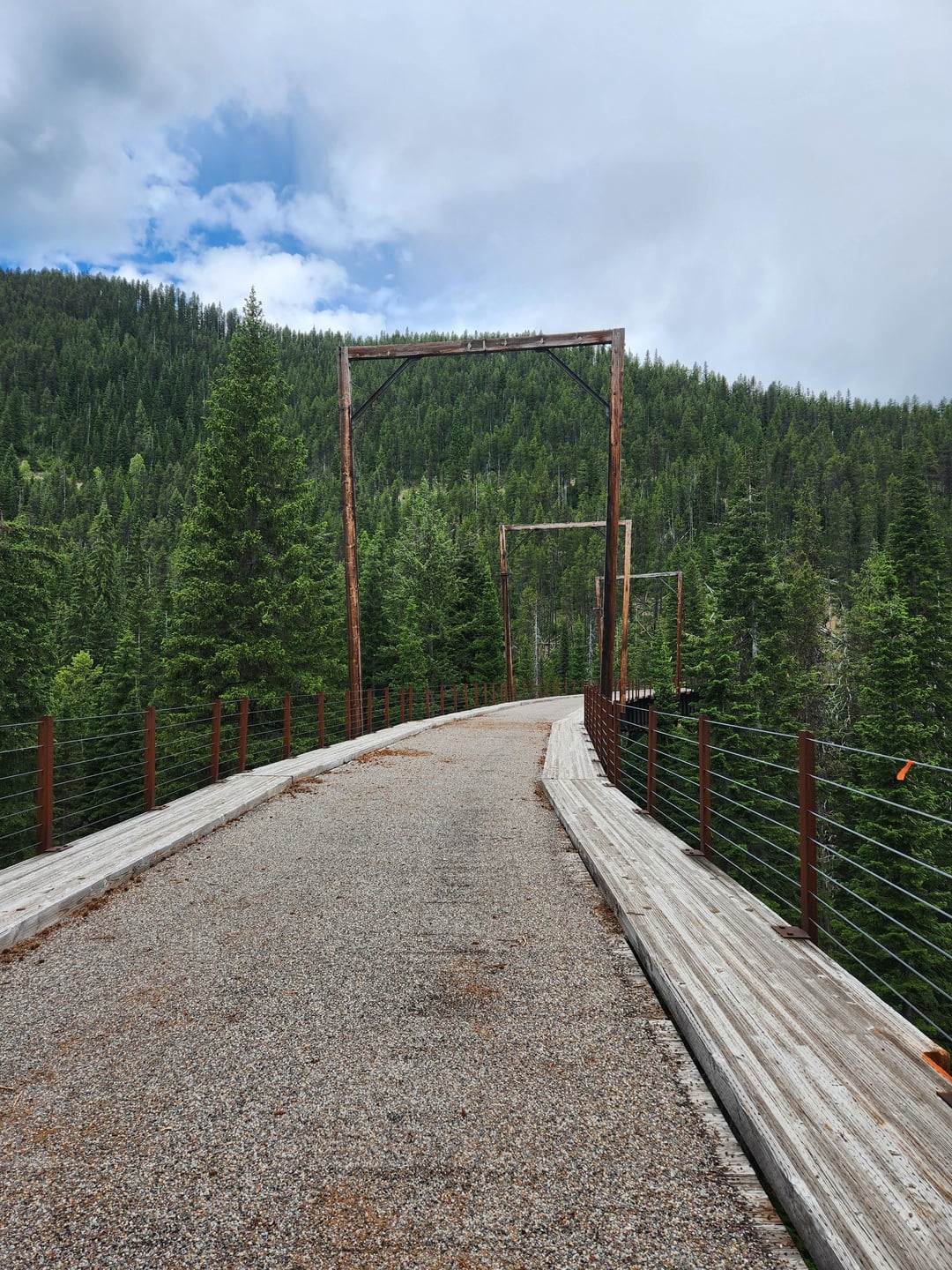
Three of us rode from St Mary, Montana to Spokane, Washington: 438 miles and about 19,200 ft of climbing over seven days. The trip was built around the bikes-only window on Going-to-the-Sun Road. GTTS is an iconic, unbelievable ride across the Continental Divide in Glacier National Park. Each spring, after the plows clear Logan Pass but before the road opens to cars, the road is open only to bikers and hikers. Some time from early June to early July and with no warning, the Park announces that Logan Pass is open, but only to bikes, then announces it is open to cars a few days later. The bikes-only stretch may have been longer in the past, but the last few years it's lasted less than a week. We were flying in from across the US and planning to take Amtrak to Glacier, so we couldn't wait for the announcement; we had to predict the date months ahead.
To predict the bikes-only window we built two models: a multivariate regression on snowpack from a few SNOTEL weather stations modified by reports of plowing progress, and a k-nearest-neighbor "analog" model that matched this year's daily snowmelt curve against every year since 2007. We held three refundable booking windows — crossings of June 12, 19, and 27 — and committed to the middle one in late May as the most likely candidate. We met up on the Empire Builder in the early hours of June 18, still unsure we'd get the crossing: The models had predicted a 70% likely opening of GTTS for cars by June 20-25, so we were betting on a bikes-only window opening in time for our crossing. That afternoon the NPS opened the road to bikes, so we crossed car-free as planned on June 19th. NPS opened GTTS to cars June 22, in the middle of our models' prediction window. It worked, and we were lucky. How lucky? Aside from the nail-biting prediction uncertainty, the road closed again the next weekend for a snowstorm and subsequent flooding. In late June.
The crossing
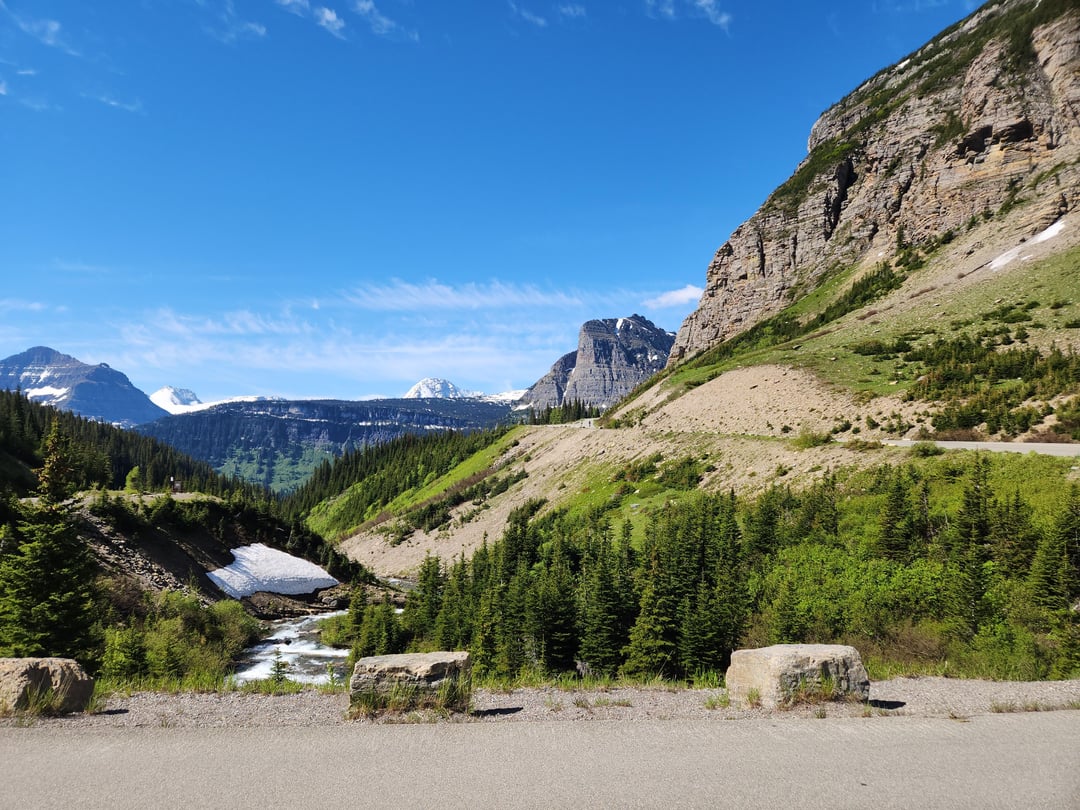
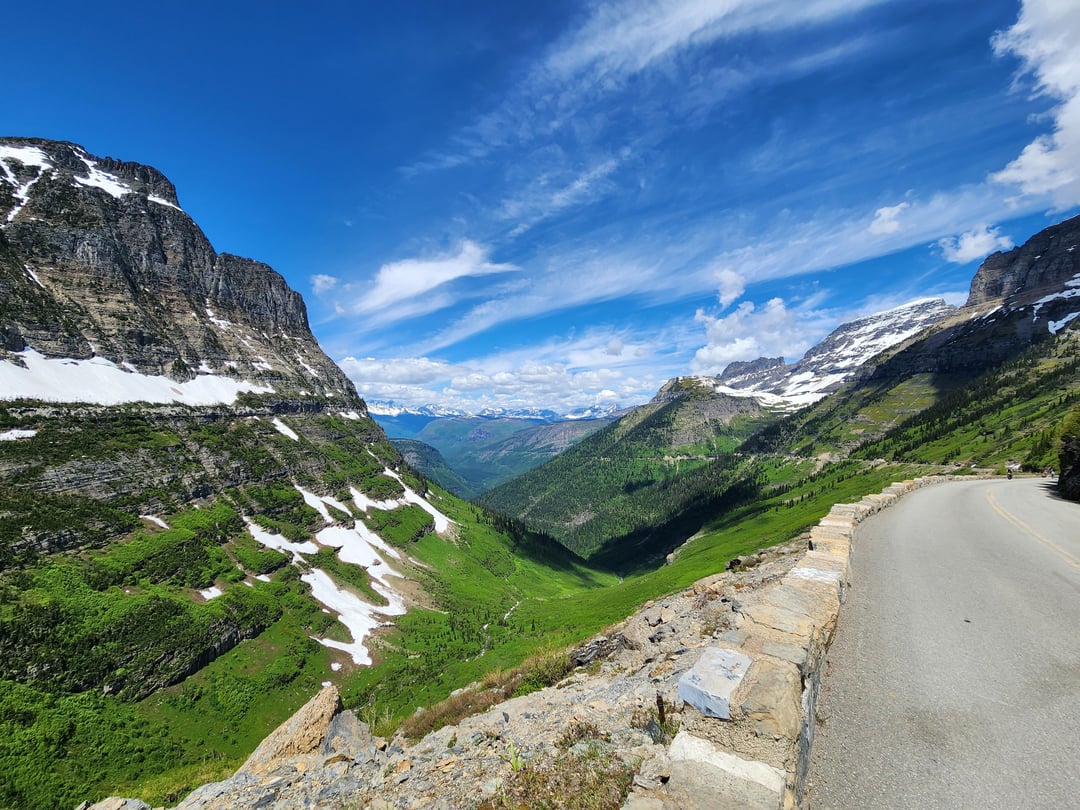
We climbed out of St Mary up the east side with the road nearly to ourselves, every turn revealing vistas more stunning than the last. We descended the west side down the curtain wall, with dizzying views of a perfect glacial valley seen from a mountain road clinging to the side of a cliff. The most spectacular ride I've ever done, and something that has to be high on the bucket list of most memorable events in one's biking life.
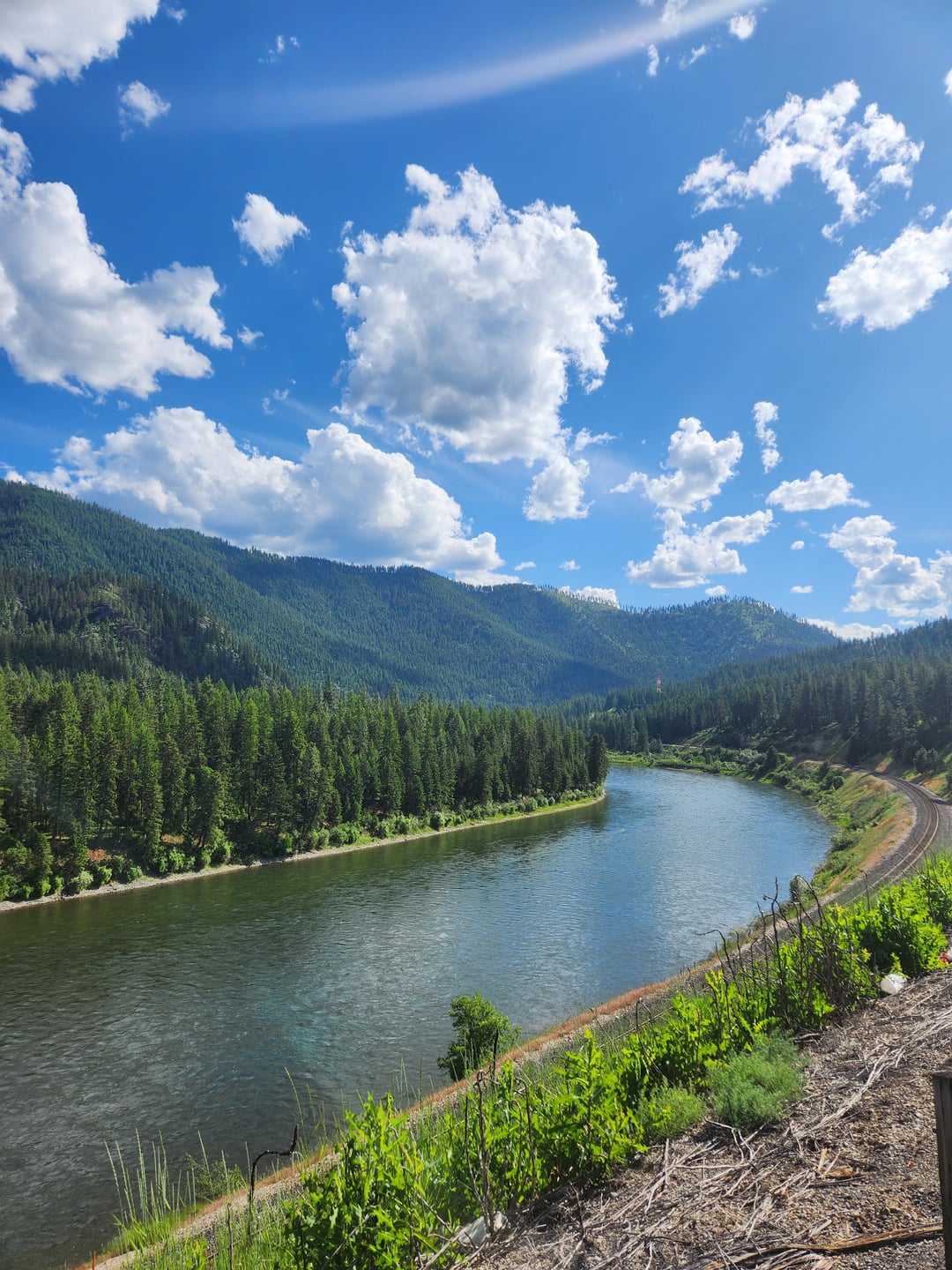
Over the next six days we rode back to Spokane. Every day was different, every day was incredible.
Five passes
- Logan Pass, 6,646 ft — the Continental Divide on GTTS, car-free.
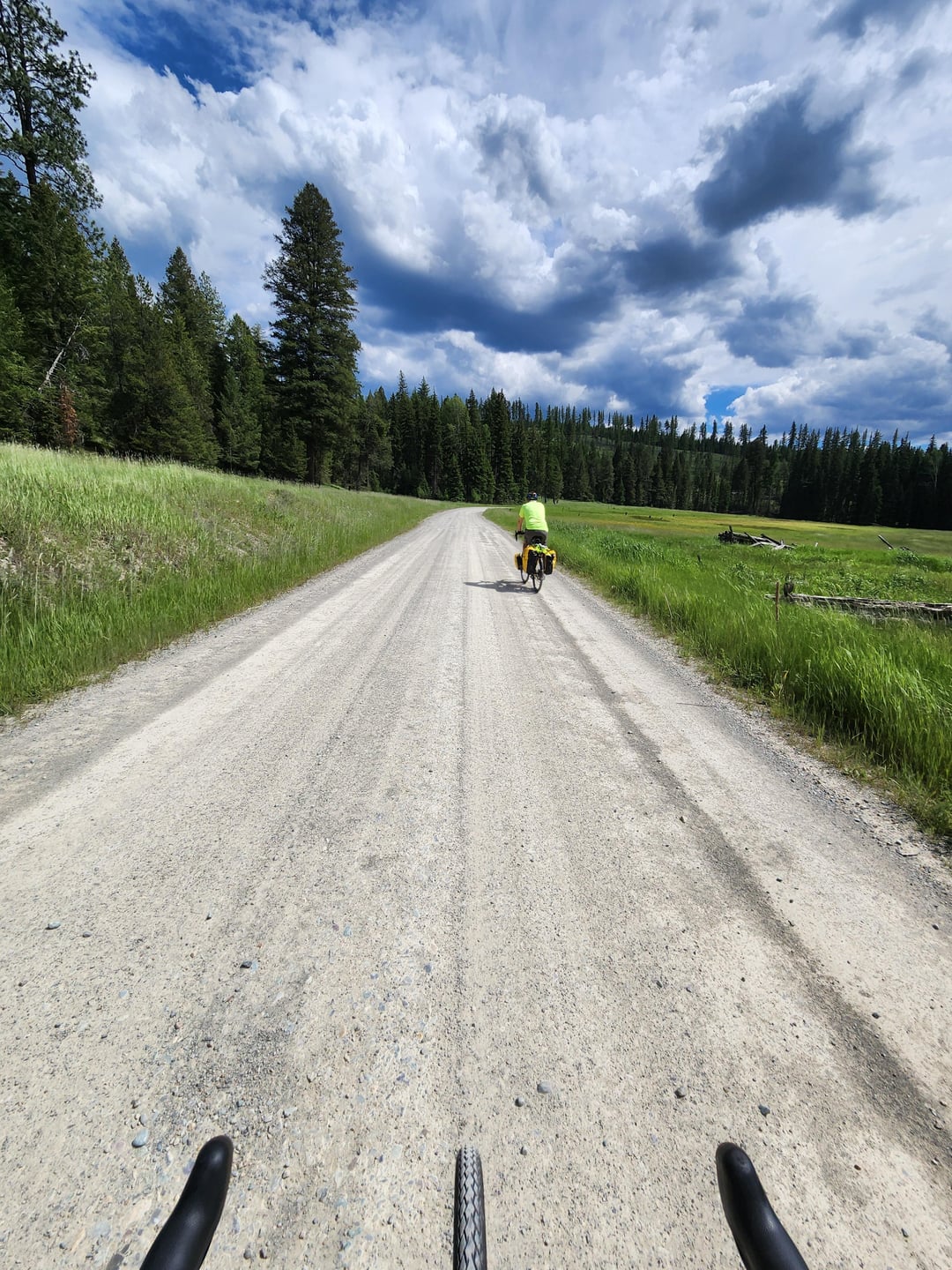
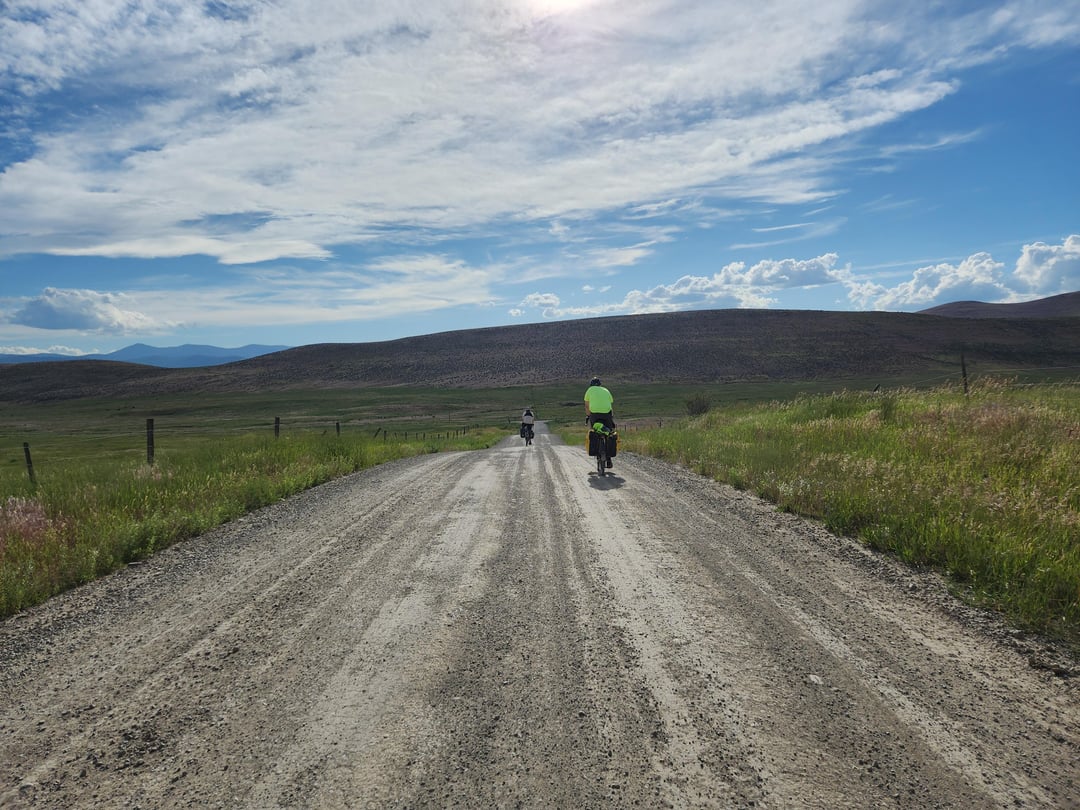
- Browns Meadow Pass, ~5,200 ft — gravel, a reputation for sticky mud (bone dry for us), and a long grind up. If you like fast descents down gravel, this is the place to go.
- Camas Pass — easiest, but proof that no pass is easy.
- St. Paul Pass — crossed under via the Taft Tunnel, a 1.7-mile unlit tunnel on the Route of the Hiawatha. Otherworldly.
- Moon Pass — gravel up, over, and down into Wallace, Idaho. The hardest climb of the trip. 5-10% grade for miles.
The road west
Quiet Montana, Idaho, and Washington backroads and near-empty reservation land. One lesson learned the hard way after a few shoulderless 70 mph highways — trade distance, or even a climb, for a safer road. The Route of the Hiawatha, on the old Milwaukee Road grade, is essentially an amusement-park ride on a bike — long tunnels, high trestles, maintained by the local ski resort, worth the $20. The Trail of the Coeur d'Alenes, on an abandoned UP line, was my second-favorite stretch after the crossing: about 70 miles of flat, well-maintained paved rail-trail through pretty country and rail towns.
The bikes
- REI Co-op Cycles ADV 1.1, steel touring frame, modified – 22T granny and an 11–36T cassette, ~16.5 gear inches for the loaded climbs.
- Stock ADV 1.1 – 26T granny, 11-34T cassette: ~20.6 gear inches.
- Cube Nuroad SLX gravel bike, 1x Shimano GRX 40T with a 10–51T cassette: ~21.6 gear inches — tough on the climbs, good on the descents.
What went wrong
Most of it was mechanical, before we'd really started. A rear derailleur — hanger and cage both — bent during transit and assembly the evening before we boarded the train; a spare hanger we'd packed plus an emergency trip to the bike mechanics at REI fixed it. A dropped chain later bent a front derailleur, which bent back easily. The Amtrak Empire Builder ran six hours late. A couple of flats. Otherwise smooth.
by TrailTech425
2 Comments
i live near here. i know nothing about models or weather. how can i follow you to find out the bikes only window next year, or where do i look for that lol
Awesome!!!!!!