
This is part 2 of my trip report cycling from the northernmost point to the southernmost point of Vietnam. You can find part 1 here.
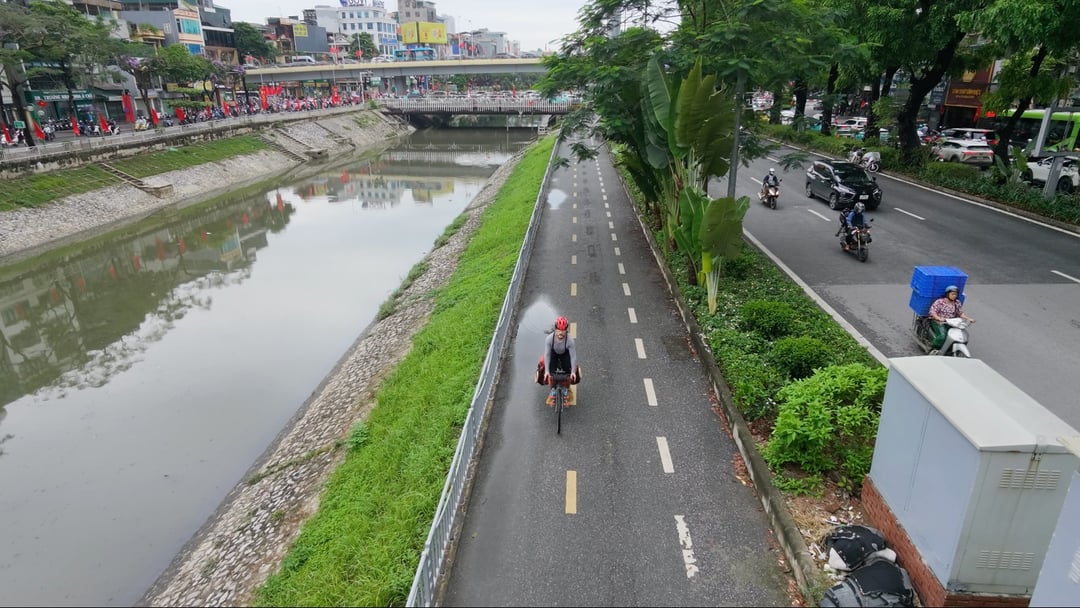
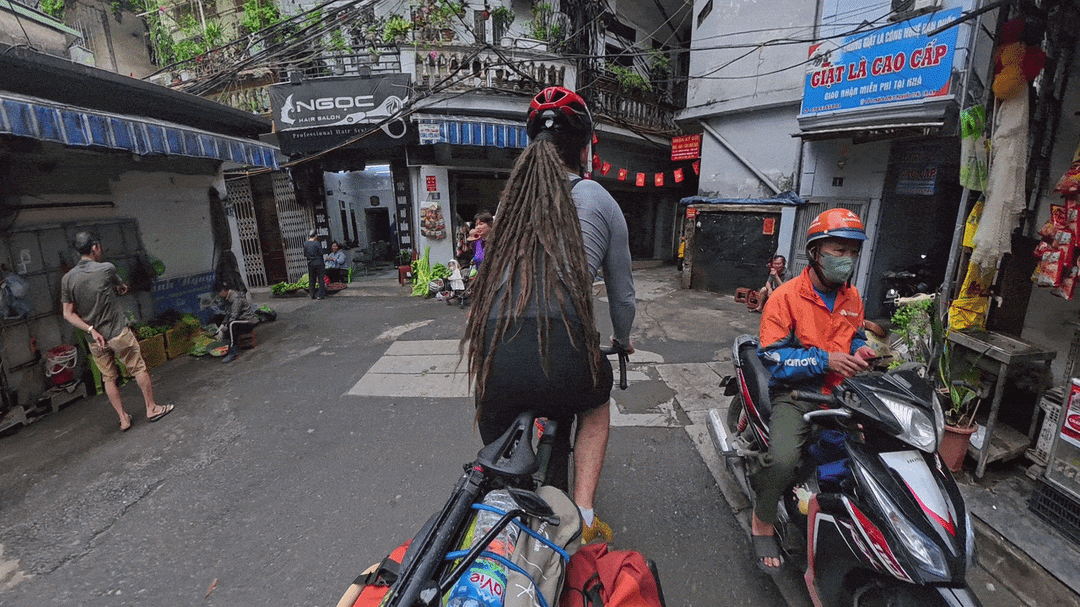
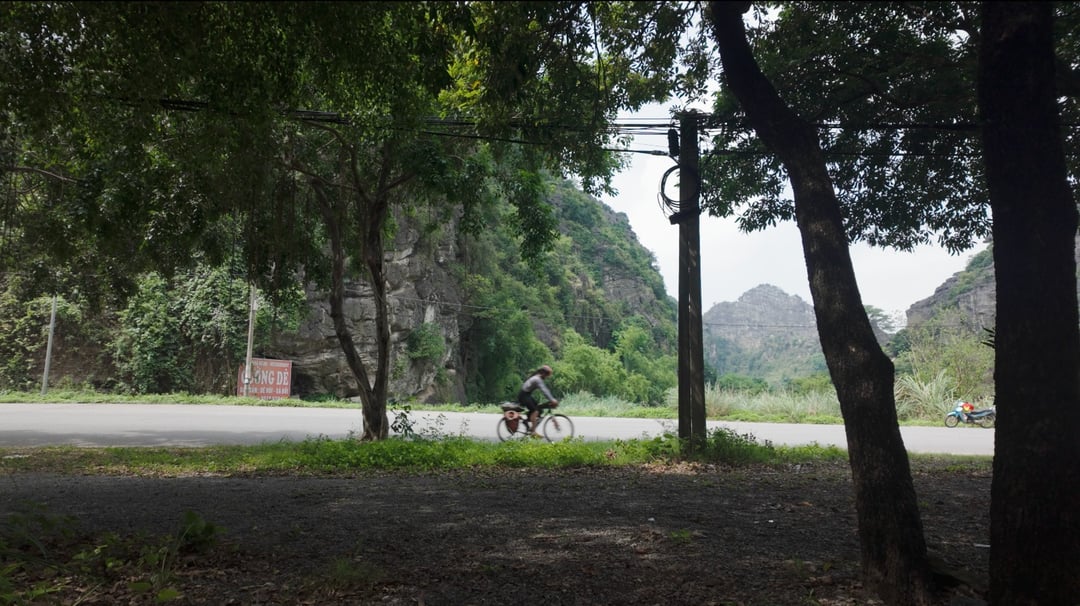
After my last post I spent a few days recovering in Hanoi before hitting the road again and heading south towards the low-lying karst landscape of Ninh Bình. The journey out of the city was characteristically chaotic but no longer so intimidating. I'm getting very comfortable with the constant noise, movement, and complete lack of predictability that comes with cycling in Vietnamese traffic.
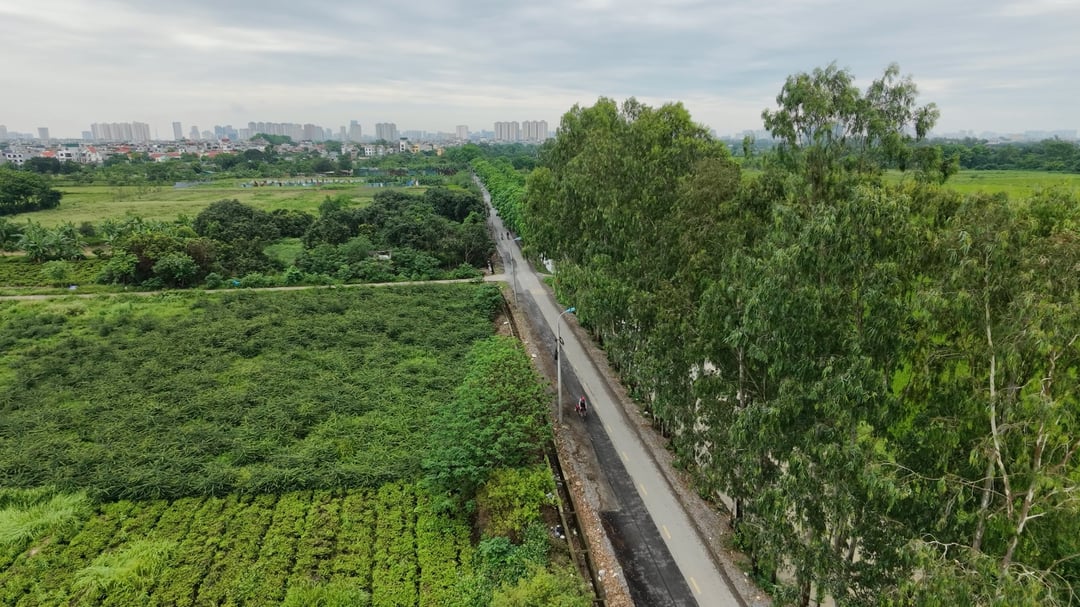
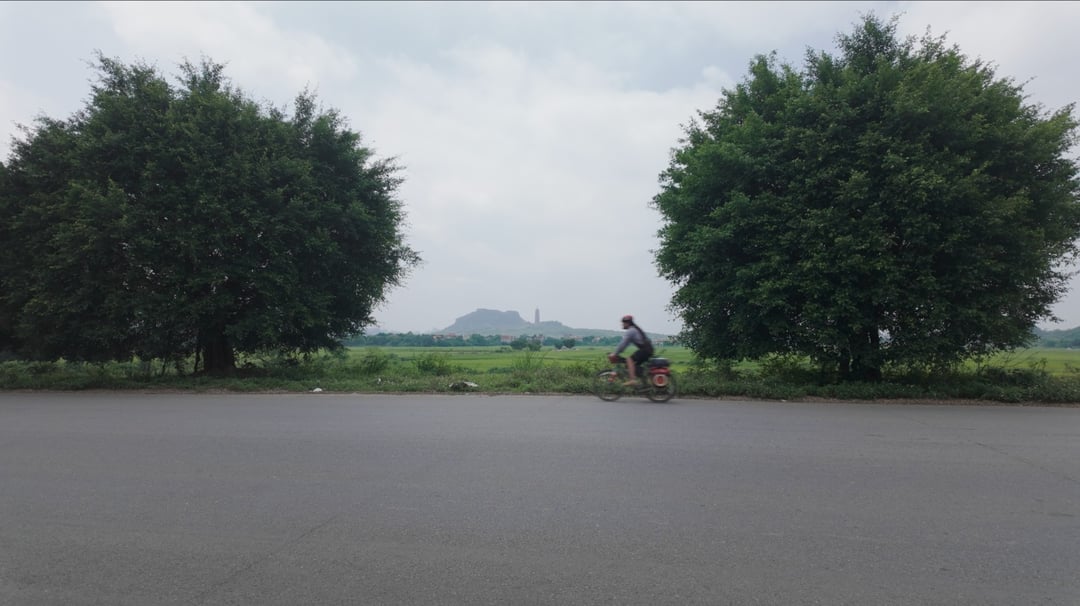
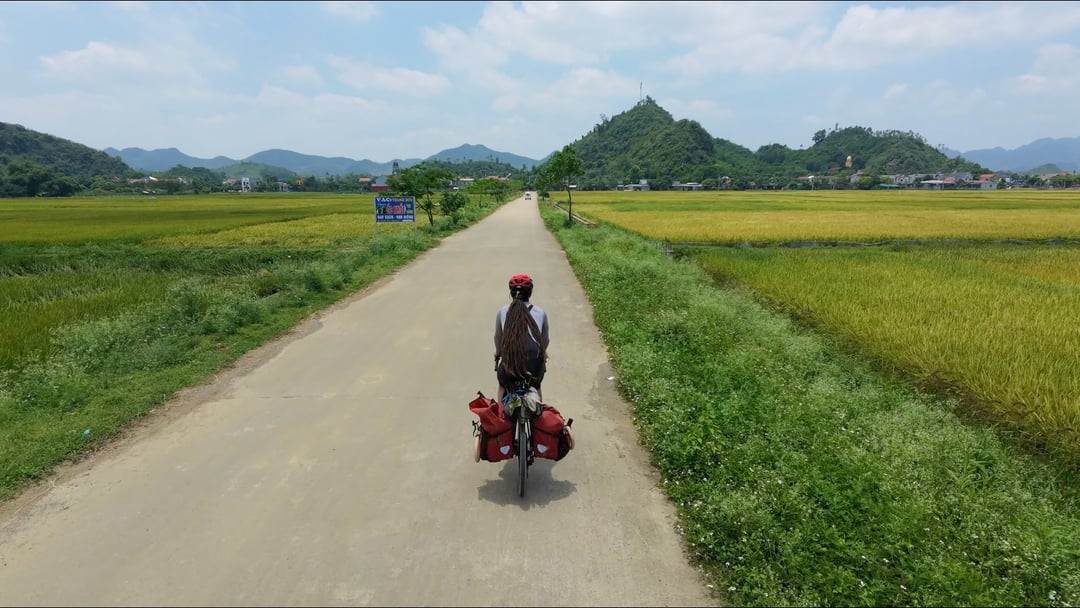
The city dissolved into farmland surprisingly quickly and I found myself thankful for a stretch of flat terrain after the undulating landscape I’d fought my way through two weeks earlier.
Around 50km down the road to Ninh Bình I got my first puncture and had to swap the tubeless rear tyre for an inner tube after failing to find a tubeless repair kit anywhere in Hanoi. Over the next 30km I got another three punctures in the exact same spot. No matter how many times I checked the tyre wall for the offending object I couldn’t find it.
The final puncture flattened the tyre about 1km from my homestay for the night and I ended up pushing the bike the rest of the way in the dark; slightly delirious, completely exhausted, and furious at the invisible shard that had spent the entire afternoon tormenting me.
The homestay owners were incredibly helpful and called a mechanic from a nearby village. The next morning a one-legged man arrived on a scooter carrying tools and inner tubes as I’d completely run out of patches, glue and spares. Within minutes he’d found the microscopic shard I couldn’t, fixed the wheel, patched my remaining tubes and sold me enough supplies to continue south.
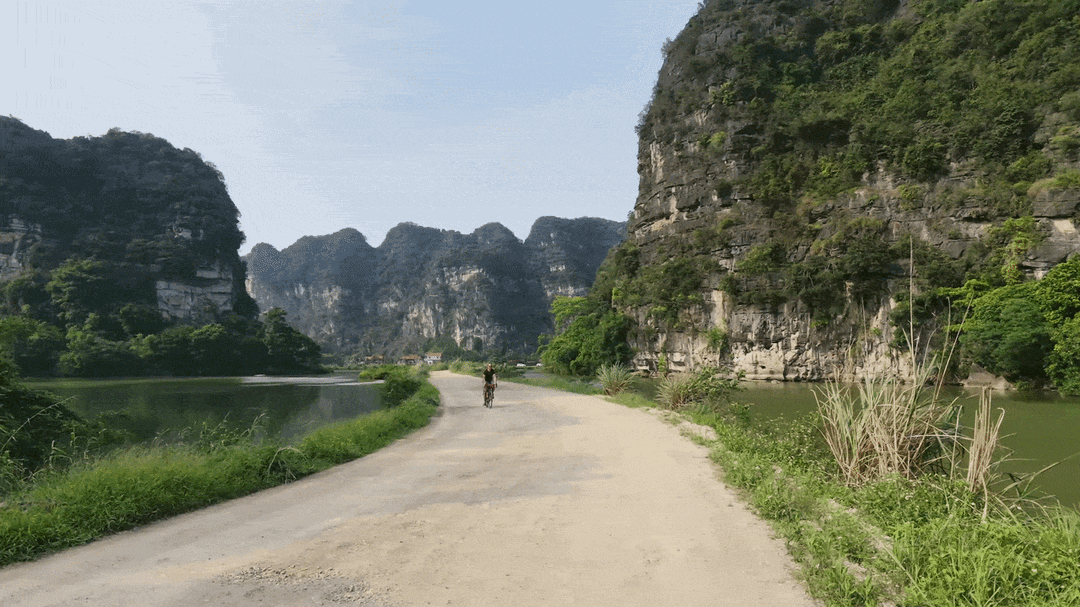
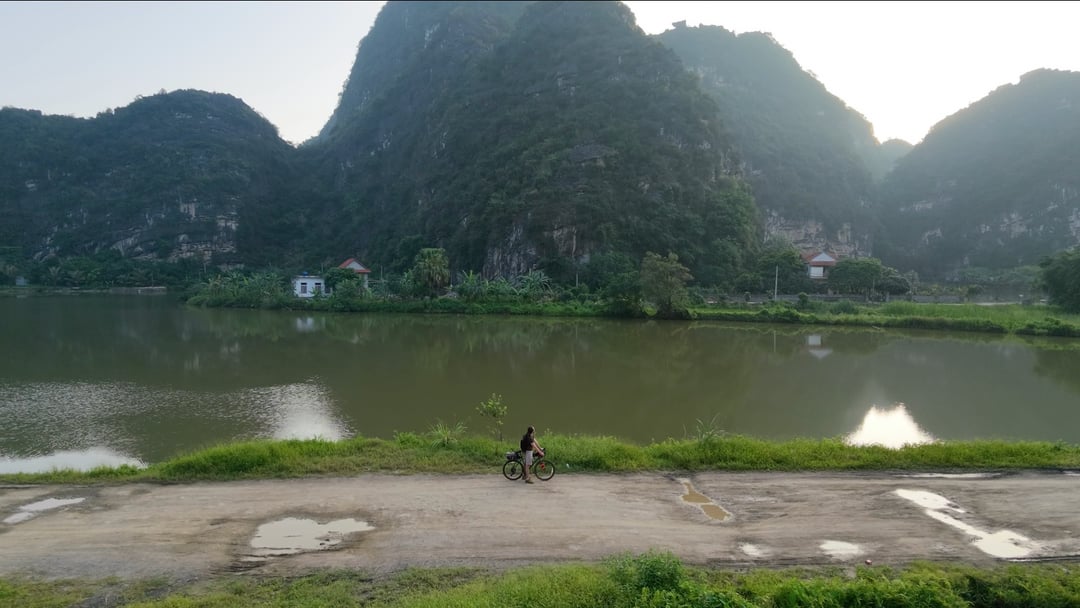
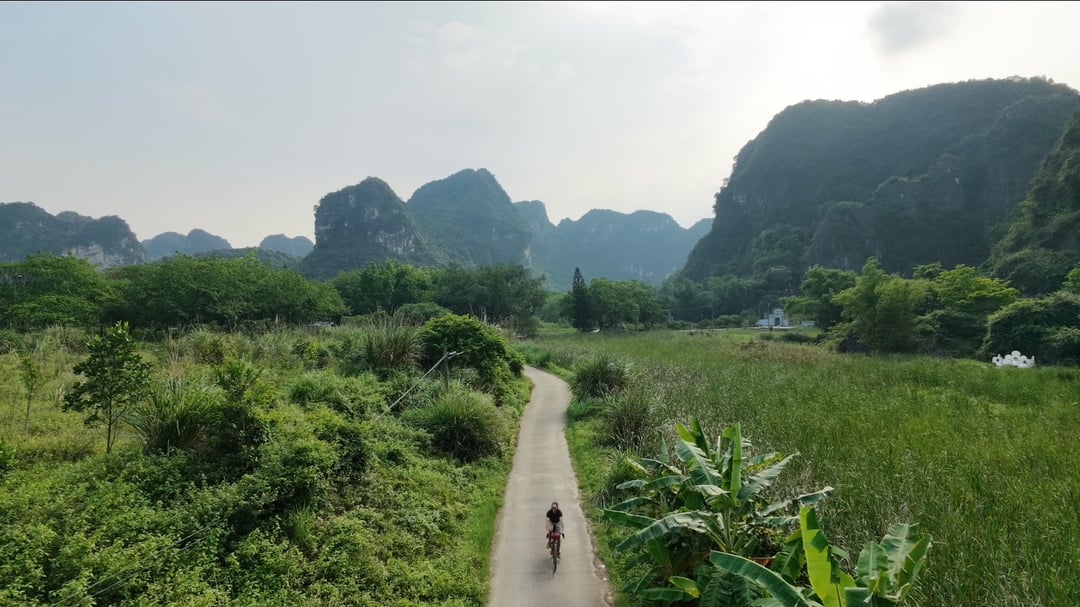
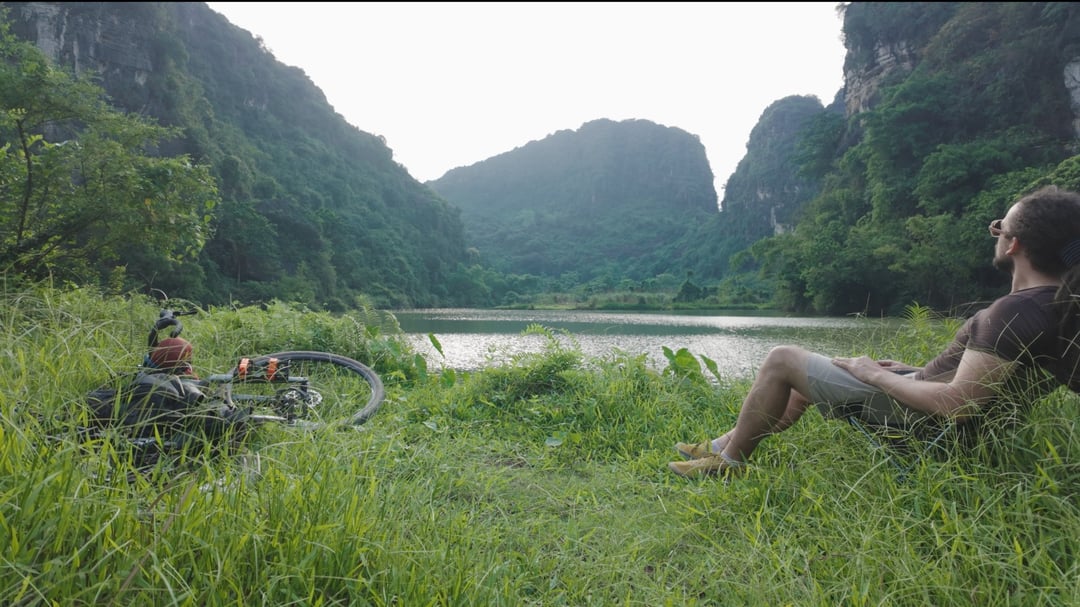
I spent the next couple of days exploring the area around Ninh Bình. After the harsh, high-altitude karst landscape of Đồng Văn, the scenery here felt almost dreamlike by comparison. Instead of jagged limestone ridges and exposed mountain passes, Ninh Bình is low-lying, humid and heavily shaped by water, with isolated karst towers rising out of rice fields, rivers and flooded wetlands. Where Hà Giang often felt severe and remote, this part of the country felt softer, greener and far more lived-in.
My plan after Ninh Bình was to join the Ho Chi Minh Road and start making serious progress south towards Huế. Before that, however, I took a short detour to Cúc Phương, the country’s oldest national park, founded during the war.
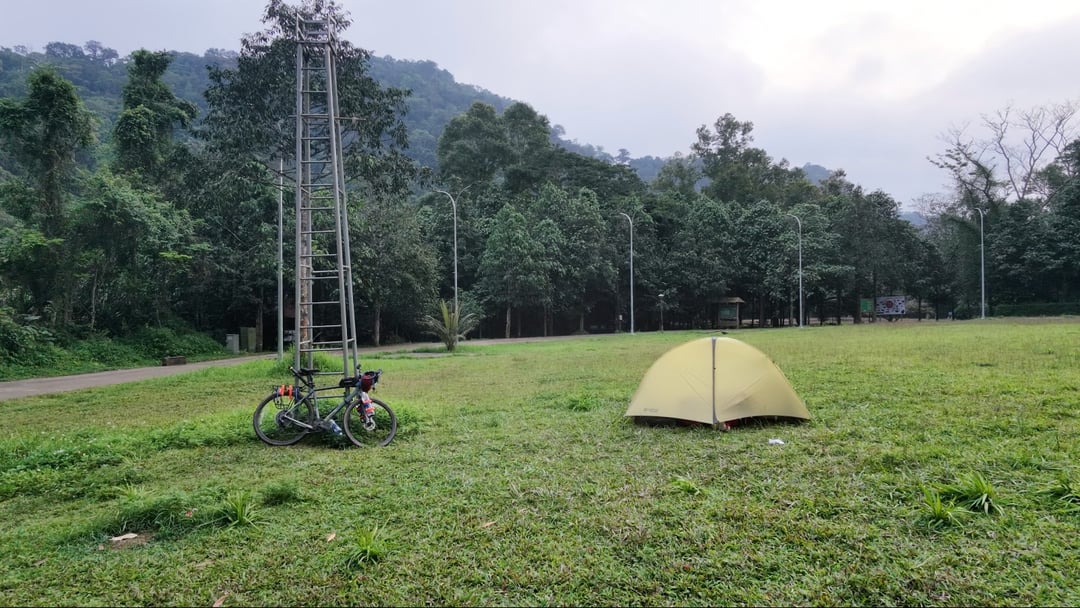
My reasoning was twofold. I wanted to experience a proper jungle environment before leaving the north, and I’d heard it was possible to camp in a clearing deep inside the forest. I’d hoped to do more camping on this trip, but it’s surprisingly difficult in Vietnam as almost every scrap of flat land is already under some kind of ownership or productive use.
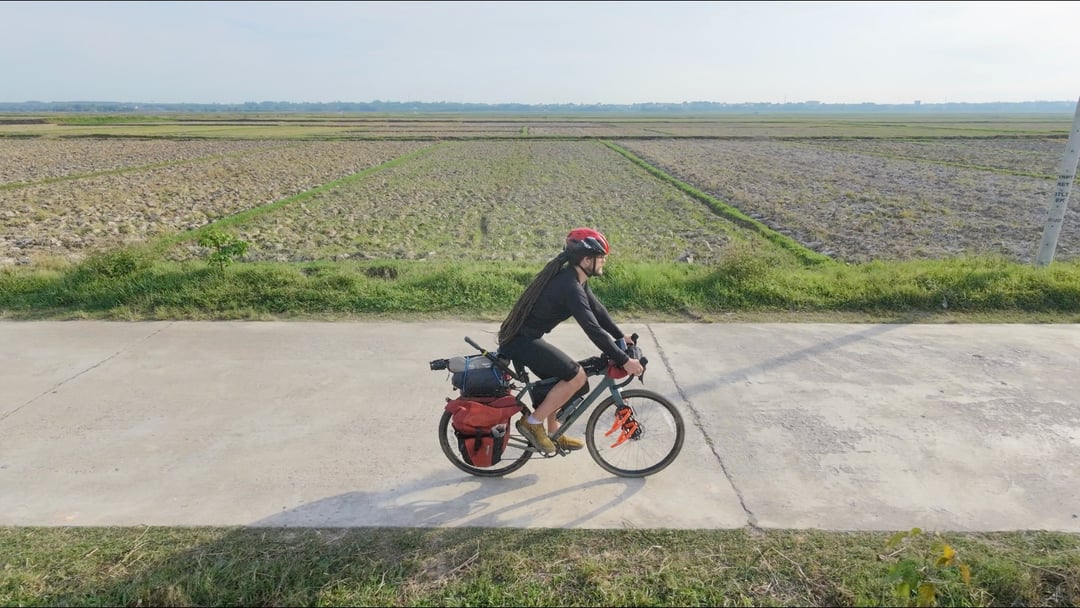
On the way to Cúc Phương I passed through rice country in the middle of harvest season, weaving between endless sheets of rice laid out across the roads to dry in the sun. The national park itself was beautiful, if slightly faded these days, with moss-covered concrete buildings and old signboards slowly being reclaimed by the jungle.
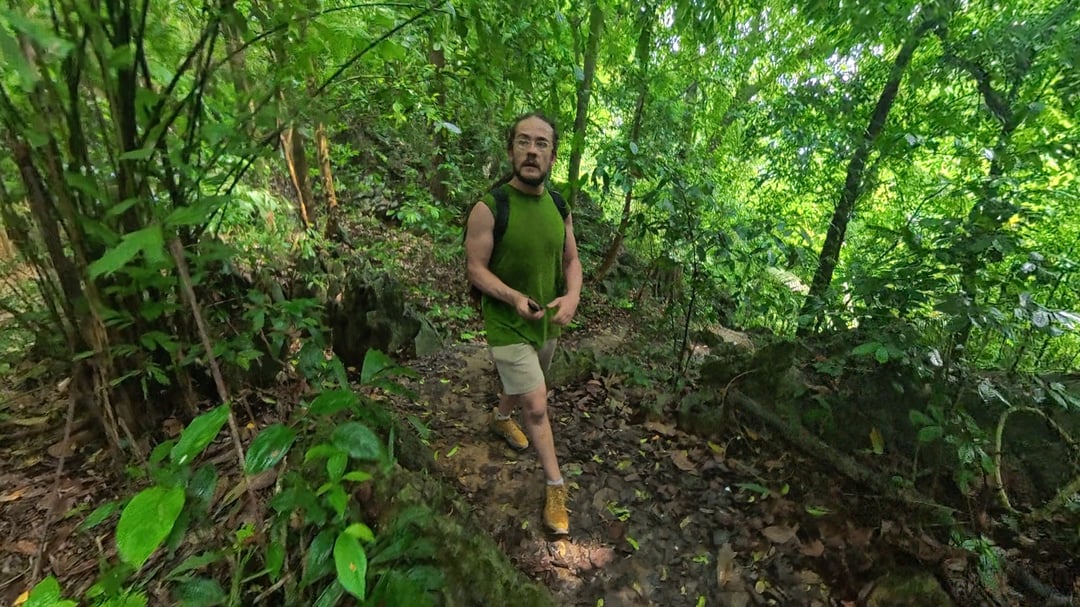
The ride into the interior was a relentless uphill grind through dense humid forest that brought back memories of the far north, albeit without the vast mountain vistas that had accompanied my suffering there.
I attempted a hike up to the highest point in the park but abandoned it after being relentlessly pursued through the forest by a swarm of hornet or wasp like insects. After that I returned to camp and spent a very hot, sweaty night in my tent, somewhat ironically named the Hornet, surrounded by a chorus of cicadas, tree frogs, geckos and unseen insects echoing through the jungle while a thunderstorm rolled over the canopy overhead.
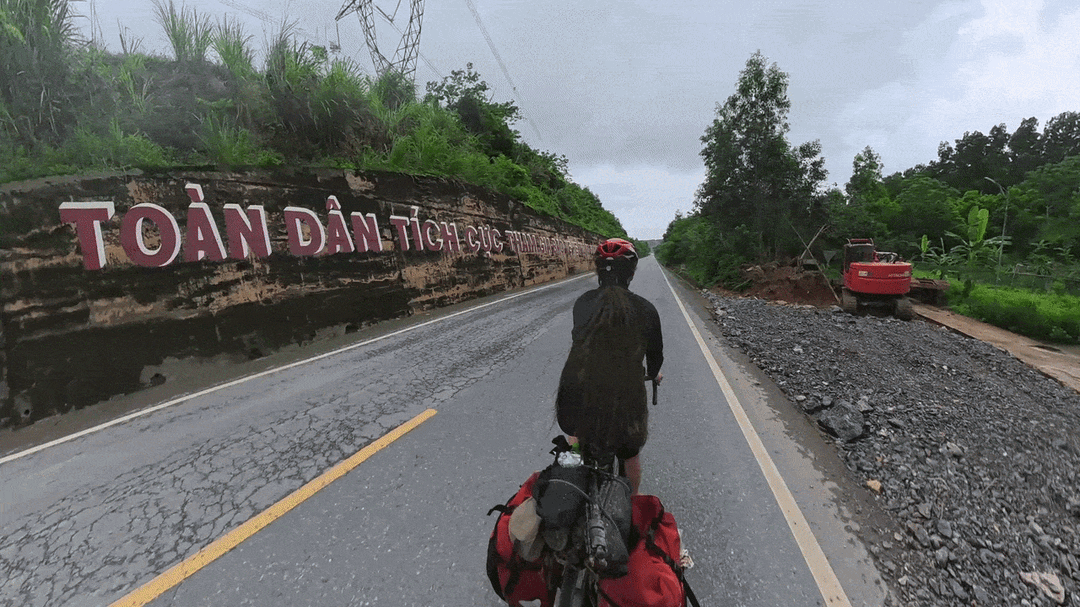
Leaving the jungle I finally joined the Ho Chi Minh Road, though not before Komoot sent me through a stretch of red clay hell still completely saturated from the previous night’s storm. The road had dissolved into a churned-up swamp of thick mud and potholes filled with opaque brown water, some deep enough to reach halfway up my legs.
A couple of miles into this misery I crested a hill at the exact same moment as an elderly Vietnamese man also pushing his bike in the opposite direction. We exchanged a brief bemused look before continuing on our separate ways. Thankfully, at the bottom of the hill the mud abruptly gave way to a newly laid gravel road and, not long after that, smooth tarmac.
Over the next few days the landscape gradually shifted from rice country into tea country as I continued south along the Ho Chi Minh Road. I’d expected this section to feel significantly easier after the brutality of the far north, but while the savage 15% walls had mostly disappeared they’d simply been replaced by endless attritional rollers that slowly ground away at my legs.
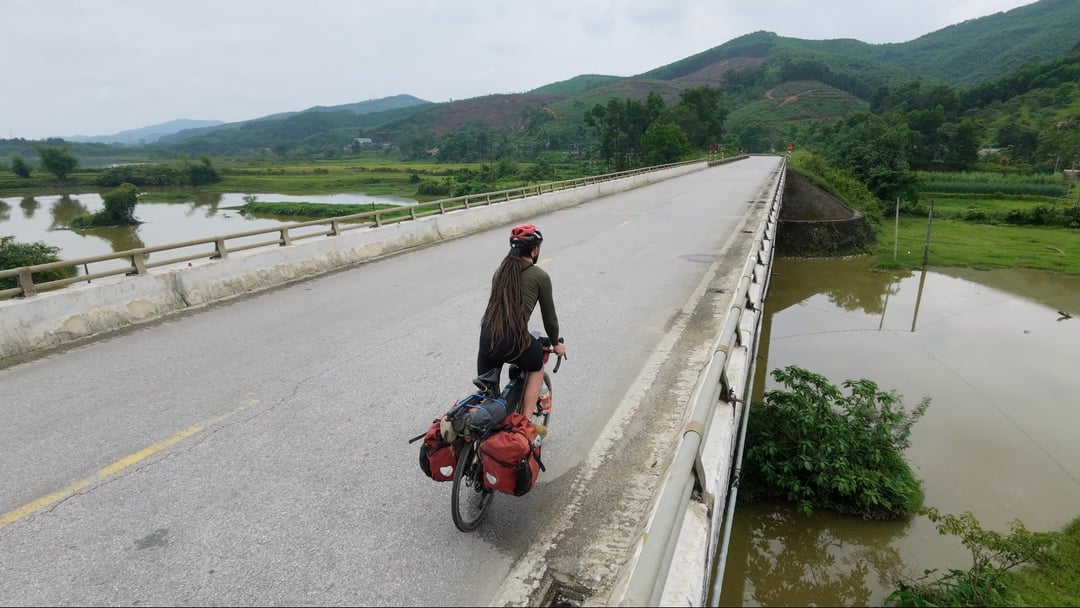
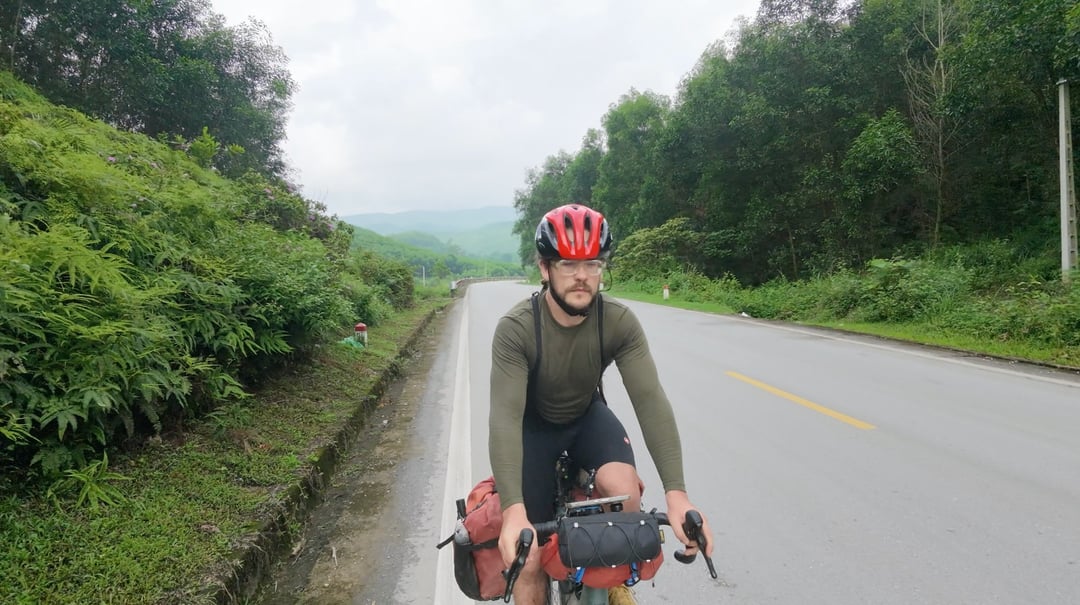
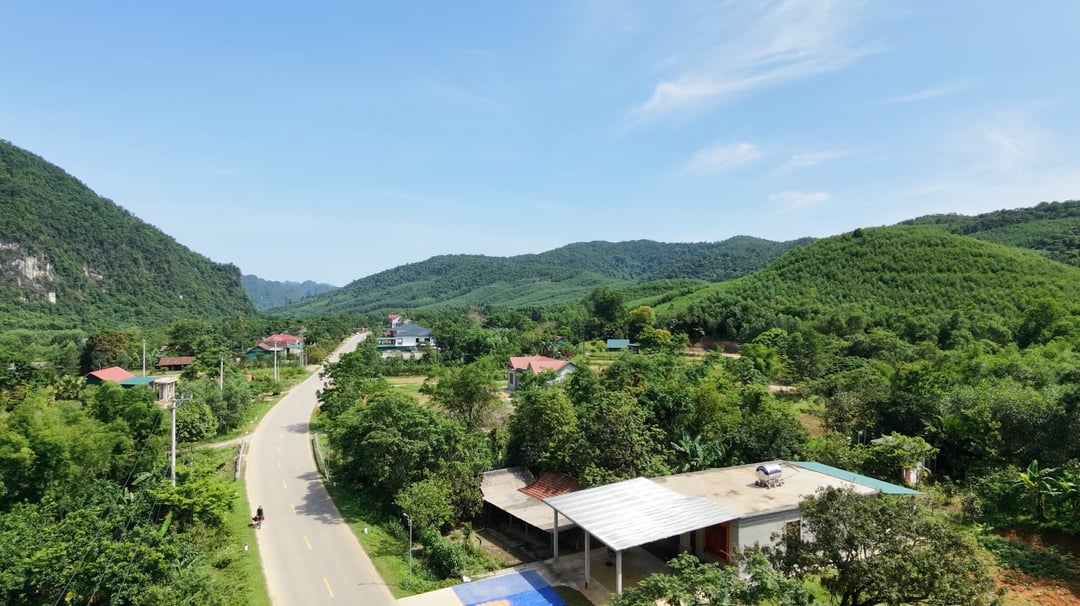
Despite this, I managed to put together several consecutive metric centuries as I settled into the rhythm of the road. It was some of the most enjoyable riding of the trip so far. To my west the karst landscape continued almost unbroken along the Laotian border, though here it felt softer and more heavily forested than the exposed grey stone of Hà Giang. The road wound through tea hills, jungle valleys and small farming settlements with surprisingly little traffic, and for long stretches it felt like I had the entire road to myself.
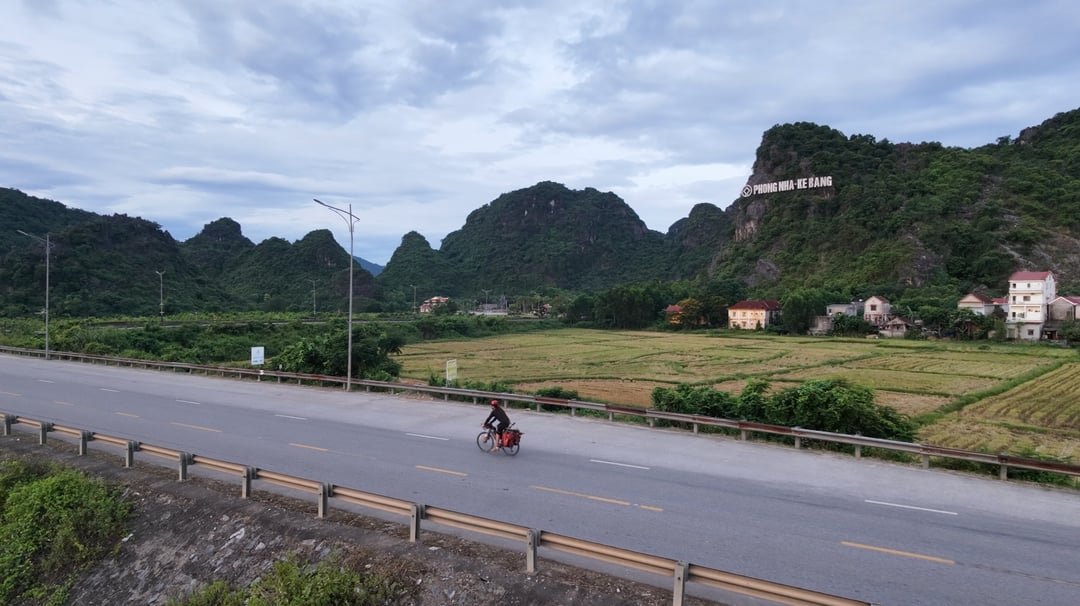
My hardest day of the trip so far came just before I reached Phong Nha-Kẻ Bàng National Park, the last major settlement buried deep in the karst landscape of central Vietnam.
I’d planned a fairly ambitious day of 125km with a 600m climb waiting right at the end. To beat the heat I got on the road at 4am and the first half of the day went smoothly, but just before reaching the final climb into Phong Nha I got another puncture and lost around 45 minutes fixing it at the side of the road while being relentlessly attacked by horseflies.
By the time I finally started the climb it was peak afternoon heat, well over 35°C. What followed was several hours of grinding uphill through exposed jungle-covered limestone hills with almost no shade or air movement.
About halfway up I started to worry I was feeling the first symptoms of heatstroke setting in. I ended up sitting beneath a small tree offering barely enough shade to matter, completely drained and almost out of water. At one point I seriously considered giving up and started trying to flag down pickup trucks for a lift over the pass. Every driver refused, though several handed me bottles of water through the window before continuing on.
Eventually I decided the only option was to keep moving. I began pushing the bike uphill instead of riding it and slowly dragged myself the rest of the way to the summit.
Not long after cresting the pass, the road tipped downward into one of the most satisfying descents of the trip so far. As I coasted through the late afternoon light, completely exhausted, a guesthouse suddenly appeared at the side of the road and I immediately decided to end the day there at 115km.
I spent the next few days recovering in Phong Nha-Kẻ Bàng National Park, a region famous for its enormous cave systems and some of the most dramatic karst scenery in the country. Towering jungle-covered limestone cliffs rose directly out of the surrounding farmland and rivers disappeared into cave mouths below. After the intensity of the previous stretch it felt like the perfect place to stop, recover properly and spend a few days eating myself into a coma.
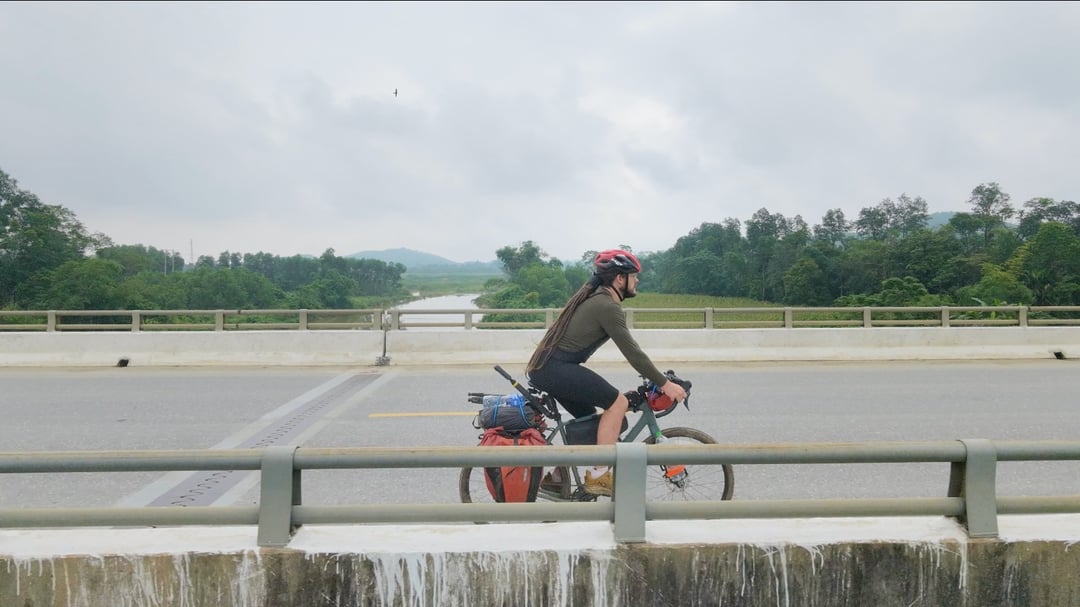
Leaving Phong Nha I continued south along the Ho Chi Minh Road towards Huế over the course of three days. As the terrain gradually flattened out the riding became noticeably easier and I was finally able to settle into a more consistent rhythm without constantly bracing for another climb around the next corner.
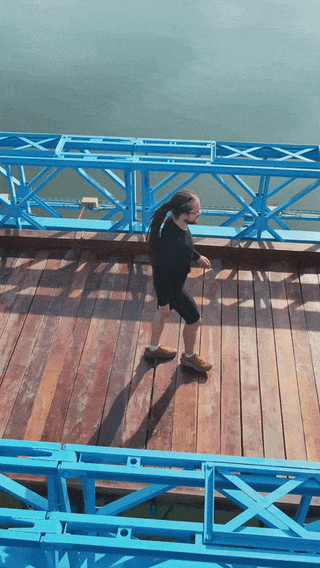
The road also became busier again as I moved further south, passing through larger towns and more densely populated farming areas after the long isolated stretches through the karst and jungle. About 100km from Huế I left the Ho Chi Minh Road to visit the Hiền Lương Bridge, which once marked the border between North and South Vietnam at the DMZ.
Reaching Huế yesterday felt like a major milestone in the journey south. After weeks of mountains, jungle roads and rural landscapes, arriving in a large historic city again felt disorientating though deeply relieving. Huế marks roughly the halfway point of my ride from Lũng Cú to Cà Mau and, with only the Central Highlands still left to tackle before the flat alluvial plains of the Mekong Delta, most of the elevation gain is finally behind me.
I’ll check back in again once I’ve crossed the final volcanic plateau and the road finally flattens out towards my endpoint on the Gulf of Thailand.
by Early_Moment_3428