
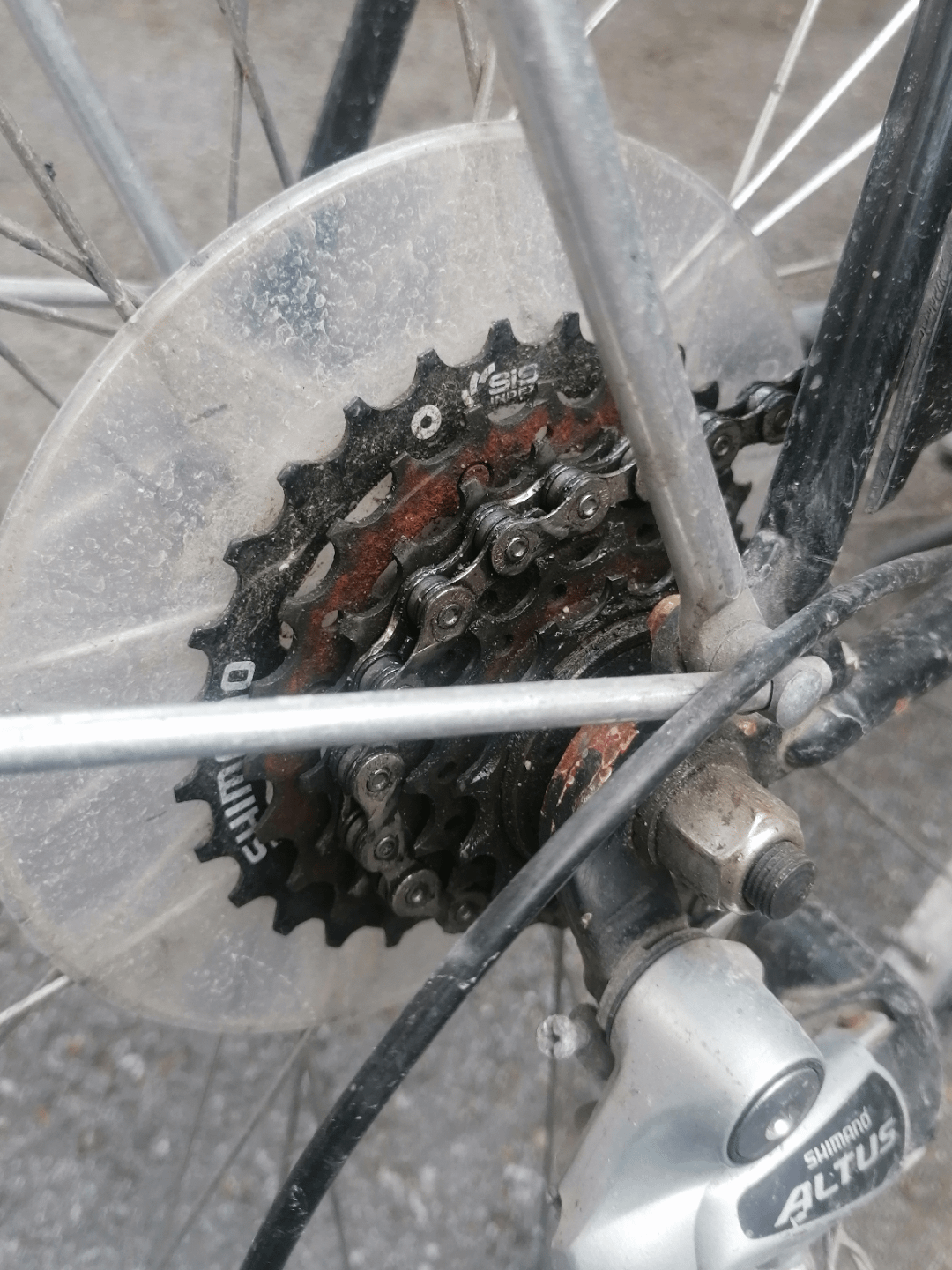
Context: Last Fall I replaced both freewheel and chain on my main commuter bike. Towards the end of Winter, I checked the chain for the first time, and to my surprise, it already showed almost 1% stretch, presumably thanks to a combination of bad conditions (salted roads during winter), lackluster maintenance (I probably didn't clean & grease it often enough, once it even got a little rusty), my rather aggressive riding style, and a low quality chain (I have since found out that the low-end shimano chains have a reputation of wearing down quickly).
So I replaced the chain, this time with a more robust model, hoping that the freewheel was still okay. Afterall it wasn't even 6 months old, and my commute isn't that long either. But no, the new chain skipped under load. Not unrideable, but definitely not negligible. I begrudgingly ordered a replacement freewheel online. While I was waiting for the part to arrive, I rode the bike conservativelyvand avoided skipping in attempt to not damage the new chain with the worn sprockets. After a couple of days, right when the new freewheel arrived, I noticed that the chain stopped skipping completely. Now I can't make it skip even when trying my hardest. The chain still looks fine according to the measuring tool.
So what happened here? Has the old freewheel already stretched the new chain ever so slightly, enough to fit the sprockets, after only three days of very conservative riding? Could there be another reason for the skips, like the factory lube or something? Should I replace the freewheel now, or will it be good to go for the new chain's lifetime?
by liaslias
4 Comments
It depends on how “moderately worn” the freewheel is. Personally, I would t put a new chain on a cassette that’s got that much rust on it, as that rust will wear the chain faster (it’s got the texture of sandpaper) and the rust will bleed into the freewheel. Take the wheel to your local bike shop and you could probably get a new freewheel for $20, installed.
This can easily happen if you’ve let your chain stretch just a little too far before replacing it, but as long as the freewheel cogs aren’t too worn, the new chain stretches and adapts fairly soon to the worn cogs. In theory it means your new chain will stretch beyond 1% sooner because of the worn cogs but it won’t skip again until after it does. So I would just run it until your new chain reaches its limit and then fit your new freewheel with another new chain. Others might disagree but that’s what I’d do.
It’s often happened to me – if I’ve only let the previous chain go slightly too far, the new chain only skips when I’m out of the saddle, and even then only in the gears used most often. So you just sit and spin up the climbs and use other gear combinations to avoid the worn cogs, and within a couple weeks or so the skipping stops, you can climb out of the saddle and use all the gears for the rest of the chain’s life.
You just have to be careful, though – a skipping chain when pulling out into traffic can be dangerous, and it could throw you off balance when you’re out of the saddle. But then, when you’re a cyclist you always have to be careful!
The freewheel is toast that’s why it skips, when replacing a chain lots of the time you need to replace the rear freewheel. It’s a very inexpensive part just get a new one and be done w/ it. You can’t get a new chain to work on a worn freewheel that’s just not how it works
My guess is the factory lube. Perhaps the chain sat on the shelf for many years and the lube degraded. The cluster doesn’t look too bad, zero shurikens rated. IMO the new chain hasn’t stretched from that little use, but just use it and see what happens.