
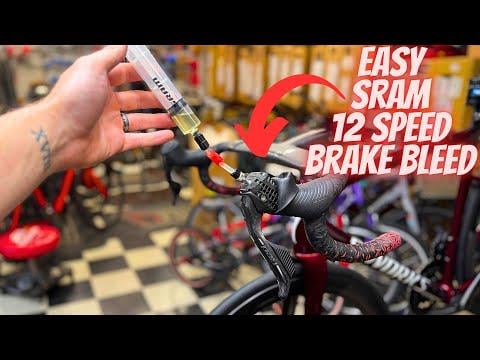
What exactly is the problem with working on Sram's DOT 5.1 fluid brakes? I see a lot of hate online about bleeding, servicing, and changing Sram's brakes to the point where people will not buy a groupset because it uses DOT fluid.
As a budding home mechanic (I've learned to do all my maintenance myself), I've bought the bleed kit to service my Sram Rival D1 brakes on the road bike. I am also going to build a gravel bike with a mix of Rival D1 and Force D2 components and bleed those brakes.
Online, people make it seem like it's the end of the world but thousands of bikes around the world use Sram DOT and are serviced each day. Sure the bleeding technique is not as simple as Shimano but it's not that difficult.
From my research, I understand that DOT 5.1 is corrosive, hygroscopic, and toxic. You should take precaution and wear protective gloves and eyewear. Unlike mineral oil that needs to be neutralized with alcohol, DOT simply wipes away with water. DOT does not last once opened so you need to use it within a time period.
Aside from the advantages of using Shimano's mineral oil and techniques to service those brakes, what is the deal with DOT fluid? I understand Shimano is much more convenient especially for a shop mechanic processing so many bikes. I also see that mineral oil is longer lasting and needs less bleeds.
From my reddit based research, people make it seem like I am engaging in a dangerous act that should be left to the professionals. Yet, GC Performance is over there bleeding Sram brakes in sandal slides and shorty-shorts while making his silly noises. As a home mechanic, I don't see an issue other than the mechanically un-inclined projecting their fears.
Edit: Great discussion in the comments. I did not mean to suggest that DOT is superior or did not have any problems. I am fully aware that DOT has issues in many of the same and inconvenient ways that proprietary bike parts make working on maintenance frustrating. I am just trying to understand and get my information straight before working on my bike. This is the best way to learn and answer questions for myself and for other future home mechanics trying to learn about this.
by Koen-K
22 Comments
“From my research, I understand that DOT 5.1 is corrosive, hygroscopic, and toxic.”
It is that simple. It doesn’t offer a big performance benefit so it is just a pain for no good reason.
idk this seems like enough for me: “From my research, I understand that DOT 5.1 is corrosive, hygroscopic, and toxic. You should take precaution and wear protective gloves and eyewear. Unlike mineral oil that needs to be neutralized with alcohol, DOT simply wipes away with water. DOT does not last once opened so you need to use it within a time period.”
mineral brakes work fine for bicycles .. there is just no need for:
“corrosive, hygroscopic, and toxic. You should take precaution and wear protective gloves and eyewear. DOT does not last once opened so you need to use it within a time period.”
as a mechanic .. takes longer and there is multiple step by step instructions for multiple systems..
waste two gloves and multiple paper towels per bleed not to mention the chance of dripping on to clothing , skin. paint . etc. it sucks and for no reason at all. mineral performs fine.
DOT fluid needs replaced more often. The shift to mineral oil, in my opinion as a tech and a product engineer, comes down to the use case for bikes. The hygroscopic nature of dot fluid being the key, in my experience dot fluid needs replaced more often because it can absorb water readily and results in that spongy feel. Most bike riders these days want to setup their systems and forget about this, mineral oil does this really well and remains very stable, where dot fluid needs more regular maintenance and thats not ideal for the vast majority of riders.
I’m thinking that DOT fluid was used initially in bike braking systems because it was already well developed for automotive, now that mineral fluid systems have been refined, and shown to work as well or better than DOT for most users, the shift makes sense. DOT is also regulated where mineral oil is not, so that makes the whole development process a lot easier for manufacturers.
you’re right that non mechanical people are very afraid of brake systems
Dot fluid brakes will inevitably end up corroding fitting and finishes, either because you miss a drop or just with age.
All my old SRAM brakes (10-20 years old) show significant signs of corrosion, as did the hopes when I had them, whereas the shimano of the same era don’t.
It’s also the principle of the thing, why use DOT when mineral oil works fine, without the corrosive or disposal issues. To be clear, my objection is based on the potential risk to finishes (and to a lesser extent clothing), skin is pretty tough (and self healing) so getting it on you occasionally isn’t really an issue aside from a bit of peeling.
Why use a corrosive and toxic substance when there is a non corrosive and no toxic alternative? SRAM switched to mineral oil on their new brakes, so it’s not like DOT was a requirement for them.
Also SRAM brand brakes have been finicky-difficult to bleed since their avid days while shimano have always been much simpler.
These two traits get amplified in online discourse and recommendations. It doesn’t make a huge difference but if some people had their bike finish damaged from errant dot fluid then they be the loudest commenters. Also if someone struggled with a SRAM bleed and then got a Shimano bleed right on the first try, they’ll remember that.
People in the bike world have the weirdest idea that it’s some deadly chemical, meanwhile a zillion car mechanics deal with it everyday. Don’t drink it or bathe in it, but you could say the same thing about chain lube or mineral oil too.
Hydroscopic is a plus, not a negative, you want your brake fluid to suck up moisture so it doesn’t pool in the caliper, and the storage thing is pretty overblown, I have year old jars of open brake fluid that are still fine, just put a cap on it and toss if it turns brown.
Mineral vs brake fluid as a deciding factor is pretty silly, neither is good for you to ingest and you shoudl be wearing gloves, both have upsides and downsides.
If you’ve used both, you realize the difference is bigger than expected. If you’re at the trailhead and need to bleed your brakes, you probably don’t have latex gloves. If you’re in your makeshift shop and set a part down when changing your levers, it’s easy to do something like damage the paint on your toolbox. And it really slows down the process to take care to not get it on anything it might damage, immediately wipe it up, etc. It’s just a matter of time before you damage something.
dot as brake doesn’t give any real benefits compared to mineral oil, at least for bicycles, but drawbacks – plenty
I have both Shimano and SRAM and try to do it all myself. My objections to DOT are:
– it is toxic and corrosive
– it absorbs water so needs bleeding more often – my bike shop says every 6 months. Left alone, Shimano mineral oil brakes don’t really ever need bleeding
– the bleeding process is much more fiddly – I find needing a lot of work with vacuuming the syringes to get all the air out the system, and took four attempts recently to get my back brake right, eventually having to find a way to keep my bike vertical before and after the bleed. People always respond that you just need practice, to learn how to do it, but that’s the point – I’ve bled my Shimano brakes twice and it was easy, perfect first time
Overall, DOT has negatives, and zero positives, compared to mineral oil.
So, what’s the problem? Cars, motorcycles use it, no one complains.
Maybe it’s because I already work with these fluids so often on my track car, but I don’t see any big problem with using DOT fluids.🤷
If I was choosing a system I wouldn’t even factor that in one way or the other. If anything, I would have to lean towards it being the superior fluid, though I honestly don’t know if bike brakes get hot enough to see the benefit that cars do. A lot of the comments in this post show that people don’t actually understand these different fluids to begin with.
Edit: Regarding safety, it’s not xenomorph blood. Grease monkeys across the country/world are doing automotive brake work with these fluids all day every day. Throw on some gloves, you’ll be fine. I wear gloves for all the work I do for easy clean up anyways. If you get it on your hand wash it or wipe it off, you’ll be fine.
Saying the Dot fluid absorbs water as a negative is technically irrelevant. Dot fluid absorbs water yes but mineral oil is immiscible I.e separates with water. In a sealed unit no more water gets into sram brakes than Shimano. So sram water gets absorbed and Shimano it separates meaning in both freezing and boiling conditions Shimano can have more obvious issues.
Could you point out the Hope DOT fluid haters? Or is it that these complainers don’t like SRAM?
As a DIY guy I find it very convenient that I can buy DOT fluid from the moto store that is a few blocks away. And the fact that it’s miscible with water is a plus for me because with mineral oil moisture will accumulate at the caliper which will boil easily.
Aside from the fluid discussion I found last gen rivals to never get a good pressure point. A hard brake and the lever was very close to the bar. Shit on descents
I’m also a home mechanic and I taught myself on SRAM DOT disc brakes. I was initially avoiding hydraulic disc brakes because i thought the bleeding procedure would be challenging and messy. The first few times i did it, I followed the SRAM videos SUPER carefully and treated DOT fluid like it was radioactive. After a few times – now to bleed I just pop two syringes on, swish them back and forth until there are no bubbles, pressurize, and go. I’ve also learned how to deal with stuck pistons, prep hoses, and basically do every aspect of brake service, from youtube videos and SRAM service manuals.
On one hand, I SRAM did not use a corrosive/toxic liquid – it’s true that if i get some on my hands or bike that isn’t quickly cleaned, it can be an issue. On my prior-gen Force groupset, I (apparently) didn’t clean the bleed port enough once and it caused some of the paint to flake off over time.
On the other hand, I have set up and re-set-up and bled SRAM brakes with DOT fluid many times now, with bare hands, just being sensible overall, and i’ve been fine and my brakes work well.
I also don’t know (and i mean, i do not know) how true it is that it has a “use by” date like you mentioned. I have a container of fluid which i keep closed and in a sealed plastic bag. I’ve used it for like 2 years, and I haven’t noticed any issues with my brakes to make me believe it was contaminated by moisture.
If you want to run DOT then run DOT. It has downsides and upsides but a lot of people these days don’t want the downsides of DOT, especially the corrosive and toxic parts.
Ain’t no problem.
This is a good balanced article on the pros and cons of each.
DOT certainly isn’t as bad as some make out. Ultimately comes down to your use case and which trade off you prefer.
https://epicbleedsolutions.com/blogs/articles/dot-brake-fluid-vs-mineral-oil
SRAM uses mineral oil in their MTB brakes
People store bikes in their homes and I don’t want poison in my home. Seems pretty straightforward to me?