
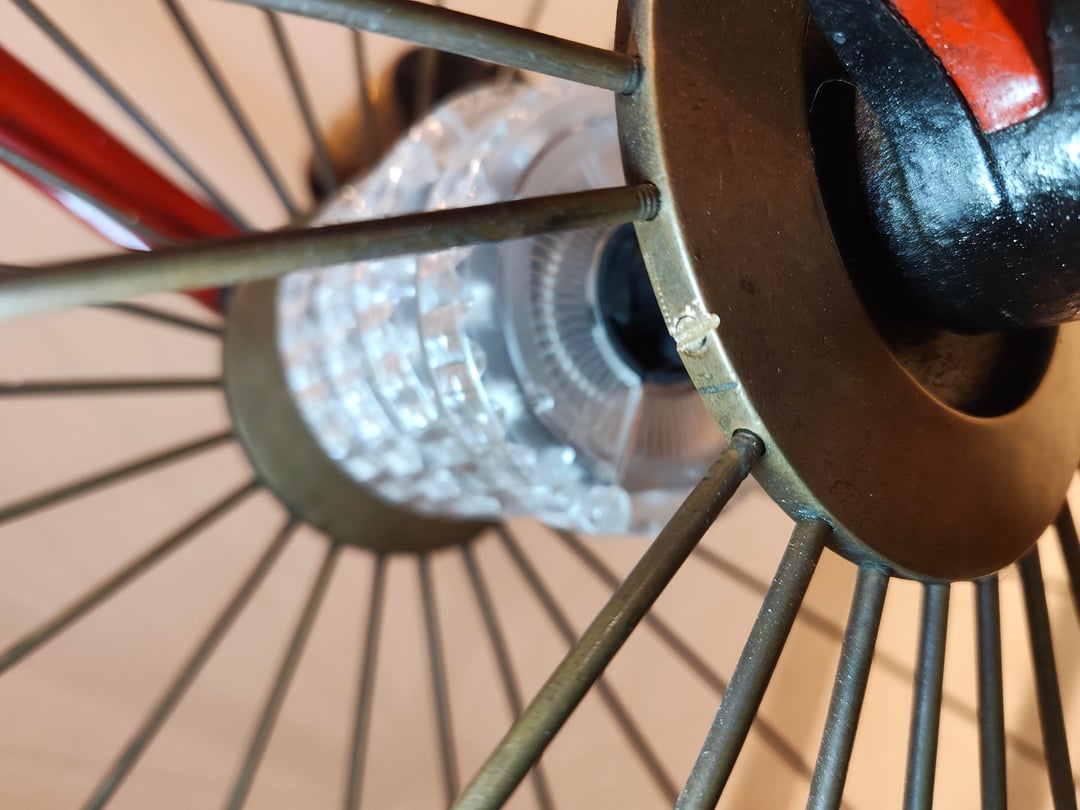

I have been riding a penny farthing in Singapore for 2 years. A few weeks ago disaster struck, one of the spokes on the 52" front wheel of my 1878 UK made Hydes & Wigfull penny farthing broke, with a piece of metal stuck in the hub.
Now looking to get some replacements made, but getting the correct thread measurement seems harder than I had expected.
Spoke length: 607 mm
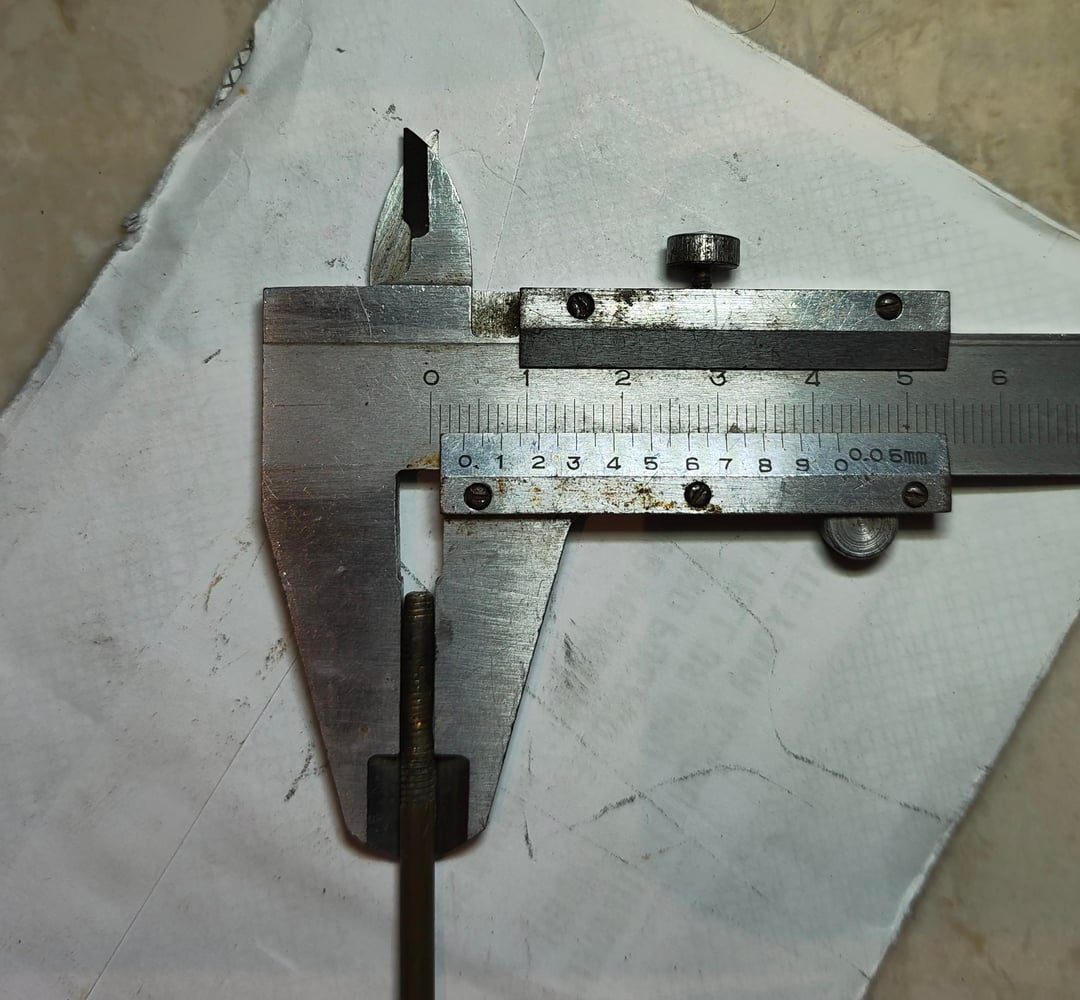
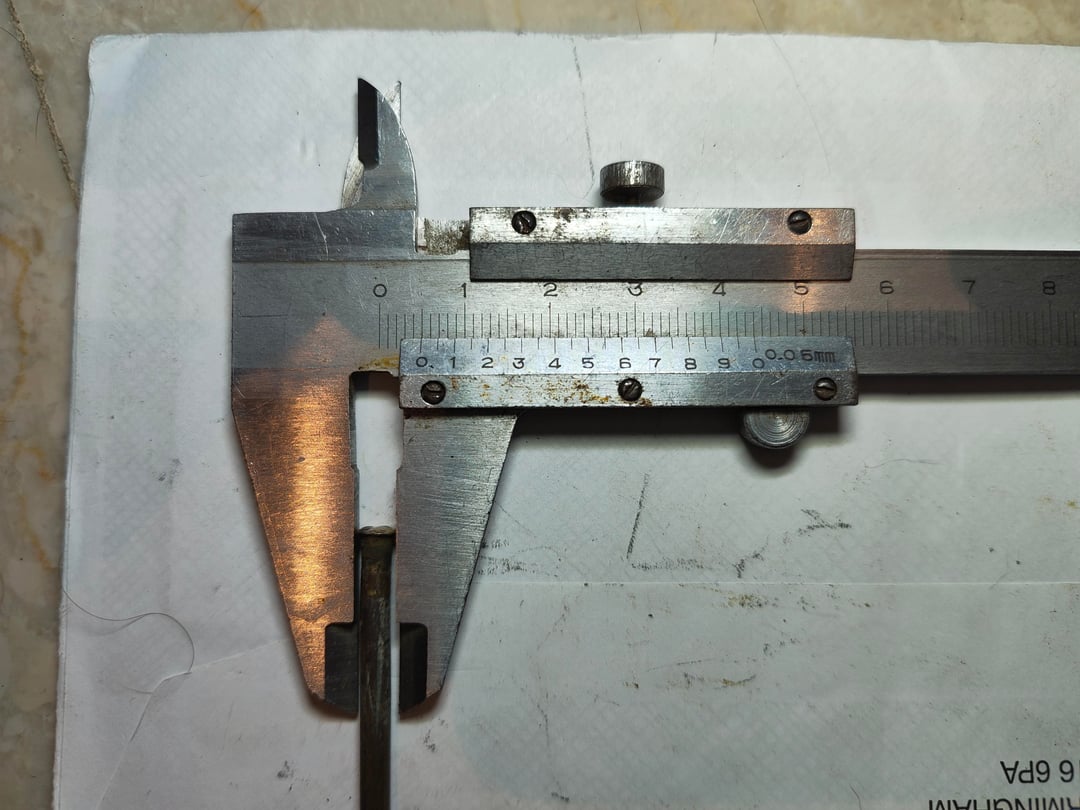
Spoke diameter: +/- 3.5 mm
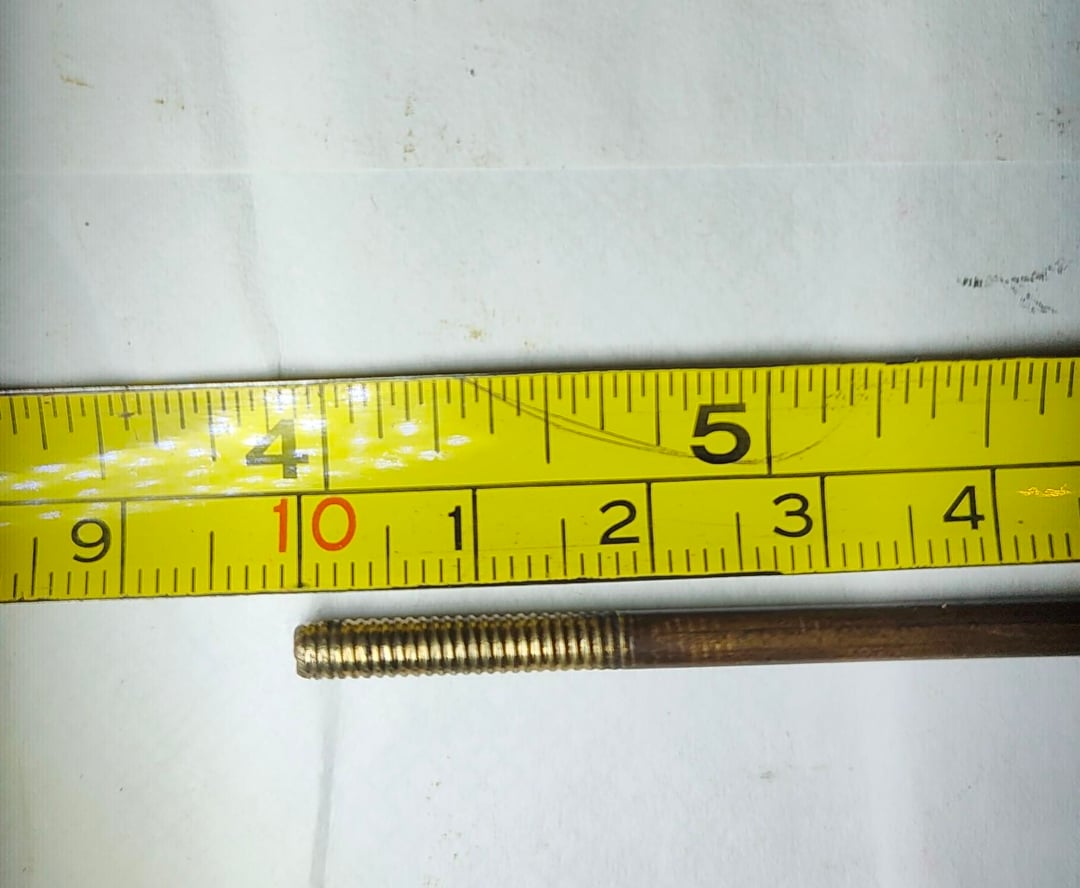
Thread length spoke: 20 mm
Threads on 20 mm length: +/- 25
Spoke material: brass
Mushroom head (5 mm) on the rim side, no nipple
Hub thread length: 20 mm
Thread is not metric and not BSW 1/8" 40TPI. I have a 1/8" 40TPI tap, it falls right into the hub threads, so is too small. I have passed by some metalworkshops in Singapore and they can't make much sense of this thread.
Hoping the community here can guide in the right direction so that I can get some spokes with the correct thread made and can buy a tap and die with the same.
Is anyone familiar with 1870's UK thread used on penny farthings or recognizes the thread from the description? Can threads be reverse engineered from a known good thread?
I want to get the thread right as I don't want to damage the threads on the hub worse than they already are. I will be replacing some other spokes that were loose and have damaged thread. Once I have the correct thread I hope to find a corresponding tap and die somewhere.
The rear wheel has the number 8 stamped on the hub and slightly thinner 3.1 mm spokes. The front wheel has no identifiers on the hub at all.
by renburanto-san
3 Comments
I’ve never made threads on a lathe, but shouldn’t you be able to have arbitrary pitch and diameters if you machine them on a lathe?
Of course ideally you’d roll the thread on like in proper spokes.
Found a similar one on the [Online Bicycle Museum](https://onlinebicyclemuseum.co.uk/1878-hydes-wigfull-stanley-penny-farthing/); could try contacting them to see if they can help?
Your cycle is made well before the standardization of most thread systems. You are most likely going to have to hand this off to someone who can duplicate it from a sample spoke you give them. Ideally, these threads should be rolled for strength and fatigue in this application, but a custom roll die is probably well out of acceptable price range. I would try a cut thread with a decent root radius and gradual lead out.
You also need to choose the correct grade of brass if you decide to keep it similar. A lot of the standard free-cutting grades like 360 would probably not have the tensile strength or would crack at the thread termination.
You need to look for someone who understands the nuance of this repair. Sometimes hobbiest machinists or clock-repair adjacent machinists would have more understanding than going into a random job shop. It is a some difficult task. The spoke head gives me a bit of pause. That would have been mushroomed out with a forming die I think.