
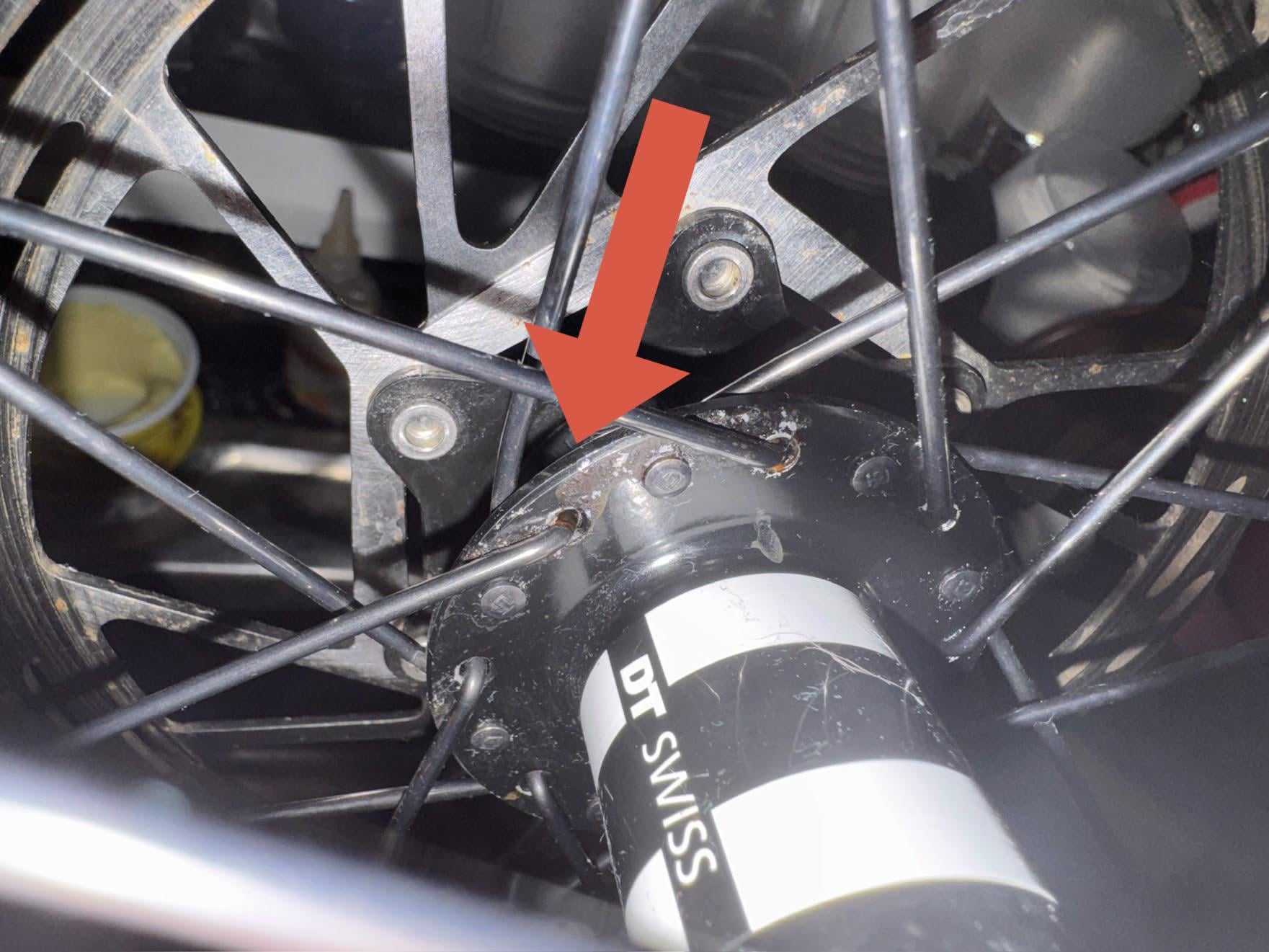
I was cleaning my bike, when I found this. I think this is what they call "galvanic corrosion". Is this dangerous? Should I replace my hubs? What caused this? I often clean my bike, but now I'm thinking of constantly rubbing grease on it. How do you guys avoid this? Thanks 🙂
by badznovski
5 Comments
Keep the wheel set clean. You get galvanic corrosion when you have two dissimilar metals. In your case, you have stainless steel and aluminum so it’s going to happen. Honestly, it looks like it could just be dirt and you need to scrub a little more. At the shop I work at, we use toilet brushes to scrub the inside hub flanges when we wash wheels because they fit between the spokes. The little bit of rust is somewhat concerning. You could pop spokes soon if they’re rusting through.
Put a magnet on a spoke. A strong pull can indicate a steel spoke. Stainless can also be magnetic, but much less than steel. Weird to see on wheels with DT hubs, but you never know.
Frequent water and salt exposure will accelerate this process. More sparing use of the hose can help. If the water is experienced while riding, drying off ASAP helps but there’s a point where it can’t be helped.
I can’t comment on the hub flange, it’s sort of like diagnosing carbon damage over the internet (unreliable until the failure is obvious to a lay person). The rust on the J bend of those spokes is concerning. There’s no predicting an exact timeline for failure, but it’s usually at an inconvenient time.
As others have noted, good to have things checked out and/or keep an eye on it, however as someone who has been running DT 240/350 for decades (still running some Hugi hubs even), looks like surface to me. If the integrity of the spokes are good, I would have no concerns.
what’s the tension of spokes? looks very high, I would say over 160kg, normally we don’t need that much