
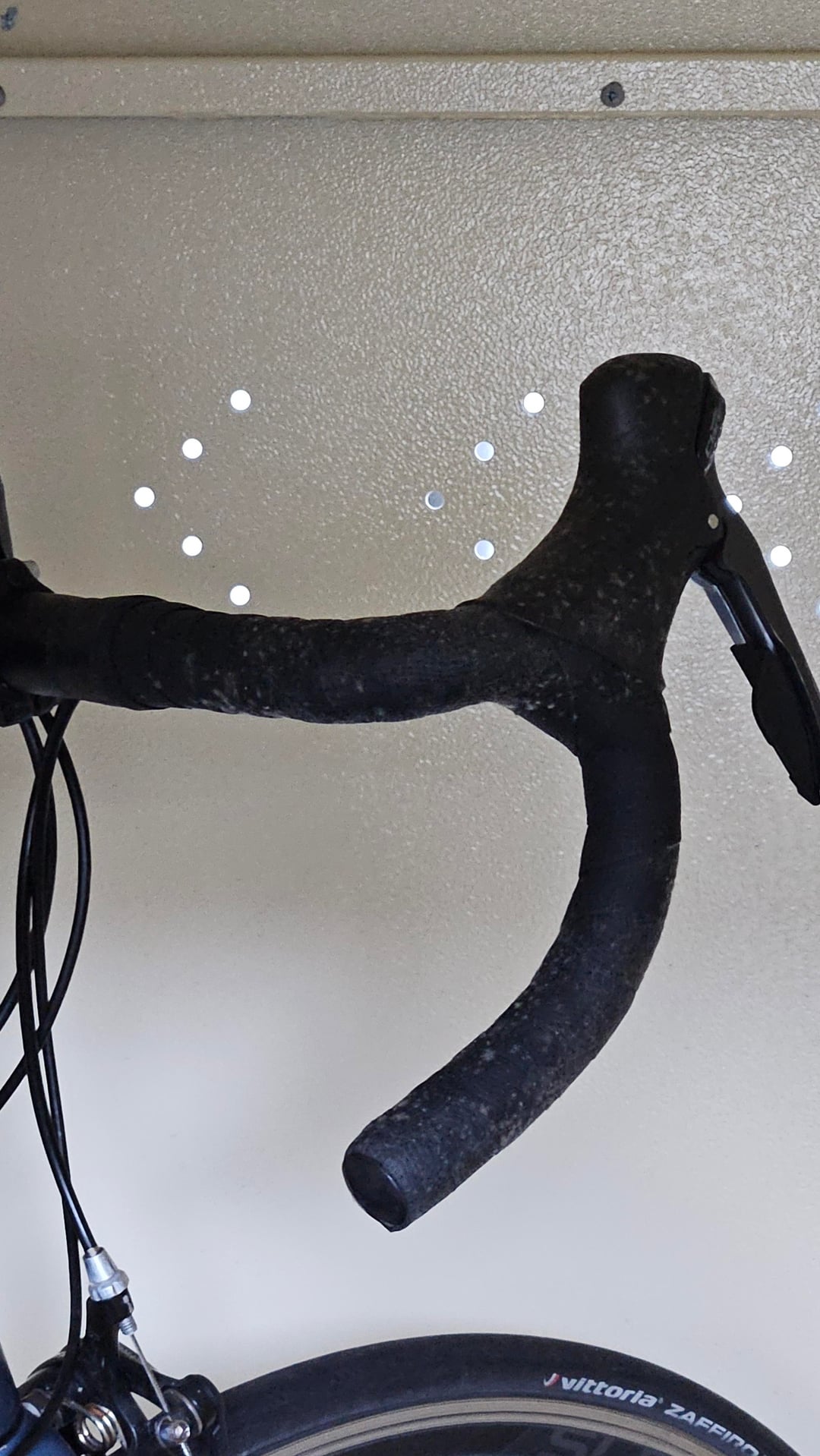
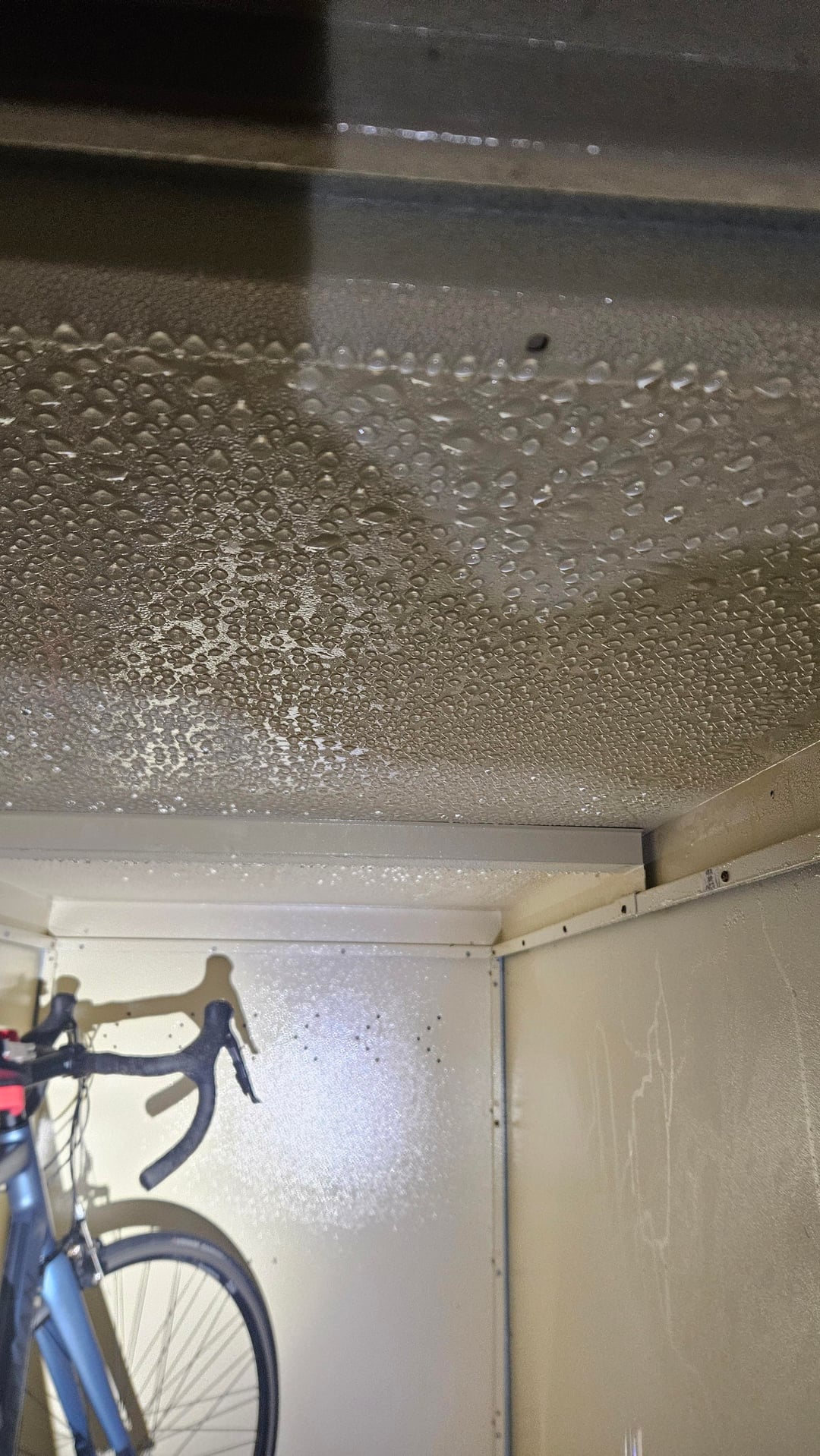
How to prevent condensation build up in metal bike store (Asguard 2 bike store)? As you can see there is a lot of condensation build up on the ceiling if the bike store which is causing my bikes to grow mould. The bike store is mounted onto a solid concrete base.
by taddy8
6 Comments
https://www.asgardsss.co.uk/metal-sheds-and-condensation-info
🤷🏻♂️
You can try the cushion type dehumidifiers made for cars.
Looks to me like you need an exhaust fan to get some airflow and pull the humidity out.
Attach a sheet of styrofoam to the ceiling.
This should be shown to everyone who is excited about converting shipping containers into homes.
The fundamental issue (assuming you have no leaks allowing liquid water to directly enter your shed (Is this assumption correct? If not, it’s a MUST fix.)) is that your concrete slab has no moisture barrier beneath it, and is acting like a giant wick, constantly transporting ground moisture to the inside of the shed. The condensation on the metal roof is a *symptom*, visible only because the metal gets cold enough to condense. However, the humidity is going to be high inside regardless of how you insulate the metal.
So:
The ideal way to attack this is to decrease the ground humidity. The fact your shed likely has no gutters is making this worse, as all rain that falls on the roof drips down right next to the shed. Any and all things you can do to dry the ground near the slab will help greatly. This can be gutters or active (drain tiles) or passive (ground slope) drainage improvements.
The next best treatment is to remove the humidity once it’s inside the shed. Depending on your ambient humidity, passive ventilation may be adequate. Or you might need active (fan) ventilation. You may even need active dehumidification – and if you need that you’d be well advised to seal all air leaks in the shed to make the dehumidification process more efficient.