
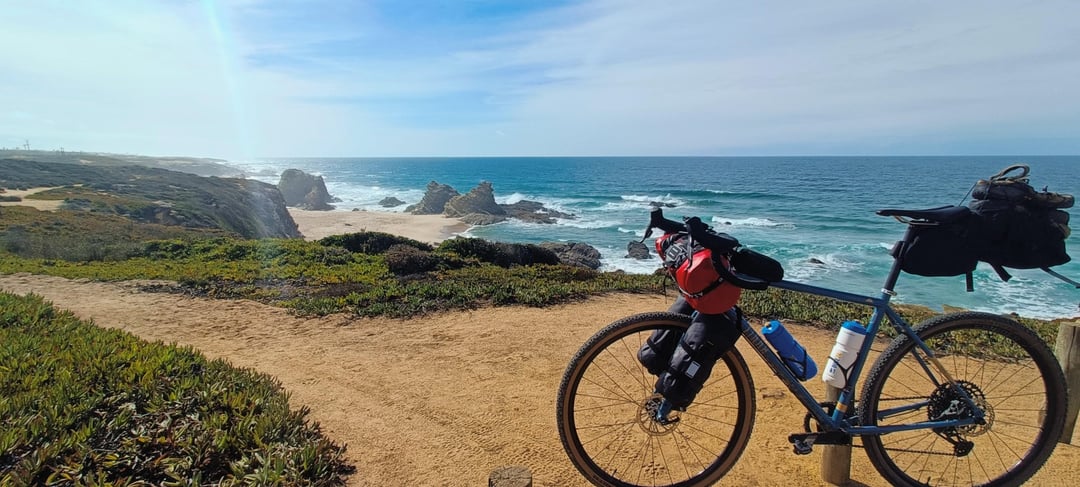
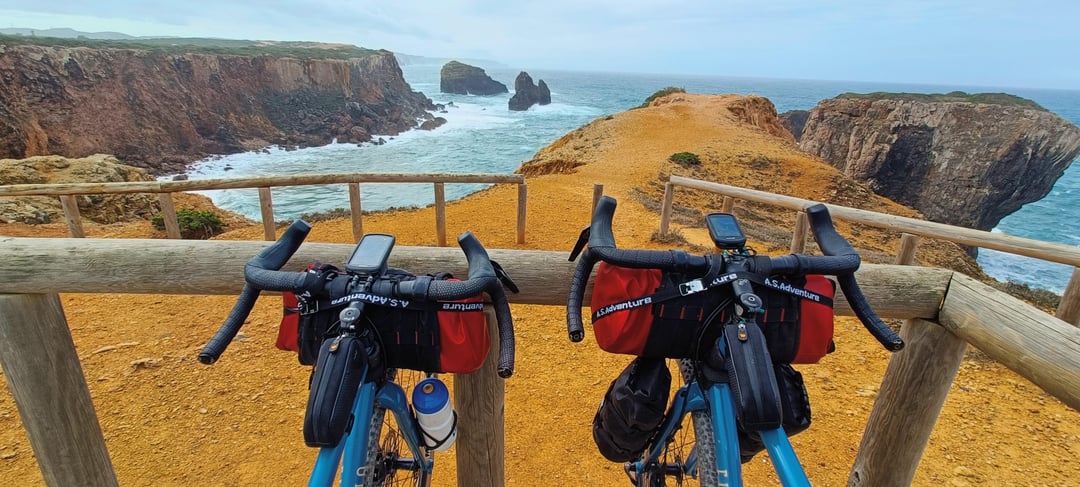
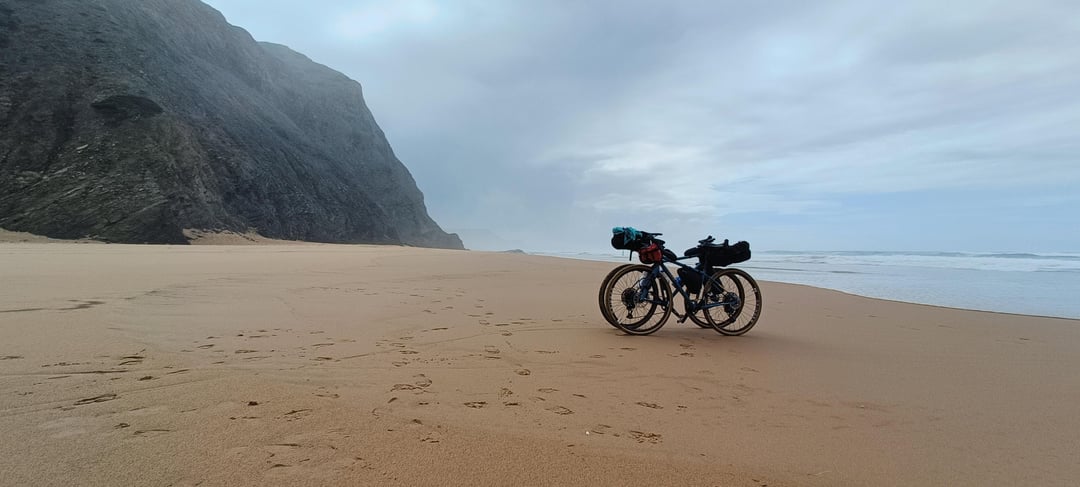
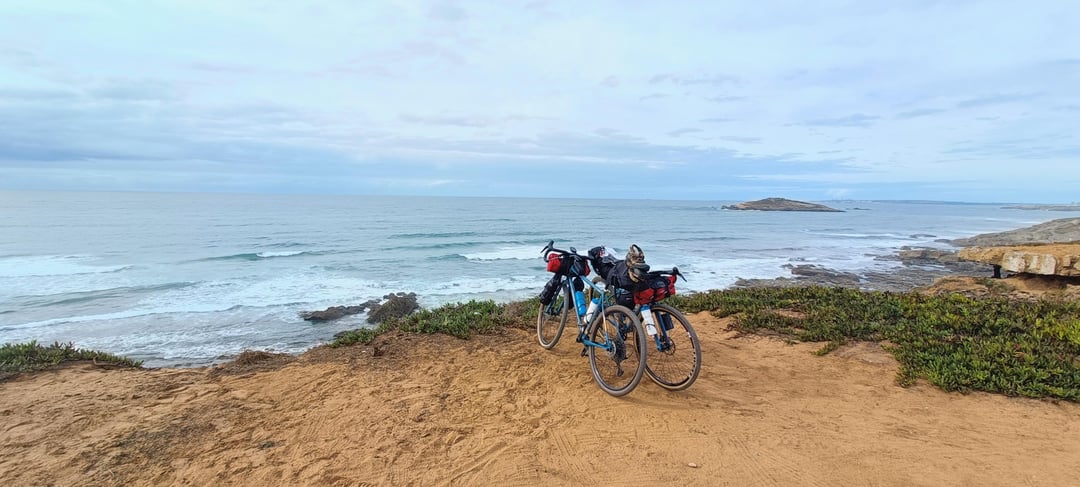
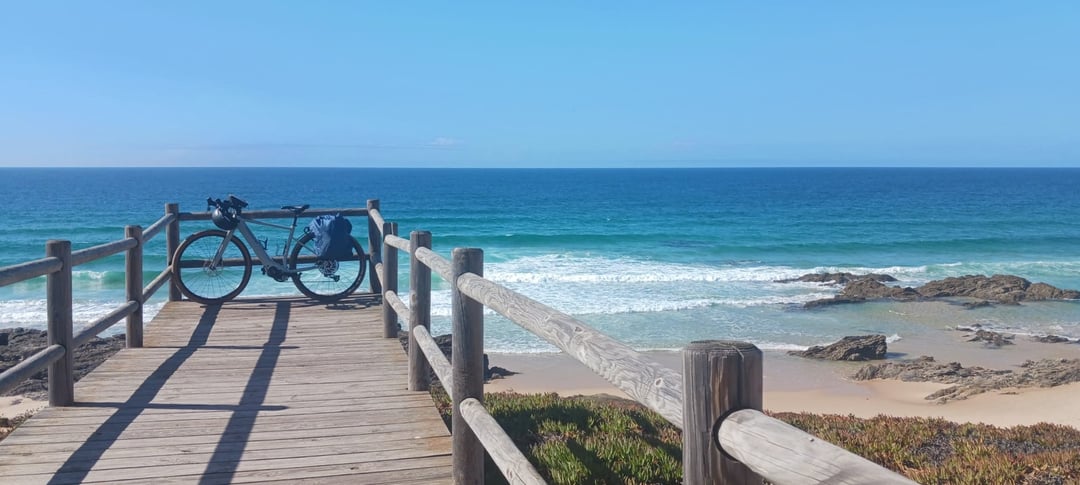
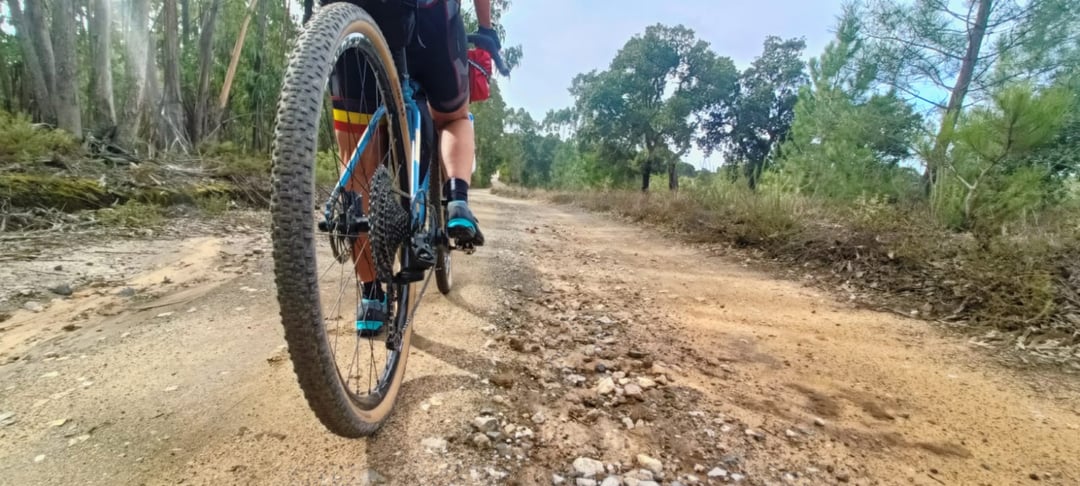
I’ve spent a lot of time riding in the southern half of Portugal during the winter months, and it’s a real good season for cycling trip. A lot of what I’m sharing here comes from planning routes for riders who come to Portugal for short winter trips, plus my own time on the bike.
Weather
South of Lisbon, especially near the coast, winter temperatures stay steady. Most days are around 15–18°C (59–64°F), and it’s rare for daytime temps to drop much below 15°C (59°F). The Atlantic keeps things very even, so sudden cold snaps don’t happen often.
From time to time you get warmer days reaching 20°C (68°F) — more common in the Algarve, which usually runs a bit warmer. Nights generally sit around 6–10°C (43–50°F).
Winter is also a very sunny season here. Not summer-level sunshine, but plenty of bright, clear days and long sunny intervals, even when the forecast looks mixed.
Rain is possible, but not everyday and it almost never lasts the whole day. Most often it shows up in short periods — maybe an hour or two — and then clears again. Even during wetter spells it usually switches back and forth between showers and very comfortable riding weather.
Because of that, the best strategy is simply to plan a bit of buffer into your trip.
If you’re traveling freely, add an extra day so you can wait out a shower if needed.
If your schedule is tight, keep your daily distances a little shorter so you’re not stuck riding in the rain just to stay on track.
A small time cushion usually turns a “rainy day” into a normal sunny ride with a longer coffee break.
Daylight
Winter days in Portugal are shorter. Sunrise is around 7:00, and sunset is between 17:30 and 18:00. Temperatures usually feel good for riding from about 10:00, so your “comfortable daylight window” is roughly 6–7 hours.
Once you add in a coffee stop, a viewpoint, a few photos, and lunch, that leaves around 4–5 hours of actual moving time, not more. That’s the number I normally use when helping riders plan winter days here.
A simple rule that works well:
your realistic daily distance = your comfortable moving speed × 3–5 hours.
Terrain
Portugal isn’t flat — and the coastal regions have a steady rhythm of short climbs. They’re not long, but there are many of them, and they add up.
Our riders from flatter countries (like the Netherlands or Denmark) often find their average speed drops compared to home. Nothing dramatic, but worth keeping in mind when planning.
And the scenery is good enough that stopping more than planned is almost guaranteed.
Wind
If you’re riding along the west or south coast, wind is one of the big factors. Most of the year the wind comes from the north or northwest, which makes riding southbound feel noticeably easier.
In winter, southerly winds appear more often. Sometimes mild, sometimes strong enough that you really feel them.
The easiest approach — and the one I usually suggest to riders we work with — is to decide your direction (north→south or south→north) just a few days before you start, once the forecast is reliable. Portugal has plenty of train and bus options, so adjusting your starting point is usually simple.
A good tailwind in Portugal can make a day feel completely different.
Final thought
Winter cycling in Portugal works best when you keep things simple:
a bit of buffer time, slightly shorter daily distances, and a direction that matches the wind.
Most riders who follow this end up describing their trip as “more like spring than winter.”
by GravelTravelPT
2 Comments
Great post thanks for the info. Hoping to spin there sometime soon
Thanks for the info! I will be there for a month from early January, and this info is very helpful. I plan to use the regional train often to expand my rides to other areas of Algarve. Anything to keep in mind when traveling with bike on the rails? And what sort of temps would be expected mid-day in the mountains if it is about 20c on/near the coast.