
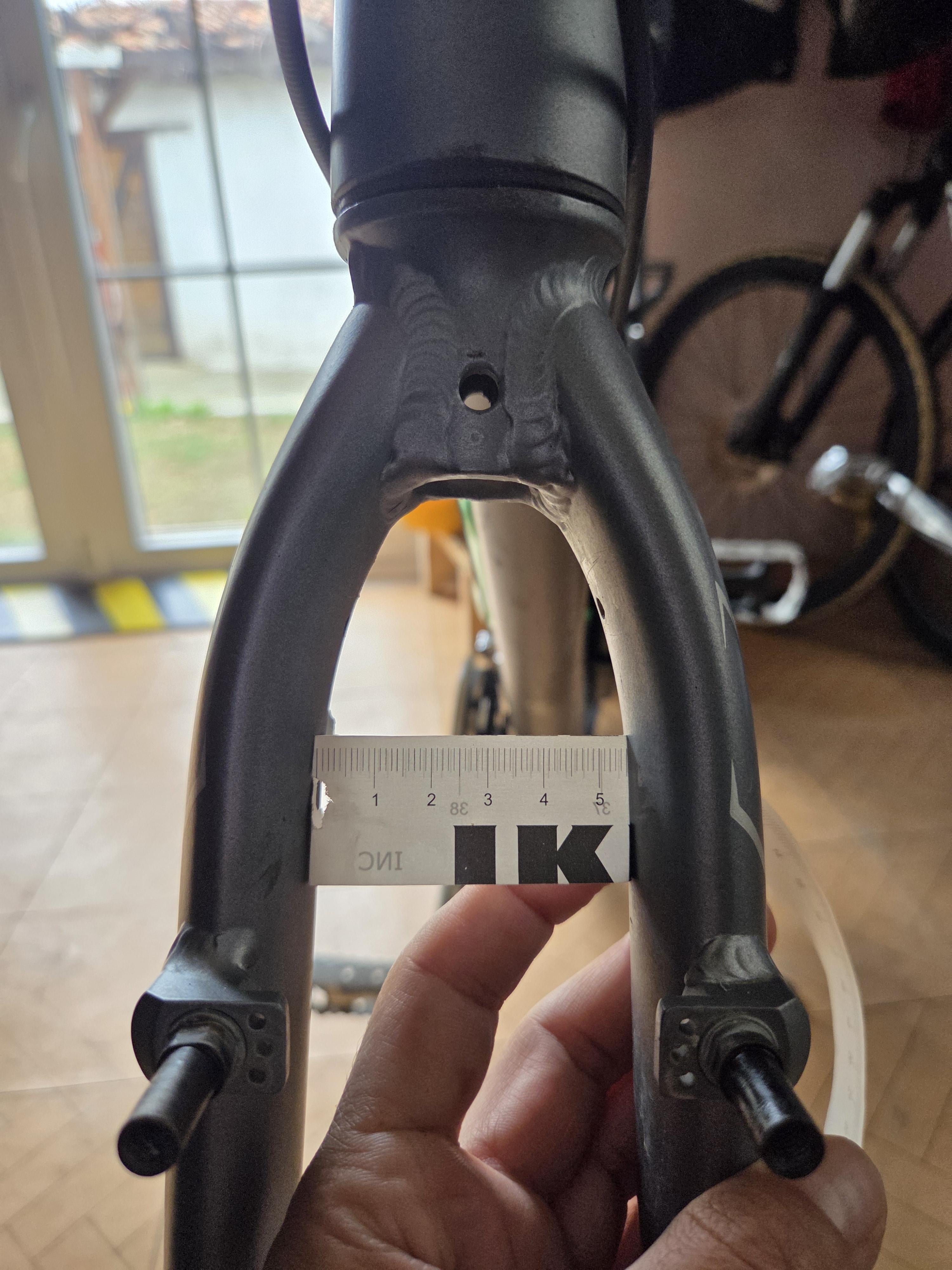
TThe original tire size is 700×32. What is the maximum tire size I can fit? I want to be able to drive on gravel roads with a loaded rear luggage compartment.
by catngs
TThe original tire size is 700×32. What is the maximum tire size I can fit? I want to be able to drive on gravel roads with a loaded rear luggage compartment.
by catngs
3 Comments
Generally, side-to-side clearance in the ISO standard is 6mm on all sides, so 54-ish – 12 = 42mm tires. If you have a tire/wheel though, you’ll need to check to see if the tire would be too tall too, although that design doesn’t seem like it.
You can run less clearance if you like and are willing to risk rubbing in the case of mud or an out-of-true wheel.
6mm clerance is standard, but alloy and steel forks/frames work fine with as low as 3mm clerance.
Also some tires have knobs wider then carcass, you have to check for that too.
It’s way easier to gauge what will fit if you put a tire of known sizing in there and then measure the gap from the tire to the metal. And when I say known sizing, I mean putting a caliper on it to verify that it’s the advertised size as well.
General rule of thumb is that you want 6-7mm of space in all dimensions. So assuming your ikea tape is accurate, you are holding it in the appropriate spot both vertically and that it’s lined up correctly between the fork blades, then you have about 55mm minus 14mm giving you 41mm of clearance. Based on my own experience with older hybrids, I think it’s more likely going to be a 38mm max that meets the 6-7mm rule but a 42mm will likely fit with less clearance. As gravelpi also mentioned, the wider the tire the higher the tire so you have to work about clearance at the top of the fork too.
You are likely holding your gauge too low, so expect your clearance to shrink as the rubber moves higher.