
Hey everyone,
I had my rear brake rotor replaced last week because my old 160mm rotor was squeaking/creaking when braking. My LBS suspected it had overheated, so they swapped it for a 180mm rotor. I was fine with that since I wanted to upgrade anyway.
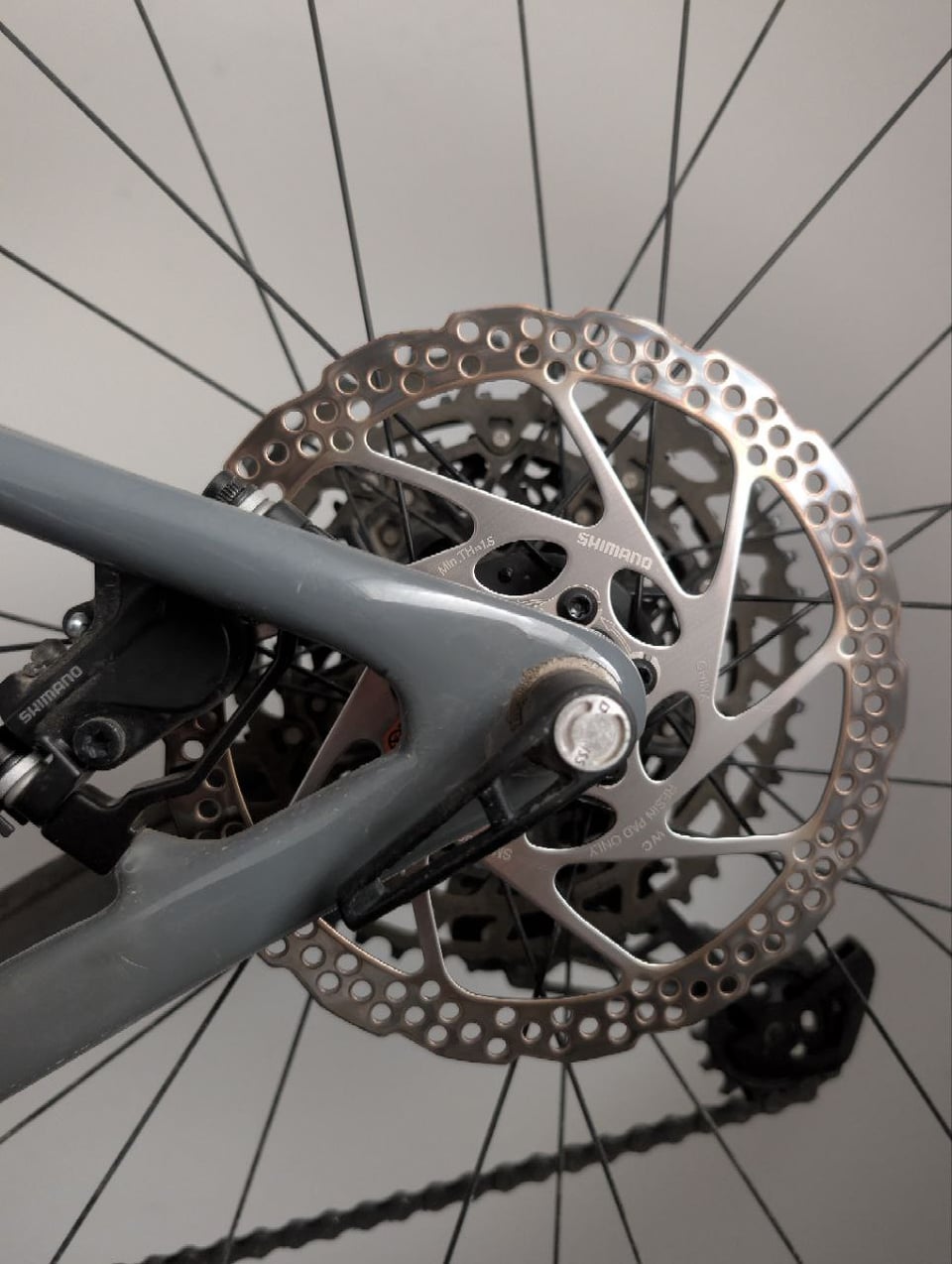
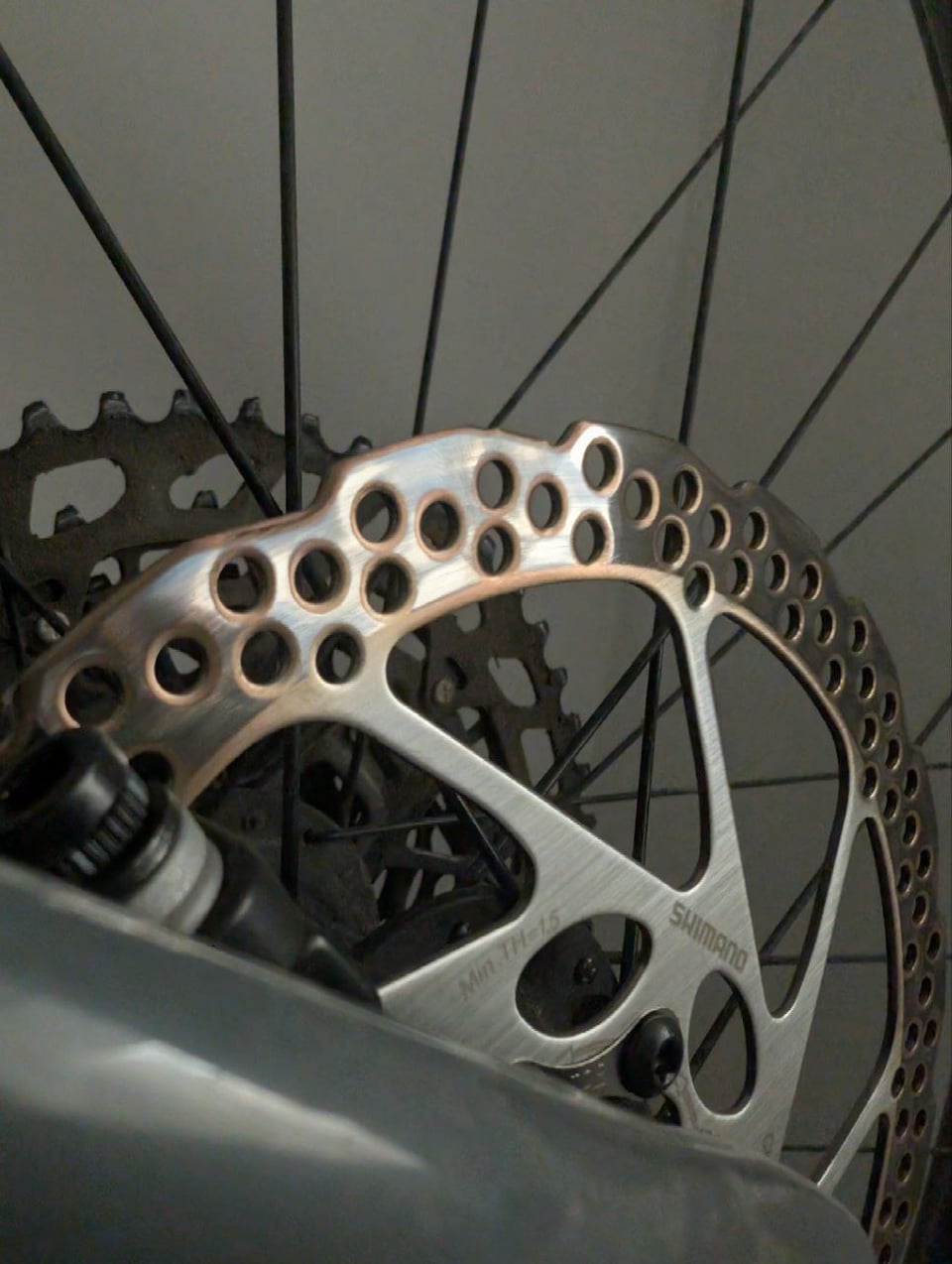
Yesterday I went on a 45 km ride with about 1,000 m of elevation gain. On some of the downhills, I hit speeds of up to 88 km/h. After just that one ride, the rotor is already showing discoloration (pics attached) and it makes some noise again.
My questions:
- Am I braking incorrectly?
- Could this just be because I’m a heavier rider and putting more heat into the system?
- Could it also have something to do with the brake pads?
- Is it safe to keep riding with the rotor in this condition?
Any advice would be appreciated.
by Otherwise_Bag_4929
7 Comments
Why are you showing us the rear brake? Is this because you mainly use the rear brake for deceleration? Are you dragging the brake?
You want to use the front brake as much as possible, as braking will shift the weight distribution forward. This is amplified when going downhill. You also want to brake in bursts and not constantly so the rotor has a chance to cool down.
We would have to see you braking to be sure, but i always brake in bursts to let the brakes air cool a little in between. So brake release, brake.
How is your braking power?
My brakes did look the same after a descent of 1500m. Water i squirted on them ( I learned afterwards that you shouldn’t do that) evaporated instantly. I was in the middle of nowhere and continued another 2000km on them without issues. But I’m far from a pro.
1: Maybe, do you stay on the brakes consistently whilst going downhill? Or do you “pump” them? (Brake for a couple of seconds, release for a couple, repeat)
2: Again, maybe, define heavy? Are you over 120kilo? But tbh it shouldn’t play too much as long you’re braking correctly. Usually, weight will just mean you’ll go through break pads faster.
3: possibly but unlikely, if memory serves those shimano rotors are organic only, but most shimano pads are anyway.
4: Unless it doesn’t brake or makes a crazy noise, yeah, it’s fine.
> Am I braking incorrectly?
Maybe, but disc brake rotor oxidation alone is not evidence of incorrect braking.
> Could this just be because I’m a heavier rider and putting more heat into the system?
Yes, most definitely.
> Could it also have something to do with the brake pads?
Sintered metallic pads tend to scrape the oxide layer off the rotors, organic pads tend to leave it in place.
> Is it safe to keep riding with the rotor in this condition?
Yes. Monitor rotors for minimum thickness and cracks originating from drillings/cutouts, replace when either is present.
Straw coloration begins to appear on stainless steel around 430F/220C
I’m not an expert but I would be surprised if you are getting your brakes hot enough to roast a thanksgiving turkey. To my eyes it looks more like some deposition, either from the brake pad(?) or a contaminant like oil that is heating upnand bedding into the rotor (this also can cause a ton of squeaking)
Like I said I’m not an expert but this would be my theory
First thing first, you have tabs between rotor and screws. You don’t need these with that rotor, it’s only required for the rt86 and above (xt/xtr rotors).
That rotor is the cheapest you can buy from Shimano, of course it’s going to overheat, especially if you hit such speeds and the whole syatem being like 115kgs at least. That rt10 rotor is good for casual city bikes. Of course, your breaking technique will affect the rotor as well. If you brake for long period of time without releasing the lever, this is going to happen even on high-end rotors.
If you are having heat issues maybe consider switching to something like a Shimano ice tech rotor which is designed to dissipate heat faster to minimise these issues